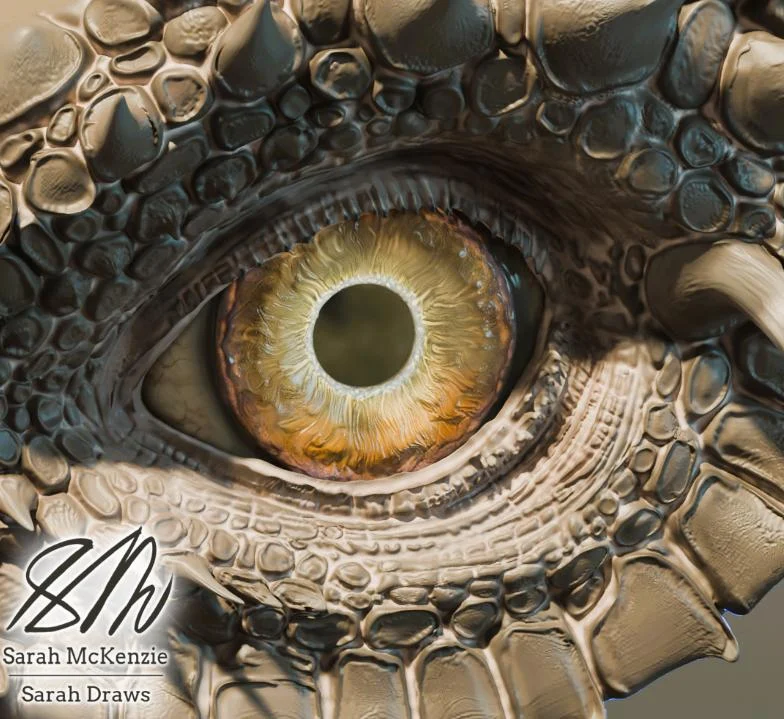
Every week, hundreds of artists share their work on the Blender Artists forum, a testament to the vibrant and evolving digital art landscape. This particular week, one creation has captured significant attention: a meticulously crafted "Dragon Eye Study for Smaugust 2026." This artwork, shared by artist Bart on BlenderNation, not only highlights the exceptional talent within the Blender community but also serves as a focal point for discussions on digital sculpting, texturing, and rendering techniques. The study, a single but potent element of a larger thematic challenge, demonstrates a deep understanding of anatomy, light, and material properties, pushing the boundaries of what is achievable with open-source 3D creation software.
The Genesis of "Smaugust" and the Dragon Eye Study
The "Smaugust" challenge, a recurring annual event within the 3D art community, encourages artists to dedicate the month of August to creating dragon-themed artwork. Named implicitly after Smaug, the iconic dragon from J.R.R. Tolkien’s The Hobbit, the challenge fosters a focused period of creativity and skill development. This year, the "Dragon Eye Study" emerged as a standout piece, drawing praise for its realism and intricate detail. While the full scope of the artist’s "Smaugust" project remains to be seen, this focused study offers a compelling glimpse into their artistic vision and technical execution.
The Blender Artists forum, established in 2002, has grown to become one of the largest and most influential online communities for 3D artists. With tens of thousands of active users and millions of posts, it serves as a crucial platform for sharing work, seeking feedback, and discovering emerging talent. BlenderNation, founded in 2006 by Bart himself, acts as a vital news and information hub for the Blender ecosystem, regularly featuring exceptional community creations and industry developments. The weekly "Spotlight" feature on BlenderNation, of which this article is an example, aims to elevate outstanding artistic contributions that might otherwise be lost in the sheer volume of submissions.
Technical Prowess and Artistic Vision
The "Dragon Eye Study" is not merely an aesthetic representation but a sophisticated demonstration of advanced 3D art techniques. The complexity of rendering a realistic eye, particularly a mythical creature’s, involves a deep understanding of several key areas:
- Modeling and Sculpting: The base form of the dragon’s eye would have required meticulous sculpting to achieve anatomical accuracy, even for a fantastical creature. This likely involved high-resolution sculpting within Blender, focusing on the curvature of the eyeball, the intricate details of the iris and pupil, and the surrounding eyelid structures. The subtle undulations and imperfections that lend realism to organic forms would have been paramount.
- Texturing and Shading: The realism of the eye hinges significantly on its surface properties. The artist would have employed advanced texturing techniques, potentially using procedural textures or high-resolution image maps to define the scales, veins, and subtle color variations within the iris. Achieving the characteristic wetness and reflectivity of an eye requires sophisticated shader networks, carefully balancing subsurface scattering, specular reflections, and refraction to mimic how light interacts with biological tissues. The chromatic aberrations and subtle color shifts often seen in reptilian eyes would also be a critical consideration.
- Lighting and Rendering: The final presentation of the artwork relies heavily on lighting and rendering. The artist would have employed a carefully constructed lighting setup to accentuate the form, highlight the textures, and convey a sense of depth and presence. The choice of render engine within Blender (such as Cycles or Eevee) and the fine-tuning of render settings, including sampling, denoising, and color management, are crucial for achieving photorealistic or stylized results. The way light reflects off the cornea, scatters within the iris, and casts subtle shadows would have been meticulously controlled.
The "Smaugust" challenge, by its nature, encourages a focused exploration of dragon anatomy and aesthetics. Artists often delve into research, drawing inspiration from real-world reptiles, birds, and even mythological depictions to inform their creations. The "Dragon Eye Study" likely benefited from such research, allowing the artist to imbue the eye with a believable, albeit fantastical, biological structure. The scale patterns around the eye, the texture of the eyelids, and the overall expression conveyed by the gaze all contribute to the piece’s impact.

The Role of Online Communities in Artistic Development
The Blender Artists forum and platforms like BlenderNation play an indispensable role in the development and recognition of digital artists. They provide:
- A Platform for Showcase: Artists can share their work with a global audience, gaining exposure and valuable feedback.
- Learning Resources: The forums are rich with tutorials, discussions, and shared techniques, enabling artists to learn from one another and continuously improve their skills.
- Inspiration and Motivation: The sheer volume of high-quality work shared daily serves as a powerful source of inspiration, encouraging artists to push their own creative boundaries.
- Community Building: These platforms foster a sense of camaraderie and shared passion, connecting artists from diverse backgrounds and skill levels.
Bart’s long-standing involvement with Blender, dating back to its early days, and his role in founding BlenderNation and managing the Blender Artists forum, underscore his deep commitment to this community. His consistent effort to highlight exceptional work like the "Dragon Eye Study" contributes significantly to the ecosystem’s vitality.
Broader Implications for the Digital Art Landscape
The continuous advancement of open-source software like Blender has democratized 3D art creation, making professional-grade tools accessible to a wider range of individuals. This has led to an explosion of creativity and innovation, as evidenced by the quality of work emerging from community challenges like "Smaugust." The "Dragon Eye Study" is a prime example of this trend, showcasing that exceptional artistic output is no longer solely the domain of large studios with proprietary software.
Furthermore, the increasing sophistication of digital rendering techniques allows for the creation of highly realistic and immersive imagery. This has profound implications for various industries, including film, gaming, advertising, and architectural visualization. The skills honed through personal projects and community challenges often translate directly into professional opportunities.
The "Dragon Eye Study" serves as a micro-example of the macro-trend: the democratization of advanced creative tools and the rise of a highly skilled, globally connected artistic community. As these artists continue to innovate and share their work, the boundaries of digital art will undoubtedly continue to expand, offering new possibilities for storytelling, visual expression, and technological advancement. The ongoing success of events like "Smaugust" and platforms like Blender Artists and BlenderNation are crucial indicators of this dynamic and exciting future. The focused dedication required for such a detailed study, presented within the context of a community-driven challenge, speaks volumes about the passion and commitment of digital artists worldwide. Each pixel, each sculpted polygon, represents hours of dedication, problem-solving, and a relentless pursuit of artistic excellence. The "Dragon Eye Study for Smaugust 2026" is not just a piece of digital art; it’s a beacon of creativity, a testament to community spirit, and a glimpse into the ever-evolving potential of digital creation.
About the Author