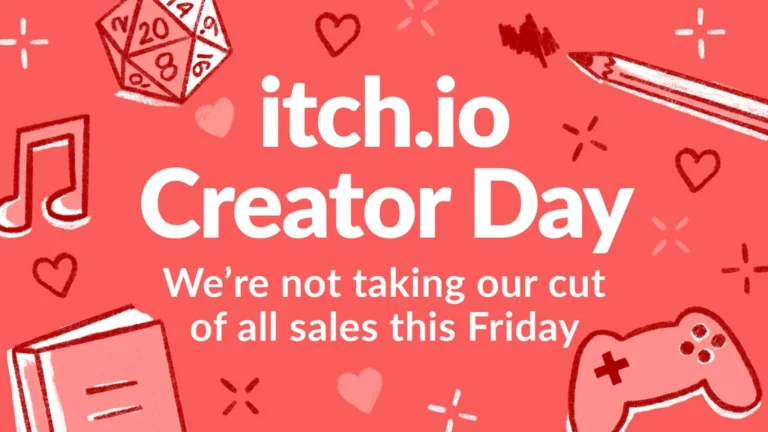
Creator Day, an initiative spearheaded by the independent digital storefront itch.io, represents a pivotal 24-hour period where the platform entirely waives its standard revenue share on all sales. This unique event ensures that creators receive 100% of the proceeds from their digital products, after accounting for applicable taxes and third-party payment processing fees. Since its inception on May 14, 2021, Creator Day has evolved into a regularly recurring fixture in the itch.io calendar, reinforcing the platform’s commitment to directly supporting its vast community of independent developers, artists, and content creators. The event has garnered significant attention within the indie development sphere, offering a tangible economic boost and a potent promotional opportunity for creators, while providing buyers with a direct and impactful way to support their favorite artists. This model stands in stark contrast to the conventional revenue splits observed across most major digital distribution platforms, positioning itch.io as a leader in creator-centric marketplace innovation.
The Genesis and Evolution: A Commitment to Independent Creators
The advent of Creator Day in May 2021 was not merely a promotional gimmick but a strategic move deeply rooted in itch.io’s foundational philosophy: to be a creator-first marketplace. In an ecosystem often dominated by platforms that command substantial revenue shares—typically ranging from 15% to 30% for games and digital assets—itch.io has consistently championed a more equitable model. Its standard revenue share is famously flexible, allowing creators to set their preferred split, often defaulting to a highly favorable 10% for the platform. Creator Day takes this commitment a significant step further, temporarily eliminating the platform’s cut altogether. This radical approach reflects a deep understanding of the economic precarity often faced by independent creators.
The decision to launch Creator Day was a direct response to the perennial challenges faced by independent creators: securing sustainable income, gaining visibility in a crowded market, and navigating complex distribution channels that often favor established entities. Many indie developers struggle with funding, relying on passion projects and often self-financing their endeavors. By explicitly removing its own fee, itch.io sought to create an unparalleled incentive for both creators and consumers. For developers, it meant a guaranteed maximum return on their hard work, potentially translating into critical funding for ongoing projects, covering essential software licenses, hardware upgrades, marketing costs, or simply providing a much-needed personal income boost, allowing creators to dedicate more time and resources to their craft without the constant pressure of external financial demands. For buyers, it offered the reassurance that every dollar spent during the event directly benefited the individual or team behind the creation, fostering a stronger sense of community and direct patronage.
The inaugural Creator Day on May 14, 2021, proved exceptionally successful, drawing considerable traffic and generating significant revenue for participating creators. The positive reception from both the creator and buyer communities prompted itch.io to establish it as a regularly recurring event, happening multiple times throughout the year. This regularity underscores its importance not as a one-off charitable gesture, but as an integral component of the platform’s operational ethos and its long-term strategy for fostering a vibrant, self-sustaining indie ecosystem. The consistent scheduling also allows creators to plan their releases and promotional campaigns around these high-impact days, further maximizing the benefits and integrating Creator Day into their annual business strategies.
Operational Mechanics: How Creator Day Functions
Creator Day operates with precise timing and automatic implementation, simplifying participation for all users. The event typically spans a full 24-hour period, commencing at midnight Pacific Time (PT) and concluding at midnight PT the following day. For a global audience, this translates to an 8 AM Coordinated Universal Time (UTC) start and end time. This fixed schedule ensures clarity and allows both creators and buyers worldwide to mark their calendars and plan their purchases or promotions accordingly. The global coordination is essential given itch.io’s international user base, spanning continents and diverse time zones.
During this designated window, the platform’s sophisticated backend automatically adjusts its revenue sharing mechanism. Any purchase made across the entire itch.io marketplace during these 24 hours automatically bypasses the usual platform fee. Creators do not need to alter any account settings, opt-in, or make manual adjustments to participate; their standard revenue share settings are automatically overridden for the duration of the event and seamlessly restored once it concludes. This seamless integration ensures that the event is inclusive and accessible to every creator on the platform, from burgeoning hobbyists experimenting with their first game jam entries to established indie studios releasing their latest commercial titles. The automatic nature removes potential barriers to entry and ensures widespread participation.
It is crucial to note that while itch.io waives its platform fee entirely, creators still incur charges from third-party payment processors (such as PayPal, Stripe, or credit card companies) and are responsible for any applicable taxes on their sales. These fees are external to itch.io’s revenue model and are standard across nearly all digital transactions globally. However, even with these necessary deductions, the absence of itch.io’s percentage—which can be up to 10% of the gross sale—significantly increases the net income for creators, often by a substantial margin compared to standard marketplace models where platforms typically retain 15-30% of the sale price. This direct increase in earnings is the core financial benefit.
Historically, Creator Day events have frequently been scheduled on Fridays, a strategic choice that often aligns with peak online shopping activity and weekend leisure time. Furthermore, these events often coincide with broader promotional campaigns, such as seasonal sales (e.g., Summer Sale, Winter Sale, Halloween Sale) or major retail events like Black Friday and Cyber Monday. This strategic timing amplifies the event’s impact, drawing in larger audiences already primed for digital purchases and offering creators an even greater opportunity for discoverability and increased sales volume during periods of heightened consumer activity. The synergy between Creator Day and these larger promotional cycles maximizes its reach and effectiveness.
Empowering Indie Developers: A Creator’s Perspective
For the thousands of independent developers, artists, and musicians who host their projects on itch.io, Creator Day represents a significant economic lifeline and a powerful marketing tool. The direct injection of 100% of sales revenue can be transformative, particularly for smaller teams or solo developers who often operate on razor-thin margins. Funds generated on Creator Day can directly contribute to project development, cover essential software licenses, hardware upgrades, marketing costs, or simply provide a much-needed personal income boost, allowing creators to dedicate more time and resources to their craft without the constant pressure of external financial demands. This direct support fosters greater creative freedom and reduces the reliance on external funding sources that often come with restrictive terms.
The promotional aspect of Creator Day is equally valuable. The event inherently generates buzz within the itch.io community and across broader social media platforms, creating a concentrated period of heightened visibility. Creators are strongly encouraged to leverage this increased attention by actively promoting their work. Effective strategies often include:
- Launching New Projects: Releasing a highly anticipated game, asset pack, or development tool on Creator Day can maximize initial sales, secure significant early funding, and generate strong launch momentum.
- Running Special Discounts or Bundles: While the platform fee is waived regardless of price, offering a limited-time discount or creating exclusive bundles can attract new buyers, incentivize existing fans to make a purchase, and clear out wishlists.
- Engaging on Social Media: Actively sharing news about Creator Day and linking directly to their itch.io pages helps creators tap into a broader audience, drive traffic to their storefronts, and capitalize on the community’s collective excitement. Using relevant hashtags and coordinating with other creators can amplify reach.
- Highlighting "Pay What You Want" Options: For projects utilizing itch.io’s flexible "Pay What You Want" model, Creator Day provides an excellent opportunity for buyers to contribute above the minimum price, knowing their full contribution goes directly to the creator, often resulting in higher average sale prices.
- Updating Existing Projects: Releasing significant updates, new content, or remastered versions of popular titles can rekindle interest and drive sales during the event, appealing to both new and returning customers.
These combined financial and promotional benefits foster a more sustainable environment for indie creators, empowering them to pursue innovative and niche projects that might struggle to find funding or an audience on more traditional, profit-driven platforms. Many creators have publicly expressed their gratitude for the initiative, often describing it as a vital differentiator for itch.io and a testament to its genuine support for the independent development scene, making it a preferred platform for many to publish their work.
Maximizing Impact: The Buyer’s Role
Creator Day is equally significant for buyers and supporters. For consumers who are passionate about independent games, art, and digital tools, the event offers a unique opportunity to maximize the impact of their purchases. Knowing that every dollar (minus unavoidable third-party fees and taxes) directly reaches the creator provides an unparalleled sense of satisfaction and direct contribution. This contrasts sharply with purchases on other platforms where a substantial portion of the sale is retained by the storefront, often leaving creators with a significantly smaller percentage.
The event encourages thoughtful consumerism, prompting buyers to consider purchases they might have otherwise delayed. Whether it’s picking up a long-coveted indie game, investing in a new asset pack for their own creative projects, or simply supporting a favorite developer’s ongoing work, Creator Day makes these decisions more compelling. It transforms a standard transaction into an act of direct patronage and community building, aligning consumer values with direct support for the artistic process. This fosters a sense of collective empowerment within the community.
Buyers often participate by:
- Purchasing Wishlist Items: Clearing out their wishlists, knowing their money is going directly to the developers, and often discovering new titles in the process.
- Discovering New Talent: Exploring itch.io’s vast catalog with an added incentive to support emerging creators who might not yet have widespread recognition.
- Gift Giving: Purchasing games or assets as gifts for friends and family, extending the direct support to more creators and introducing new users to the platform.
- Participating in Community Discussions: Spreading awareness about Creator Day and recommending titles to others on social media, forums, and personal networks, further amplifying the event’s reach and impact.
The collective participation of buyers during Creator Day events translates into a significant financial injection for the indie community, reinforcing the symbiotic relationship between creators and their audience. It’s a clear demonstration of how a platform can facilitate genuine, direct support, moving beyond mere transaction to foster a deeper connection and a shared investment in the success of independent creative endeavors.
The Broader Economic and Community Impact
The recurring success of Creator Day has profound implications for the independent game development ecosystem and the broader digital content marketplace. Economically, it represents a substantial redirection of funds directly into the hands of creators. While specific aggregated financial figures are not publicly disclosed by itch.io, industry observers and participating developers estimate that Creator Day events collectively channel millions of dollars directly to independent creators annually. This financial support helps to stabilize small studios, fund experimental projects, and mitigate creator burnout, all common challenges in the often-precarious world of indie development. It provides a crucial buffer and allows for greater creative risk-taking.
Beyond direct financial benefits, Creator Day strengthens itch.io’s brand identity as a uniquely creator-friendly platform. In an increasingly competitive digital storefront landscape, this differentiation is crucial. It positions itch.io not just as a marketplace, but as a genuine partner and advocate for independent talent. This reputation, built on tangible actions like Creator Day, attracts new creators seeking fairer terms and a supportive community, further enriching the platform’s diverse content library and fostering a virtuous cycle of growth and innovation. The platform becomes a magnet for those seeking alternatives to more restrictive or less equitable models.
The event also cultivates a stronger, more engaged community. It fosters a shared sense of purpose among buyers and creators, uniting them in a collective effort to support independent art. This community-centric approach stands in contrast to more impersonal, corporate-driven platforms. Discussions around Creator Day on social media, forums, and within development circles highlight a palpable sense of excitement and solidarity, reinforcing the idea that itch.io is more than just a place to buy games—it’s a movement built on mutual support and shared values. This sense of belonging is invaluable in an often isolating creative industry.
From an analytical perspective, Creator Day serves as a compelling case study in alternative platform economics. It demonstrates that a digital storefront can prioritize creator welfare without necessarily undermining its own sustainability. While itch.io foregoes its revenue share on these specific days, the goodwill generated, the increased traffic, the strengthened brand loyalty, and the attraction of new talent likely contribute to long-term platform loyalty and overall growth. This model suggests a potential path forward for other platforms looking to foster more equitable relationships with their content providers, challenging the long-held assumptions about necessary revenue splits.
Beyond the Day: Long-Term Vision and Sustainability
The sustained commitment to Creator Day reflects itch.io’s long-term vision for fostering a vibrant and sustainable independent creative ecosystem. The platform’s ability to consistently waive its fees for these events speaks to a robust underlying business model, likely supported by its standard, flexible revenue share on non-Creator Days, its paid services, and potentially strategic investments or a lean operational structure. This allows the platform to absorb the temporary loss of revenue in exchange for the immense value it provides to its community and brand, viewing it as an investment in its core mission and long-term success.
Itch.io’s founders and leadership have implicitly, through the continuation of Creator Day, reiterated their dedication to providing a platform where creative freedom and financial fairness are paramount. This initiative is not seen as an anomaly but as a cornerstone of their operational philosophy, a tangible expression of their belief in the power and importance of independent creators. The future of Creator Day appears secure, continuing to serve as a beacon of direct creator support in the digital marketplace and a key element of itch.io’s identity.
However, even in such a positive initiative, considerations for long-term growth and discoverability remain. While Creator Day brings significant traffic, the sheer volume of new content and existing projects means that individual creators still face the ongoing challenge of standing out. Itch.io continues to evolve its discovery tools, curation methods, and community features to ensure that even outside of Creator Day, valuable independent work finds its audience. The success of Creator Day also relies on a continuous influx of buyers willing to participate, underscoring the importance of ongoing community engagement, awareness campaigns, and the continued cultivation of a supportive ecosystem.
In conclusion, itch.io’s Creator Day stands as a powerful testament to an alternative, creator-centric model in the digital distribution landscape. By strategically waiving its platform fee for 24-hour periods several times a year, itch.io not only provides crucial financial support to independent developers but also cultivates a unique, community-driven marketplace. This initiative strengthens the platform’s brand, empowers creators, and offers buyers an unparalleled opportunity for direct patronage, solidifying Creator Day’s role as a groundbreaking and highly impactful event for the independent creative world. It exemplifies a sustainable approach to fostering creativity by putting creators at the heart of its economic model.
About the Author