The landscape of digital content creation has been fundamentally reshaped with the advent of Unreal Engine 5 (UE5) and its groundbreaking MetaHuman character library. These incredibly high-fidelity digital humans are now freely available, offering an unprecedented opportunity for developers, filmmakers, and creators to integrate photorealistic characters into their projects without the prohibitive costs and extensive labor typically associated with such assets. This guide will meticulously detail the process of incorporating MetaHumans into a UE5 project, while also exploring the profound technological underpinnings, strategic development timeline, and significant industry implications of this revolutionary offering.
The Dawn of Digital Realism: Introducing MetaHumans and Unreal Engine 5
Unreal Engine 5, Epic Games’ flagship real-time 3D creation tool, has set new benchmarks for visual fidelity and development efficiency. At its core, UE5 introduced revolutionary technologies like Nanite, a virtualized micropolygon geometry system, and Lumen, a fully dynamic global illumination and reflections solution, enabling artists to create environments with unprecedented detail. Complementing these advancements is the MetaHuman framework, a comprehensive ecosystem designed to empower creators with the ability to produce, customize, and animate photorealistic digital humans with remarkable ease. The MetaHuman library, a curated collection of pre-configured, production-ready digital characters, represents a pivotal step in democratizing access to cutting-edge character art. Each MetaHuman is not merely a static model but a fully rigged, animatable character, equipped with highly detailed skin shaders, realistic hair, and intricate facial rigging, all optimized for real-time performance within Unreal Engine 5. This accessibility, coupled with the "free to use" model, positions MetaHumans as a game-changer for projects ranging from independent game development to AAA titles, virtual production, and architectural visualization.

A Step-by-Step Guide to MetaHuman Integration in Unreal Engine 5
The process of bringing a MetaHuman into a UE5 project is streamlined through Epic Games’ integrated tools, primarily Quixel Bridge. This section provides a detailed walkthrough for developers aiming to leverage these assets.
Accessing the MetaHuman Library via Quixel Bridge
The initial gateway to the MetaHuman library is Quixel Bridge, an integral application within the Epic Games ecosystem. Quixel Bridge serves as a vast repository not only for MetaHumans but also for the extensive Quixel Megascans library, which comprises thousands of high-quality 3D assets, surfaces, and environments.
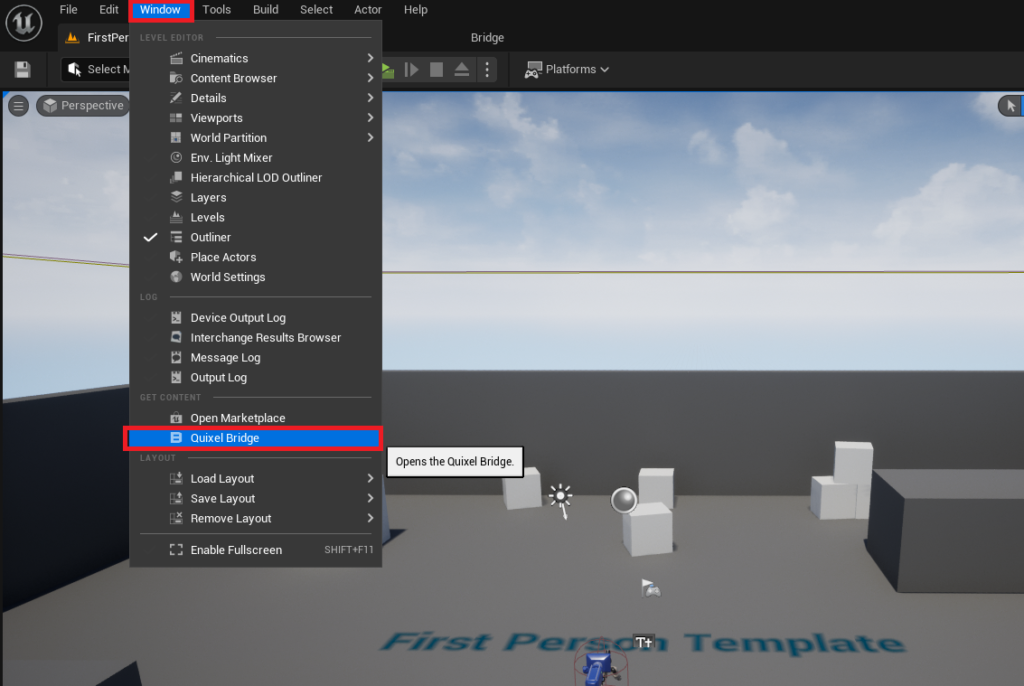
- Launching Quixel Bridge: Within the Unreal Engine editor, creators must first navigate to the ‘Window’ tab located in the top menu bar. From the dropdown menu, selecting ‘Quixel Bridge’ will open the integrated Bridge window directly within the editor interface. This integration eliminates the need for external applications, ensuring a seamless workflow.
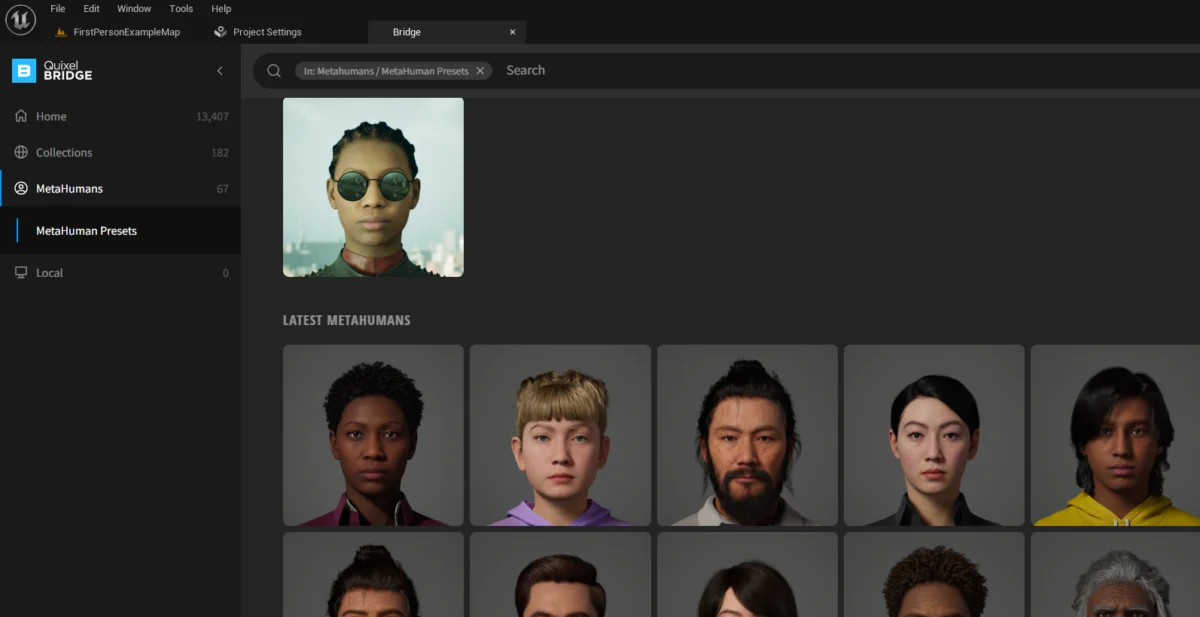
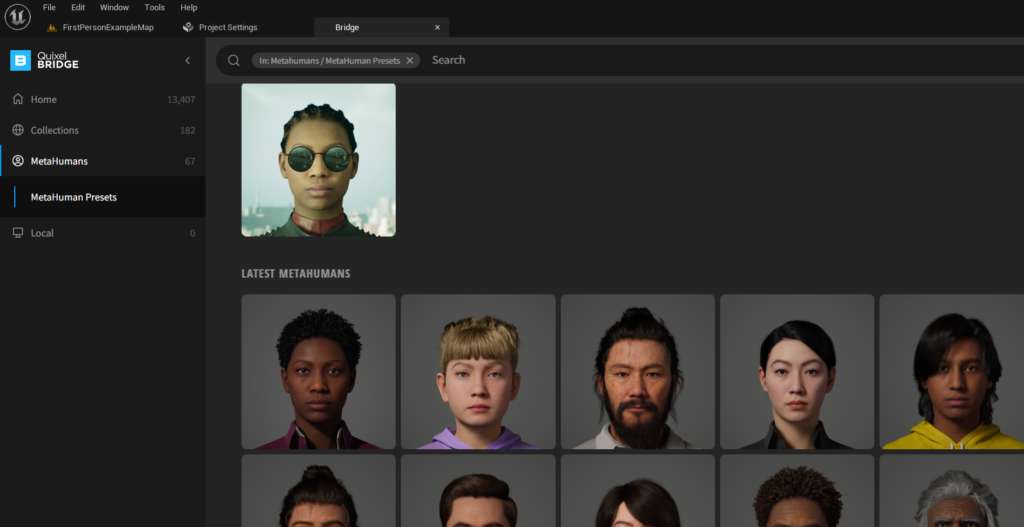
- Navigating to the MetaHumans Tab: Once Quixel Bridge has successfully initialized and opened, users will observe several categorical tabs. To access the digital human assets, the ‘MetaHumans’ tab must be clicked. This action filters the extensive library, presenting only the pre-configured MetaHumans available for download and integration.
- Browsing the MetaHuman Collection: Upon selecting the MetaHumans tab, a comprehensive grid display will populate with a diverse array of digital human avatars. These characters showcase a wide range of ethnicities, ages, and styles, all rendered with an astonishing degree of realism. This visual catalog allows developers to preview and select the most suitable MetaHuman for their specific project requirements. Each character is meticulously crafted, embodying the high standards of photorealism that MetaHumans are renowned for.
Authenticating Your Access: The Epic Games Account
Before any MetaHuman can be downloaded, authentication is required. This ensures compliance with licensing agreements and grants full access to the premium content within Quixel Bridge.
- Initiating Login: To proceed with downloading a chosen MetaHuman, the user must first click on one of the avatars displayed in the grid. This action typically reveals additional details about the selected character and, critically, a ‘Sign In’ button, usually located in the bottom-right corner of the Quixel Bridge window.
- Epic Games Account Integration: Clicking ‘Sign In’ will prompt the user to log in with their Epic Games account credentials. This is a mandatory step, as the MetaHuman library, like Quixel Megascans, is part of the broader Epic Games content ecosystem. Successful login grants unfettered access to the entire library, enabling downloads and additions to ongoing projects. This integration underscores Epic’s strategy of fostering a cohesive and interconnected creative environment for its users.
Downloading and Importing into Your UE5 Project
With authentication complete, the process of transferring a MetaHuman into your active Unreal Engine 5 project becomes straightforward.
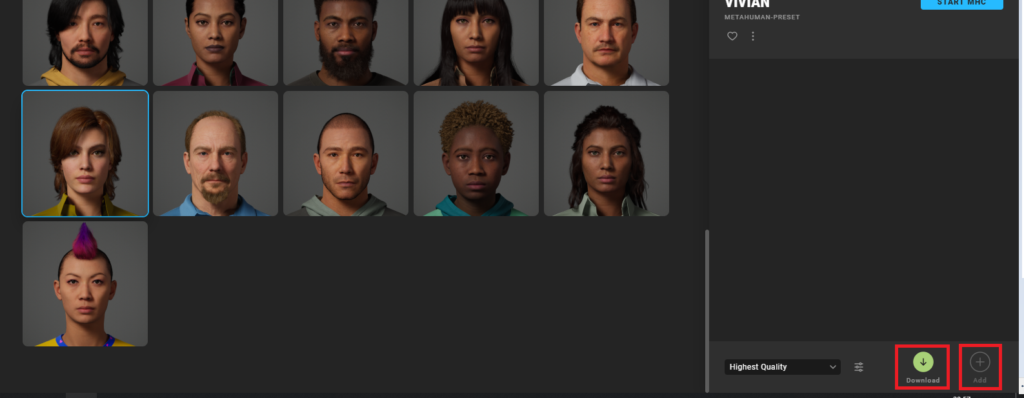
- Selecting and Downloading: After logging into the Quixel Bridge tab, the user can select their desired MetaHuman avatar from the grid. A ‘Download’ button will become active. Clicking this initiates the download of the selected MetaHuman’s assets, which can be substantial due to their high fidelity. The download progress is typically displayed within the Bridge window.
- Adding to Project: Once the download is successfully completed, the ‘Download’ button will transform into an ‘Add’ button. Clicking ‘Add’ triggers the automatic import process, where Unreal Engine begins integrating all the necessary files, textures, materials, and blueprints into the currently open project. This automated process saves considerable time and effort compared to manual asset import.
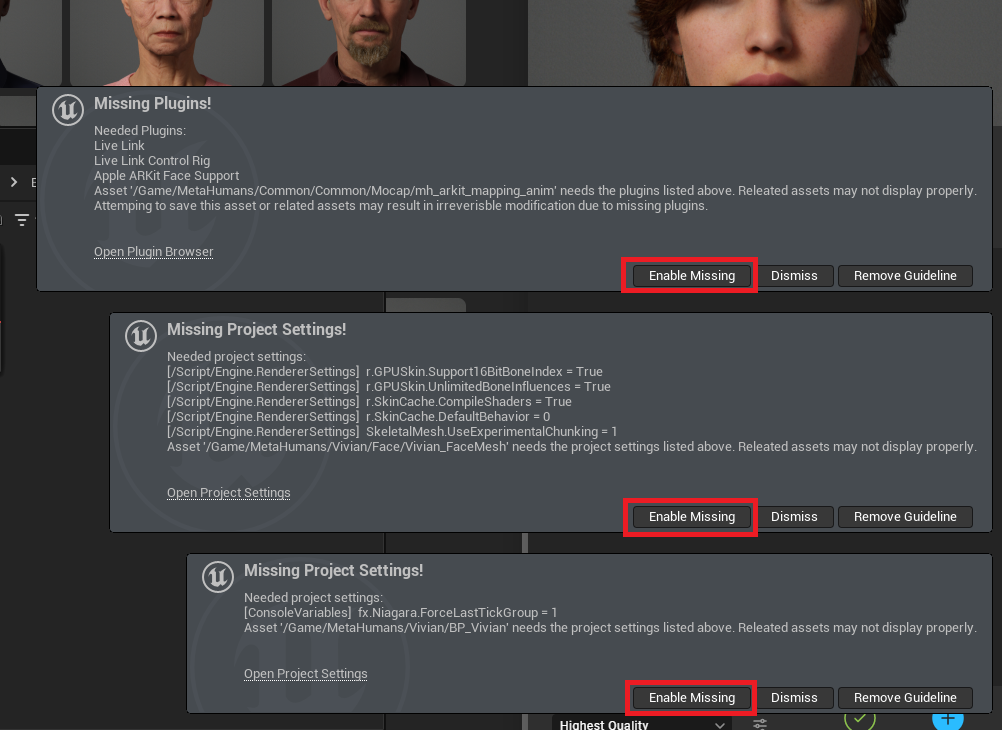
- Configuring Project Settings for MetaHumans: During the import process, Unreal Engine 5 might identify missing plugins or project settings essential for optimal MetaHuman functionality. Notifications will typically appear in the bottom-left corner of the editor. It is crucial to press ‘Enable Missing’ when prompted. This action allows the editor to automatically activate required plugins (such as the MetaHumans plugin itself) and adjust project settings to properly render and animate MetaHumans. These configurations are vital for ensuring correct shader compilation, hair rendering, and animation system integration.
- Editor Restart for Configuration Application: After enabling the missing settings and plugins, Unreal Engine will often require a restart for these changes to take effect. A ‘Restart Now’ button will appear, which must be clicked. The editor will close and then relaunch, applying all the newly configured settings, ensuring that the project environment is fully optimized for MetaHuman assets.
- Locating the MetaHuman Blueprint: Post-restart, the imported MetaHuman assets can be found within the project’s Content Drawer. By navigating to the ‘MetaHumans’ folder, and then into the subfolder corresponding to the name of the chosen MetaHuman, creators will find the core asset: a blueprint file typically prefixed with ‘BP‘. This blueprint encapsulates the entire MetaHuman character, including its various meshes (body, face, hair, clothing), skeletal rigging, materials, and animation controls. This ‘BP‘ asset is the ready-to-use character that can be dragged directly into the scene or integrated into gameplay logic.
The Technological Foundation: Behind MetaHumans’ Realism
The stunning realism of MetaHumans is not merely a visual trick but the culmination of years of research and development in advanced computer graphics.
Photogrammetry and AI-Driven Pipelines: MetaHumans are initially created using sophisticated photogrammetry techniques, capturing detailed scans of real human faces and bodies. This raw data is then processed through an AI-powered pipeline that intelligently reconstructs geometry, textures, and normal maps, ensuring an unparalleled level of detail and accuracy. This hybrid approach combines the fidelity of real-world captures with the flexibility of digital manipulation.
Advanced Rigging and Animation Systems: Each MetaHuman comes with an incredibly robust and modular rigging system. This includes a full body rig, an advanced facial rig with over 50 blend shapes for nuanced expressions, and a sophisticated hair system. The rigs are designed to be compatible with standard animation techniques, including motion capture data (like that from Epic’s Live Link Face app), keyframe animation, and procedural animation, giving creators extensive control over performance.

Physically Based Materials and Shading: The materials used for MetaHumans are built upon a physically based rendering (PBR) pipeline, simulating how light interacts with various surfaces in the real world. This is particularly evident in the highly detailed skin shaders, which account for subsurface scattering, reflections, and intricate pore details. The strand-based hair system utilizes complex shaders to simulate individual hair fibers, reacting realistically to light and shadow, further enhancing the photorealism.
Scalability and Performance Optimization: Despite their high fidelity, MetaHumans are engineered for scalability. They come with various Levels of Detail (LODs) that automatically switch based on distance from the camera, optimizing performance for different hardware and use cases. This ensures that while a MetaHuman can look stunningly realistic up close, it also performs efficiently within a broader scene.
Chronology and Development Milestones
The journey to MetaHumans has been a multi-year endeavor, deeply intertwined with the evolution of Unreal Engine itself.

- Early Research (Pre-2020): Epic Games had been exploring advanced digital human technologies for years, with early demonstrations hinting at their ambitions for realistic character creation.
- Unreal Engine 5 Reveal (May 2020): MetaHumans were officially unveiled during the Unreal Engine 5 reveal, showcased alongside Nanite and Lumen. This initial demonstration highlighted the potential for real-time photorealistic characters.
- MetaHuman Creator Early Access (February 2021): Epic Games launched the MetaHuman Creator in early access, allowing a select group of creators to experiment with designing their own custom digital humans in a cloud-based application. This marked a significant step beyond merely providing a library, empowering users to generate unique characters.
- Public Access and Library Expansion (April 2021 onwards): The MetaHuman Creator was made publicly available, and the pre-configured MetaHuman library within Quixel Bridge expanded, offering a diverse range of ready-to-use characters.
- Ongoing Updates and Integrations: Since their public launch, MetaHumans have received continuous updates, improving fidelity, adding new customization options, and enhancing integration with other Unreal Engine features and external tools.
Industry Impact and Broader Implications
The introduction of MetaHumans has sent ripples across multiple industries, promising to democratize high-end content creation and redefine character pipelines.
Democratization of Content Creation: Perhaps the most significant impact is the lowering of the barrier to entry for creating photorealistic characters. Historically, developing a high-quality digital human required specialized skills, expensive software, and a significant investment of time and resources – often months for a single character. MetaHumans dramatically reduce this overhead, making production-ready characters accessible to independent developers, small studios, and even hobbyists, fostering a more diverse and innovative creative ecosystem. This democratizes visual quality, allowing even small teams to achieve a level of fidelity previously exclusive to AAA studios or major film productions.
Revolutionizing Game Development: For game developers, MetaHumans streamline the character art pipeline, allowing teams to allocate more resources to gameplay mechanics, narrative, and world-building. Faster prototyping with high-fidelity characters becomes a reality, enabling quicker iteration and higher visual standards from the outset. While performance considerations for large numbers of MetaHumans in a game remain a factor, their scalability and optimization make them viable for player characters, key NPCs, and cinematics.
Transforming Film and Virtual Production: The film industry, particularly in the burgeoning field of virtual production, stands to benefit immensely. MetaHumans can be rapidly deployed for pre-visualization, digital doubles, virtual actors, and even final pixel character work, significantly cutting down on production time and costs. The ability to integrate realistic digital characters into virtual sets in real-time, as famously seen in productions like "The Mandalorian," opens new creative avenues for filmmakers. Directors can now visualize and iterate on scenes with human characters directly within the virtual environment.
Expanding Applications in Advertising and Marketing: Brands are increasingly turning to digital characters for advertising campaigns and interactive experiences. MetaHumans provide a robust solution for creating lifelike avatars for virtual spokespeople, interactive guides, or digital brand ambassadors, offering a consistent and high-quality representation across various media.
Paving the Way for the Metaverse and Digital Identity: As the concept of the metaverse gains traction, the need for realistic and expressive digital avatars becomes paramount. MetaHumans offer a powerful foundation for personal digital identities within virtual worlds, enabling users to create and embody highly detailed representations of themselves or entirely new personas. This technology is a critical building block for future immersive digital experiences.
Challenges and Considerations: While MetaHumans offer immense advantages, they also present certain considerations. The computational overhead for running many high-fidelity MetaHumans simultaneously can be demanding, requiring careful optimization. Furthermore, while the library is diverse, achieving a truly unique artistic style or a specific character design outside the pre-configured options or the MetaHuman Creator’s scope may still require traditional character art workflows. The distinct "MetaHuman look" can also be a challenge for projects striving for highly individualized aesthetics.
Statements and Expert Perspectives
Epic Games, through its leadership, has consistently articulated a vision centered on empowering creators. Tim Sweeney, CEO of Epic Games, has frequently spoken about the importance of open ecosystems and tools that democratize access to high-end technology. The release of MetaHumans aligns perfectly with this philosophy, aiming to remove technical barriers and allow artists to focus on creative expression. The positive reception from the developer community underscores this success, with many praising the accessibility and quality, noting the significant time savings and the ability to achieve cinematic-level characters in projects that previously couldn’t afford such assets. Analysts widely view MetaHumans as a strategic move that strengthens Unreal Engine’s position not only in gaming but also across the broader media and entertainment industries, solidifying its role as a versatile content creation platform.
Future Outlook: Beyond the Library
The MetaHuman library is merely the beginning. The future of digital humans within Unreal Engine promises even greater sophistication and accessibility.

The Power of the MetaHuman Creator: While the library provides ready-to-use characters, the MetaHuman Creator tool, a cloud-streamed application, allows users to craft custom digital humans from scratch. This tool offers extensive customization options for facial features, body types, hair, clothing, and skin tones, providing unparalleled flexibility to design unique characters that precisely fit a project’s vision. The ability to blend different MetaHumans and sculpt features offers limitless possibilities, and these custom creations can then be exported directly into Unreal Engine.
Integration with Advanced AI and Machine Learning: The integration of AI and machine learning holds immense potential for the future of MetaHumans. This could include AI-driven animation systems that generate realistic movements and expressions from minimal input, advanced dialogue systems that automatically synchronize lip-sync, or even intelligent procedural generation of character variations.
Evolving Ecosystem and Broader Tool Integration: MetaHumans will undoubtedly continue to evolve alongside Unreal Engine’s core technologies. Enhanced integration with other Epic products, third-party animation software, and motion capture solutions will further solidify their position as a central component of modern content creation pipelines. The ongoing development aims to push the boundaries of real-time digital human performance, ensuring MetaHumans remain at the forefront of virtual character technology.
In conclusion, the MetaHuman library within Unreal Engine 5 represents a monumental leap forward in digital character creation. By making high-fidelity, production-ready digital humans freely available and easily integratable, Epic Games has not only democratized access to cutting-edge technology but also set a new standard for realism and efficiency in content development across industries. The journey from initial concept to a fully functional MetaHuman blueprint in a UE5 project is now remarkably streamlined, empowering creators to focus on storytelling and innovation rather than the arduous technicalities of character asset production. As the technology continues to evolve, MetaHumans are poised to play an increasingly critical role in shaping the future of interactive entertainment, virtual production, and the burgeoning metaverse.
About the Author