The acquisition of Twitter by Elon Musk in October 2022 marked a pivotal moment in the history of social media, initiating a profound transformation of one of the world’s most influential digital public squares. The dramatic changes under Musk’s leadership, including rebranding the platform to ‘X,’ have ignited widespread debate about the future of online discourse, content moderation, and the inherent risks of centralized control, prompting many users and industry observers to advocate strongly for decentralized alternatives.
The Genesis of a Shift: Twitter’s Evolution and Musk’s Takeover

From its inception in 2006, Twitter rapidly evolved into a global phenomenon, celebrated for its real-time information dissemination, direct communication capabilities, and role in political and social movements worldwide. It became a unique blend of personal diary, news wire, and public forum, fostering connections and facilitating dialogue on an unprecedented scale. However, its centralized nature also presented inherent challenges, particularly concerning content moderation, the spread of misinformation, and the immense power vested in a single corporate entity.
The lead-up to Musk’s takeover was characterized by months of high-stakes drama, beginning with his significant stake acquisition in early 2022, followed by an offer to buy the company outright for $44 billion. Musk articulated a vision of transforming Twitter into a bastion of "free speech absolutism" and an "everything app" – ideas that resonated with some but raised alarms among others concerned about potential implications for platform safety, hate speech, and moderation policies. The acquisition was finalized on October 27, 2022, ushering in an era of rapid, often controversial, change.
A Timeline of Transformation: From Twitter to X

The period following Musk’s acquisition has been marked by a series of swift and often contentious decisions that have reshaped the platform’s identity and functionality:
- October 2022: Elon Musk completes the acquisition of Twitter. He immediately dissolves the board of directors, fires key executives, and initiates widespread layoffs across various departments, including critical content moderation teams.
- November 2022: The controversial "Twitter Blue" subscription service is revamped, offering verification checkmarks to any paying subscriber, leading to a surge in impersonation accounts and a temporary suspension of the service. Musk also reinstates several previously banned accounts, including that of former U.S. President Donald Trump, citing principles of free speech.
- December 2022: The platform introduces character limit increases for paying subscribers and begins efforts to make internal algorithms open source. Concerns about a rise in hate speech and misinformation intensify, with reports from organizations like the Anti-Defamation League (ADL) and academic researchers documenting increases in harmful content.
- Early 2023: Twitter announces plans to charge for API access, significantly impacting third-party applications and academic research relying on platform data. Further layoffs occur, reducing the workforce to a fraction of its pre-acquisition size.
- July 2023: Musk announces the complete rebranding of Twitter to ‘X,’ eliminating the iconic bird logo and signifying a broader strategic shift towards an "everything app" encompassing payments, messaging, and more. This move is met with mixed reactions, with many users expressing nostalgia for the old brand and skepticism about the new direction.
- Late 2023 – Early 2024: X grapples with declining advertising revenue, a consequence of advertiser flight driven by concerns over brand safety and content moderation policies. The platform introduces new monetization features, including ad revenue sharing for creators and further enhancements to premium subscriptions, as it seeks to diversify its income streams.
Supporting Data and Observed Impacts
The transformation has not been without significant consequences, evidenced by various metrics and reports:
- User Engagement and Retention: While X has reported some increases in daily active users at times, independent analyses suggest a decline in overall engagement from long-term power users and a substantial exodus of public figures, journalists, and advertisers. A study by Similarweb in early 2023 indicated a significant drop in web traffic and app usage compared to pre-acquisition levels.
- Advertising Revenue: Prior to Musk’s takeover, Twitter’s revenue was predominantly driven by advertising. Reports from X itself and external analysts indicate a steep decline in advertising revenue, with some estimates suggesting a drop of 50% or more. Major brands have either paused or significantly reduced their spending on the platform due to concerns about content moderation and brand safety.
- Content Moderation and Safety: Research from groups like the Center for Countering Digital Hate (CCDH) and the ADL has indicated a measurable rise in hate speech, antisemitism, and misinformation on the platform following the changes in content moderation policies and the reinstatement of previously banned accounts. This has led to increased scrutiny from regulators and civil society organizations.
- Workforce Reduction: The drastic reduction in Twitter’s workforce, from approximately 7,500 employees to an estimated 1,500-2,000, has raised concerns about the platform’s ability to maintain its technical infrastructure, develop new features, and effectively manage content at scale.
Reactions from Related Parties
The changes at X have elicited strong reactions from a diverse array of stakeholders:
- Advertisers: Many major advertisers, including pharmaceutical companies, automotive brands, and consumer goods giants, significantly reduced or ceased their spending on X. Concerns centered on brand safety, the perceived increase in toxic content, and Musk’s sometimes erratic public statements.
- Civil Society and Advocacy Groups: Organizations focused on civil rights, online safety, and combating hate speech have been vocal critics of X’s evolving content policies. Groups like the ADL and GLAAD have expressed alarm over the perceived rollback of protections against harassment and discrimination, citing specific instances of increased hate speech.
- Former Employees: Numerous former Twitter employees have publicly shared accounts of the tumultuous transition, expressing concerns about the company’s direction, the impact of mass layoffs on morale, and the technical stability of the platform.
- Journalists and Public Figures: A significant number of journalists, academics, and public figures who once relied heavily on Twitter for professional networking and news dissemination have either reduced their activity or migrated to alternative platforms, citing concerns about reliability, content quality, and the overall user experience.
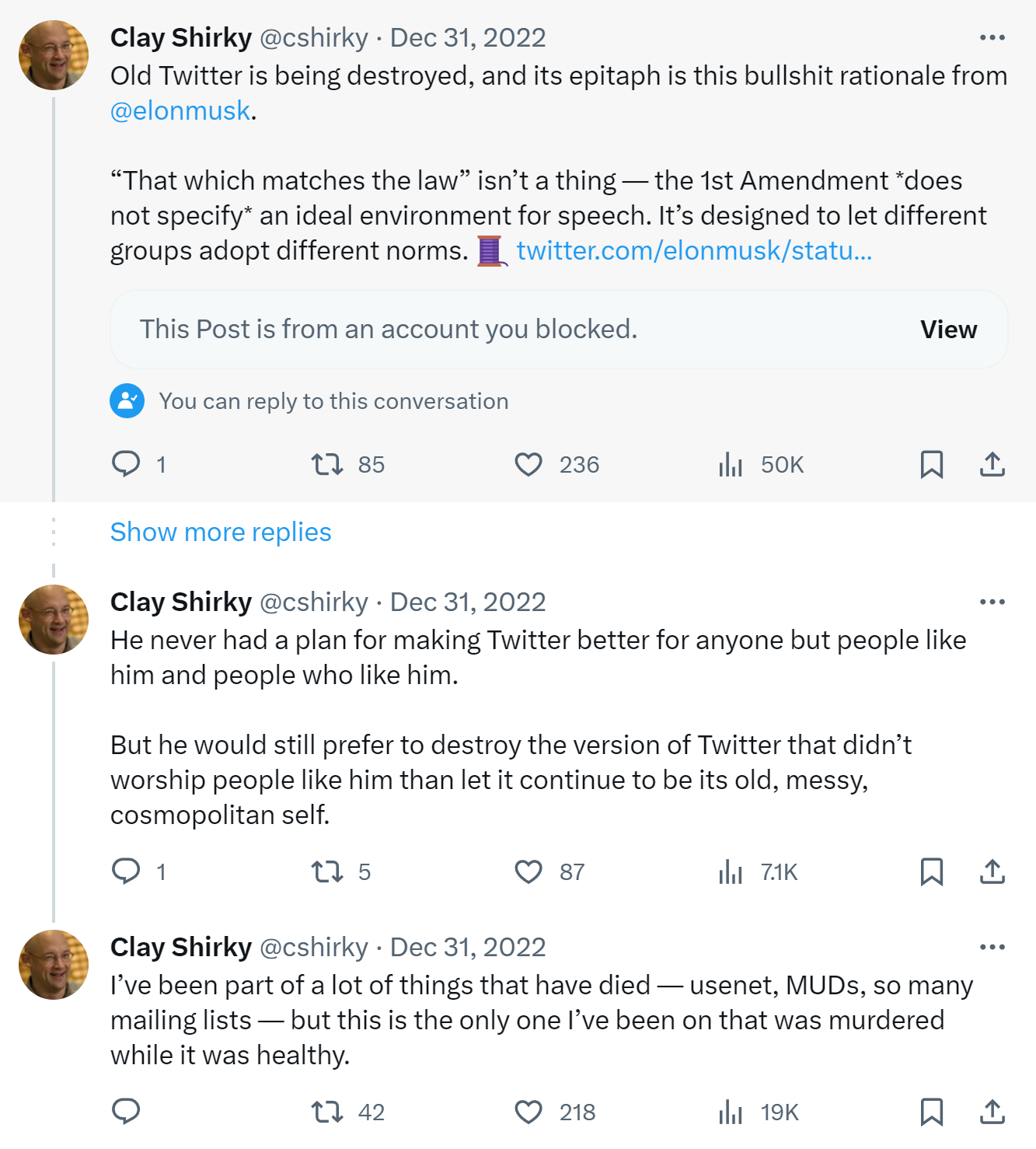
- Users: User reactions have been polarized. While some users have embraced Musk’s "free speech" stance and the new direction of X, a substantial segment has expressed deep dissatisfaction, mourning the loss of the platform they once valued and actively seeking alternatives. This sentiment is encapsulated in reflections by long-time internet observers, such as Paul Ford, who critically analyzed the inherent challenges of large-scale social platforms, suggesting that human social structures are better suited for smaller, more manageable groups than vast, centralized "town squares."
Broader Impact and Implications: The Call for Decentralization
The tumultuous period under Elon Musk’s ownership has served as a potent case study regarding the vulnerabilities of centralized social media platforms. The ability of a single individual or corporation to unilaterally alter fundamental aspects of a platform—from its name and logo to its content policies and technical infrastructure—has highlighted the precariousness of user data, digital identities, and established online communities.
This experience has significantly amplified long-standing arguments for decentralization in social media. Proponents of decentralized models contend that they offer greater resilience, censorship resistance, and user control by distributing power across a network rather than concentrating it in a single entity. Key implications include:
- Empowering Users: Decentralized platforms, often built on open-source principles, aim to empower users with greater control over their data, content, and community rules. This contrasts with traditional models where users are often seen as "digital sharecroppers," providing content and data that enrich the platform owner without true ownership or agency.
- Resilience Against Whims: The "king, dictator, tyrant, despot, autocrat" analogy used by critics highlights the fragility of platforms beholden to the singular vision of an owner. Decentralized networks, by design, are less susceptible to the sudden and dramatic shifts that can occur when control is centralized.
- Diverse Ecosystems: Rather than a single global "town square," decentralization encourages a federated approach, where numerous independent servers (or "instances") can host communities, each with its own moderation policies and culture, while still allowing for inter-community communication. This fosters a more diverse and adaptable online landscape.
- Transparency and Open Source: Many decentralized alternatives prioritize open-source code, allowing for greater transparency in how platforms operate, how data is handled, and how algorithms function. This contrasts with proprietary platforms where internal workings are often opaque.
Exploring Alternatives: The Rise of the Fediverse
In response to the changes at X, there has been a notable surge in interest and adoption of decentralized social networks, particularly those within the "Fediverse" (a portmanteau of "federation" and "universe").
- Mastodon: As a prominent example, Mastodon, an open-source, federated social network, has seen significant growth in user numbers. It allows users to join various independent servers, each managed by its own community, while still being able to follow and interact with users on other servers. This model is seen by many as a more democratic and resilient approach to online social interaction. Its popularity underscores a growing desire for platforms that prioritize community governance and user autonomy.
- Bluesky, Threads, and Others: Beyond Mastodon, other platforms have emerged or gained traction, each offering different takes on social networking. Bluesky, for instance, is another decentralized platform built on the AT Protocol, aiming for a more open and composable social web. Even Meta’s Threads, while not fully decentralized in the same way as Mastodon, has signaled intentions to integrate with the ActivityPub protocol, indicating a broader industry recognition of the federated model’s potential.
The shift towards decentralized services, while presenting challenges in terms of ease of use and initial setup compared to highly centralized platforms, is increasingly viewed as a necessary evolution for the long-term health and democratic nature of online discourse. As proponents argue, just like democracy itself, it may be messier and require more effort, but it offers a more survivable and equitable path forward for digital communities.
The ongoing transformation of Twitter into X under Elon Musk has undeniably reshaped the social media landscape. It has not only altered the trajectory of a once-dominant platform but has also galvanized a movement towards more user-centric, resilient, and transparent online environments. The debate over centralization versus decentralization, once a niche technical discussion, has now moved to the forefront of public discourse, prompting a critical re-evaluation of how we build, govern, and participate in our digital public spaces.
About the Author