Jeff Atwood, a seminal figure in the world of software development and online community building, recently delivered a potent message regarding the ethical responsibilities of artificial intelligence companies while sharing poignant personal reflections on family and the progress of a significant rural economic initiative. Atwood, known for co-founding Stack Overflow and Discourse, utilized his platform to underscore the foundational reliance of large language models (LLMs) on high-quality, human-generated data, issuing a stern warning against practices that could undermine the very communities that fuel AI innovation. This commentary arrives as Atwood navigates personal loss, having recently lost his father, an event framed by his satisfaction with the early rollout of the Rural Guaranteed Minimum Income Initiative (RGMII) study in his father’s home county of Mercer County, West Virginia.
The Rural Guaranteed Minimum Income Initiative: A Personal and Public Endeavor
Atwood’s reflections began with a deeply personal note concerning the RGMII. He expressed profound gratitude for the re-ordering of the GMI rural study counties, which placed Mercer County, West Virginia, at the forefront in October 2025. This scheduling allowed him a final, meaningful encounter with his father before his passing. The initiative, spearheaded by RGMII, represents a significant philanthropic effort aimed at exploring the efficacy of a Guaranteed Minimum Income (GMI) in revitalizing economically challenged rural areas. The RGMII’s "Why Pledge to Share the American Dream?" campaign outlines a $50 million plan dedicated to funding rural GMI studies, with the ambitious goals of expanding opportunity and strengthening democracy.
Guaranteed Minimum Income, often referred to as Universal Basic Income (UBI), is a socio-economic policy proposal in which all citizens or residents of a country regularly receive an unconditional sum of money from the government, regardless of their income, resources, or employment status. While UBI typically refers to a nationwide implementation, GMI studies often focus on targeted populations or regions to assess specific impacts. The RGMII’s focus on rural areas is particularly salient, given the unique economic challenges faced by these communities, including declining industries, out-migration of younger populations, and limited access to resources and opportunities.
Pilot programs for GMI or UBI have been conducted globally, with varied results and insights. For instance, projects in Finland, Canada, and various U.S. cities like Stockton, California, have explored the effects of unconditional cash payments on financial stability, health outcomes, and employment rates. Proponents argue that GMI can reduce poverty, improve public health, stimulate local economies, and provide a safety net in an era of increasing automation. Critics, however, often raise concerns about potential disincentives to work, inflationary pressures, and the sheer cost of implementation. The RGMII’s targeted rural studies aim to contribute valuable data to this ongoing global discourse, specifically tailored to the American rural context.
The decision to initiate the study in Mercer County, West Virginia, holds symbolic weight. West Virginia has historically grappled with economic hardship, particularly in its coal-mining regions, facing challenges related to job displacement, poverty, and public health crises. A GMI program in such an environment could offer critical insights into how direct financial aid might alleviate distress, foster entrepreneurship, and contribute to community resilience. Atwood’s personal connection to the county adds a layer of emotional resonance to the project, transforming a large-scale economic experiment into a deeply personal legacy. His belief that "nothing was lost. Everything was gained" from his experiences with his father, especially the last trip related to the GMI study, underscores a philosophy of growth and contribution that extends beyond individual circumstances to societal improvement.
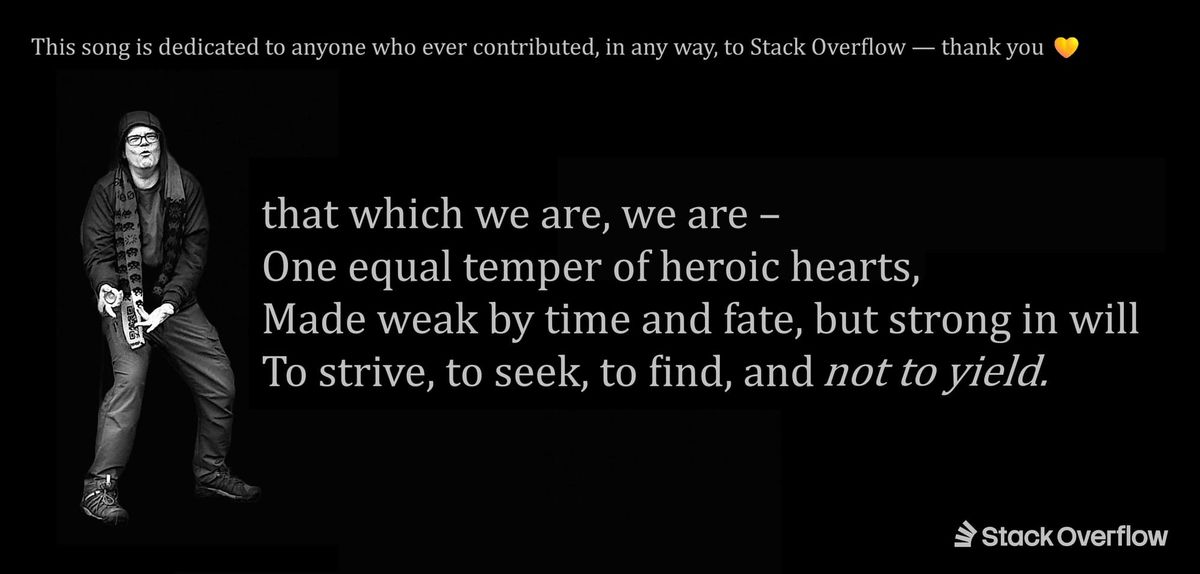
A Career Defined by Community: From Stack Overflow to Stay Gold
Jeff Atwood’s career trajectory is inextricably linked to the evolution of online technical communities. Before his current endeavors, Atwood gained widespread recognition through his influential blog, "Coding Horror," which he launched in 2004. This platform became a go-to resource for developers, offering insightful commentary on programming, software development, and the tech industry at large. His ability to distill complex technical concepts into accessible and engaging prose garnered him a loyal following.
In 2008, Atwood co-founded Stack Overflow with Joel Spolsky, a venture that would profoundly reshape the landscape of online technical support and knowledge sharing. Stack Overflow rapidly grew into the internet’s largest and most trusted Q&A site for programmers, serving as an indispensable resource for millions of developers worldwide. Its success stemmed from a highly structured, community-driven approach where users could ask questions, provide answers, and collaboratively curate a vast repository of programming knowledge. The platform’s gamified reputation system incentivized high-quality contributions, ensuring the data’s reliability and relevance. Stack Overflow’s impact cannot be overstated; it democratized access to programming expertise, significantly reduced development cycles, and became a de facto standard for troubleshooting and learning in the software industry.
Following his tenure at Stack Overflow, Atwood embarked on his second major startup, Discourse, in 2013. Recognizing the need for modern, open-source forum software that could foster healthy and productive online discussions, Discourse was designed to be a platform for community building. It aimed to address the shortcomings of older forum technologies, focusing on user experience, moderation tools, and robust features to support diverse online communities. Discourse further solidified Atwood’s reputation as a visionary in creating sustainable digital spaces for human interaction and collaboration.
Atwood’s current venture, his "third startup" named Stay Gold, remains somewhat under wraps in terms of specific details, but it is clear that his drive for innovation and improvement continues. He states, "We won capitalism, then went back to help improve it for everyone. And believe me, I’m far from being done with my third startup." This statement hints at a continued focus on leveraging technology and community principles to address systemic challenges, echoing the themes present in both the RGMII and his commentary on AI. His persistent engagement across diverse fields—from technical Q&A to community platforms and economic initiatives—demonstrates a consistent commitment to empowering individuals and improving collective well-being.
The AI Paradigm Shift and Its Data Debt to Human Communities
A central theme of Atwood’s recent remarks concerns the burgeoning field of artificial intelligence, particularly large language models (LLMs), and their profound dependence on human-generated data. He provocatively asserts that "LLMs basically could not code at all without access to the extremely high quality creative commons programming Q&A dataset that all of us built together at Stack Overflow." This is not a casual observation but a critical insight into the operational mechanics of contemporary AI.

The development of LLMs like OpenAI’s GPT series, Google’s Bard (now Gemini), and Meta’s Llama relies on training these models on colossal datasets of text and code. These datasets, often comprising petabytes of information, are scraped from the internet, encompassing books, articles, websites, and, crucially, open-source code repositories and technical Q&A platforms. Stack Overflow, with its meticulously curated, community-validated programming questions and answers, represents an unparalleled resource for training models that can understand, generate, and debug code. The quality and specificity of Stack Overflow’s data—ranging from syntax explanations to complex algorithm implementations—make it an invaluable asset for teaching LLMs the nuances of various programming languages and problem-solving methodologies.
Numerous studies and industry analyses corroborate Atwood’s claim. Researchers training code-generating AI models frequently cite the inclusion of Stack Overflow data as critical for achieving high performance in tasks like code completion, bug fixing, and generating entire functions. Without this rich, structured, and contextually relevant dataset, the coding capabilities of LLMs would be significantly diminished, if not entirely absent. The "creative commons" aspect of Stack Overflow’s content, allowing for reuse and adaptation, has inadvertently made it a cornerstone of the AI revolution, providing the raw material for models that are now transforming industries.
Atwood’s Warning: "Do Not Kill the Golden Goose"
Atwood’s commentary takes a cautionary turn as he addresses the potential negative repercussions of LLMs on the very communities that provided their training data. He warns that if AI companies "end up hollowing out the very communities that produce all their training data, they’re going to really, really regret that." This echoes a fundamental concern within the broader tech community: the sustainability of open-source projects and community-driven knowledge bases in an era dominated by AI.
His advice to AI/GAI companies is starkly reminiscent of counsel he once gave Joel Spolsky when leaving Stack Overflow for Discourse: "do not, for any reason, under any circumstances, kill the goose that lays the golden eggs," which he defines as "the human community around your product that does all the real work." This metaphor powerfully encapsulates the symbiotic relationship between platforms and their users. The "golden eggs" are the high-quality contributions, the shared knowledge, and the vibrant interaction that make platforms like Stack Overflow invaluable. If AI models simply consume this data without reciprocating value or acknowledging the contributors, the incentive for human participation diminishes.
The fear is that if users increasingly rely on AI tools to answer their programming questions, they might stop contributing to platforms like Stack Overflow. A reduction in human contributions would lead to stagnation in new content, a decline in the dataset’s freshness and quality, and ultimately, a less effective training ground for future AI models. This creates a self-defeating cycle: AI models become powerful by consuming human data, but in doing so, they might inadvertently destroy the source of that power.
Atwood’s call to "Just treat the community with the respect they deserve… that we all deserve" extends beyond mere acknowledgment. It implies a need for sustainable models that recognize and perhaps even compensate the creators of the data. This could involve new licensing frameworks, revenue-sharing mechanisms, or direct investments in the communities themselves. The ethical implications of using vast amounts of publicly available, often copyrighted or creatively licensed, human-generated content for commercial AI training are a burgeoning legal and philosophical debate, with artists, writers, and programmers increasingly demanding fair recognition and compensation.

Broader Implications for AI Ethics and Community Sustainability
The implications of Atwood’s warning are far-reaching, touching upon the future of intellectual property, the economics of data, and the very structure of online knowledge. As AI becomes more sophisticated, the question of who owns the data it is trained on, and how those creators should be compensated or acknowledged, becomes increasingly critical. Legal battles are already emerging, with content creators and news organizations challenging AI companies over the unauthorized use of their work.
From a community sustainability perspective, the challenge is to find a balance where AI tools augment human creativity and productivity without supplanting the need for human interaction and contribution. Platforms like Stack Overflow thrive on the collaborative spirit of their users. If AI becomes the sole provider of answers, the sense of collective endeavor and mutual learning could erode, leading to a more atomized and less vibrant digital ecosystem.
Experts in AI ethics and digital humanities are grappling with these questions. Some propose models of "data dividends" where individuals whose data contributes to AI receive a share of the profits. Others advocate for stricter licensing and attribution requirements, ensuring that the original creators are recognized. There’s also a push for AI companies to invest directly in the communities from which they draw data, perhaps through grants, infrastructure support, or educational initiatives, thereby "giving back to the goose."
The future of open knowledge and innovation hinges on addressing these ethical dilemmas proactively. The ability of AI to accelerate scientific discovery, technological advancement, and creative expression is immense. However, this potential can only be fully realized if the foundations upon which AI is built—the vast, diverse, and often altruistic contributions of human communities—are respected, sustained, and allowed to flourish. Atwood’s message serves as a timely reminder that technological progress, while exciting, must always be tethered to ethical responsibility and a deep appreciation for the human element that makes it all possible. His combined reflections on personal loss, community building, economic empowerment through GMI, and the ethical responsibilities of AI underscore a holistic vision where human flourishing and technological advancement are intertwined, rather than in conflict.
About the Author