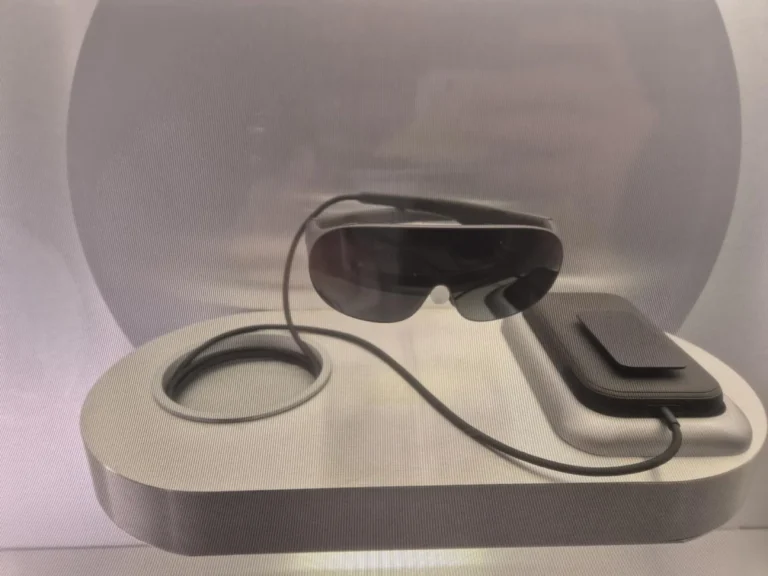
The American startup Raven Resonance has introduced its inaugural hardware product, the Raven Prism, signaling a shift in the wearable technology sector toward what the company defines as "ambient computing." Unveiled at the Augmented World Expo (AWE), the Raven Prism is designed to move beyond the traditional constraints of smart glasses by prioritizing user privacy, open-source software architecture, and hardware modularity. Unlike many contemporary wearables that function primarily as smartphone peripherals, the Raven Prism is positioned as a standalone computing platform capable of processing contextual information from the user’s environment to facilitate hands-free productivity and digital interaction.
Strategic Vision and Leadership Background
Raven Resonance enters a competitive field currently dominated by major technology conglomerates, yet it distinguishes itself through a leadership team with deep roots in the augmented reality (AR) sector. The company was founded by Tom Suarez, an innovator with over 12 years of experience in the field of spatial computing. Suarez has framed the development of the Raven Prism not as a reaction to current market trends, but as a multi-year project aimed at reclaiming personal privacy in an era of "surveillance capitalism."

The term "ambient computer" is central to the company’s branding strategy. It reflects a design philosophy where the device remains unobtrusive until needed, providing digital overlays and information that feel integrated into the physical world rather than separated from it. This vision aligns with broader industry movements toward "calm technology," where devices assist users without demanding constant, fragmented attention.
Technical Architecture and RavenOS
A significant point of technical divergence for the Raven Prism is its operating system. While the majority of smart glasses currently on the market utilize modified versions of the Android Open Source Project (AOSP), Raven Resonance has developed RavenOS, a custom operating system built on a Linux kernel. This decision serves two primary strategic purposes. First, it aligns the device with the capabilities of desktop-class computing, supporting the "ambient computer" designation. Second, it ensures a level of transparency and freedom from the corporate ecosystems typically associated with Google-maintained platforms.
The hardware is powered by an undisclosed 64-bit ARM-based chipset. While the specific model remains under wraps, Raven Resonance has confirmed that the silicon is optimized for high-performance edge computing. Most notably, the chipset is capable of running specific models from the Gemma 3 family locally on the device. Gemma 3, a suite of lightweight, open-source large language models (LLMs) developed by Google, allows the Raven Prism to provide advanced artificial intelligence (AI) features—such as real-time translation, object recognition, and contextual assistance—without the need to transmit sensitive data to external cloud servers.

Innovative Power Management and Modular Design
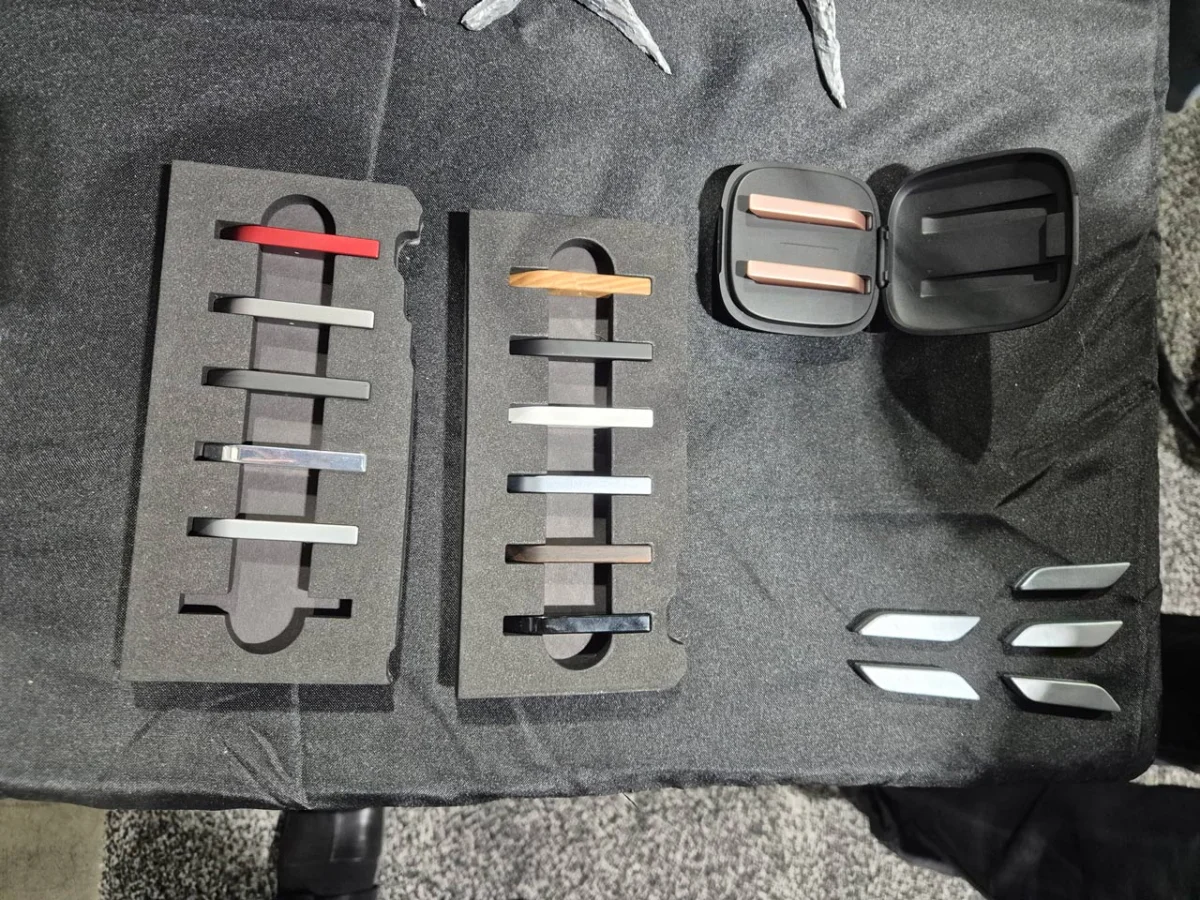
One of the most distinctive features of the Raven Prism is its proprietary "tri-battery" architecture. The glasses are equipped with two hot-swappable batteries located at the ends of the frame’s temples. This design allows users to replace a depleted battery while the device is still in operation, provided at least one battery remains connected. To facilitate the simultaneous replacement of both main batteries, a third, smaller internal battery is integrated into the frame, providing enough temporary power to prevent a system shutdown.
This power management system is intended to support full-day utility, a common pain point for the smart glasses category. By offering batteries in various colors and finishes, the company also addresses the aesthetic demands of consumer wearables, allowing for a degree of personalization that is often missing in enterprise-focused hardware.
The device also features a hardware development kit (HDK) interface. When a battery is removed, the connector pins become accessible, allowing third-party manufacturers or enterprise clients to attach custom hardware modules. This modular approach could potentially expand the device’s functionality to include specialized sensors, medical monitoring equipment, or specialized communication tools, fostering an open ecosystem for developers.

Display Specifications and User Interaction
The Raven Prism utilizes an LCoS (Liquid Crystal on Silicon) display combined with a diffractive waveguide. The display is monocular and offers a 30-degree field of view (FOV). Raven Resonance executives have compared this viewing experience to looking at a 13-inch MacBook Air at arm’s length. While a 30-degree FOV is narrower than the immersive displays found in mixed reality (MR) headsets like the Meta Quest 3 or Apple Vision Pro, the company argues that a monocular, compact display is a calculated trade-off. This configuration reduces the device’s overall weight, lowers manufacturing costs, and extends battery life while maintaining the "style" of traditional eyewear.
Interaction with the Raven Prism is primarily handled through a combination of eye tracking and voice commands. The inclusion of eye tracking at this form factor is a significant technical achievement, potentially allowing for "gaze-and-commit" interactions that leave the user’s hands entirely free. This hands-free capability is particularly relevant for industrial and medical applications where users may be operating machinery or performing procedures while requiring digital information.
Privacy as a Core Product Feature
Privacy is not merely a secondary consideration for Raven Resonance; it is the cornerstone of the Raven Prism’s value proposition. The company has implemented several layers of protection to ensure that user and bystander data remains secure:

- Local Processing: By utilizing a powerful ARM chipset and local AI models, the device performs the vast majority of its computations on-board, minimizing the "data trail" left by cloud-dependent devices.
- Encryption: All data stored on the device is subject to high-level encryption standards.
- Physical Camera Security: In addition to a standard privacy LED that illuminates when the camera is active, the Raven Prism includes a magnetic camera cover. This allows users to physically block the lens, providing a visible and foolproof signal to those around them that they are not being recorded. The cover can be magnetically stored on the side of the frame when not in use.
Market Context and Industry Implications
The announcement of the Raven Prism comes at a time when the "AI glasses" market is seeing renewed interest, following the success of the Meta Ray-Ban collaboration. However, Raven Resonance is targeting a different demographic: users who are wary of the data collection practices of major tech firms and developers who seek a truly open platform.
Industry analysts note that the success of the Raven Prism will likely depend on its price point and the robustness of its developer ecosystem. The company has already released a Python-based software development kit (SDK) on GitHub, accompanied by a device emulator. This allows developers to begin building "Raven Apps" before the physical hardware is widely available.
The Raven Prism is scheduled for a commercial launch before the end of 2024. While the final retail price has yet to be announced, the device’s unique combination of Linux-based architecture, local AI capabilities, and rigorous privacy standards has already garnered significant attention from the XR (Extended Reality) community. As the industry moves toward a post-smartphone era, Raven Resonance is betting that the future of computing will not just be wearable, but also open and private.
About the Author