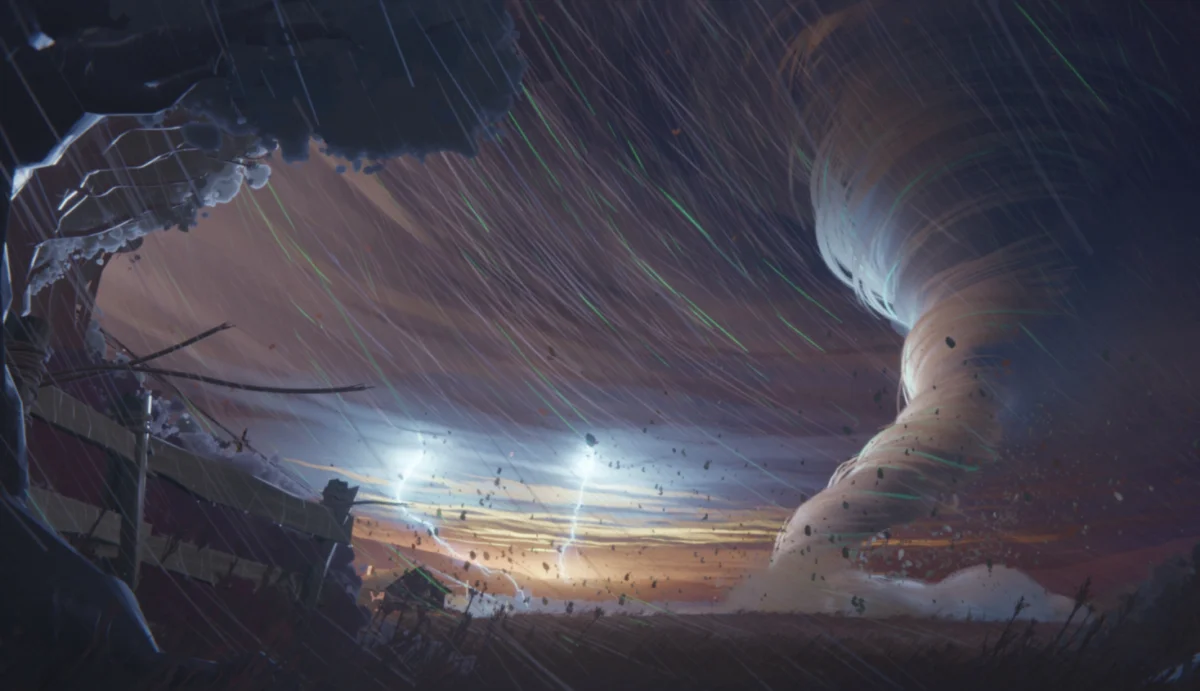
The creation of "Stormy Scene Experiment," a short film project by artist Sozap, offers a compelling case study in the iterative and often serendipitous nature of digital art production. While initially conceived with a singular focus on a hurricane, Sozap’s creative journey, as detailed in a recent behind-the-scenes look, reveals a process marked by exploration, unexpected detours, and a deliberate embrace of learning through error. This exploration delves into the various stages of production, the technical challenges encountered, and the broader implications of such independent artistic endeavors within the digital creative landscape.
The Genesis of "Stormy Scene Experiment"
Sozap’s initial vision for "Stormy Scene Experiment" was to capture the raw power and dynamic chaos of a hurricane. However, the artist candidly admits that the project’s scope and thematic elements expanded significantly beyond this original premise. "The original idea was to focus on the hurricane, but it turns out I side tracked a lot on many other aspects," Sozap explained. This deviation from the initial plan is not presented as a failure, but rather as an integral part of the learning process. Sozap further elaborated on this pedagogical approach to creation: "Also since we learn a lot from mistakes I made sure I did a bunch of them during the project so I was sure to fulfill my goal." This sentiment underscores a proactive strategy of embracing challenges and viewing them as opportunities for skill development and artistic growth, a philosophy particularly relevant in the rapidly evolving fields of 3D animation and visual effects.
The short film itself, embedded within the project’s documentation, presents a visually immersive experience. While specific narrative details are not provided in the initial brief, the accompanying image, a wide landscape shot featuring dramatic cloud formations and a turbulent atmosphere, suggests a focus on environmental spectacle. The Vimeo embed of the short film allows viewers to witness the culmination of Sozap’s efforts, providing a tangible output of the experimental process. The film’s runtime, though not explicitly stated, is implied to be concise, characteristic of many short film experiments aimed at testing specific techniques or ideas.
A Chronology of Creative Exploration
While a precise, day-by-day chronology of "Stormy Scene Experiment" is not publicly available, the artist’s statement allows for a reconstruction of the project’s developmental arc.
Phase 1: Conceptualization and Initial Focus (The Hurricane)
The project likely began with Sozap defining the core concept: the depiction of a hurricane. This phase would have involved research into hurricane mechanics, visual characteristics, and potential artistic interpretations. This could have included studying meteorological data, photographic references, and existing visual representations of extreme weather.
Phase 2: Diversification and Unexpected Paths
As Sozap notes, the project "side tracked a lot on many other aspects." This suggests a period of exploration where the artist began experimenting with various visual elements, perhaps inspired by the initial hurricane concept but branching out into related or even unrelated areas. This might have involved:
- Atmospheric Effects: Beyond the storm itself, Sozap may have explored different types of atmospheric phenomena, cloud simulations, or lighting conditions.
- Environmental Design: The landscape surrounding the hurricane could have become a focus, leading to the development of terrain, foliage, or other environmental assets.
- Technical Challenges: The pursuit of specific visual effects, such as realistic water simulation or dynamic lighting, could have led to the adoption of new software features or workflows, thus influencing the project’s direction.
- Narrative or Thematic Detours: While not explicitly a narrative film, the "other aspects" could have introduced subtle thematic elements or visual storytelling opportunities that Sozap chose to pursue.
Phase 3: Embracing Mistakes as Learning Tools
Sozap’s deliberate strategy of "making a bunch of them [mistakes] during the project" indicates a structured approach to learning. This phase would have involved:
- Prototyping and Testing: Implementing various techniques, even if they were known to be potentially flawed, to understand their limitations and potential.
- Iterative Refinement: Identifying errors or suboptimal results and then working to correct them, thereby deepening the understanding of the tools and techniques.
- Documentation of Learnings: Although not detailed in the provided text, it is common for artists who document their process to keep notes on what worked, what didn’t, and why. This knowledge is crucial for future projects.
Phase 4: Finalization and Presentation
The culmination of the project involves the rendering and editing of the short film, followed by its presentation to an audience, as seen on platforms like Vimeo. This phase would also include the creation of accompanying documentation, such as the behind-the-scenes commentary provided by Sozap.

Technical Aspects and Creative Tools
While the specific software and techniques used by Sozap are not explicitly detailed, the nature of the project – a visually complex animated short – strongly suggests the use of industry-standard 3D animation software. Given the source of the article, Blender is a highly probable primary tool. Blender is a powerful, open-source 3D creation suite that supports the entire 3D pipeline, including modeling, rigging, animation, simulation, rendering, compositing, and motion tracking.
Creating a realistic hurricane simulation and its surrounding environment would typically involve a combination of techniques:
- Volumetric Simulations: For the clouds and atmospheric effects, advanced volumetric rendering and simulation techniques would be essential. This allows for the creation of realistic, dense, and dynamic cloud formations that interact with light.
- Particle Systems: These would likely be used for elements such as rain, spray, and debris, adding to the chaotic and intense nature of the storm.
- Fluid Simulations: If water bodies are depicted, especially during or after the storm, realistic fluid simulations would be necessary to portray waves, splashes, and potential flooding.
- Procedural Texturing and Shading: To achieve realistic surfaces for the environment, clouds, and any other rendered elements, procedural texturing and advanced shading techniques would be employed. This allows for complex material properties to be generated and manipulated algorithmically.
- Lighting and Rendering: The dramatic interplay of light and shadow, particularly during a storm, is crucial for visual impact. Sophisticated lighting setups and high-quality rendering engines (such as Cycles or Eevee within Blender) would be vital.
The artist’s explicit mention of learning from mistakes is particularly relevant in the context of these complex technical workflows. Each of these simulation and rendering processes can be resource-intensive and prone to producing unexpected or undesirable results if not carefully managed. The iterative process of trial and error is fundamental to mastering these tools.
The Significance of Independent Artistic Endeavors
"Stormy Scene Experiment" represents a broader trend in the digital art world: the rise of independent creators leveraging powerful software to produce high-quality visual content. Platforms like BlenderNation and Vimeo have become vital hubs for showcasing such work, fostering a community of artists and enthusiasts.
Supporting Data: The independent animation sector has seen significant growth. While precise figures for short experimental films are difficult to isolate, the broader animation industry is a multi-billion dollar global market. The accessibility of sophisticated 3D software like Blender has democratized content creation, enabling individuals to compete with larger studios in terms of visual fidelity, if not necessarily in scale of production or marketing reach. The growing number of online tutorials, forums, and communities dedicated to these tools further supports this accessibility. For instance, Blender has seen a substantial increase in its user base over the past decade, with millions of active users worldwide, a testament to its capabilities and open-source nature.
Background Context: The digital art and animation landscape is characterized by continuous innovation. Artists are constantly pushing the boundaries of what is possible with available technology. Projects like "Stormy Scene Experiment" contribute to this innovation by exploring new techniques, workflows, and aesthetic approaches. They serve as valuable case studies for other artists, demonstrating practical applications of software features and creative problem-solving.
Broader Impact and Implications
The approach taken by Sozap in "Stormy Scene Experiment" has several implications for the field of digital art and animation:
- Democratization of Learning: The explicit acknowledgment of learning through mistakes highlights a valuable pedagogical model. It encourages aspiring artists to embrace experimentation and view challenges as integral to the creative process, rather than insurmountable obstacles. This contrasts with more traditional, often more rigid, educational structures.
- Value of Iteration and Exploration: The project underscores the importance of not being rigidly tied to an initial concept. The willingness to deviate and explore "other aspects" can lead to richer, more nuanced, and ultimately more interesting artistic outcomes. This iterative and exploratory approach is crucial for innovation.
- Community Knowledge Sharing: By sharing the process, even in a brief commentary, Sozap contributes to the collective knowledge base of the artistic community. This type of sharing, often facilitated by platforms like BlenderNation, is vital for the advancement of digital art techniques.
- Potential for Future Development: The skills and insights gained from "Stormy Scene Experiment" could inform future projects by Sozap, potentially leading to more ambitious and polished works. This project, therefore, can be seen as a foundational step in a longer creative trajectory.
While "Stormy Scene Experiment" may have originated as a personal exploration, its underlying principles and the artist’s candid reflection on the creative journey offer valuable lessons for anyone involved in digital content creation. The project serves as a reminder that the most compelling artistic achievements often arise not from flawless execution, but from a persistent engagement with the creative process, an openness to discovery, and a profound willingness to learn from every step, intended or otherwise. The success of such independent projects reinforces the dynamic and ever-evolving nature of digital artistry.
About the Author