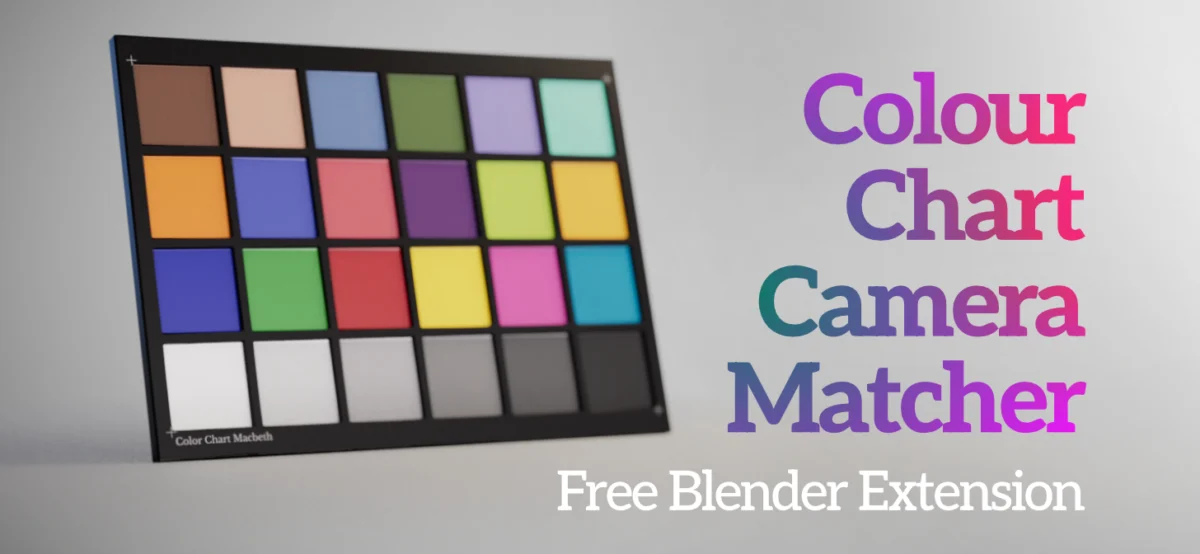
Blender, a powerhouse in the realm of open-source 3D creation, has long been lauded for its comprehensive toolset that caters to a wide array of artistic and technical needs within the visual effects (VFX) industry. From sophisticated modeling and animation capabilities to robust rendering engines, the software has continuously evolved to empower artists. However, a persistent challenge for users integrating live-action footage with 3D elements has been the intricate process of plate preparation and, crucially, accurate color matching. This is precisely the void that the newly released free extension, CCC Matcher, aims to fill, promising a streamlined and efficient workflow directly within the Blender environment.
Developed with the practical needs of VFX artists in mind, CCC Matcher addresses a critical bottleneck in post-production. The integration of computer-generated imagery (CGI) into live-action plates requires meticulous attention to detail, especially concerning color and lighting consistency. Discrepancies in these areas can immediately break the illusion, rendering otherwise impressive visual effects jarring and unconvincing to the viewer. Historically, achieving this level of fidelity has often necessitated exporting elements to specialized compositing software or relying on complex, multi-step manual adjustments within Blender, consuming valuable time and resources.
The core functionality of CCC Matcher, as articulated by its proponents, lies in its ability to intelligently sample color information from reference charts within a scene. This sampled data is then used to match the color and lighting characteristics of High Dynamic Range (HDR) environment maps and the live-action camera plate. The extension’s design emphasizes an "all-in-one" approach, allowing artists to perform these crucial color matching tasks without ever having to leave the familiar confines of the Blender interface. This localized workflow is a significant advantage, reducing the friction often associated with transferring data between different software packages and minimizing potential errors introduced during the export/import process.
The Genesis of CCC Matcher: Addressing a Long-Standing Need
The development of CCC Matcher is not an isolated event but rather a response to a recurring theme within the Blender VFX community. For years, forum discussions and feature requests have highlighted the desire for more integrated and intuitive tools for color correction and matching. While Blender’s node-based compositing system offers immense power, its initial setup and the precise replication of real-world lighting conditions have remained areas where dedicated add-ons and external solutions have often been preferred.
Paul Schlichter, a key figure involved in the extension’s development and promotion, articulated the motivation behind CCC Matcher: "Blender has a lot to offer for VFX work – but falls a bit short when it comes to plate preparation and colour matching. This free extension is intended to fill that gap." This statement underscores a pragmatic approach to enhancing Blender’s capabilities, focusing on practical utility rather than reinventing existing core functionalities.
The underlying technology of CCC Matcher likely leverages advanced image analysis algorithms. By identifying key color points on a color checker chart (such as those produced by X-Rite or Datacolor), the software can derive a color profile that represents the lighting and color balance of the filmed scene. This profile is then applied to the 3D environment, effectively "teaching" the virtual lights and shaders to mimic the real-world illumination. Similarly, it allows for the adjustment of rendered CGI elements to precisely match the color temperature, saturation, and luminance values of the live-action footage.
Technical Capabilities and Workflow Integration
The demonstration video accompanying the release of CCC Matcher provides a clear visual overview of its operational flow. The process appears to involve several key steps:
- Color Checker Sampling: The user first identifies and samples data points from a color checker chart present in the live-action plate. This chart acts as a ground truth for the scene’s color calibration.
- HDRI and Camera Plate Matching: CCC Matcher then analyzes the sampled data and uses it to adjust the characteristics of the HDR environment map, which dictates the lighting in the 3D scene. Simultaneously, it can also be used to adjust the color properties of the camera plate itself, ensuring a cohesive base for compositing.
- Direct Application: The crucial aspect of the extension is its ability to apply these color transformations directly within Blender. This means that the adjustments made by CCC Matcher are immediately visible in the 3D viewport and can be directly incorporated into the final render or composited output without requiring manual intervention or re-exporting.
The benefit of such an integrated approach is manifold. For individual artists and small studios, it significantly reduces the need for expensive specialized software licenses and streamlines production pipelines, allowing for faster iteration and quicker project turnaround. For larger productions, it can help standardize workflows and ensure consistency across different departments and artists.
Potential Impact on the VFX Industry
The introduction of a free, high-quality tool like CCC Matcher has several potential implications for the broader VFX landscape.
- Democratization of Advanced VFX Techniques: By making sophisticated color matching accessible within a free and open-source platform, CCC Matcher lowers the barrier to entry for aspiring VFX artists and independent filmmakers. This can foster greater creativity and innovation by enabling a wider range of individuals to produce professional-quality visual effects.
- Increased Adoption of Blender for Full Pipeline VFX: As Blender continues to mature, tools like CCC Matcher enhance its viability as a complete solution for VFX production. This could lead to a further shift in industry adoption, with more studios integrating Blender into their pipelines for tasks beyond just modeling and rendering.
- Time and Cost Savings: The ability to perform color matching within Blender directly translates to significant time and cost savings. Reduced software overhead, fewer render farm requirements for test renders between software, and a more efficient artist workflow all contribute to a more economically viable production process.
- Enhanced Realism in CGI Integration: Ultimately, the primary benefit is the potential for more seamless and believable integration of CGI into live-action footage. When colors and lighting are accurately matched, the digital elements feel like they truly belong in the scene, enhancing the overall quality and immersion of the final visual product.
Expert Reactions and Community Engagement
While specific named reactions from prominent industry figures were not immediately available at the time of this report, the general sentiment within the Blender community has been overwhelmingly positive. Discussions on platforms like Reddit’s r/blender and the Blender Artists forum have indicated significant interest.
One recurring theme in these early discussions is the appreciation for the extension’s focus on a specific, yet critical, problem. Many users have expressed relief at finding a dedicated solution that aims to simplify a notoriously complex aspect of VFX work. The fact that it is free further amplifies its appeal, making it an accessible tool for hobbyists and professionals alike.
"This is exactly what I’ve been waiting for," commented one user on a popular Blender news aggregator. "I’ve spent hours trying to get my renders to match my plates, and often ended up exporting to Nuke or After Effects. If this works as advertised, it’s a game-changer."
Another user highlighted the potential for educational purposes: "Being able to teach and learn color matching directly within Blender, without needing to jump between multiple complex programs, will be incredibly valuable for students and newcomers to VFX."
The Future of Color Matching in 3D Workflows
The success of CCC Matcher could pave the way for further development in integrated VFX tools within Blender. As more artists leverage its capabilities, feedback will undoubtedly drive future iterations, potentially expanding its functionality to include more advanced grading features or even AI-assisted matching algorithms.
The trend towards all-in-one solutions in creative software is undeniable. Users increasingly prefer environments where they can accomplish a broad spectrum of tasks without constant context switching. CCC Matcher aligns perfectly with this trend, reinforcing Blender’s position as a versatile and increasingly indispensable tool for visual effects professionals.
The extension’s developers have indicated that this is just the beginning, with plans to continue refining the tool based on user feedback and to explore additional features that can further enhance the VFX pipeline within Blender. This commitment to ongoing development suggests that CCC Matcher is poised to become a staple in the toolkit of many 3D artists working with live-action integration, solidifying Blender’s role in the demanding world of visual effects. The extension’s release marks a significant step forward, offering a practical and powerful solution to a long-standing challenge and demonstrating the vibrant, problem-solving spirit of the Blender community.
About the Author