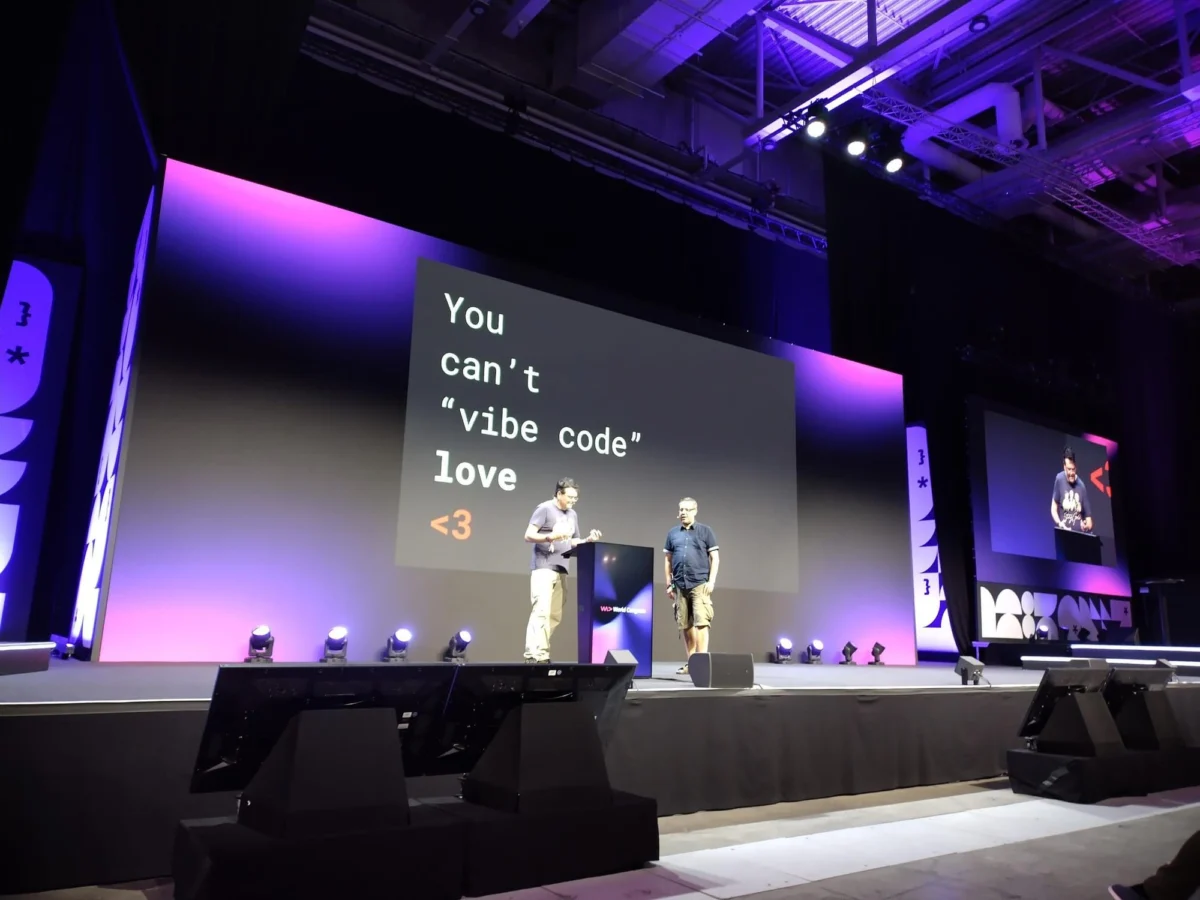
BERLIN – A powerful dialogue on the enduring value of human collaboration in the digital age, particularly amidst the rise of artificial intelligence, unfolded at the WeAreDevelopers World Congress in Berlin. On Friday, July 10th, at the CityCube, Stack Overflow co-founder Jeff Atwood and early community hire Ben Dumke-von der Ehe delivered a joint presentation titled, "None of Us Is As Dumb As All of Us: Community And Knowledge Go Hand In Hand," exploring the symbiotic relationship between community-driven knowledge and technological advancement. The session underscored the profound impact of collective effort in building the programming knowledge commons and raised critical questions about its future in an era increasingly dominated by Large Language Models (LLMs).
The Genesis of a Collaborative Insight
The presentation marked a rare public speaking engagement for Jeff Atwood, who selectively accepts such invitations, especially international ones. The unique circumstances surrounding this event – the timing, location, and the specific request for Ben Dumke-von der Ehe to co-present – were pivotal. Atwood emphasized that his agreement was contingent on Dumke-von der Ehe’s participation, recognizing their shared, yet distinct, perspectives on community and knowledge. Ben Dumke-von der Ehe, an early and influential community member at Stack Overflow, brought a wealth of experience from his time as one of the platform’s inaugural "Valued Associates," a title bestowed upon key community contributors. Living in Berlin, his involvement grounded the discussion in both the historical context of Stack Overflow’s growth and the contemporary European tech landscape.
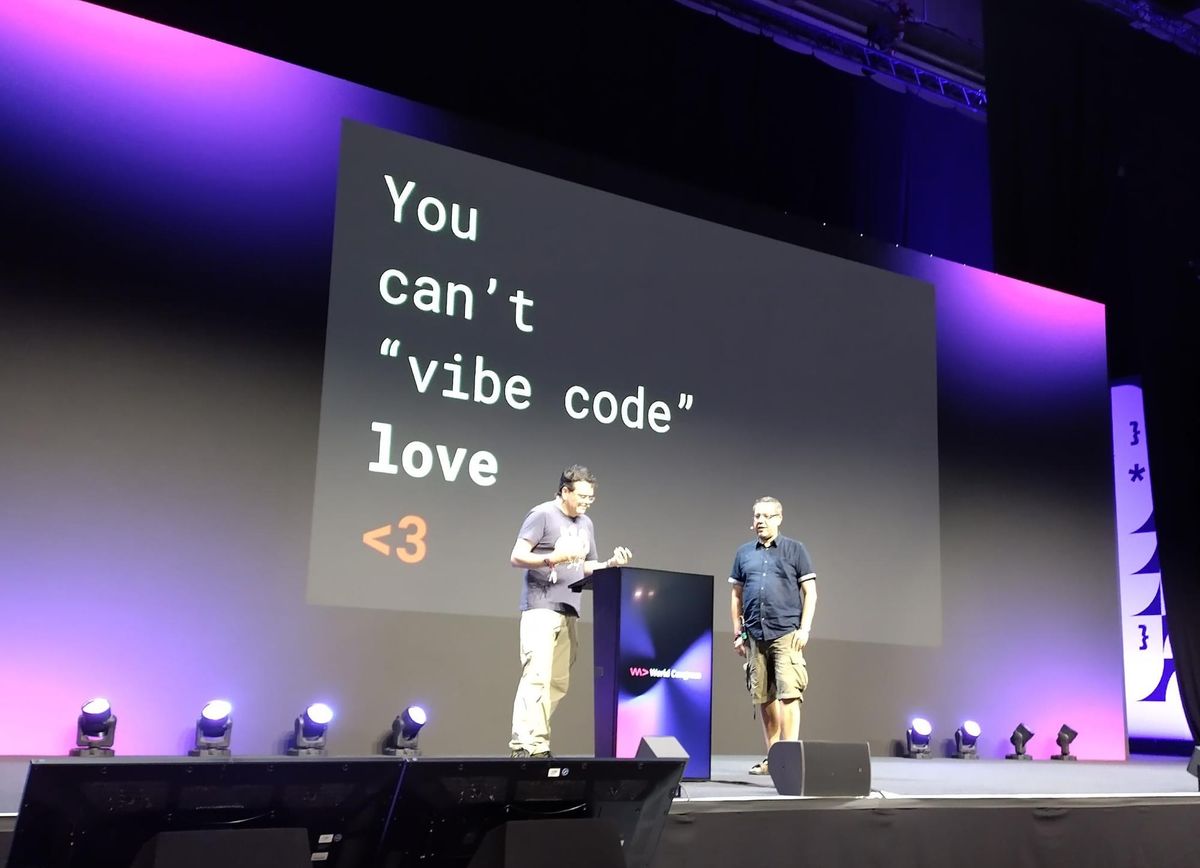
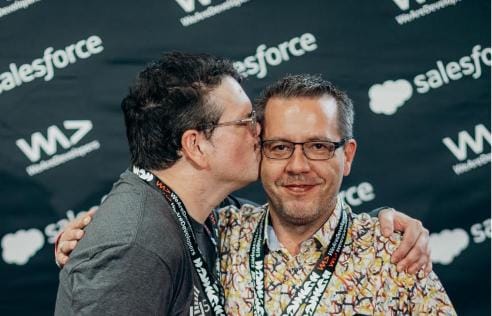
The heart of their collaborative narrative, as revealed during the presentation, revolved around a deeply personal connection forged through their work on Stack Overflow. Atwood candidly shared on stage, "The long version of this story is that we changed each others’ lives. The short version is: unicorns." This evocative statement hinted at a remarkable journey of mutual influence and profound impact, illustrating how professional collaboration can transcend mere work to become a transformative personal experience. Dumke-von der Ehe’s own recounting of his Stack Overflow journey, described by Atwood as "remarkable," further amplified this sentiment. His unique professional trajectory, including leaving the company, returning, and then departing again, speaks volumes about the dynamic and often deeply personal relationship individuals develop with the platforms they help create and sustain. Atwood’s heartfelt declaration, "I’m mostly doing this presentation because I owe you so much," served as a powerful testament to the immeasurable contributions of community members like Dumke-von der Ehe.
Stack Overflow: A Monument to Collective Intelligence
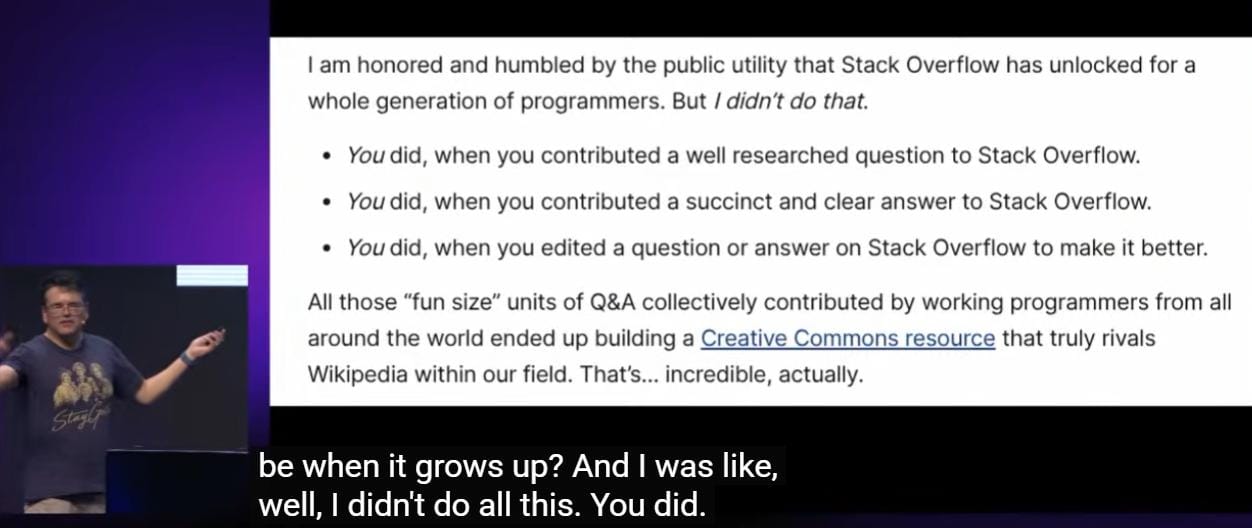
The presentation powerfully highlighted the monumental achievement of Stack Overflow as a global knowledge commons. Since its inception in 2008, the platform has grown into an indispensable resource for millions of developers worldwide, boasting hundreds of millions of questions and answers. This vast repository of programming knowledge was not built by a corporation alone, but by a global community of developers, educators, and enthusiasts. Atwood stressed that this collective effort was undertaken "together, under a bedrock Creative Commons license." This licensing framework was crucial, ensuring that the immense intellectual capital contributed by individuals was respected, preserved, and made accessible for the benefit of the wider public.
The Creative Commons (CC) license, specifically CC BY-SA (Attribution-ShareAlike), established a foundational principle of open knowledge sharing. It empowered contributors to retain copyright while allowing others to use, modify, and distribute their work, provided proper attribution was given and derived works were licensed under identical terms. This innovative approach fostered an environment of trust and encouraged active participation, leading to the rapid accumulation of high-quality, peer-reviewed content. The resulting dataset became not just a website but a public utility, a testament to what a distributed, volunteer-driven community could achieve. This collaborative spirit transformed the often solitary act of coding into a shared journey of learning and problem-solving, creating a vibrant ecosystem where knowledge flowed freely and expertise was democratized. The impact of this open-source ethos extended beyond individual developers, influencing countless projects, startups, and even academic research that leveraged Stack Overflow’s data for analysis and development.

The AI Revolution and the Challenge of Duplication
The discussion then pivoted to the transformative impact of Large Language Models (LLMs) on the landscape of programming assistance. Atwood acknowledged the significant benefits LLMs bring, particularly in tackling the pervasive issue of duplicate questions. For years, Stack Overflow, like many Q&A platforms, grappled with the challenge of managing an ever-growing volume of similar questions. As Atwood elaborated, "When you’re asking a question on a site that doesn’t allow duplicate questions, the problem space of a site with 1 million existing questions is rather different from a site with 10 million existing questions… or 100 million." The increasing difficulty of formulating a truly unique question, navigating a "vast, enormous field of prior art questions without stepping on any of the vaguely similar looking landmines," had become a considerable barrier to entry and a source of frustration for both new users and seasoned contributors.
LLMs, with their advanced natural language processing capabilities, have proven remarkably adept at identifying and mapping semantically similar questions, even when phrased with entirely different words, to existing answers. This ability, Atwood stated, is "incredibly transformative, and a huge net positive. Less duplication. More answers, faster. That’s the point." This efficiency aligns perfectly with Stack Overflow’s higher-level objectives, which have always prioritized the swift and effective dissemination of solutions. As Atwood had previously articulated in his blog, "Passively searching and reading highly ranked Stack Overflow answers as they appear in web search results is arguably the primary goal of Stack Overflow. If Stack Overflow is working like it’s supposed to, 98% of programmers should get all the answers they need from reading search result pages and wouldn’t need to ask or answer a single question in their entire careers. This is a good thing! Great, even!" The advent of LLMs, in this regard, can be seen as an acceleration towards this long-held vision, making readily available knowledge even more accessible.
The Unseen Cost: Erosion of the Commons and Community
Despite the undeniable efficiencies offered by LLMs, Atwood and Dumke-von der Ehe raised a profound and urgent concern: "But what happens to the commons when everyone is privately whispering to LLMs?" This question strikes at the heart of the collaborative model that has defined platforms like Stack Overflow. If developers increasingly turn to AI chatbots for instantaneous, personalized answers, the communal interaction—the asking, answering, refining, and peer-reviewing process—that has historically enriched the knowledge base begins to diminish.
The human element, the "vibe code love" that fosters connection and shared learning, is at risk. Ben Dumke-von der Ehe’s personal journey, where he found joy in becoming a programmer through active community engagement and was even hired for "doing things he loved" within that community, exemplifies the intrinsic value of such interactions. These communities are not merely repositories of data; they are crucibles of learning, mentorship, and professional networking. The decline in public engagement could lead to a less vibrant, less diverse, and ultimately less robust knowledge ecosystem. The social capital, the shared experiences, and the informal learning that occur through public interaction are irreplaceable by private AI consultations.
Furthermore, a critical long-term implication looms: "Where exactly will the LLMs get their next set of training data from, if we don’t build for and protect the commons together?" The current generation of powerful LLMs has largely been trained on vast datasets scraped from the open internet, including, significantly, the content generated by communities like Stack Overflow. If these communities wither due to reduced public contribution, the wellspring of fresh, human-generated knowledge will dry up. This creates a dangerous feedback loop where the very technology that benefits from the commons could inadvertently contribute to its demise, leading to stagnation in AI capabilities and a dearth of novel, cutting-edge information. The ability to "share knowledge – and love – with each other" becomes compromised, impacting the very essence of human intellectual progress.
Broader Implications for the Developer Ecosystem
The concerns raised by Atwood and Dumke-von der Ehe resonate deeply within the broader technology community, prompting reflections on several key implications:
- Impact on Novice Developers: While experienced developers might adapt quickly to LLM assistance, junior developers often benefit immensely from the public learning process. Asking questions, receiving feedback, and observing how others articulate solutions are crucial for developing problem-solving skills, critical thinking, and communication abilities—skills that go beyond merely finding an answer. A reliance on private AI assistance might inadvertently stunt the holistic development of future programmers.
- The Future of Open Source and Collaborative Projects: The open-source movement, heavily reliant on community contributions and public discourse, could face similar challenges. If the incentive to publicly share and collaborate diminishes, the pipeline of new projects and innovations might slow. The "commons" extends beyond Q&A sites to repositories like GitHub, forums, and discussion boards, all of which thrive on visible, public interaction.
- Ethical Considerations of Data Sourcing and Attribution: The discussion implicitly touches upon the ongoing ethical debates surrounding AI training data. The vast body of work contributed by millions under Creative Commons licenses was intended for public benefit and attribution. The commercial use of this data by LLMs, often without direct compensation or clear attribution to individual contributors, raises questions about fairness and the sustainability of open knowledge models.
- Adapting Knowledge Platforms: The challenge for platforms like Stack Overflow will be to evolve. This might involve integrating AI tools in ways that augment, rather than replace, human interaction; fostering discussions around more complex, novel problems that current LLMs struggle with; or creating new incentives for public contribution that acknowledge the changing landscape. The focus might shift from answering common, easily solvable problems to fostering deeper discussions, mentorship, and collaborative project work.
- The Role of Conferences and Human Connection: Events like the WeAreDevelopers World Congress become even more critical in this context. They provide invaluable spaces for human connection, real-time dialogue, and the exchange of ideas that cannot be replicated by virtual or AI-driven interactions. These forums allow leaders like Atwood and Dumke-von der Ehe to articulate complex challenges and galvanize collective thought towards solutions for safeguarding the future of collaborative knowledge.
In conclusion, the presentation by Jeff Atwood and Ben Dumke-von der Ehe at the WeAreDevelopers World Congress served as a potent call to action. While celebrating the efficiencies brought by AI, it underscored the indispensable and often underappreciated role of human community in the creation, sharing, and evolution of knowledge. As technology continues to advance, the challenge lies not in resisting progress, but in ensuring that innovation enhances, rather than erodes, the foundational human connections and collaborative spirit that have historically driven intellectual and technological advancement. The future of knowledge, and indeed the future training data for AI itself, hinges on our collective commitment to nurturing and protecting the vibrant commons that we have painstakingly built together.
About the Author