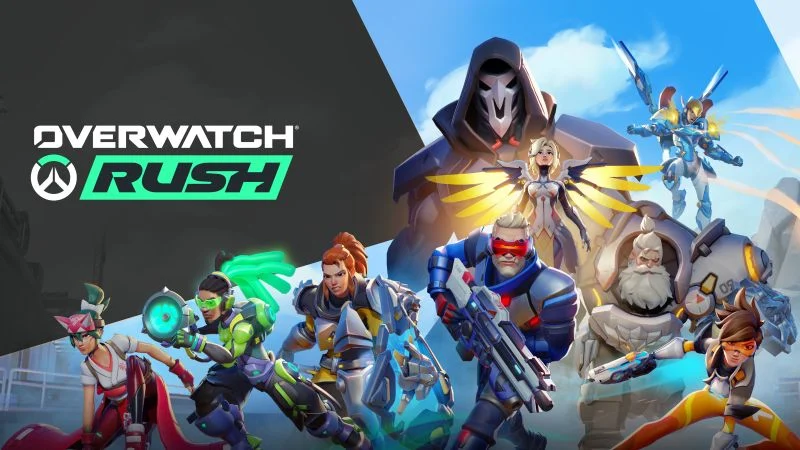
Blizzard Entertainment has officially commenced the soft launch phase for its latest mobile endeavor, Overwatch Rush, a top-down hero shooter designed specifically for handheld platforms. The initial rollout, which began on August 31, targets three key Southeast Asian markets: the Philippines, Malaysia, and Indonesia. This strategic move marks a significant expansion of the Overwatch intellectual property, transitioning the high-octane hero-based combat of the core PC and console series into a more accessible, mobile-centric format. According to internal communications and public social media updates from Blizzard staff, the soft launch serves as a critical testing period to refine gameplay mechanics, server stability, and monetization strategies before a broader global release.
The project is the result of several years of development by a dedicated mobile unit within Blizzard, reflecting the company’s ongoing commitment to diversifying its portfolio beyond its traditional desktop and console strongholds. Unlike previous mobile efforts that relied heavily on external partnerships, Overwatch Rush appears to be an internal effort aimed at capturing the lucrative mobile shooter market, which has seen explosive growth in the Asia-Pacific region. The game departs from the first-person perspective of its predecessors, opting instead for a top-down view that aligns with popular mobile titles such as Supercell’s Brawl Stars, potentially broadening the franchise’s appeal to a younger, mobile-first demographic.
Strategic Rollout and Development Milestones
The soft launch was confirmed through a series of professional updates from Blizzard’s leadership and marketing teams. Danika Wilkinson, Blizzard’s Director of User Acquisition, highlighted the significance of the release in a recent statement, noting that the project represents a "huge milestone" for the franchise. Wilkinson emphasized that the game is the culmination of years of intensive development, signaling that Blizzard is positioning Overwatch Rush not merely as a spin-off, but as a foundational pillar of the brand’s future.
The choice of the Philippines, Malaysia, and Indonesia as the initial testing grounds is a calculated decision based on regional market dynamics. These territories are recognized for their high mobile penetration rates, robust competitive gaming communities, and English-language proficiency, making them ideal environments for stress-testing online infrastructure and gathering actionable user feedback. By monitoring player behavior in these markets, Blizzard can adjust the game’s "meta," balance hero abilities, and optimize the user interface to meet the expectations of a global audience.
Chronology of the Overwatch Mobile Expansion
The journey of Overwatch Rush began long before its recent appearance on digital storefronts. The project was first publicly acknowledged in February 2024, following years of speculation regarding Blizzard’s intent to bring the Overwatch universe to smartphones. Historically, Blizzard has been cautious with its mobile adaptations, preferring to wait until a concept is fully realized before entering the market.
- Late 2021 – Early 2022: Internal formation of a dedicated Overwatch mobile team following the successful, albeit controversial, launch phase of Diablo Immortal.
- February 2024: Official announcement of Overwatch Rush, clarifying that the game would be a top-down shooter rather than a direct port of the first-person Overwatch 2.
- Mid-2024: Closed alpha testing conducted under strict non-disclosure agreements to finalize the core gameplay loop.
- August 31, 2024: Initiation of the soft launch in Southeast Asia, allowing the public in selected regions to download and play the title.
- Present Day: Ongoing data collection and iterative updates as the development team prepares for potential expansion into Western and East Asian markets.
This timeline illustrates a deliberate and methodical approach to mobile development, contrasting with the more rapid-fire release schedules of some of Blizzard’s competitors.
Gameplay Mechanics and Visual Identity
Overwatch Rush retains the core "Hero" philosophy that defined the original 2016 release, featuring a roster of familiar characters with unique abilities, ultimates, and roles (Tank, Damage, and Support). However, the shift to a top-down perspective necessitates a complete redesign of how these abilities interact. In the mobile environment, verticality—a hallmark of the PC version—is replaced by tactical positioning and skill-shot precision on a two-dimensional plane.
Early footage from players in the soft launch regions suggests a fast-paced, match-based structure designed for short sessions. The visual style remains consistent with the vibrant, optimistic aesthetic of the Overwatch universe, utilizing high-quality assets optimized for mobile GPUs. The game also introduces mobile-specific progression systems, including battle passes and daily challenges, designed to drive long-term player retention in a highly competitive free-to-play ecosystem.
Financial Context: Blizzard’s Mobile Performance Data
To understand the stakes of Overwatch Rush, one must examine Blizzard’s historical performance in the mobile sector. The company’s mobile division has become a silent powerhouse, often outperforming traditional segments in terms of consistent monthly revenue.
According to data from AppMagic, Hearthstone remains a cornerstone of Blizzard’s mobile strategy. Despite being over a decade old, the mobile port of the digital collectible card game continues to generate between $3 million and $5 million in monthly revenue. The title is currently approaching the $1 billion lifetime revenue milestone on mobile alone, demonstrating the longevity of Blizzard’s intellectual properties when properly managed.
Diablo Immortal, developed in collaboration with NetEase, represents another major success. Despite initial criticism regarding its monetization model, the game has proven to be a financial juggernaut. It maintains a steady monthly intake of $3 million to $4 million and has amassed over $420 million in total revenue since its launch. This success underscored the viability of bringing "hardcore" Blizzard IPs to mobile devices, provided the gameplay remains engaging.
However, the path has not been without obstacles. Warcraft Rumble, Blizzard’s take on the action-strategy genre, has faced significant challenges. While the game remains available, Blizzard recently announced a cessation of new content updates effective July 2025. This decision followed reports of approximately 100 layoffs within the mobile department, signaling a pivot in strategy. The underperformance of Warcraft Rumble likely increased the pressure on the Overwatch Rush team to deliver a product with broader commercial appeal and a more sustainable live-service model.
Market Implications and Regional Strategy
The mobile gaming market in 2024 is vastly different from the landscape that greeted Hearthstone in 2014. The "Hero Shooter" genre on mobile is currently contested by titles like Tacticool and the mobile version of Apex Legends (though the latter was recently shuttered by EA, highlighting the volatility of the market). By entering this space, Blizzard is attempting to fill a vacuum for high-quality, team-based tactical shooters.
From an industry perspective, the success of Overwatch Rush is vital for Blizzard’s standing under its new parent company, Microsoft. Following the acquisition of Activision Blizzard, Microsoft has expressed a clear desire to bolster its mobile presence, specifically through the "King" side of the business. However, leveraging Blizzard’s premium IPs for mobile is a key component of Microsoft’s strategy to create a cross-platform ecosystem that spans Xbox, PC, and mobile devices.
Analysis of Potential Impact
The implications of a successful Overwatch Rush launch extend beyond immediate revenue. If the game achieves a status similar to Diablo Immortal, it could provide Blizzard with the necessary capital to continue funding the more expensive, slower-paced development of its flagship PC titles. Furthermore, it serves as a brand-building tool, introducing the Overwatch lore to millions of players in regions where PC gaming is less prevalent than mobile gaming.
Analysts suggest that the top-down format is a strategic hedge. By not attempting a direct first-person port, Blizzard avoids the technical hurdles and control scheme frustrations that often plague mobile FPS titles. Instead, they are leaning into a genre that is proven to work well with touchscreens, prioritizing smooth gameplay and readability over graphical fidelity.
Official Responses and Community Reception
While Blizzard’s corporate headquarters in Irvine has not yet issued a formal global press release, the sentiment from the ground is one of cautious optimism. Social media interactions from developers indicate that the team is "proud" of the current build but acknowledges that "lots more is to come." This suggests that the soft launch version is a "minimum viable product" that will see significant evolution based on player data.
Initial community reception in the Philippines and Malaysia has been largely positive, with players praising the game’s performance on mid-range devices and the faithful recreation of the Overwatch "feel." However, some veteran fans of the franchise remain skeptical of the top-down shift, questioning whether the strategic depth of the original games can be maintained in a simplified mobile format.
Conclusion and Future Outlook
As Overwatch Rush continues its soft launch, the gaming industry will be watching closely to see if Blizzard can replicate the magic of its early hits in a crowded mobile marketplace. The coming months will be dedicated to analyzing retention rates, average revenue per user (ARPU), and the effectiveness of the game’s competitive matchmaking.
If the Southeast Asian trial proves successful, a rollout to larger markets—including North America, Europe, and potentially China—is expected to follow in 2025. For now, Overwatch Rush represents Blizzard’s most ambitious attempt yet to prove that its legendary franchises can thrive in the palm of a player’s hand, provided they are willing to adapt to the unique demands of the mobile platform. The success or failure of this title will likely dictate the company’s mobile strategy for the remainder of the decade, determining whether Blizzard remains a dominant force in the shifting landscape of global interactive entertainment.
About the Author