The landscape of digital content creation is undergoing a significant transformation with the advent of Unreal Engine 5’s MetaHuman character library. This groundbreaking initiative by Epic Games offers developers, artists, and creators unprecedented access to a vast collection of high-fidelity digital humans, available for free integration into their projects. This strategic move is poised to redefine character development across industries, from video games and film to architectural visualization and virtual production, by significantly lowering the barrier to entry for photorealistic digital human assets.
The Dawn of Photorealistic Digital Humans in Real-Time

MetaHumans represent a paradigm shift in the creation of realistic digital characters. Historically, crafting a photorealistic human character for a digital environment demanded immense artistic skill, specialized technical expertise, and substantial time and financial investment. This often placed such capabilities out of reach for independent developers and smaller studios, and even for larger entities, it represented a significant bottleneck in production pipelines. Unreal Engine 5, renowned for its cutting-edge rendering capabilities like Nanite for virtualized geometry and Lumen for global illumination, provides the perfect ecosystem for MetaHumans to shine, delivering unparalleled visual fidelity in real-time environments.
Epic Games’ vision behind MetaHumans is rooted in democratizing high-end content creation. By making these assets freely available, the company aims to empower a broader spectrum of creators to populate their virtual worlds with believable, expressive characters without the prohibitive costs and complexities traditionally associated with such endeavors. The integration of MetaHumans with Unreal Engine 5 underscores Epic’s commitment to pushing the boundaries of real-time graphics and fostering innovation across the digital entertainment and simulation sectors.
Accessing the MetaHuman Repository: A Streamlined Process
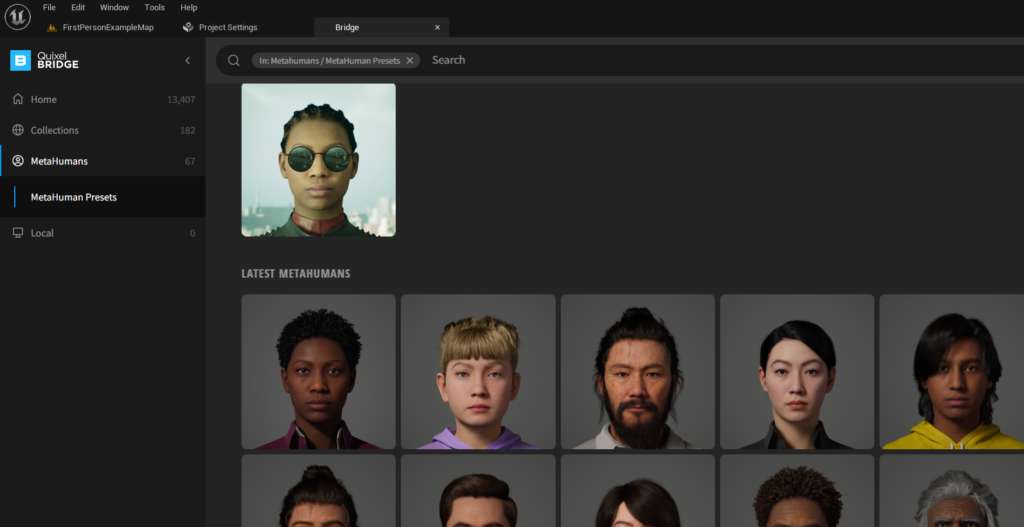
Integrating MetaHumans into an Unreal Engine 5 project is a streamlined process designed for efficiency, leveraging Epic Games’ robust ecosystem of tools and services. The primary gateway to the MetaHuman library is through Quixel Bridge, an integral component of the Unreal Engine editor that serves as a vast repository for high-quality 3D assets, including the extensive Megascans library.
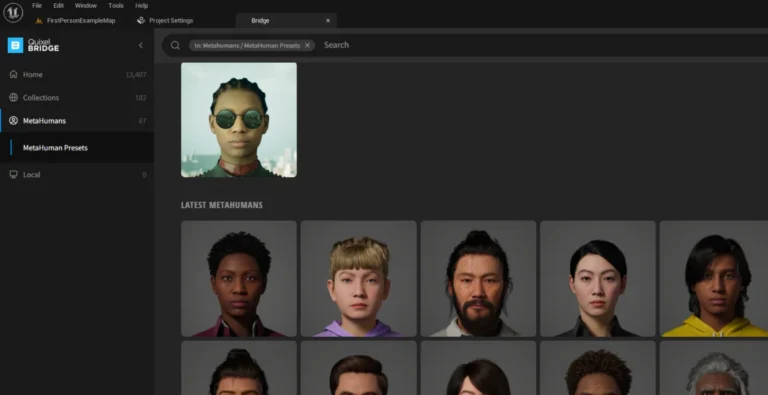
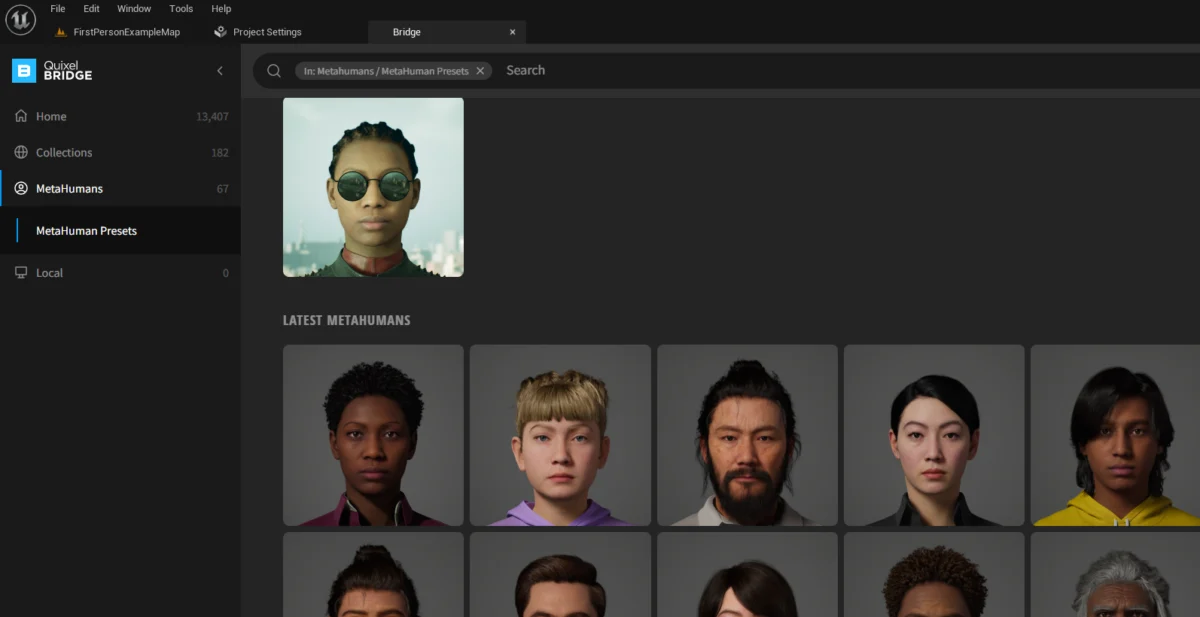
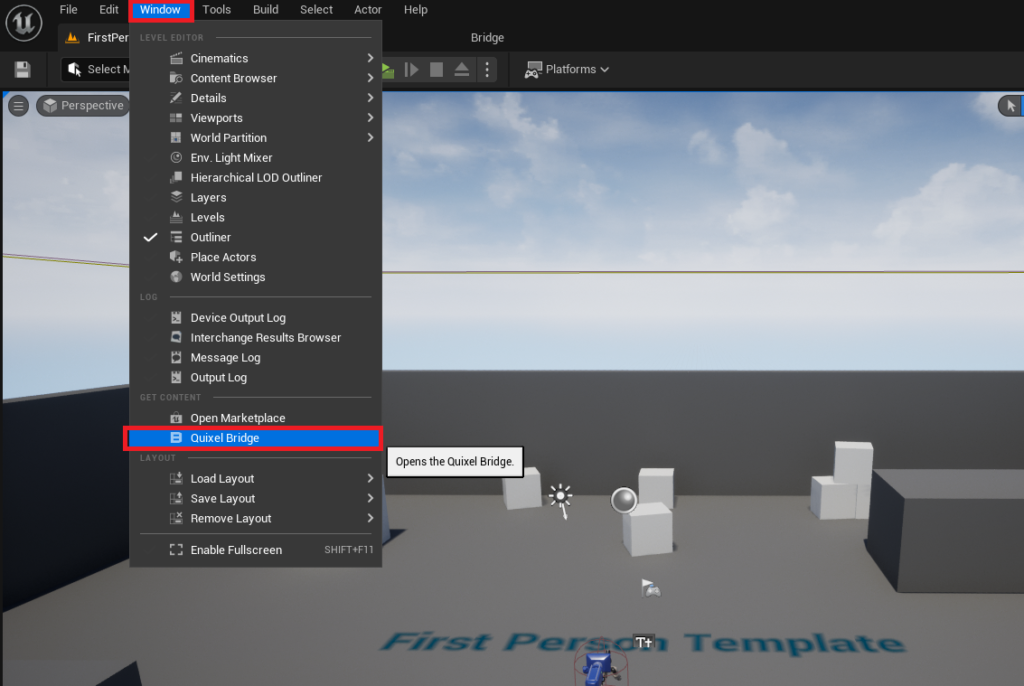
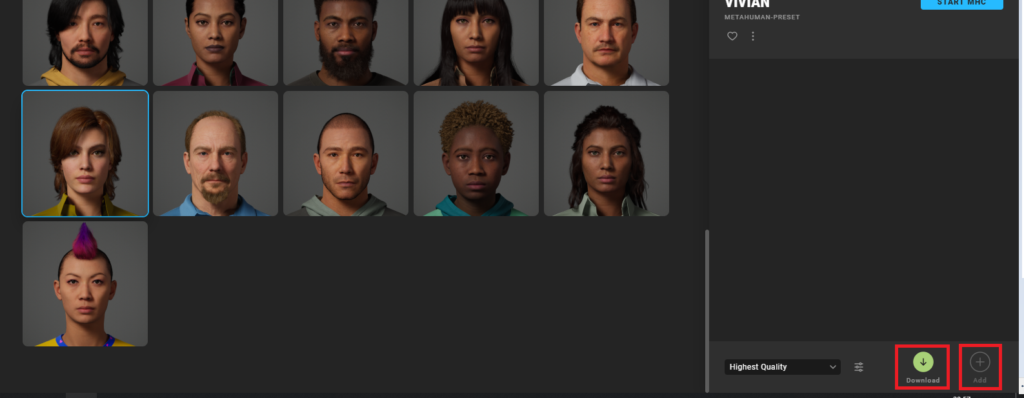
To initiate the process, developers first navigate to the Unreal Engine editor. Within the "Window" tab, the "Quixel Bridge" option provides direct access to Epic’s asset management platform. Upon opening Quixel Bridge, a dedicated "MetaHumans" tab becomes visible, acting as the central hub for browsing the available digital characters. This interface presents a comprehensive grid of pre-configured MetaHumans, each meticulously crafted with intricate details, ranging from diverse facial features and body types to varied skin tones and hairstyles. The breadth of this library ensures that creators can find characters suitable for a wide array of narrative and stylistic requirements.
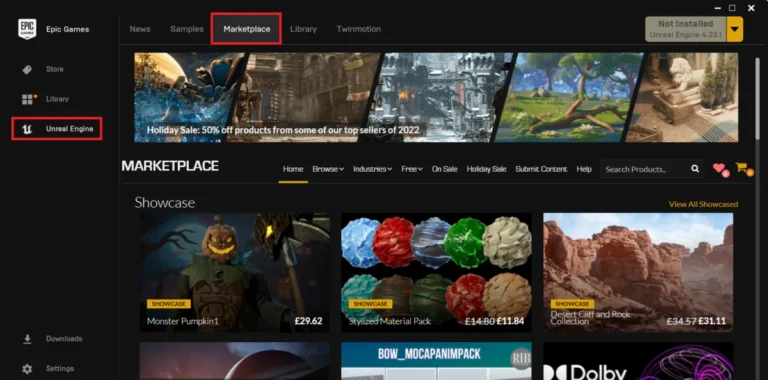
Before any MetaHuman asset can be downloaded and imported, an authentication step is required. Users must log in with their Epic Games account. This integration ensures seamless access to the entire Quixel ecosystem, including both MetaHumans and the vast Megascans library, which provides photorealistic textures, materials, and 3D models. This unified login system streamlines the workflow, connecting user accounts to Epic’s content infrastructure and enabling legitimate access to these high-value assets. Once authenticated, developers can select their desired MetaHuman from the library and proceed with the download.
Seamless Integration into Unreal Engine 5 Projects
The integration process extends beyond simple download, involving several crucial steps to ensure the MetaHuman assets function optimally within an Unreal Engine 5 project. After selecting a MetaHuman and initiating the download, a dedicated "Add" button appears, which, when clicked, automatically begins the import process into the currently open Unreal Engine project. This automated workflow simplifies asset management, eliminating the need for manual file transfers or complex configuration.
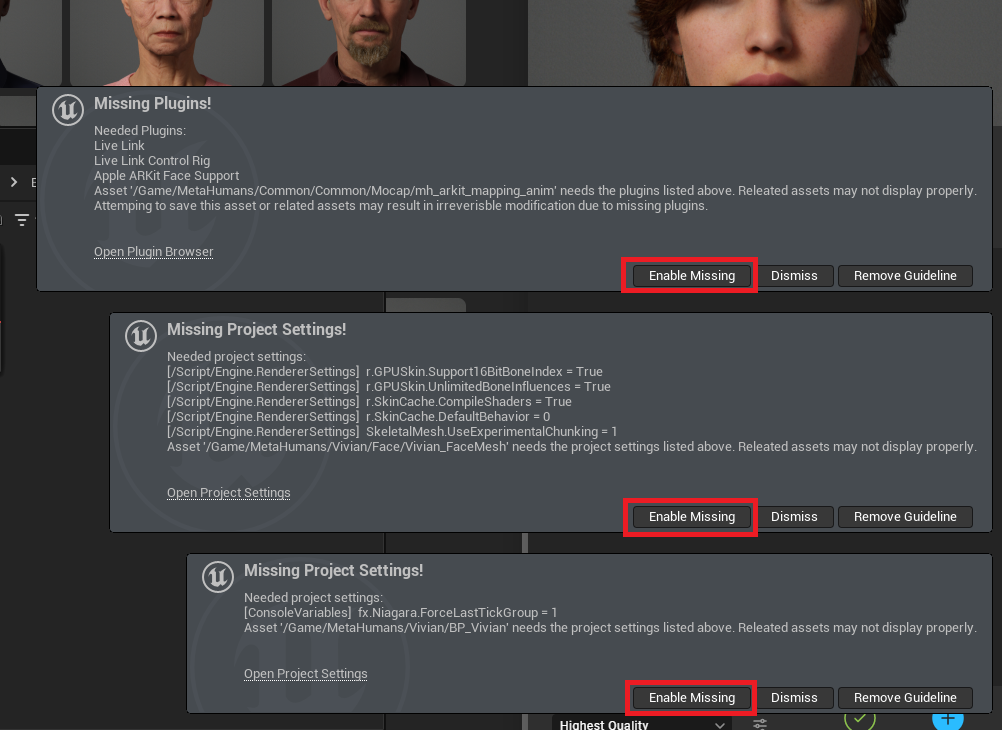
During the import, the Unreal Engine editor performs a series of checks and configurations to ensure full compatibility. It is common for notifications to appear in the bottom-left corner of the editor, prompting users to "Enable Missing" plugins and project settings. These prompts are critical as MetaHumans rely on specific Unreal Engine plugins and configurations to achieve their stunning visual fidelity and rigging capabilities. Enabling these missing components ensures that all necessary dependencies, such as specific rendering features, animation systems, and material setups, are correctly integrated into the project.

Following the enabling of these critical settings and plugins, the editor typically requires a restart. A "Restart Now" button will appear, and clicking it reloads the Unreal Engine editor with all the newly applied configurations active. This restart is essential for the changes to take full effect, allowing the engine to properly compile shaders and integrate the MetaHuman’s complex asset structure. Once the editor has restarted, the imported MetaHuman becomes fully accessible within the project.
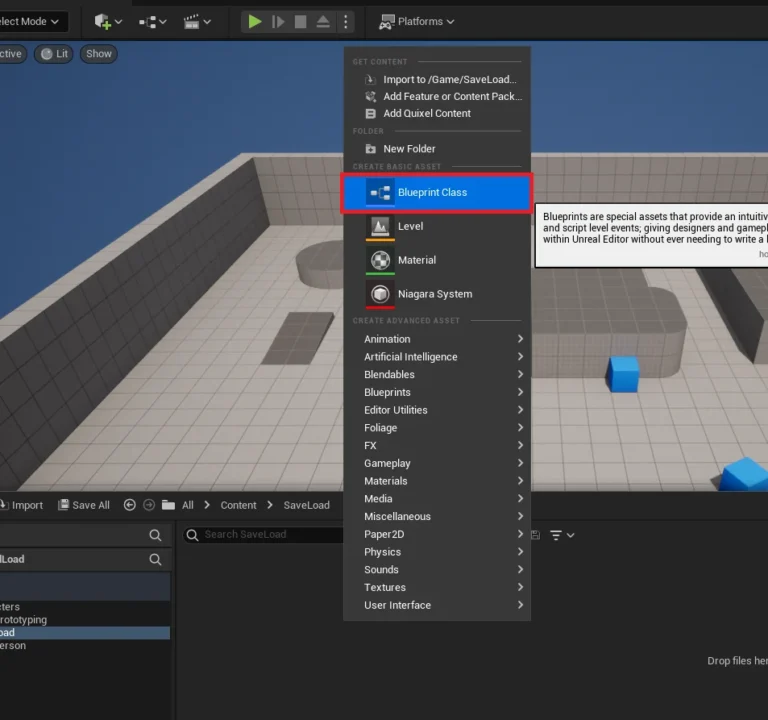
Developers can locate their newly added MetaHuman within the Content Drawer. A dedicated "MetaHumans" folder is automatically created, containing a subfolder named after the specific MetaHuman chosen. Inside this subfolder, the primary asset for the character is typically identified by a blueprint (BP) asset, often prefixed with "BP_". This blueprint encapsulates the entire MetaHuman character, including its high-resolution meshes, intricate material setups, sophisticated rigging for animation, and various levels of detail (LODs) to optimize performance across different platforms and viewing distances. These blueprints are immediately ready for use, serving as player characters, non-player characters (NPCs), or digital doubles in various interactive and linear media projects. The modular nature of MetaHumans, evident in their multiple component meshes, allows for further customization and integration into existing character pipelines.
Broader Impact and Implications for Digital Content Creation

The free availability of the MetaHuman library in Unreal Engine 5 carries profound implications for the entire digital content creation ecosystem.
Game Development: For video game developers, MetaHumans dramatically reduce the time and resources traditionally spent on character creation. Indie studios, often resource-constrained, can now incorporate AAA-quality characters, elevating their production values. Larger studios can accelerate prototyping, iterate faster on character designs, and free up their character artists to focus on more unique, bespoke creations or optimize existing MetaHuman assets for specific game mechanics. This accessibility can lead to a richer diversity of characters and more immersive gameplay experiences.
Film and Visual Effects (VFX): In film and VFX, MetaHumans are poised to revolutionize virtual production pipelines. They offer a rapid solution for creating digital doubles, background characters, or even primary protagonists with a level of realism previously requiring extensive scanning and modeling work. The ability to integrate these characters into real-time environments means filmmakers can visualize scenes with high-fidelity digital actors on set, facilitating iterative creative decisions and reducing post-production costs and timelines. This democratizes access to technologies traditionally reserved for mega-budget Hollywood productions.
Beyond Entertainment: The applications extend far beyond traditional entertainment. In architectural visualization, MetaHumans can populate virtual walkthroughs with believable human presence, enhancing the sense of scale and realism. For training and simulation, they provide realistic avatars for interactive learning environments, from medical training to industrial simulations. The burgeoning metaverse concept also stands to benefit immensely, as MetaHumans offer a standardized, high-quality foundation for digital identities and interactions within persistent virtual worlds.
Technical Considerations and Future Outlook: While MetaHumans offer unparalleled fidelity, developers must consider the computational demands of such high-resolution assets. Unreal Engine 5’s optimizations, like Nanite, help manage polygon counts, but robust hardware remains beneficial for real-time rendering of multiple complex MetaHumans. Epic Games continues to refine the technology, with ongoing developments in performance optimization and the expansion of the MetaHuman Creator tool. The MetaHuman Creator, a cloud-based application, allows users to design entirely custom digital humans from scratch, offering an even greater degree of personalization beyond the pre-configured library. This tool leverages a vast database of scanned human variations, enabling creators to sculpt unique faces, adjust body proportions, and apply diverse skin textures and hair styles, all within an intuitive interface. The ability to export these custom creations directly into Unreal Engine 5 projects further solidifies MetaHumans as a comprehensive solution for digital character development.
A Chronology of Innovation: The introduction of MetaHumans is part of a larger, evolving narrative within Epic Games’ strategy. While the MetaHuman Creator tool first entered early access in February 2021, showcasing its groundbreaking capabilities, the integration of a free, readily available library within Unreal Engine 5 marks a critical milestone in making these assets universally accessible. Unreal Engine 5 itself, having moved out of early access in April 2022, provided the stable and powerful platform necessary for MetaHumans to thrive. This steady progression underscores Epic’s long-term commitment to empowering creators with state-of-the-art tools.
In conclusion, Unreal Engine 5’s free MetaHuman library is a transformative offering that significantly lowers the barrier to creating photorealistic digital characters. By providing high-fidelity, rigged, and ready-to-use assets, Epic Games is not only accelerating production pipelines across various industries but also democratizing access to cutting-edge technology. This initiative solidifies Unreal Engine 5’s position as a leading platform for real-time content creation, promising a future where stunningly realistic digital humans are a standard, rather than an exception, in virtual experiences. As the technology evolves and the MetaHuman Creator tool becomes more widely adopted, the potential for personalized, immersive digital interactions will only continue to grow.
About the Author