The advent of Unreal Engine 5 has ushered in an unprecedented era for digital content creation, particularly with the introduction of the MetaHuman character library. These groundbreaking, high-fidelity digital humans are not only freely available for integration into a wide array of projects but also represent a significant leap forward in democratizing access to photorealistic virtual characters. This guide delves into the essential steps required to leverage MetaHumans within your Unreal Engine 5 (UE5) projects, exploring the underlying technology, the streamlined workflow, and the profound implications for industries ranging from gaming to film and virtual production.
The Dawn of Digital Realism: Understanding MetaHumans
At its core, MetaHuman is a comprehensive framework developed by Epic Games designed to enable the creation, animation, and integration of hyper-realistic digital humans with unparalleled ease and speed. Far beyond simple character models, MetaHumans are fully rigged, textured, and shaded digital avatars engineered to achieve cinematic quality in real-time. The technology leverages advanced photogrammetry, intricate facial capture data, and sophisticated rigging systems that encompass everything from skeletal animation to muscle deformation, hair simulation (using Unreal Engine’s strand-based hair system), and sub-surface scattering for lifelike skin. Each MetaHuman comes equipped with a fully functional control rig, allowing for nuanced animation and expression, and is optimized for performance within the demanding environment of Unreal Engine 5. This level of detail, previously achievable only through months of work by highly specialized artists, is now accessible to a broader audience, drastically reducing the traditional barriers to entry for creating compelling digital characters.

The development timeline for MetaHumans saw its initial reveal in early 2021, generating significant industry buzz for its potential to revolutionize character creation. This was followed by an early access program for the MetaHuman Creator, a cloud-streamed application, and the subsequent public release of a diverse library of pre-configured MetaHumans, making the technology widely available to all Unreal Engine developers.
Unreal Engine 5: A New Era for Digital Content
Unreal Engine 5 itself provides the foundational technology that makes MetaHumans truly shine. With features like Nanite, a virtualized micropolygon geometry system that allows for cinematic-quality assets to be imported and rendered in real-time without significant performance overhead, and Lumen, a fully dynamic global illumination and reflections system, UE5 offers an environment where MetaHumans can exist with astonishing realism. These core technologies ensure that the intricate details of MetaHuman characters – from the minute pores on their skin to the individual strands of their hair – are rendered faithfully and dynamically lit, contributing to an immersive and believable digital experience. The synergy between MetaHumans and UE5’s rendering capabilities is pivotal, positioning the engine as a powerhouse for next-generation interactive and linear content. The engine’s robust architecture also supports advanced animation systems, physics simulations, and a powerful blueprint visual scripting system, all of which contribute to the seamless integration and high performance of MetaHuman assets.
Seamless Integration: Accessing the MetaHuman Library
The journey to integrating MetaHumans begins within the Unreal Engine editor itself, specifically through the Quixel Bridge. This powerful application, seamlessly integrated into UE5, serves as the primary portal to Epic Games’ vast library of high-quality assets, including the acclaimed Quixel Megascans and, crucially, the MetaHuman character library. This integration highlights Epic Games’ strategic vision to centralize asset management and streamline workflows for creators.
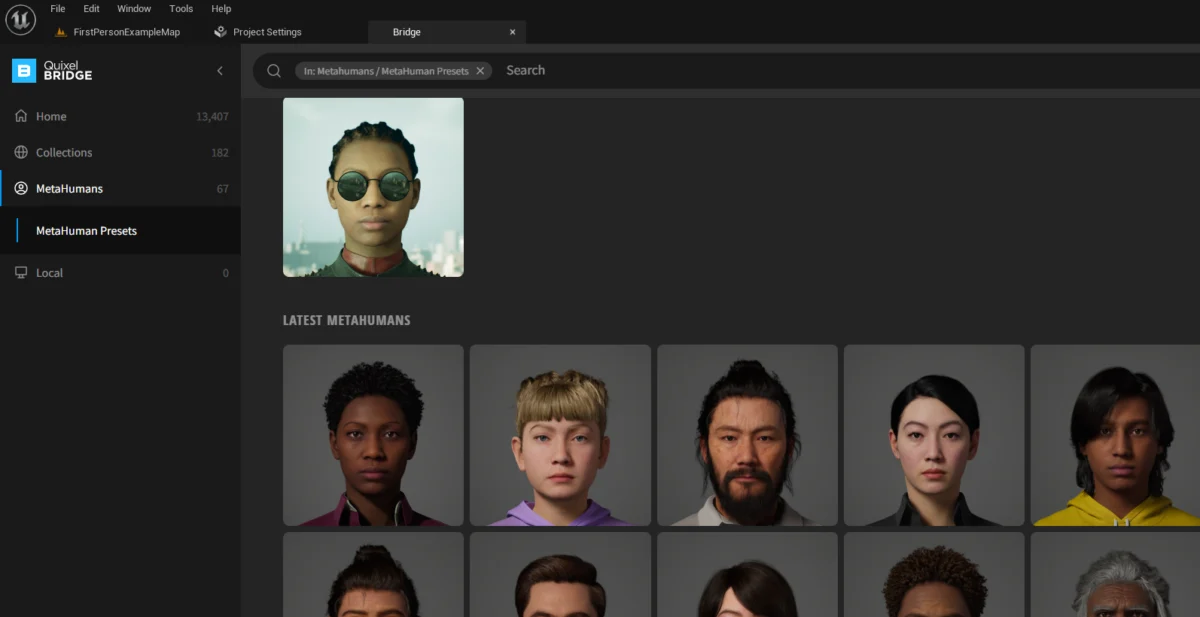
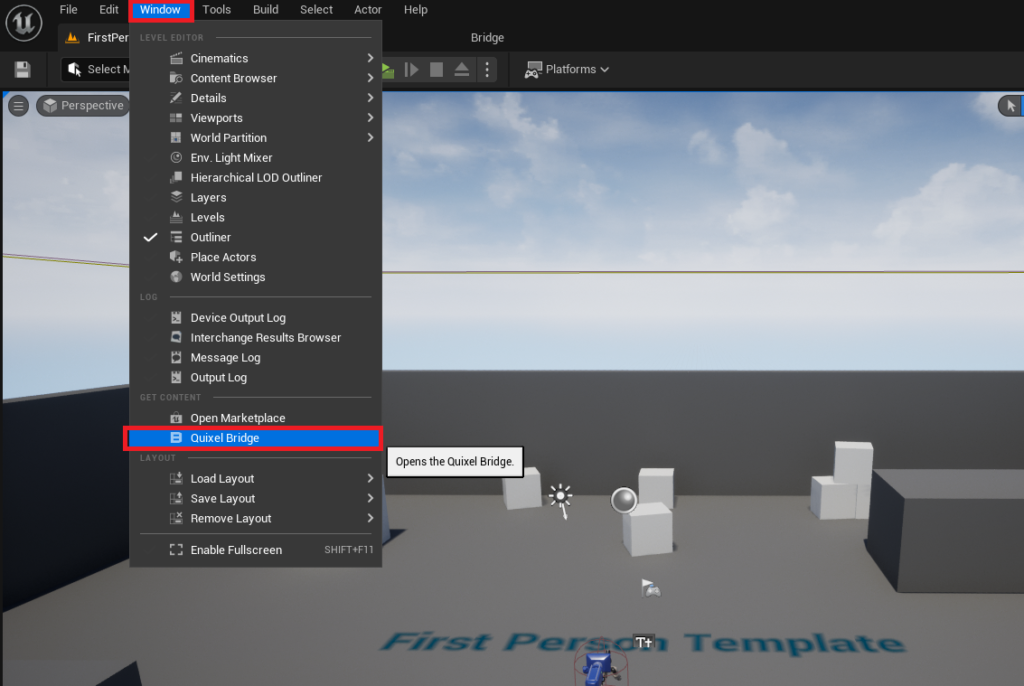
To initiate this process, users must first open the Quixel Bridge. This is accomplished by navigating to the Window tab within the Unreal Engine editor’s main menu. From the dropdown options, selecting “Quixel Bridge” will launch the application directly within the editor interface, eliminating the need for external software or complex export/import procedures. This integrated workflow underscores Epic Games’ commitment to creating a cohesive and efficient ecosystem for content creators, minimizing context switching and maximizing productivity.
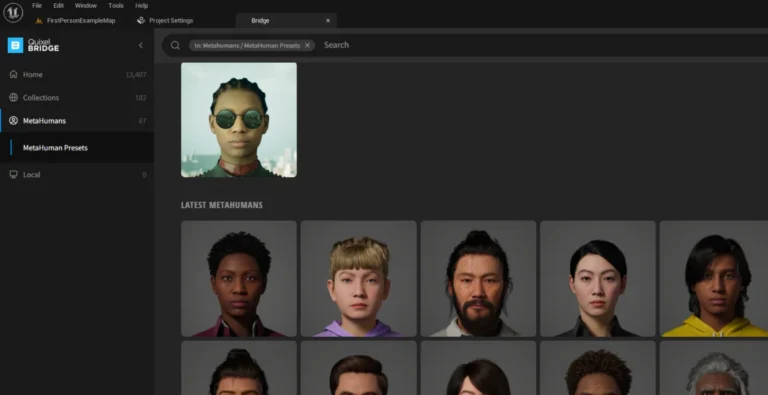
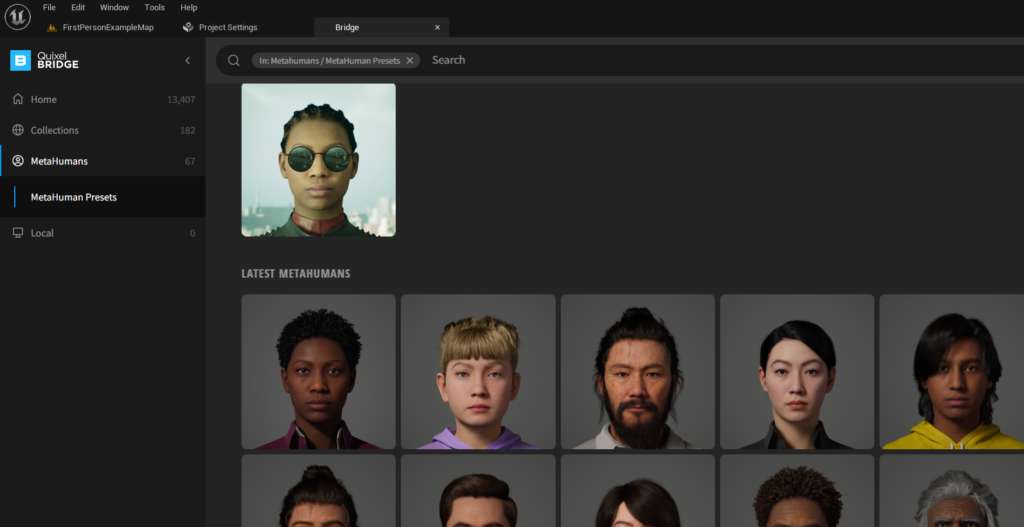
Upon the successful loading of Quixel Bridge, users will be presented with a comprehensive interface showcasing various asset categories. To access the digital human library, the next crucial step is to locate and click the “MetaHumans” tab. This dedicated section within Quixel Bridge is meticulously curated, offering a wide selection of preconfigured MetaHuman avatars, each meticulously crafted to exhibit varying demographics, styles, and appearances. This library functions as a starting point, providing developers with a diverse cast of characters ready for immediate use or further customization, enabling rapid prototyping and character deployment.
Navigating the MetaHuman Selection and Epic Games Account Integration
Once within the MetaHumans tab, users are greeted with a grid displaying numerous high-fidelity digital avatars. These are the pre-configured MetaHumans, each representing a distinct character, complete with unique facial features, hairstyles, and clothing. The breadth of this library aims to cater to a wide range of project needs, from protagonists in narrative-driven games to background characters in virtual productions. The variety ensures that creators can find suitable characters without extensive modification, saving valuable development time.
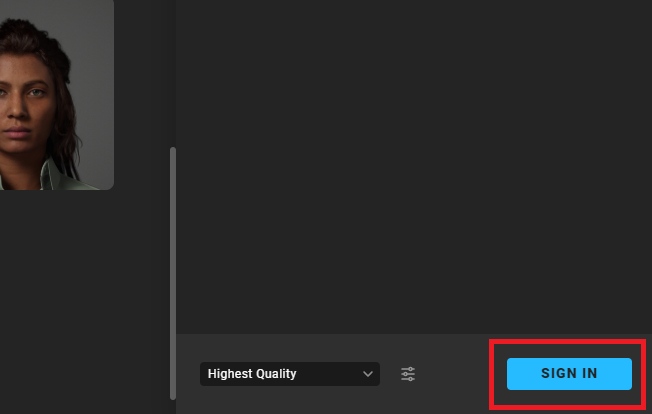
Before any of these impressive digital assets can be downloaded and integrated into a UE5 project, an essential authentication step is required. Users will observe a “Sign In” button, typically located in the bottom right corner of the Quixel Bridge window, once a MetaHuman avatar has been selected. Clicking this button prompts users to log in with their Epic Games account. This mandatory login process is critical for several reasons: it authenticates access to the licensed assets provided by Epic Games, ensuring adherence to usage terms, and it links the user’s project to the broader Epic Games ecosystem, which includes access to the full Quixel Megascans library alongside MetaHumans. This seamless integration facilitates a unified asset management experience, allowing developers to manage all their Epic-provided assets from a single interface. The Epic Games account serves as a universal key, unlocking a wealth of resources designed to accelerate and enhance digital content creation, reinforcing the interconnected nature of Epic’s tools and services.
Integrating MetaHumans into Your Project: A Step-by-Step Guide
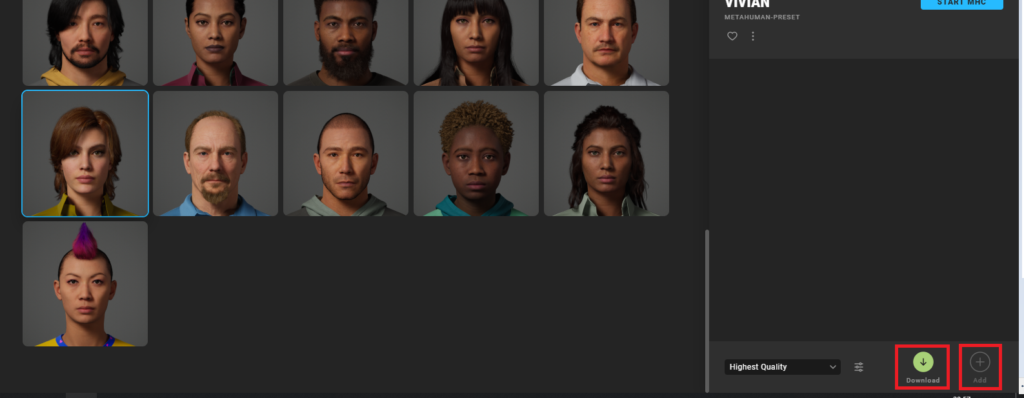
With successful authentication via the Epic Games account, the process of bringing a MetaHuman into a UE5 project becomes straightforward. After selecting a desired MetaHuman avatar from the library, the “Download” button will become active. Clicking this button initiates the download of the MetaHuman’s extensive data, which includes high-resolution meshes, textures, animation rigs, and various material settings. Due to the high fidelity and intricate detail of these assets, download times may vary depending on internet connection speed and the specific MetaHuman’s complexity. Developers should ensure a stable internet connection for this phase.

Once the download is complete, the “Add” button will become available. Clicking “Add” directly imports the MetaHuman into the currently open Unreal Engine 5 project. This action triggers a series of automated processes within the engine to prepare the asset for use, streamlining what would otherwise be a complex manual import and setup procedure. The engine intelligently handles the packaging and integration of the various components, making the process virtually effortless for the user.
Project Configuration and Editor Restart: Essential Steps for Optimal Performance
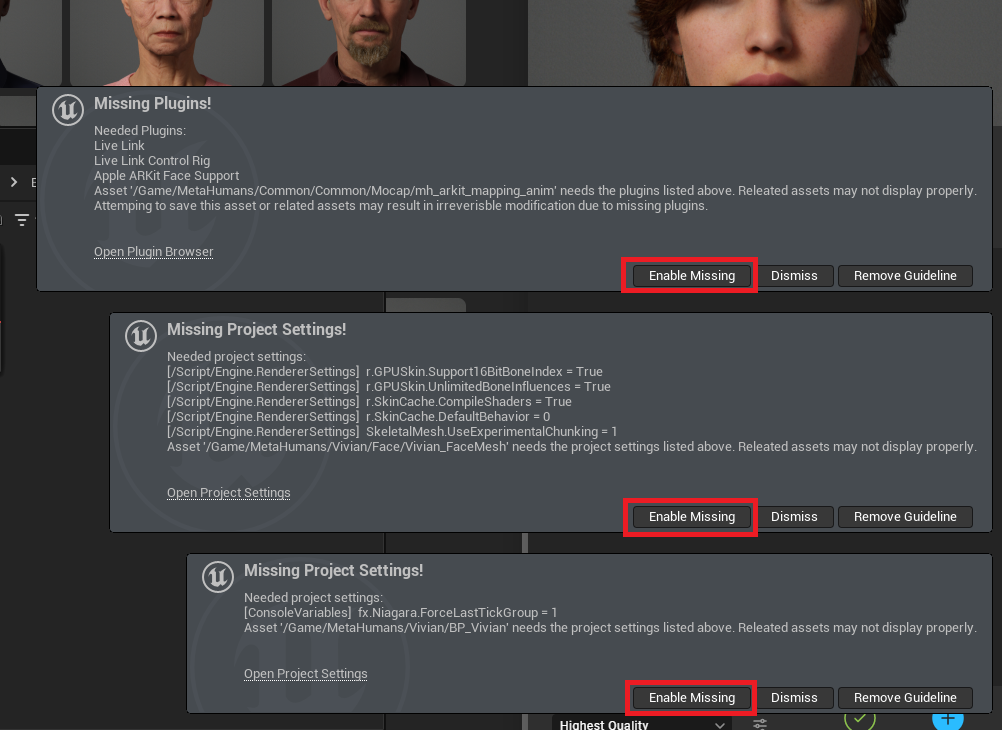
Upon adding a MetaHuman to a project, the Unreal Engine editor may detect that certain plugins or project settings essential for MetaHuman functionality are either missing or not correctly enabled. This is a standard procedure, as MetaHumans rely on specific engine configurations to render correctly and perform optimally. These configurations include enabling specialized rendering features, hair and cloth simulation plugins, and advanced material graph options.
Notifications typically appear in the bottom left corner of the editor, prompting the user to take action. These notifications often include an option to “Enable Missing”. It is imperative to click this button. Enabling missing elements ensures that all necessary plugins—such as those related to hair rendering (e.g., Groom plugin), specific material shaders (e.g., for sub-surface scattering), and animation systems—are activated, and relevant project settings are automatically adjusted. These adjustments might include enabling support for virtual texture streaming, setting up appropriate rendering features for sub-surface scattering, or configuring specific lighting profiles that enhance the realism of MetaHumans. The engine’s automated configuration prevents common errors and ensures the MetaHuman assets can leverage UE5’s full graphical capabilities.
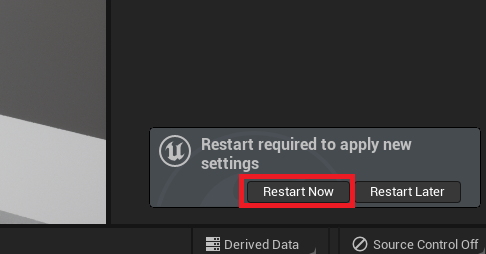
Following the enabling of missing settings and plugins, the editor will usually present a “Restart Now” button. This restart is crucial. It allows Unreal Engine to fully load and apply the newly enabled plugins and reconfigured project settings. Attempting to proceed without restarting could lead to rendering issues, incorrect material display, animation glitches, or even crashes, as the engine would not be operating under the optimal conditions required for MetaHuman assets. The restart ensures that the project environment is fully synchronized with the demands of the advanced MetaHuman technology, guaranteeing stable and accurate asset representation.
Locating and Utilizing Your MetaHuman Asset
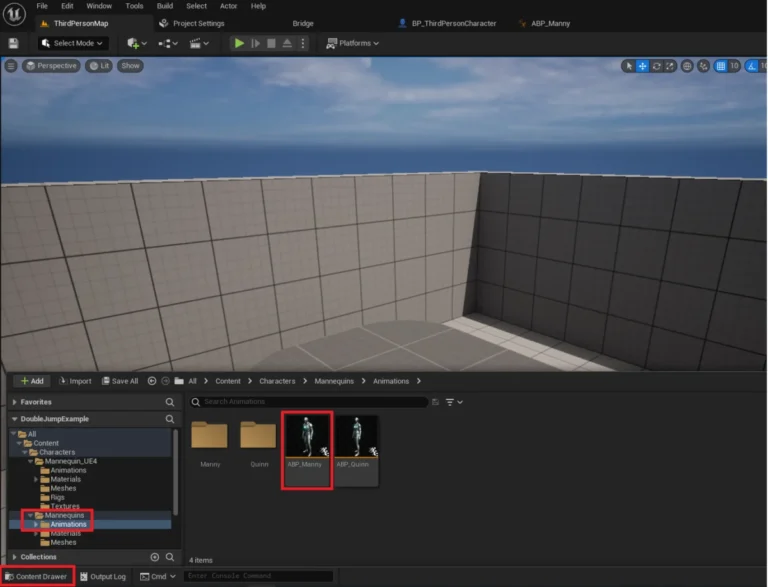
After the editor has successfully restarted and all necessary configurations are applied, the newly imported MetaHuman asset can be located within the project’s Content Drawer. Unreal Engine automatically organizes imported MetaHumans into a dedicated “MetaHumans” folder, typically found at the root level of the Content Drawer. This organizational structure simplifies asset management, especially in projects with numerous imported assets.
Within this “MetaHumans” folder, users will find another sub-folder named after the specific MetaHuman character that was downloaded (e.g., “Ada,” “Anja,” “Miko,” etc.). Inside this character-specific folder, the most important asset is the Blueprint class, which typically begins with the prefix “BP_” (e.g., “BP_Ada”). This Blueprint represents the complete, ready-to-use MetaHuman character. It encapsulates all components: the high-resolution meshes for the head, body, hair, eyes, and clothing, along with their respective materials, textures, and the intricate control rig for animation.
Developers can simply drag and drop this “BP_” asset from the Content Drawer into their scene to instantly place a fully rigged and textured MetaHuman character. From there, the character can be manipulated, animated, and integrated into game logic or virtual production sequences. The modular nature of the MetaHuman blueprint also allows for individual components to be accessed and potentially swapped or modified, offering a degree of flexibility while maintaining the integrity of the character’s high fidelity. This modularity is particularly useful for optimizing performance by swapping out high-detail elements for lower-detail ones when characters are further from the camera.
The Broader Impact: Reshaping Digital Character Creation
The introduction and widespread availability of MetaHumans have profound implications across the digital content creation landscape. Historically, crafting a photorealistic digital character was an arduous, time-consuming, and expensive endeavor, often requiring a team of specialized artists, each focusing on different aspects like modeling, texturing, rigging, and shading. This process could easily take months and incur significant costs, making high-fidelity characters a luxury primarily reserved for large-budget productions.
MetaHumans fundamentally alter this paradigm. By providing a library of ready-to-use, production-quality digital humans, Epic Games has democratized access to what was once an elite skill set. This directly translates to:
- Reduced Development Time and Cost: Small independent studios and individual creators can now access characters that meet industry standards without the massive upfront investment in time or personnel. This accelerates prototyping, shortens production cycles, and lowers overall development costs, potentially saving hundreds of hours per character.
- Focus on Creativity: Artists and developers can shift their focus from the laborious technical aspects of character creation to more creative endeavors like storytelling, animation, and interaction design. The foundational work of creating a high-quality human is handled, freeing up resources for innovation and narrative development.
- Enhanced Realism Across Industries: Beyond video games, MetaHumans are transforming virtual production for film and television, enabling filmmakers to create believable digital doubles or entirely virtual cast members with unprecedented efficiency. Architectural visualization firms can populate their renders with realistic human figures, and simulation/training environments can offer more immersive and relatable experiences, boosting engagement and believability.
- Standardization of Quality: The consistent high quality of MetaHuman assets establishes a new baseline for digital human realism, pushing the entire industry forward and raising audience expectations for visual fidelity.
Industry analysts have widely lauded MetaHumans as a game-changer. An Epic Games spokesperson, when discussing the vision behind MetaHumans, reportedly stated, "Our goal with MetaHumans was to empower creators of all sizes to bring their visions to life with believable digital characters, removing the technical hurdles that often stand in the way of artistic expression. We believe this will unlock new levels of creativity across all forms of real-time content." This sentiment encapsulates the transformative potential of the technology, echoing a broader industry trend towards accessible, high-quality content tools.
Looking Ahead: The MetaHuman Creator and Future of Digital Identity
While the current MetaHuman library offers an impressive array of pre-configured characters, the future of MetaHumans promises even greater flexibility through the MetaHuman Creator tool. This cloud-streamed application, currently in early access or specific deployments, allows users to design their own unique digital humans from scratch or by blending existing MetaHumans. With intuitive controls, creators can sculpt facial features, adjust body proportions, select from a vast range of hairstyles, skin tones, eye colors, and clothing options, all while maintaining the hyper-realistic quality synonymous with MetaHumans.
The MetaHuman Creator moves beyond simply choosing from a library; it empowers users to generate bespoke digital identities that can serve as player characters, non-player characters, virtual hosts, or even digital representations of real individuals. This evolution signifies Epic Games’ long-term vision: to provide a complete ecosystem for digital human creation that is both accessible and infinitely customizable. The integration of custom MetaHumans generated through the Creator will follow a similar workflow to the pre-configured ones, ensuring a consistent and user-friendly experience within Unreal Engine 5. This iterative development model promises a continuously expanding toolkit for digital character artistry.
The ongoing development of MetaHumans, coupled with the continuous advancements in Unreal Engine 5, suggests a future where the line between digital and physical characters becomes increasingly blurred. This has profound implications not just for entertainment but also for areas like virtual fashion, digital therapeutics, and personalized AI assistants, where believable human interaction is paramount. The technology holds the potential to redefine digital identity and interaction in the metaverse and beyond.
Conclusion
The integration of MetaHumans into Unreal Engine 5 projects marks a pivotal moment in digital content creation. What was once a prohibitively complex and resource-intensive task has been streamlined into an accessible, efficient, and highly effective workflow. From the initial access via Quixel Bridge to the final placement of a fully rigged Blueprint into a scene, the process is designed for seamless integration, empowering creators to focus on narrative and experience rather than the intricate technicalities of character construction.
The MetaHuman library provides an invaluable resource for developers seeking to populate their virtual worlds with hyper-realistic digital humans. These characters, fully rigged and optimized, are not merely assets but complete, performance-ready blueprints awaiting deployment. As the technology continues to evolve with tools like the MetaHuman Creator, the possibilities for creating compelling, believable digital identities are set to expand exponentially, solidifying Unreal Engine 5’s position at the forefront of the digital revolution. The future of digital characters is here, and it is more human than ever before.
About the Author