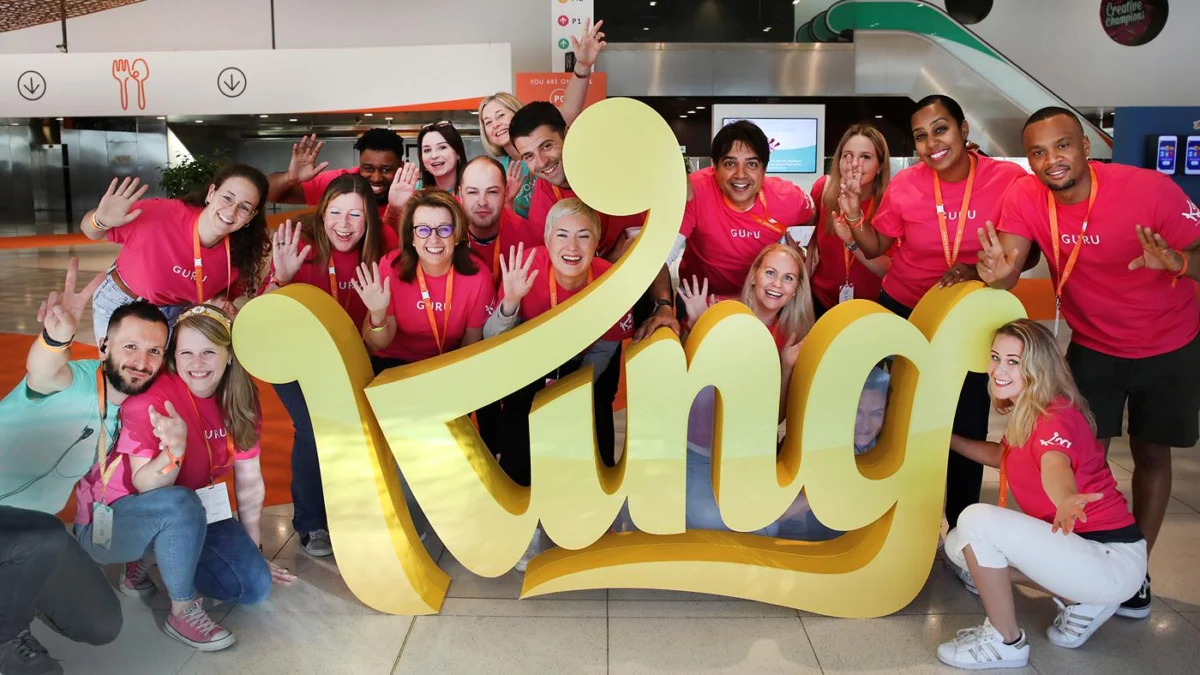
The Swedish labor landscape within the global video game industry has reached a critical inflection point as two of the country’s most prominent trade unions, Sveriges Ingenjörer (Engineers of Sweden) and Unionen, have officially issued a strike notice against King. The developer, best known for the multi-billion-dollar Candy Crush Saga franchise and currently operating as a subsidiary of Microsoft, finds itself at the center of a deepening dispute over the implementation of a collective bargaining agreement. This escalation follows more than a year of stalled negotiations and represents a significant challenge to the corporate labor strategies of major technology firms operating within the Nordic region.
The formal notice serves as a direct response to King’s categorical rejection of a collective bargaining agreement (CBA), a cornerstone of the Swedish labor market model. According to the unions, the strike is scheduled to commence at 5:00 am on Friday, September 25, should no resolution be reached in the interim. The industrial action is slated to impact King’s primary Swedish hubs in Stockholm and Malmö, potentially disrupting the operations of one of the world’s most profitable mobile gaming entities. In accordance with Swedish labor law, the National Mediation Office (Medlingsinstitutet) is expected to appoint independent mediators to facilitate last-minute discussions between the company and union representatives.
The Catalyst of the Conflict: A Year of Stalled Negotiations
The friction between King and its workforce began to crystallize over twelve months ago when employees sought to formalize their working conditions through a CBA. In the Swedish context, a collective bargaining agreement is a written contract between an employer and a trade union that regulates wages, benefits, and general working conditions for all employees at a workplace, regardless of their individual union membership status.
In June, the tension transitioned from internal discussions to public knowledge when King’s president, Todd Green, sent an internal memorandum to staff. In the email, Green confirmed that after a year of evaluative negotiations, the company had decided to decline the proposed agreement. The justification provided by the executive was that King’s "current benefits offering is better for our employees" than what would be mandated or provided under a standard Swedish collective agreement. This stance, however, has been met with significant skepticism from labor organizers who argue that a CBA provides legal protections and long-term security that unilateral corporate policies cannot guarantee.
Sveriges Ingenjörer, which represents approximately 100 members at King’s Swedish operations—registered legally as Midasplayer AB—emphasized that the decision to move toward a strike was not made lightly. Camilla Frankelius, the union’s chief negotiator, stated that the signal from the membership was clear: workers desire the structural security and institutional influence that only a formal agreement can provide. Similarly, Martin Wästfelt, the chief negotiator for Unionen, remarked that the union saw "no other option" but to escalate to industrial action after the company’s definitive refusal to sign the agreement.
The Swedish Labor Model vs. Corporate Autonomy
To understand the gravity of the strike notice, it is essential to consider the broader context of the "Swedish Model." Unlike many other developed economies, Sweden does not have a statutory minimum wage or comprehensive government-mandated labor regulations covering all aspects of employment. Instead, these factors are determined through collective bargaining between employers and unions. Approximately 90% of all employees in Sweden are covered by such agreements, which govern everything from pension contributions and insurance to redundancy procedures and overtime pay.
By rejecting a CBA, King is positioning itself as an outlier in the Swedish corporate environment. While the company maintains that its internal benefits package is superior, unions argue that without a CBA, those benefits remain at the total discretion of the employer and can be altered or rescinded at any time without the negotiation process required by a collective contract. Furthermore, a CBA ensures that employees have a formal seat at the table during major corporate restructuring—a factor that has become increasingly relevant given the recent waves of layoffs within the technology sector.
Contextualizing the Dispute: Layoffs and the Integration of AI
The move toward industrial action does not exist in a vacuum. It follows a period of significant volatility for King and the wider gaming industry. In July 2025, reports surfaced indicating that King was moving to eliminate approximately 200 roles across its global operations. This restructuring hit the Swedish offices particularly hard, with early estimates suggesting 96 staff members were targeted for redundancy in Stockholm. Additional cuts were reported in Malmö, London, Berlin, and Barcelona.
In Barcelona, where 75 staff members—representing roughly 12% of the local workforce—faced redundancy, the news prompted immediate protests. Perhaps more concerning for the workforce was the revelation from internal sources that the layoffs specifically targeted narrative and UX writing teams. These sources alleged that the departing staff were being replaced by the very generative AI tools they had helped train and build during their tenure.
This trend of "AI displacement" has added a layer of existential urgency to the unions’ demands. For workers at King, a collective bargaining agreement represents more than just a salary floor; it represents a framework for how new technologies are integrated into the workplace and what protections are afforded to employees whose roles are evolved or eliminated by automation. The lack of a formal agreement leaves the workforce more vulnerable to rapid, AI-driven restructuring.
The Microsoft Factor and Global Labor Trends
The dispute at King also carries implications for its parent company, Microsoft. Since its acquisition of Activision Blizzard (King’s former parent company) for $68.7 billion, Microsoft has projected a relatively progressive image regarding labor relations. In the United States, Microsoft entered into a "Labor Neutrality Agreement" with the Communications Workers of America (CWA), promising not to interfere with unionization efforts at its subsidiaries.
However, the situation in Sweden suggests a disconnect between Microsoft’s global public relations stance and the local operational decisions of its subsidiaries. While Microsoft has allowed unionization to proceed at ZeniMax and Bethesda in the U.S., the resistance from King’s leadership in Sweden indicates a desire to maintain a more traditional, top-down management style in its European mobile division. This friction highlights the challenges multinational corporations face when trying to reconcile standardized global corporate cultures with the deeply entrenched labor traditions of specific regions like Scandinavia.
Data and Implications: The Cost of Industrial Action
King is a massive financial engine. In the most recent fiscal quarters, the mobile segment has often outperformed the PC and console divisions of the Activision Blizzard King (ABK) group. Candy Crush Saga continues to generate hundreds of millions of dollars in quarterly revenue. A strike in Stockholm and Malmö—the creative heart of the company—could lead to delays in content updates, live-service maintenance, and the development of new titles.
Beyond the immediate financial impact, the strike notice at King is part of a broader "unionization wave" sweeping the gaming industry. Historically, the sector was known for its lack of organized labor, often characterized by "crunch" culture and high turnover. However, the last three years have seen a dramatic shift. From the formation of the first unions at Raven Software and Blizzard Albany to the recent successes of Sega of America employees, game developers are increasingly turning to collective action to address issues of job security, pay equity, and workplace harassment.
Conclusion and Outlook
As the September 25 deadline approaches, the eyes of the global gaming industry are on Stockholm. If a deal is not reached, the resulting strike would be one of the most significant instances of industrial action in the history of the Swedish tech sector. It would serve as a landmark case study in the ongoing struggle between the "move fast and break things" ethos of Silicon Valley—which Microsoft and King represent—and the "consensus and security" ethos of the Nordic labor model.
For King, the risk is not merely operational but reputational. As the company continues to navigate the integration of AI and the pressures of being a key revenue driver for Microsoft, its relationship with its most valuable asset—its talent—remains its most volatile variable. The National Mediation Office now has a narrow window to find a middle ground that satisfies the unions’ demand for structural security while addressing the company’s desire for operational flexibility. Should they fail, the "Sweet" success of King may be tempered by the bitter reality of a prolonged labor stoppage.
About the Author