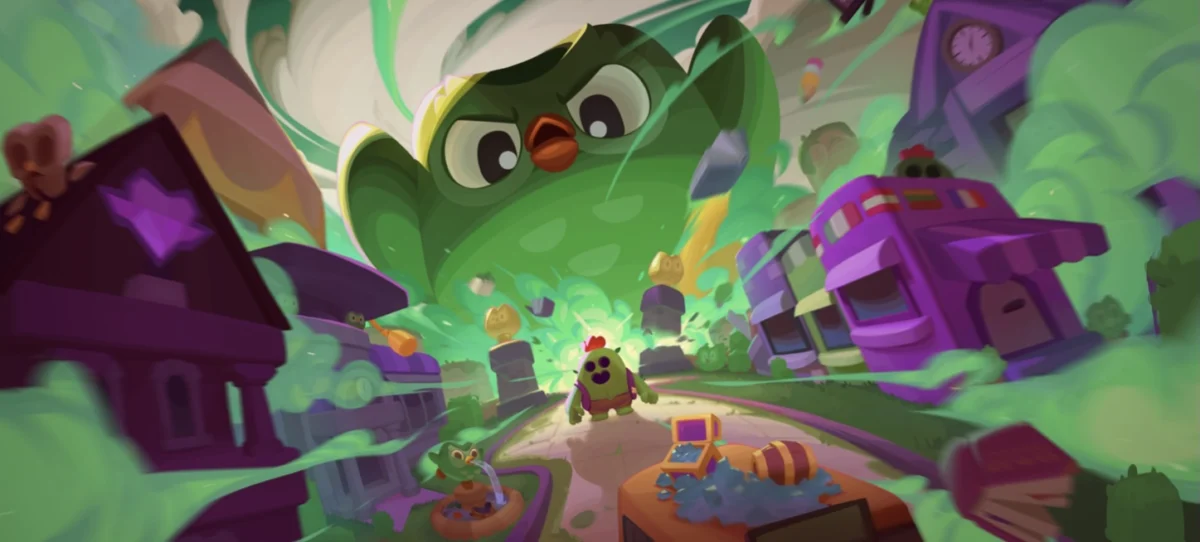
The mobile gaming and educational technology sectors have witnessed an unexpected convergence as Supercell, the Finnish developer behind global hits such as Clash of Clans, and Duolingo, the world’s leading language learning platform, officially launched a collaborative crossover event. This partnership brings together two of the most recognizable figures in the mobile app ecosystem: Spike, the silent but formidable cactus from the multiplayer brawler Brawl Stars, and Duo, the notoriously persistent green owl who serves as the face of Duolingo. The event, which is scheduled to run throughout the remainder of September, integrates the characters into their respective partner apps through a narrative-driven "feud" that challenges users to engage with both platforms in novel ways.
Strategic Integration and Campaign Mechanics
The core of the collaboration revolves around a playful "beef" between the two mascots, a marketing strategy designed to leverage the highly engaged social media followings of both brands. In terms of gameplay and user experience, the crossover manifests in distinct ways across the two applications. Within the Brawl Stars environment, Duo the Owl has "taken over" Starr Park, the central thematic location of the game. This takeover includes visual updates, thematic challenges, and the presence of Duolingo-inspired aesthetics within the game’s chaotic arena.
Conversely, Spike has migrated to the Duolingo interface. Users attempting to complete their daily language streaks or engage in vocabulary lessons will find the Brawl Stars character appearing within the curriculum. This integration serves as a gamified incentive for students, blending the high-stakes competitive energy of a mobile brawler with the disciplined routine of language acquisition. The crossover is not merely cosmetic; it represents a deeper integration of brand identities, aiming to capture the attention of a demographic that overlaps significantly: Gen Z and Millennial mobile users who prioritize both entertainment and self-improvement on their devices.
The Financial Powerhouses: A Comparative Data Analysis
The partnership links two of the most financially successful entities in the mobile software industry. According to market intelligence data from AppMagic, Duolingo has solidified its position as a dominant force in the "edutainment" space. Over its 15-year history, the platform has generated an estimated $2.62 billion in lifetime revenue through in-app purchases (IAPs) and subscriptions. Its financial momentum remains robust; in the last 30 days alone, Duolingo generated approximately $65 million in revenue. This consistent performance is bolstered by a massive user base, with lifetime downloads exceeding 1.14 billion.
Brawl Stars, while younger than Duolingo, operates on a similar scale of financial impact. Since its global launch in 2018, the title has amassed an estimated $2.42 billion in lifetime IAP revenue. While its monthly revenue of $16 million in the most recent 30-day period is lower than Duolingo’s, Brawl Stars maintains a staggering engagement rate among its 558 million lifetime downloaders. The discrepancy in monthly revenue can be attributed to the differing monetization models: Duolingo relies heavily on a recurring subscription model (Super Duolingo), whereas Brawl Stars utilizes a seasonal "Brawl Pass" and microtransactions for cosmetic and progression items, which often fluctuate based on the timing of major content updates.
Historical Context: Duolingo’s Pivot Toward Gaming
This collaboration is not an isolated experiment for Duolingo but rather the latest step in a multi-year strategy to "gamify" education. The company has long maintained that the greatest obstacle to learning a language is lack of motivation, a problem they have addressed by adopting the mechanics of mobile games—streaks, leaderboards, experience points, and virtual currencies.
The company’s commitment to the gaming sector was further solidified in late 2023 when Duolingo executed a significant "acqui-hire" of talent from Space Ape Games and NextBeat. This move brought in veteran gaming executives like Simon Hade, the co-founder of Space Ape. Following this acquisition, Duolingo made the strategic decision to shutter existing music games such as Beatstar and Country Star to focus the newly acquired talent on enhancing the core Duolingo experience and its burgeoning Music and Math branches.
Simon Hade has previously indicated that Duolingo remains active in seeking out small, high-performing teams for further acqui-hires. The goal is to refine the app’s engagement loops to match the retention levels seen in top-tier mobile games. This crossover with Brawl Stars serves as a high-profile validation of that strategy, allowing Duolingo to study how a dedicated gaming audience interacts with educational content when presented through a familiar intellectual property.
Supercell’s Marketing Evolution and Collaborative History
For Supercell, the partnership with Duolingo represents a continuation of its efforts to keep Brawl Stars at the forefront of the cultural zeitgeist. After a period of plateauing growth, Brawl Stars underwent a massive resurgence in late 2023 and early 2024, driven by a series of aggressive updates and high-profile marketing campaigns. The developer has increasingly looked toward external partnerships to broaden its reach.
Historically, both companies have dabbled in these types of crossovers. Duolingo famously partnered with Angry Birds in 2020 and more recently collaborated with the global hit Genshin Impact. Supercell has also been active in this space, recently using its newest title, Squad Busters, to cross-promote characters across its entire portfolio, including Clash of Clans and Hay Day. The synergy between Duolingo and Supercell is particularly potent because both brands have cultivated "unhinged" social media personas—Duo is often portrayed as a menacing figure who demands practice, while Spike is the silent, unpredictable wildcard of the Brawl Stars roster.
Chronology of the Collaboration and Industry Trends
The timeline for the current event is concise, designed to create a sense of urgency among players and learners.
- Early September: Social media teasers began appearing on X (formerly Twitter) and TikTok, hinting at a conflict between Spike and Duo.
- Mid-September: Official trailers were released, detailing the "takeover" of Starr Park and the inclusion of Spike in Duolingo lessons.
- September 15–30: The active phase of the crossover, featuring in-game challenges in Brawl Stars and thematic rewards in Duolingo.
- Post-September: Analysis phase where both companies will likely evaluate user acquisition and retention metrics to inform future collaborative efforts.
This event reflects a broader trend in the mobile industry where the lines between "utility" apps and "entertainment" apps are blurring. Industry analysts suggest that as the cost of user acquisition (UA) continues to rise due to privacy changes like Apple’s App Tracking Transparency (ATT), organic growth through high-profile crossovers has become a vital tool for major developers. By tapping into each other’s massive install bases, Supercell and Duolingo are effectively bypassing traditional advertising channels to reach millions of potential new users.
Implications for the Mobile Ecosystem
The implications of the Supercell-Duolingo partnership extend beyond simple cross-promotion. It signals a shift in how educational platforms view their competition. Duolingo’s executives have frequently stated that their primary competitors are not other language apps, but rather social media and gaming platforms that vie for the user’s "disposable time." By integrating directly with a competitor like Brawl Stars, Duolingo is attempting to turn a rival for attention into a funnel for engagement.
From a technical and design perspective, the integration of Spike into Duolingo’s curriculum suggests a modular approach to lesson design, where third-party assets can be swapped in to keep the experience fresh. For Supercell, seeing their characters in an educational context reinforces the brand’s versatility and its status as a lifestyle brand rather than just a software provider.
Conclusion and Future Outlook
As the crossover event proceeds through the end of September, the industry will be watching closely to see if this unconventional pairing yields a measurable spike in daily active users (DAU) for either platform. The success of the "Duo in Starr Park" campaign could pave the way for more permanent integrations between gaming and non-gaming apps.
With Duolingo’s recent moves to absorb gaming talent and Supercell’s revitalized approach to community engagement, the partnership is a logical evolution for two companies that dominate the mobile screen. Whether this leads to more permanent collaborations or remains a seasonal marketing stunt, it has undeniably set a new benchmark for how mobile giants can collaborate to capture the fleeting attention of the modern digital consumer. The "beef" between Spike and Duo may be fictional, but the business strategy behind it is a calculated move to secure dominance in an increasingly crowded app marketplace.
About the Author