The mobile gaming landscape has witnessed a significant development as King, the powerhouse behind the Candy Crush franchise, and Mojang Studios, the creators of the global phenomenon Minecraft, have officially returned their collaborative project, Minecraft Blast, to a soft-launch testing phase. Currently restricted to the Malaysian Google Play Store, this latest iteration of the title represents a refined attempt to merge the world-building aesthetics of Minecraft with the high-retention puzzle mechanics that have made King a leader in the casual gaming sector. This relaunch follows a brief and experimental testing period nearly a year ago, signaling that the developers have utilized the intervening months to overhaul the game’s core systems, visual assets, and progression loops based on preliminary data.
Technical Specifications and New Feature Integration
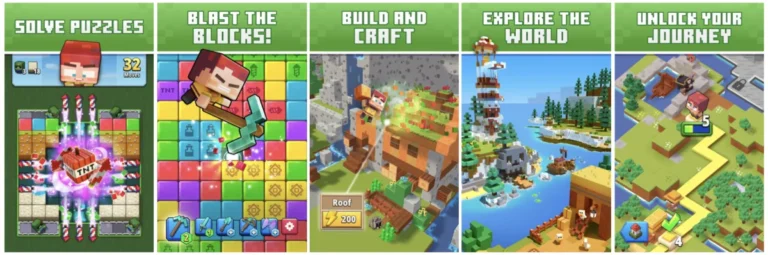
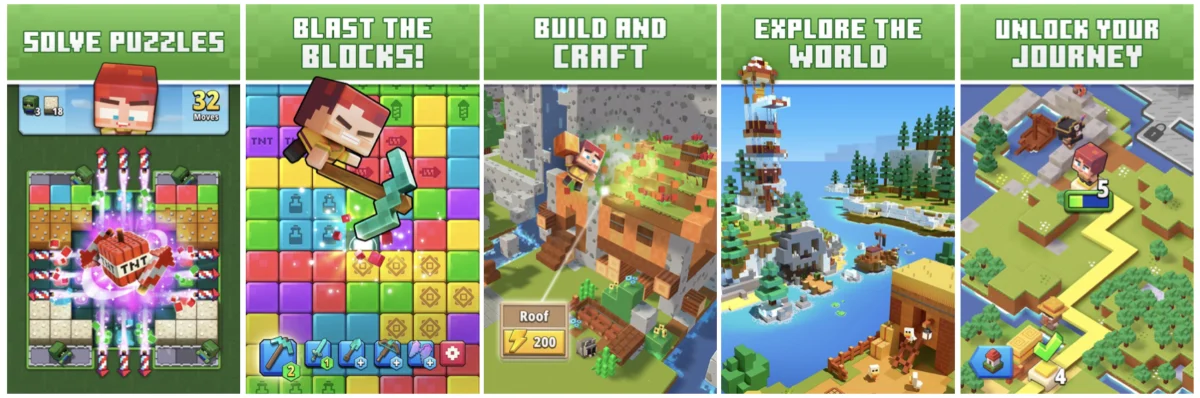
The updated version of Minecraft Blast arrives with a comprehensive suite of new content designed to increase player longevity and monetization potential. According to the latest store listings and technical blurbs, the game now features six additional "blockers"—unique obstacles within the puzzle grid that require specific strategies to clear—and four new story chapters that expand the narrative scope of the experience. The inclusion of a new Raid Tournament and a weekly leaderboard contest indicates a shift toward competitive social play, a strategy frequently employed by King to maintain engagement in its mature titles.
One of the most notable additions is the customizable companion system, or "Buddy" character. Players can now personalize a digital companion that accompanies them through the puzzle levels, meeting iconic Minecraft entities such as Chickens, Zombies, and Creepers along the way. This system is integrated into a building-based meta-game where players use rewards earned from puzzle "blasts" to design, decorate, and expand their own Minecraft-themed environments. The gameplay loop appears to follow a proven industry standard: players complete levels to earn resources, which are then spent on cosmetic and structural upgrades to a persistent world map.
A Chronology of Development: From iOS Testing to Google Play Relaunch
The journey of Minecraft Blast has been characterized by a cautious, data-driven approach to market entry. The game first surfaced in a quiet soft launch in November 2025, appearing on the iOS platform in both Malaysia and Canada. During that initial phase, the game was framed as a experimental spin-off, testing the waters for how a "blast" mechanic (where players tap groups of identical blocks rather than sliding them, as seen in traditional match-3 games) would resonate with the Minecraft audience.
However, data from industry trackers such as AppMagic indicates that the game was removed from storefronts just one month later, in December 2025. This brief window is often indicative of a "technical soft launch," where developers test server stability and initial user acquisition costs before retreating to iterate on the core product. The gap between the December 2025 removal and the September 2026 relaunch suggests a significant redevelopment period. The current version features notably updated graphics, a more polished user interface, and a trailer that highlights a Candy Crush-style map progression system, suggesting that King has integrated more of its proprietary "Saga" architecture into the Minecraft framework.

The Strategic Alliance: King, Mojang, and the Microsoft Synergy
The collaboration between King and Mojang Studios is a logical extension of Microsoft’s broader gaming strategy. Following Microsoft’s acquisition of Mojang in 2014 for $2.5 billion and the subsequent $68.7 billion acquisition of Activision Blizzard (King’s parent company) in 2023, the tech giant now holds two of the most valuable intellectual properties in gaming history. Minecraft Blast represents a concerted effort to leverage the synergy between these two subsidiaries.
While Mojang provides the brand power and the iconic "blocky" aesthetic that appeals to hundreds of millions of players worldwide, King provides the operational expertise in casual mobile gaming. King’s ability to manage live-ops, optimize in-app purchases, and maintain player retention over years—if not decades—is unparalleled in the industry. By applying the "King formula" to the Minecraft IP, Microsoft is attempting to capture a segment of the casual market that may find the core Minecraft sandbox experience too complex or time-consuming, but who are nonetheless fans of the brand.
Market Context and the "Blast" Genre Competitive Landscape
The mobile puzzle market has shifted significantly in recent years. While the match-3 genre (exemplified by Candy Crush Saga) remains dominant, the "blast" or "collapse" genre has seen a massive surge in popularity due to titles like Toon Blast and Toy Blast by Peak Games (owned by Zynga/Take-Two), and more recently, the meteoric rise of Royal Match by Dream Games.
Minecraft Blast enters a crowded field where the "tap-to-clear" mechanic is the primary draw. To differentiate itself, Minecraft Blast relies heavily on its meta-game. The ability to "build the world around you in seconds" addresses a common criticism of casual puzzle games: the lack of a meaningful sense of progression. By allowing players to discover locations such as bustling villages, mysterious caves, and pirate ships—all rendered in the signature Minecraft style—the game provides a visual and creative reward for puzzle mastery.
Analyzing the Choice of Malaysia for Soft Launch
The decision to relaunch specifically in Malaysia on the Google Play Store is a calculated move common in the mobile gaming industry. Malaysia is frequently cited by analysts as an ideal "testbed" territory for several reasons:
- English Proficiency: A high percentage of the population is fluent in English, allowing developers to test localized content without the immediate need for multiple language versions.
- Representative Demographics: The user base in Malaysia often mirrors the spending habits and engagement patterns of larger Western markets but at a lower cost of user acquisition (UA).
- Android Dominance: With Google Play being the primary storefront in the region, developers can gather high volumes of technical data regarding device compatibility and performance across a wide range of hardware specifications.
By limiting the launch to this region, King and Mojang can monitor the "Raid Tournament" and "Weekly Leaderboard" features in a controlled environment, ensuring the social and competitive balance is tuned before a global rollout.

Broader Implications for the Minecraft Franchise
Minecraft Blast is not the first time Mojang has attempted to branch out into the mobile spin-off market. Previous efforts, such as the augmented reality (AR) title Minecraft Earth, struggled to find a sustainable audience and were eventually shut down. However, unlike Minecraft Earth, which required significant physical movement and complex AR integration, Minecraft Blast stays within the comfortable, high-margin territory of casual puzzle gaming.
The success of Minecraft Blast would solidify Minecraft as a "platform" rather than just a single game. It follows the path of other successful IP expansions like Minecraft Dungeons and Minecraft Legends, though it targets a much broader, more casual demographic. If the soft launch metrics in Malaysia prove successful, industry experts anticipate a phased rollout to other Tier-1 markets, including the United States and United Kingdom, potentially by early 2027.
Conclusion: The Road to Global Release
As of late 2026, the mobile gaming industry remains in a period of consolidation and refinement. The return of Minecraft Blast signifies that Microsoft is not content to let its premier IP sit idle in the mobile space. By combining King’s data-driven design philosophy with Mojang’s creative world-building, Minecraft Blast aims to be more than just another puzzle game; it is an attempt to create a "forever game" that occupies the home screens of millions.
The next few months of the Malaysian soft launch will be critical. Analysts will be watching for updates regarding monetization balance, the frequency of new content drops, and the stability of the new social features. If King can successfully capture the "special charm" of Minecraft within the confines of a mobile puzzle grid, Minecraft Blast may well become the next multi-billion-dollar pillar in Microsoft’s gaming portfolio. For now, the "delightful block-puzzle adventure" remains a regional exclusive, as the developers fine-tune the experience for a world waiting to blast through the Nether and beyond.
About the Author