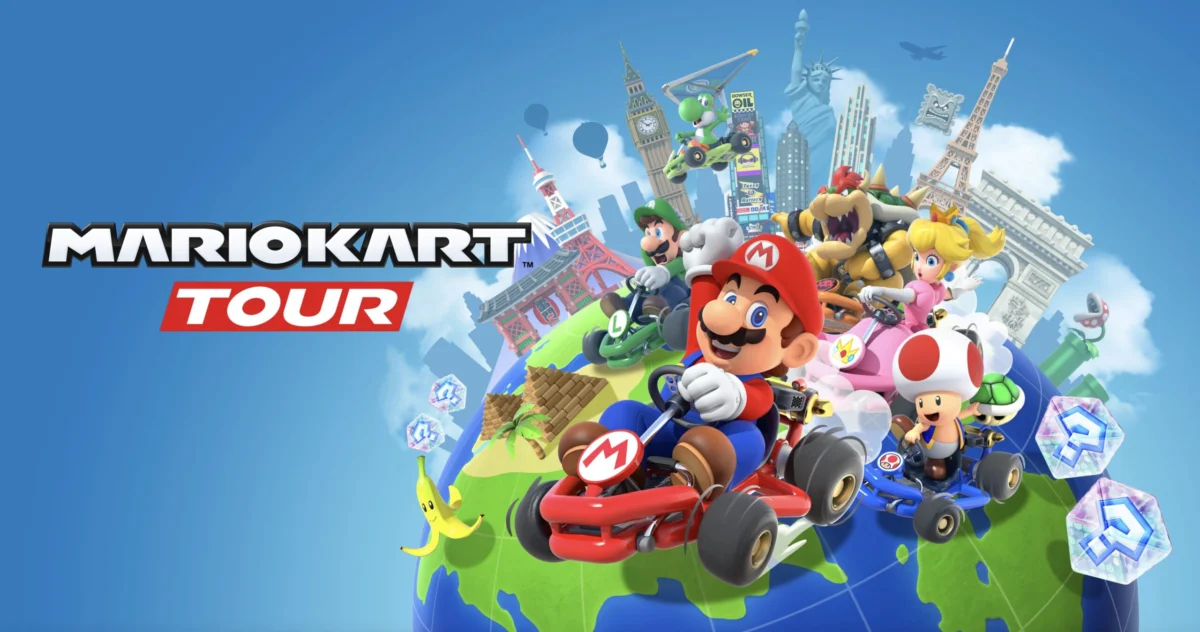
Nintendo has officially shuttered Mario Kart Tour, concluding the service of its high-profile mobile racing title after a five-year global run. The shutdown, which occurred on September 29 at 11:00 p.m. PT (September 30 at 8:00 a.m. CEST), marks the end of one of Nintendo’s most ambitious attempts to translate its premier console franchises to the smartphone ecosystem. While the application remains listed on digital storefronts like the Apple App Store and Google Play, it is no longer functional. Players attempting to launch the game are now met with a notification stating that service has concluded, accompanied by a maintenance message scheduled to persist until January 2026.
The decision to terminate the game follows a trend of Nintendo scaling back its mobile presence, a strategy that began in earnest nearly a decade ago. The company first announced the impending closure on July 8, 2024. In its official statement, the Kyoto-based gaming giant offered no specific reason for the cessation of service, choosing instead to focus on a message of gratitude toward the millions of players who supported the title since its debut.
The Rise and Performance of a Mobile Giant
Mario Kart Tour launched worldwide in September 2019 to unprecedented fanfare. At the time, it represented the pinnacle of Nintendo’s "mobile-first" philosophy, aiming to capture the casual gaming market through the ubiquitous nature of smartphones. The launch was, by all accounts, a historic success for the company. According to data from AppMagic, the game achieved a staggering 14.7 million downloads within its first 24 hours of availability, peaking on September 26, 2019.
The momentum continued through its opening month, with the title racking up 54 million downloads in its first week and 81.8 million by the end of its first 30 days. Over its entire lifespan, Mario Kart Tour is estimated to have been downloaded more than 276 million times. Financially, the game was a significant contributor to Nintendo’s mobile revenue stream, generating approximately $268.5 million in lifetime in-app purchase (IAP) revenue.
However, the financial trajectory of the game was one of early peaks followed by a steady decline. The title’s most lucrative period was immediately following its launch, earning nearly $22 million in October 2019 alone. Despite the massive initial interest, Nintendo struggled to maintain that revenue momentum. For much of 2020 and 2021, monthly IAP revenue stabilized at approximately $5 million to $6 million. By late 2021 and throughout 2022, this figure had dropped to an average of $3 million per month. By the time the shutdown was announced in July 2024, the game was generating roughly $650,000 per month—a fraction of its early earnings.
Regional Market Analysis and Consumer Behavior
The financial success of Mario Kart Tour was heavily concentrated in specific geographic regions. The United States emerged as the primary driver of revenue, accounting for 39% of the $268.5 million lifetime total. Japan followed as the second-largest market, contributing 26% of the total revenue. Other international markets, including France, Germany, and the United Kingdom, represented smaller shares, each hovering between 5% and 6%.
In terms of user acquisition and downloads, the distribution was slightly more varied. The United States again led the charts with 21% of all downloads, but Mexico (12%) and Brazil (9%) showed significant engagement, highlighting the brand’s strength in Latin American markets. Japan, despite its high revenue per user, accounted for only 7% of total downloads, suggesting a more dedicated and high-spending player base in Nintendo’s home country compared to the broader global audience.
The Pivot from Gacha to Transparency
One of the most significant turning points in the history of Mario Kart Tour was Nintendo’s decision to overhaul its monetization model in late 2022. For the first three years of its life, the game relied heavily on "gacha" mechanics—a system where players spend in-game currency for a chance to receive randomized rewards, such as rare drivers or karts. This model, while lucrative, faced increasing scrutiny from regulators worldwide and criticism from players who preferred more direct purchasing options.
In September 2022, Nintendo removed the randomized "Pipe" system and replaced it with the "Spotlight Shop," which allowed players to purchase specific items directly. While this move was praised for its transparency and consumer-friendliness, it appeared to hasten the decline in revenue. Without the "gambling" element that often drives high spending in mobile games, the monthly earnings began to dip significantly, eventually leading to the levels seen just prior to the shutdown.
A Legacy of Content: 546 Courses
To commemorate the closure, Nintendo released a series of "Final MKT Reports" via the game’s official social media channels. These reports highlighted the sheer scale of the content produced for the mobile title. Over its five-year run, Mario Kart Tour featured a total of 546 courses. This included original tracks, classic courses from previous Mario Kart entries, and unique "City" tracks based on real-world locations such as London, Paris, Tokyo, and New York.
The legacy of Mario Kart Tour lives on through the Mario Kart 8 Deluxe – Booster Course Pass on the Nintendo Switch. Many of the original assets and remastered tracks developed specifically for the mobile game were eventually ported to the console version, ensuring that the work done by the development team remains accessible to the millions of players on Nintendo’s primary hardware platform. This cross-pollination of content suggests that while the mobile service has ended, the creative output of the project was integral to the longevity of the franchise as a whole.
Chronology of Mario Kart Tour
- September 2019: Global launch on iOS and Android; achieves record-breaking 14.7 million downloads in 24 hours.
- October 2019: Reaches peak monthly revenue of $22 million.
- 2020–2021: Revenue stabilizes at $5–$6 million per month; introduction of new city tracks and the "Gold Pass" subscription model.
- September 2022: Nintendo announces the removal of gacha mechanics (the "Pipe" system).
- October 2022: The Spotlight Shop is introduced, allowing for direct purchases of in-game items.
- Late 2022–2023: Revenue continues a steady decline as new content updates begin to slow.
- July 8, 2024: Nintendo officially announces the termination of service for September.
- September 29, 2024: Servers are officially powered down; the game enters a permanent maintenance state.
Broader Implications for Nintendo’s Mobile Strategy
The closure of Mario Kart Tour is widely seen by industry analysts as a definitive signal that Nintendo is pivoting away from the mobile gaming market. When Nintendo first entered the space in 2016 with the release of Super Mario Run, it was a landmark moment—the first time a first-party Mario title appeared on non-Nintendo hardware. This was followed by a string of releases, including Fire Emblem Heroes, Animal Crossing: Pocket Camp, and the original IP Dragalia Lost.
However, the results of this mobile expansion have been mixed. While Fire Emblem Heroes has been a massive financial success, generating over $1 billion in revenue, other titles have struggled to maintain long-term profitability. Dragalia Lost was shut down in 2022, and Animal Crossing: Pocket Camp is also slated for a transition to a paid, offline version in late 2024.
Nintendo’s shift in focus appears to be driven by the immense success of the Nintendo Switch. The company has found that its intellectual property is most valuable when it serves as a "system seller" for its own hardware. While mobile games were initially intended to act as a funnel to bring new users into the Nintendo ecosystem, the company now seems more interested in expanding its IP through other mediums, such as the Super Mario Bros. Movie and the expansion of Super Nintendo World theme parks.
The end of Mario Kart Tour marks the conclusion of a specific experiment in high-frequency, live-service mobile development for Nintendo. As the company prepares for its next generation of hardware, its mobile efforts appear to be transitioning into a secondary role, focusing on utility apps like Nintendo Switch Online or smaller, niche experiences rather than massive, revenue-driving competitive games. For the millions of fans who spent five years racing on their phones, the "Final MKT Report" serves as a digital eulogy for a game that, for a time, made the world’s most popular racing franchise truly portable.
About the Author