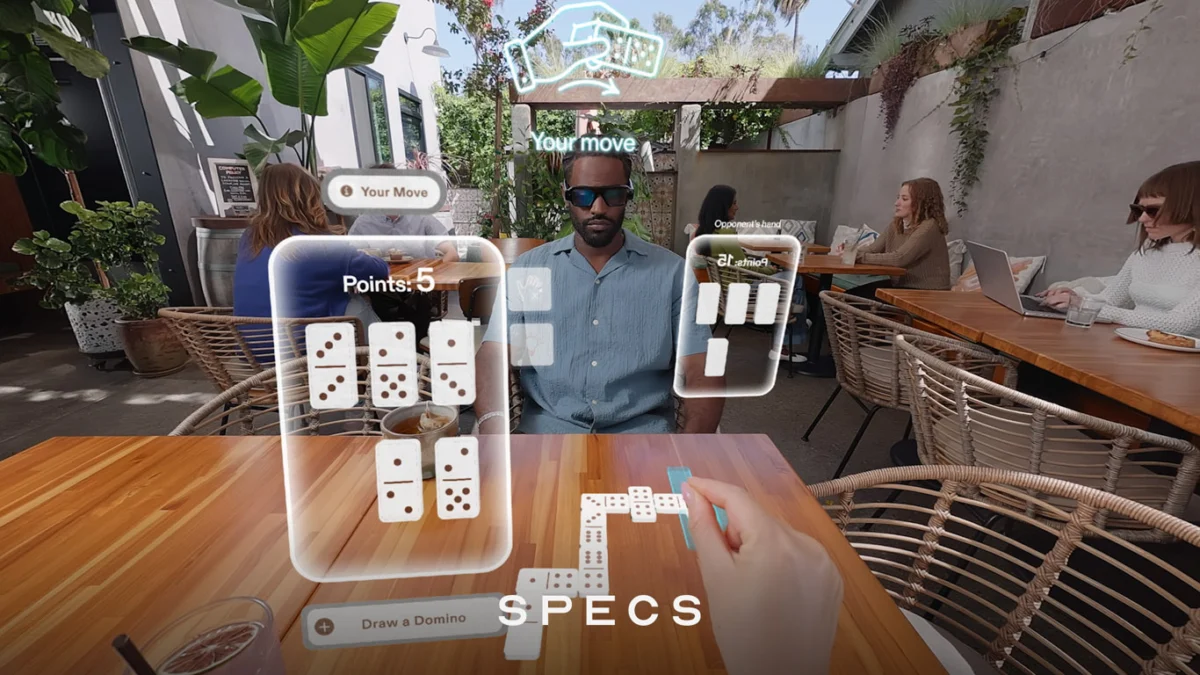
Strategic Hardware Advancements and Cellular Connectivity
One of the most significant technical hurdles for standalone AR glasses has historically been the reliance on a tethered smartphone or a localized Wi-Fi network for data-intensive tasks. To address this, Snap has introduced a dedicated charging case equipped with independent cellular connectivity. This accessory, known as the SPECS Connected Case, allows the glasses to maintain a persistent high-speed internet connection without requiring a nearby mobile device.

The hardware bundle, which includes the glasses and the cellular-enabled case, is priced at $2,395. To facilitate adoption, Snap has secured partnerships with major global carriers, including Verizon in the United States, Orange in France, and EE in the United Kingdom. In the U.S. market, Verizon will offer specialized data plans for the wearable starting at $10 per month for existing customers and $20 for non-customers. Furthermore, financing options extending up to 36 months are being implemented to mitigate the high upfront cost of the device. This move mirrors the distribution models of high-end smartphones and tablets, signaling Snap’s intent to treat the Specs as a primary computing device rather than a secondary accessory.

Pivoting Toward Enterprise and Professional Solutions
While Snap’s previous iterations of Spectacles were largely seen as experimental tools for creators, the new Specs launch emphasizes industrial and corporate applications. The company has announced a suite of partnerships with global technology leaders, including Amazon Web Services (AWS), Salesforce, NVIDIA, and HoloLight. These collaborations are designed to provide turnkey solutions for remote assistance, data visualization, and hands-free logistics.

A cornerstone of this enterprise push is the integration of NVIDIA’s XR AI framework. This allows employees to interact with AI assistants hosted on local workstations, ensuring that sensitive corporate data remains within the company’s internal network while being accessible through the AR interface. Snap has also addressed the administrative needs of large organizations by ensuring compatibility with Mobile Device Management (MDM) systems. This allows IT departments to deploy, secure, and update fleets of Specs glasses across a global workforce, a feature that is essential for competing with established enterprise AR players like Microsoft’s HoloLens and Magic Leap.

Specs Intelligence: A Multi-Platform AI Ecosystem
In a move to compete with Meta’s recent AI advancements, Snap has unveiled "Specs Intelligence," a sophisticated personal assistant designed to operate across a user’s entire digital life. Unlike traditional voice assistants that are confined to a single device, Specs Intelligence is designed to be multi-platform, maintaining continuity between a user’s Mac, iOS device, and Specs glasses.

The AI assistant utilizes spatial awareness to understand the user’s physical context. By integrating with third-party applications like calendars and productivity suites, the system can provide proactive reminders, book travel, and offer real-time digests of the user’s daily activities. A key differentiator in Snap’s approach is the emphasis on contextual relevance; because the glasses "see" what the user sees, the AI can offer information about physical objects or environments in real-time.

Addressing the inevitable privacy concerns associated with persistent AI monitoring, Snap has issued a formal commitment to data security. The company stated that personal content processed by Specs Intelligence will not be used to train its proprietary AI models or to serve targeted advertisements. Furthermore, the system relies on a combination of on-device processing and secure cloud infrastructure to minimize the risk of data exposure.

Expanding the Content Ecosystem through Cultural Partnerships
To demonstrate the versatility of the device, Snap has curated a diverse range of "Lenses" and applications that span sports, entertainment, and education. The company collaborated with several "visionaries" and high-profile partners to showcase the hardware’s potential:

- Athletic Training: In partnership with the NBA and WNBA, Snap has developed interactive basketball Lenses. These applications use spatial tracking to provide visual guidance and drills while a player uses a physical ball and hoop. Similar applications have been developed for soccer, golf, and general wellness through a partnership with the ALO Wellness Club.
- Entertainment and Media: To coincide with the upcoming HBO Original Series, Harry Potter and the Philosopher’s Stone, Snap has launched a themed AR experience. This allows users to engage with elements of the Wizarding World, such as casting spells and interacting with virtual magical objects. Additionally, the Specs browser now supports native streaming from platforms like YouTube and HBO Max, projecting a virtual 115-inch display for a cinematic viewing experience.
- Education and Utility: The Starmap Lens overlays constellations onto the night sky, while the Apollo 11 Lens provides a 3D recreation of the historic moon mission. For practical utility, the glasses offer real-time translation for up to 60 languages and AR-guided navigation through a partnership with TripAdvisor.
Privacy, Logistics, and Market Position
Snap has integrated several hardware-level privacy features to address public concerns regarding wearable cameras. A prominent external LED on the frame illuminates whenever the device is recording video or audio, providing a clear signal to bystanders. The company also clarified that the device does not employ facial recognition technology and does not continuously save ambient audio or video data unless prompted by the user.

To drive consumer engagement, Snap is launching its first "SPECS First Look" experience center at Westfield Century City in Los Angeles on October 1. This facility will allow the public to test the hardware and interact with technical representatives, addressing the industry-wide challenge of explaining AR utility through traditional 2D marketing.

The base model of the Specs glasses is priced at $2,195, with a $200 refundable deposit required for pre-orders. Shipping is scheduled to commence in late 2024 for customers in the United States, United Kingdom, and France.

Industry Analysis and Future Outlook
The launch of the 5th generation Specs represents a calculated gamble by Snap. By pricing the device at over $2,000, the company is avoiding a direct confrontation with lower-cost "smart glasses" and instead positioning itself in the premium spatial computing tier alongside the Apple Vision Pro and high-end enterprise headsets.

However, market analysts note a potential disconnect between the device’s high price point and its consumer-facing content, such as games and entertainment Lenses. The success of the Specs will likely depend on the "enterprise route" proving fruitful. If Snap can successfully integrate into the workflows of companies using Salesforce and AWS, it may establish a sustainable niche that justifies the continued development of its AR hardware. As the ecosystem matures, the lessons learned from this high-end deployment will likely inform more affordable, consumer-ready versions of the technology in the years to come.
About the Author