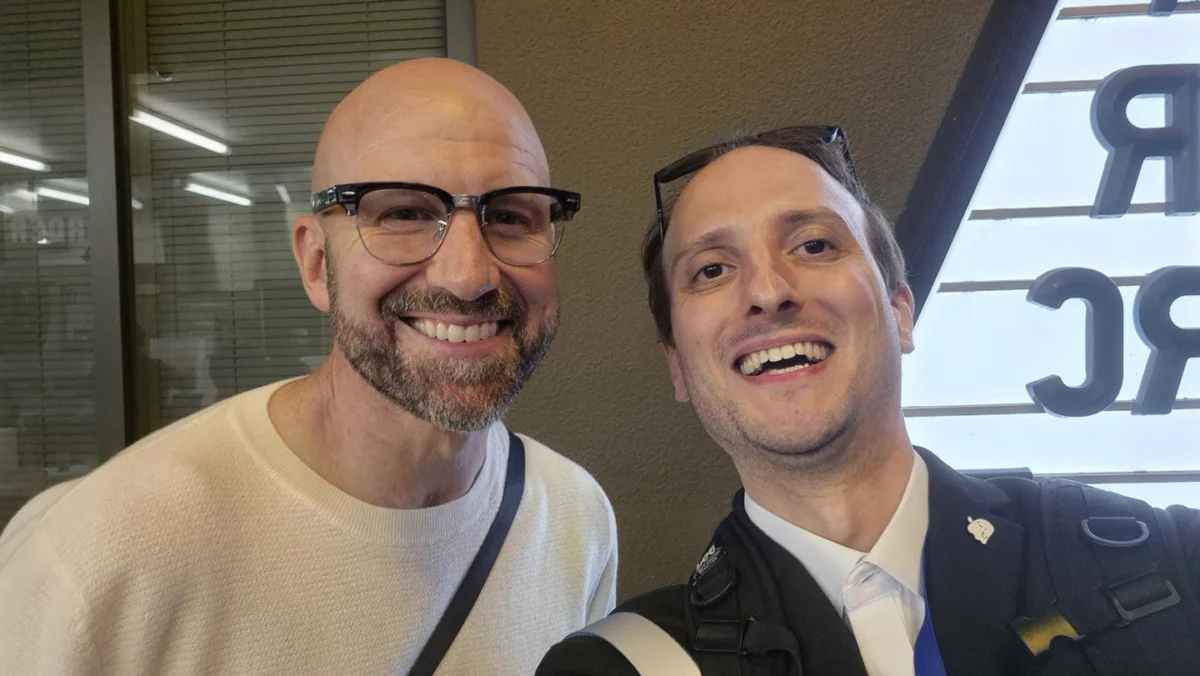
During the annual Meta Connect developer conference, Andrew “Boz” Bosworth, Chief Technology Officer of Meta, provided rare, unscripted insights into the company’s hardware performance and future research directions. In an informal encounter that bypassed traditional public relations channels, Bosworth addressed critical questions regarding the adoption of the Quest headset lineup, the technical feasibility of smart contact lenses, and the foundational principles of technology leadership.
The interaction occurred against the backdrop of Meta’s most significant hardware transition in recent years, following the launch of the Quest 3S, a budget-friendly entry into the mixed-reality ecosystem. Bosworth’s comments shed light on internal data that may redefine how the company approaches future consumer wearable designs.
Market Trends: Quest 3 and the Shift Toward Quality
A central theme of the discussion involved the market performance of the Meta Quest 3 and its lower-cost counterpart, the Quest 3S. Traditionally, the virtual reality (VR) market has been highly price-sensitive, with the Quest 2’s success largely attributed to its aggressive $299 price point. However, Bosworth revealed a surprising trend in consumer behavior following the release of the Quest 3S.
According to Bosworth, internal metrics indicated that the premium Quest 3 continued to sell at levels nearly equal to the Quest 3S, despite the $200 price difference. This data suggests that a significant segment of the consumer base now prioritizes "comfort and quality of experience"—specifically the higher resolution, pancake lenses, and slimmer profile of the Quest 3—over the lowest possible entry price.

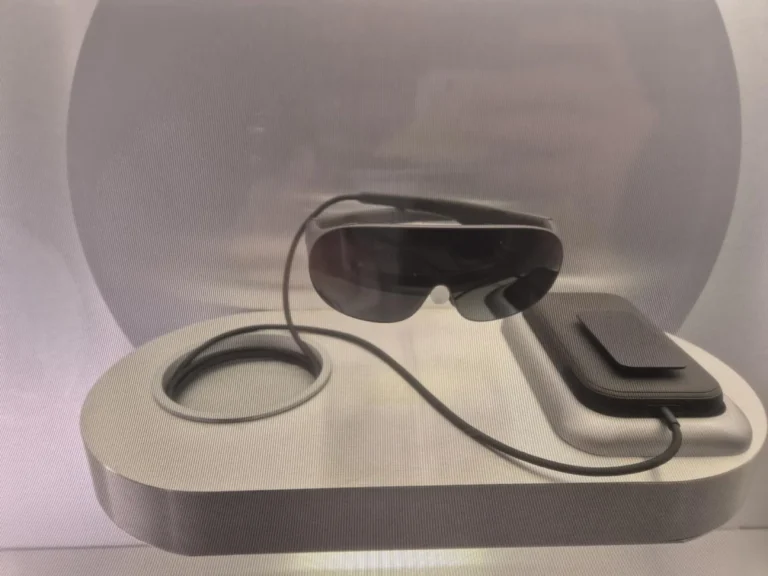
This shift in consumer sentiment has direct implications for Meta’s hardware roadmap. Bosworth noted that this trend gave the engineering teams the confidence to pursue the lightweight form factor seen in the company’s recent AR glasses prototypes. The objective for Reality Labs, Meta’s hardware division, is now focused on maintaining a lightweight, high-performance form factor while aggressively working to reduce manufacturing costs and retail pricing for future generations.
The Technical Hurdles of Smart Contact Lenses
While science fiction and early-stage tech startups have long promised the advent of augmented reality (AR) contact lenses, Bosworth offered a pragmatic assessment of why Meta is currently avoiding this path. The CTO identified power delivery and physical volume as the primary "deal-breakers" for the technology.
Bosworth explained that for a contact lens to possess enough computational power and display brightness to be useful, it would currently require a "bulky scleral lens" design. Unlike standard corneal lenses, scleral lenses are larger, resting on the white of the eye (the sclera) and creating a fluid-filled reservoir. These lenses are significantly more invasive and less comfortable for the average user.
Meta’s research indicates that until a solution is found that provides sufficient power without the need for a large scleral footprint, the technology remains unviable for the mass market. Consequently, the company remains focused on smart glasses and head-mounted displays, which offer a more manageable balance of thermal dissipation, battery life, and user comfort.
Leadership and the CTO Role at Meta
In addition to technical insights, Bosworth discussed the internal culture of Meta and the requirements for leading one of the world’s largest research and development divisions. Since taking over as CTO in 2022, Bosworth has overseen the transition from Facebook to Meta and the subsequent focus on the "Metaverse" and Artificial Intelligence.

He defined effective technology leadership not through popularity, but through "consistency and trust." According to Bosworth, a CTO’s primary responsibility is to establish a clear vision and set of principles that employees can follow even in the leader’s absence. He emphasized that leadership involves making unpopular decisions, such as canceling projects or shifting resources, and maintaining the trust of the workforce by ensuring those decisions are grounded in the long-term vision of the company.
Chronology of Meta’s Hardware Evolution
The insights provided by Bosworth at the conference are part of a broader timeline of Meta’s aggressive expansion into wearable technology:
- October 2023: Launch of the Quest 3, introducing high-fidelity color passthrough and mixed reality to the consumer market.
- September 2024: Introduction of the Quest 3S, intended to replace the aging Quest 2 as the entry-level device.
- Late 2024: Demonstration of "Orion" (formerly known by various internal codenames), a prototype of true AR glasses utilizing silicon carbide optics and neural interface wristbands.
The CTO’s presence at the conference dining area, engaging directly with independent developers and journalists, highlights a period of high confidence within Meta’s leadership. This follows a year where Meta’s stock reached record highs, driven largely by the integration of AI across its social media platforms and the stabilization of the Reality Labs division’s strategy.
Analysis of Broader Industry Implications
Bosworth’s revelation regarding Quest 3 sales parity with the 3S is a significant data point for the broader XR (Extended Reality) industry. It suggests that the "enthusiast" phase of VR is maturing into a "quality-first" phase. This could impact competitors like Apple, whose Vision Pro sits at a much higher price point, by proving that there is a middle ground where consumers are willing to pay for better optics and ergonomics without reaching the $3,500 threshold.
Furthermore, Meta’s dismissal of contact lenses in favor of glasses aligns with the current industry trend toward "ambient computing." By focusing on frames that look like traditional eyewear but house powerful AI and AR capabilities, Meta is betting on social acceptability as the primary driver of adoption.

Official Context and Future Outlook
Meta Connect served as a milestone for the company’s 10th year in the VR space, dating back to the acquisition of Oculus in 2014. The event showcased the "Orion" AR glasses, which Bosworth and CEO Mark Zuckerberg have touted as the most advanced personal electronics device ever built.
While Bosworth confirmed that the demos at the event proceeded smoothly, the company remains cautious about release dates for its most advanced AR prototypes. The focus for the immediate future remains on the Quest 3 ecosystem and the expansion of the Ray-Ban Meta smart glasses, which have seen higher-than-expected demand.
The CTO’s informal remarks underscore a strategic pivot: Meta is no longer just a social media company experimenting with hardware; it is a hardware company that has identified quality, comfort, and consistent leadership as its path to dominating the next era of computing. As the conference concluded, the sentiment among attendees suggested that while the "Metaverse" hype has cooled, the practical application of wearable AI and mixed reality is closer to mainstream reality than previously estimated.
About the Author