Released in 2019, Disco Elysium swiftly established itself as a monumental achievement in video game writing and interactive storytelling. Its profound narrative garnered widespread critical acclaim, earning it two prestigious Best Narrative awards and solidifying its place as a genre-defining title. The original release presented its intricate, text-heavy dialogue largely in silence, a challenging feat for any narrative-driven experience. Yet, it succeeded in captivating players with its evocative prose and deep philosophical undertones. Building upon this already formidable foundation, Disco Elysium: The Final Cut, released in 2021, undertook the ambitious task of fully voice-acting nearly its entire script, transforming the experience and setting a new standard for immersive storytelling in role-playing games.
A Masterpiece Reimagined: The Genesis of The Final Cut
The initial release of Disco Elysium by Estonian developer ZA/UM was met with universal praise, lauded for its innovative approach to the RPG genre. Instead of traditional combat, the game centered on complex dialogue trees, internal monologues, and skill checks that manifested as personality traits speaking directly to the player character. This unique design choice, coupled with its richly imagined world of Revachol and a gripping amnesia-driven detective plot, resonated deeply with both critics and players. Publications like PC Gamer awarded it a perfect score, and it swept numerous accolades at the Game Awards 2019, including Best Narrative, Best Independent Game, Best RPG, and Fresh Indie Game. Despite its text-heavy nature, the sheer quality of the writing transcended the silent delivery, allowing players to immerse themselves in its darkly humorous, profoundly melancholic, and politically charged universe.
The announcement of Disco Elysium: The Final Cut signaled ZA/UM’s commitment to delivering the ultimate version of their acclaimed title. The headline feature was the addition of full voice acting for 99% of the original script, a staggering undertaking considering the game’s estimated one million words of dialogue, as reported by IGN. This was not merely an aesthetic enhancement but a fundamental re-envisioning of how the narrative would land. The developers aimed to infuse life into every line, ensuring that the dialogue that made the game special would be presented in an even more impactful and accessible manner.
The Transformative Power of Voice: Bringing Revachol to Life
The implementation of comprehensive voice acting in The Final Cut fundamentally altered the player’s engagement with Revachol and its inhabitants. Where previously players might have read the lines and mentally assigned tones, the professional vocal performances now dictated the emotional weight and nuance of every exchange. This change was immediately palpable: jokes became sharper, moments of emotional breakdown hit harder, and the diverse population of the fictional city of Revachol finally sounded like a real, living place. The subtle inflections, regional accents, and distinct vocal identities assigned to each character deepened the sense of immersion, drawing players further into the game’s intricate web of political intrigue, personal trauma, and existential reflection.
Beyond enhancing emotional impact, the full voice acting significantly improved the game’s accessibility. For players who prefer audio-driven narratives or those with reading difficulties, The Final Cut opened up the experience, allowing them to fully absorb the narrative without the constant need to read extensive text boxes. This thoughtful expansion underscored ZA/UM’s dedication to making their masterpiece more inclusive while simultaneously enriching the artistic presentation.
Harry Du Bois: The Sound of a Shattered Mind
At the heart of Disco Elysium: The Final Cut is Detective Harry Du Bois, the playable character who awakens with near-total amnesia. Harry is a walking contradiction: a detective with no memory of his past, an alcoholic battling his inner demons, and an erratic personality prone to both profound insights and disastrous decisions. The original game conveyed his internal turmoil through text-based internal monologues, where his various skills (Logic, Empathy, Shivers, etc.) would manifest as distinct voices in his head, offering advice, criticism, or bizarre observations.
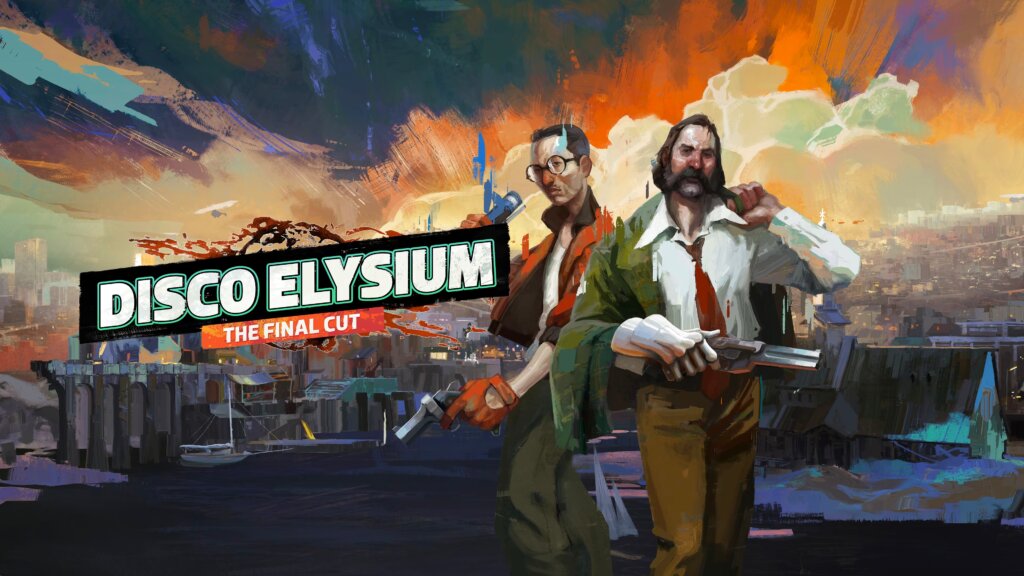
With The Final Cut, these internal struggles are given audible form. Hearing the distinct voices of Harry’s skills — a cynical, intellectual ‘Logic’ or a melancholic, intuitive ‘Shivers’ — transforms his mental landscape into a vibrant, cacophonous chorus. The voice acting amplifies his raw vulnerability and dark humor, allowing players to truly hear the sound of a man lost but desperately trying to rebuild himself. His often unpredictable and self-destructive tendencies are underscored by vocal performances that range from desperate pleas to moments of absurd self-delusion, making his journey of self-discovery all the more poignant and relatable.
Kim Kitsuragi: The Voice of Steadfast Professionalism
Contrasting Harry’s chaotic internal world is Lieutenant Kim Kitsuragi, Harry’s assigned partner from the Revachol Citizens Militia. Kim is the embodiment of professional competence: observant, patient, and grounded. He serves as Harry’s anchor, a steady presence amidst the amnesiac detective’s often bewildering antics. In The Final Cut, Kim’s vocal performance perfectly captures his understated demeanor. His calm, methodical tone provides a crucial counterpoint to Harry’s frenetic energy, making their partnership one of the game’s most compelling relationships.
Kim’s dialogue, delivered with meticulous precision and subtle expressions of exasperation or dry wit, reinforces his character as more than just a capable detective. He is a moral compass, a loyal colleague, and a surprisingly endearing presence who navigates Harry’s eccentricities with a blend of professionalism and quiet understanding. The voice acting allows the nuances of his character, from his quiet observations to his rare moments of personal revelation, to shine through with greater clarity and emotional depth.
The Omnipresent Narrator and the Inner Chorus
Perhaps one of Disco Elysium‘s most distinctive narrative devices is its Narrator, an omnipresent voice that guides the player through the world, interprets events, and often provides biting commentary. The Narrator is not merely an expository tool; it is a character in itself, shaping the player’s perception of Revachol and Harry’s unfolding reality. In The Final Cut, the Narrator’s voice is given a distinct personality, imbued with gravitas, sardonic wit, and a philosophical bent that enhances its already vital role.
Furthermore, the game’s unique skill system, where Harry’s various mental and physical attributes communicate with him directly, receives a profound upgrade with voice acting. Each skill—from the self-aggrandizing ‘Esprit de Corps’ to the anxiety-ridden ‘Inland Empire’—possesses its own distinct vocal cadence and personality. These internal dialogues, which previously relied on text, now play out as a symphony of competing thoughts and urges, making the decision-making process an even richer, more immersive experience. The Narrator and the internal skill voices together create a complex auditory tapestry that elevates the game’s philosophical and psychological exploration.
The Vibrant Tapestry of Revachol’s Inhabitants
Beyond the central duo and Harry’s internal world, Disco Elysium features an eclectic and memorable cast of non-player characters (NPCs). From the enigmatic Cuno to the union leader Evrart Claire, each character is meticulously crafted with unique perspectives, backstories, and ideological leanings. The Final Cut‘s full voice acting ensures that every encounter, no matter how brief, feels significant. The diverse vocal performances, complete with regional accents and idiosyncratic speech patterns, breathe further life into Revachol’s populace, making the city feel more alive and authentic.
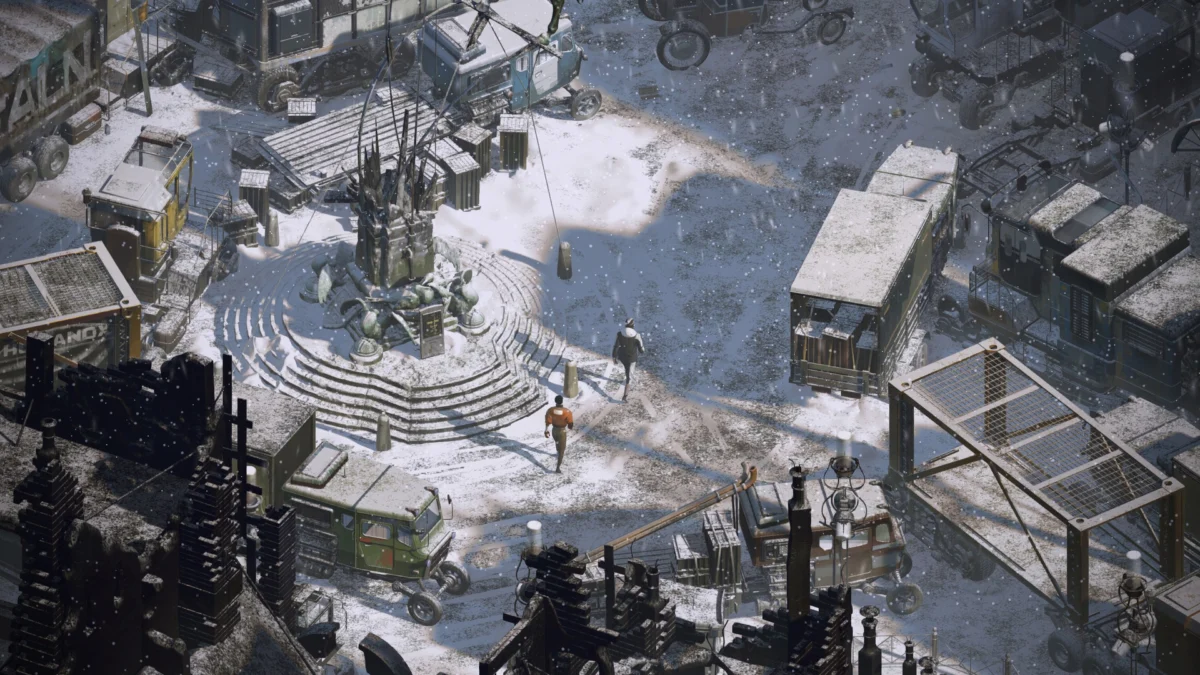
These voices contribute immensely to the world-building, immersing players in the socio-economic and political landscape of Martinaise, the district where the investigation takes place. Whether it’s the weary tone of a longshoreman, the haughty inflection of an affluent resident, or the frantic cries of a desperate citizen, the vocal performances add layers of realism and emotional resonance to the intricate web of interactions that define the game.

Beyond the Spoken Word: Story, Themes, and Gameplay Evolution
Disco Elysium: The Final Cut retains the core narrative that captivated players in 2019: Detective Harry Du Bois’s amnesia and his investigation into a murder in the beleaguered district of Martinaise. What begins as a conventional detective story quickly diverges into something far more profound. The game eschews traditional combat in favor of dialogue-driven investigations, skill checks, and virtual dice rolls that determine the success of Harry’s actions and internal deliberations. Players interrogate characters, search for evidence, and make choices that significantly impact Harry’s moral compass and his identity.
The game’s philosophical and sincere writing explores deep themes of identity, regret, political ideologies (communism, fascism, moralism, ultraliberalism), and the human condition. The narrative frequently pushes players to reflect on conflicting interpretations of the world, forcing them to confront the kind of man Harry will become. As the game itself suggests, players can "Become a hero or an absolute disaster of a human being." By the end, the murder investigation often becomes secondary to the overarching story of self-discovery and the socio-political commentary woven throughout. The Final Cut further enriched these themes by introducing new "Political Vision Quests," allowing players to delve even deeper into the ideological currents of Revachol and fully embrace (or reject) various political stances, with corresponding consequences and dialogue options.
Critical Acclaim and Community Reception
Upon its release, Disco Elysium: The Final Cut was met with renewed critical praise, solidifying its status as a definitive edition. Review aggregators like Metacritic reflect overwhelmingly positive scores, with many critics highlighting the voice acting as the single most significant improvement. Publications lauded how the new audio elevated an already brilliant script, making the characters more vivid and the emotional beats more impactful. The addition of new quests and quality-of-life improvements further cemented its reputation as the superior version of the game.
The player community also responded with enthusiasm. Long-time fans expressed delight at hearing their favorite characters speak, while new players found the fully voiced experience more accessible and immersive. The discussions around specific voice performances and how they shaped perceptions of characters underscored the profound impact of this undertaking. The Final Cut not only appeased existing fans but also attracted a new wave of players, eager to experience one of the most acclaimed narrative RPGs of recent memory in its most complete form.
The Broader Implications for RPGs and Narrative Design
Disco Elysium: The Final Cut stands as a testament to the power of exceptional writing and the transformative potential of meticulous post-launch development. It has set a new benchmark for narrative depth and presentation in role-playing games, demonstrating that an already critically acclaimed title can be significantly enhanced through a dedicated commitment to vocal performance. Its success reinforces the value of "definitive editions" that genuinely add substantial content and polish, rather than merely superficial updates.
The game’s influence on future game development is likely to be profound. It champions the idea that compelling narratives, rich characterization, and innovative dialogue systems can form the core of a successful RPG, even without traditional combat. ZA/UM’s dedication to bringing its "million words" to life through voice acting highlights the increasing importance of high-quality vocal performances in creating truly immersive and emotionally resonant gaming experiences. Disco Elysium: The Final Cut is not just a game; it is a cultural artifact, a sprawling, philosophical narrative brought to its ultimate expression, cementing its legacy as a modern classic that redefined the boundaries of interactive storytelling.
About the Author