The rapid transformation and perceived decline of Twitter, now rebranded as X, under Elon Musk’s ownership have ignited a critical debate within the tech community and beyond, highlighting the inherent vulnerabilities of centralized digital platforms and prompting a fervent call for decentralized alternatives. Tech veteran Jeff Atwood, co-founder of Stack Overflow and Discourse, has emerged as a prominent voice in this discourse, unequivocally advocating for users to abandon the platform and embrace federated, open-source solutions. His stance underscores a growing sentiment that the era of monolithic social networks, governed by singular, often capricious, authorities, must yield to models that prioritize user control, community ownership, and digital resilience.
Twitter’s Genesis: The Promise of a Global Town Square
Launched in 2006, Twitter rapidly evolved from a niche microblogging service into a global phenomenon, often hailed as the world’s digital town square. Its simple, character-limited format fostered immediate communication, breaking news dissemination, and direct engagement between public figures, organizations, and the general populace. By the early 2010s, it had become an indispensable tool for journalism, activism, and cultural exchange, offering an unfiltered, real-time window into global events. Its perceived value lay in its open nature, allowing diverse voices to converge and interact, ostensibly fostering a marketplace of ideas.

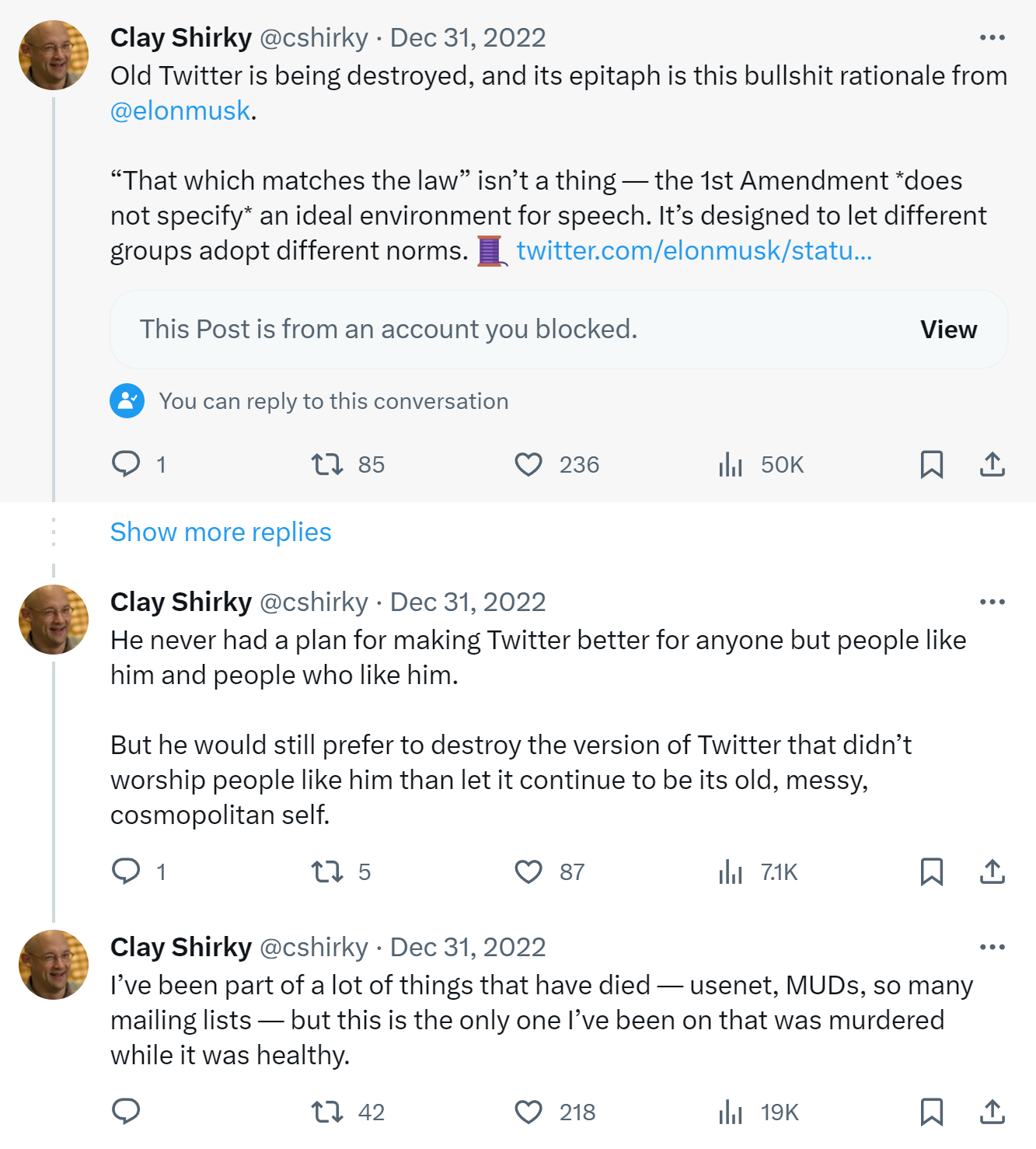
However, even in its pre-Musk era, Twitter grappled with significant challenges inherent to its centralized model. Issues such as content moderation, the spread of misinformation, the proliferation of hate speech, and the rise of echo chambers became increasingly problematic, particularly during politically charged periods like the Trump presidency. Critics argued that the platform’s attempts to balance free speech with user safety were often inconsistent, leading to a volatile environment that, while vibrant, could also be profoundly unhealthy. Despite these growing pains, many users, including long-time observers like Atwood, maintained a grudging affection for the platform, recognizing its unique role in the digital landscape. As Clay Shirky, a noted internet scholar, poignantly reflected in late 2022, Twitter, despite its flaws, felt "murdered while it was healthy," a testament to its intrinsic value before its radical overhaul.
The Elon Musk Era: A Rapid Transformation and Tumultuous Decline
The saga of Elon Musk’s acquisition of Twitter began in early 2022 and culminated in October of that year with a $44 billion takeover. Musk, presenting himself as a "free speech absolutist," promised to unlock the platform’s "extraordinary potential" and transform it into an "everything app." However, the transition was marked by immediate and drastic changes that alienated many users, employees, and advertisers.
Key Chronology of Changes and Controversies:

- October 2022: Musk completes the acquisition, immediately firing top executives and initiating mass layoffs, ultimately reducing the company’s workforce by over 80%.
- November 2022: The controversial "Twitter Blue" subscription service is revamped to include verification checkmarks, leading to widespread impersonation and confusion, forcing a temporary halt to the rollout.
- December 2022: Several prominent journalists covering Musk are suspended, raising concerns about press freedom and content moderation policies.
- Early 2023: Musk reinstates numerous previously banned accounts, including those associated with far-right figures and conspiracy theorists, further intensifying concerns about hate speech and misinformation. Internal reports and external analyses indicate a significant rise in harmful content on the platform.
- July 2023: Twitter is officially rebranded as "X," shedding its iconic bird logo and name, a move widely criticized for erasing brand recognition and user affinity.
- Ongoing: Advertiser exodus becomes a significant financial blow. Major brands reduce or cease spending due to concerns over brand safety, the proliferation of controversial content, and the perceived erratic leadership. Estimates suggest advertising revenue dropped by 50-60% post-acquisition. User engagement metrics also show declines in active users and time spent on the platform, with many long-time users migrating to alternative platforms.
Jeff Atwood’s personal experience echoed this broader sentiment. After giving the post-Musk era a week, he described the changes as "so much worse than I could have possibly ever imagined," likening Musk’s management style to a "Dilbert pointy-haired-manager book on management," generating a "laundry list of terrible things no manager should ever do." He and others observed a rapid degradation of the user experience, an increase in technical glitches, and a palpable shift in the platform’s cultural ethos, moving away from its "messy, cosmopolitan self" to one perceived as catering to a narrower, more polarizing demographic.
The Inherent Dangers of Centralized Control
The dramatic unraveling of Twitter under new ownership has served as a stark, real-world demonstration of the perils associated with highly centralized digital platforms. When a single entity, particularly an individual with a strong and often unpredictable will, holds absolute sway over a global communication network, the consequences can be profound and far-reaching. The core issue, as articulated by commentators like Paul Ford and echoed by Atwood, lies in the fundamental design flaw of gathering "a million people in a colosseum and let them fight it out with free speech" under a single authoritarian rule.
Ford’s analogy, referencing the biblical Tower of Babel and the inherent human limitation of stable relationships (Dunbar’s Number suggests around 150), highlights that large, centralized gatherings, particularly online, often devolve into chaos rather than productive discourse. The idea of a "marketplace of ideas" is romanticized, but in practice, without robust, community-driven moderation and distributed power, it can quickly become a breeding ground for division and manipulation.
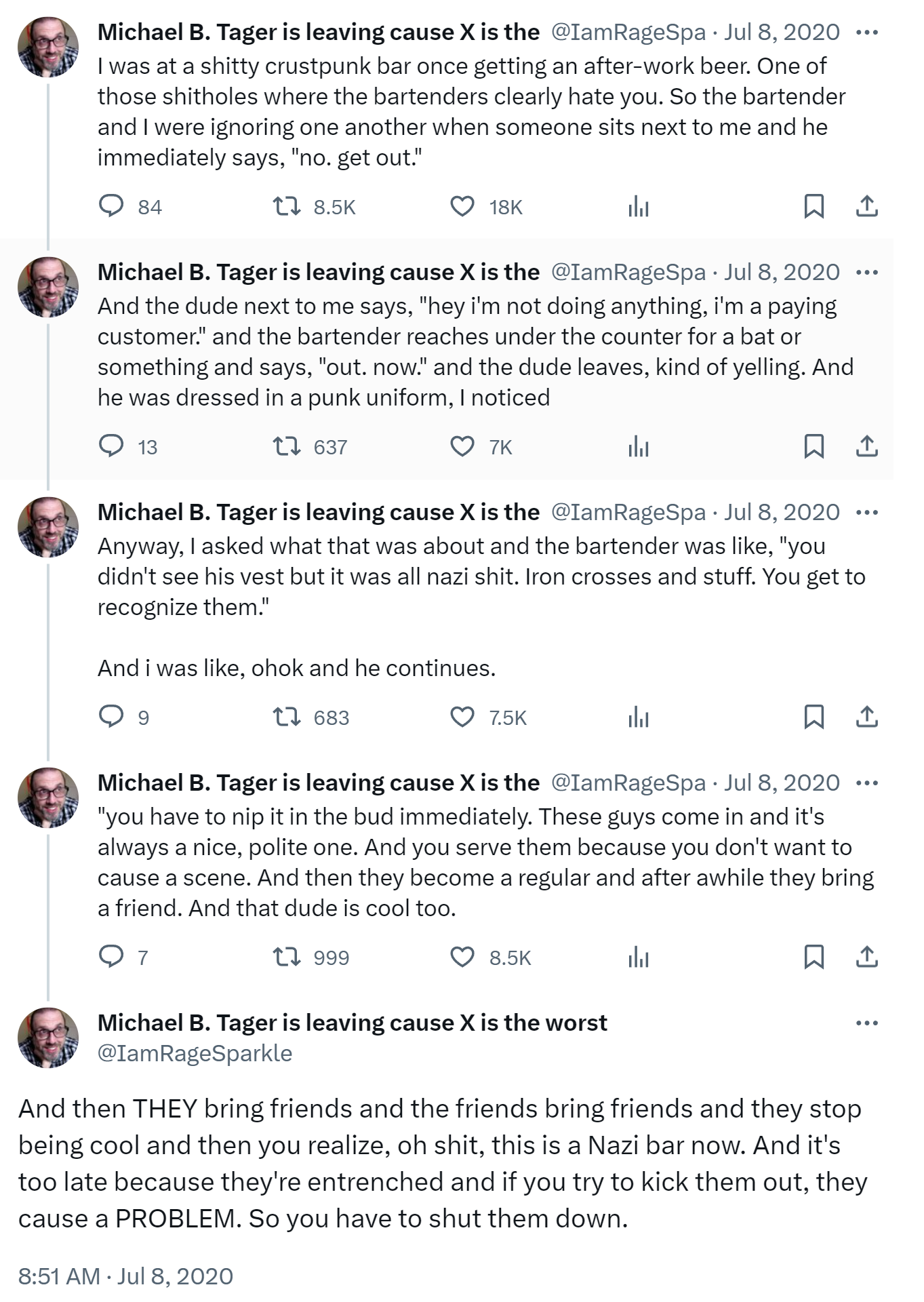
The critical lesson from the Twitter/X transformation is the "very real dangers of any platform run by a king, a dictator, a tyrant, a despot, an autocrat." Users risk having their "content rug-pulled out from under" them, or witnessing their "favorite bar… slowly transform into a Nazi bar." This powerful analogy, recounting a bartender’s uncompromising stance against even the smallest infiltration of undesirable elements, underscores the necessity of proactive, robust community governance to prevent the subversion of online spaces. The perceived motivation for some of Musk’s changes, such as his publicly stated concerns about a "trans woke virus," further illustrates how personal biases of a platform owner can directly impact global discourse and user experience.
The Case for Decentralization and User Empowerment
In light of these developments, the call for decentralization has intensified. Decentralized social media platforms operate on a different paradigm, distributing power and control away from a single corporate entity. Instead of one giant server, they consist of many interconnected, independently run servers (instances) that can communicate with each other, forming a "fediverse" (federated universe).
Benefits of Decentralization:
- User Control: Users can choose an instance that aligns with their values and moderation preferences. If they dislike their instance, they can move their account to another, retaining their followers and content.
- Resilience: No single point of failure. If one instance goes down or is shut off, the rest of the network continues to function.
- Community-Driven Moderation: Each instance can set its own moderation policies, allowing communities to self-govern and cultivate specific environments.
- Open Source: Many decentralized platforms are open source, meaning their code is publicly available, fostering transparency, security, and community development.
- No Single Arbitrary Authority: Prevents the kind of unilateral, top-down decision-making that characterized the Twitter/X transition.
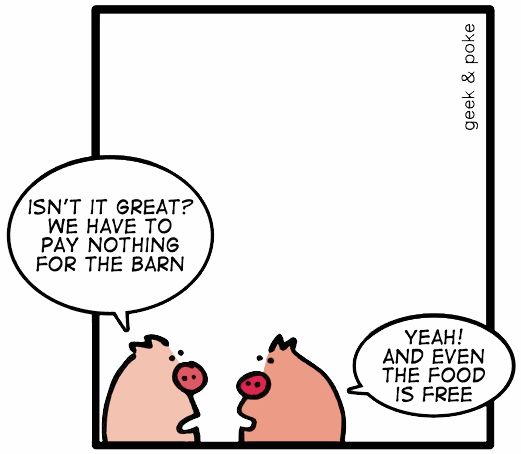
Jeff Atwood has long championed this approach, particularly through his "Discourse project," which focuses on collective ownership of content and communities. He criticizes the "digital sharecropper" model, where users create valuable content and engagement on platforms they do not own or control, ultimately enriching the platform owner while having little to no say in its governance or future. He argues that the illusion of "free" services comes at a significant cost: the sacrifice of control, privacy, and community autonomy. As Atwood emphatically states, "those so-called ‘free’ services aren’t really free."
Mastodon and the Fediverse: Exploring Alternatives
Mastodon, an open-source, federated microblogging platform, has emerged as a prominent alternative in the wake of Twitter’s instability. Its architecture, based on the ActivityPub protocol, allows users to join various independent servers (instances) that can interact with each other. This means a user on one Mastodon instance can follow and communicate with users on other instances, creating a vast, interconnected network that is not controlled by a single company.
The shift to Mastodon and similar platforms, while offering greater user empowerment, is not without its challenges. As Atwood acknowledges, "Is it messy? Hell yes it’s messy." The decentralized nature means there’s no single algorithm dictating content, no centralized support team, and often a steeper learning curve for new users accustomed to the polished, monolithic experience of corporate platforms. However, proponents argue that this "messiness" is a small price to pay for the resilience and democratic principles it upholds, likening it to the inherent complexities of democracy itself. "Anything worth doing is never easy," Atwood posits, framing the effort as a necessary investment for a survivable long-term digital future.
Beyond Mastodon, other decentralized alternatives are gaining traction, including various ActivityPub-based platforms and projects exploring blockchain-based social networks. The core philosophy driving these initiatives is to empower users with strong moderation tools and ownership, rather than exploiting them for data or advertising revenue. This "Tron-like view," as Atwood describes it, envisions a digital world where users are integral participants, not mere products.
A Call to Action and Philanthropy
Jeff Atwood’s message is unequivocal: he urges all users to "disavow Twitter and never look at it again." He argues that continuing to engage with or link to the platform feeds the attention it thrives on, implicitly endorsing a model that is "unhealthy for human minds." His call extends beyond mere disengagement, advocating for active participation in building and improving decentralized alternatives. He himself is active on Mastodon at https://infosec.exchange/@codinghorror, encouraging others to join him on the server of their choice, or "quite literally any other platform besides Twitter."
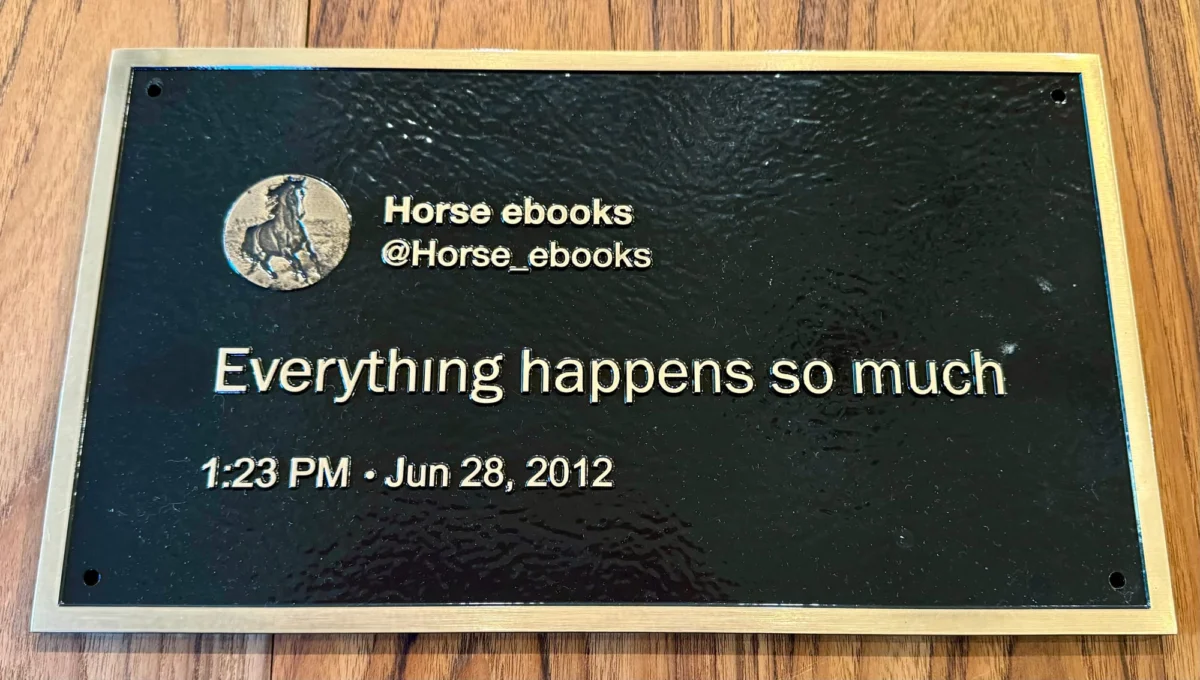
To underscore his commitment and inspire this leap of faith, Atwood has initiated a unique philanthropic endeavor. He is auctioning off 10 museum-quality brass plaques, each inscribed with what he considers "the best tweet of all time, hands down" – a quirky, memorable post from the now-legendary @horse_ebooks account. All funds raised from these auctions will benefit The Trevor Project, an organization dedicated to providing crisis intervention and suicide prevention services to LGBTQ youth. This initiative serves a dual purpose: raising money for a vital cause and, as Atwood mischievously notes, potentially "piss[ing] Elon off," adding a layer of symbolic defiance to the act of digital migration. The fact that @horse_ebooks itself has migrated to Mastodon further solidifies the narrative of a significant shift in the digital landscape.
The plaques, personally signed by Atwood, come with a "personal guarantee that it will easily outlive what’s left of Twitter," a powerful metaphor for the enduring value of community, freedom, and user empowerment over transient, centrally controlled platforms.
The Future of Online Discourse
The ongoing transformation of X and the subsequent exodus of users and advertisers represent a pivotal moment in the evolution of online social interaction. It has starkly exposed the vulnerabilities of centralized power in the digital realm and ignited a broader conversation about who controls our digital public squares and on what terms. The future of online discourse may very well hinge on the collective willingness of users to move beyond the convenience of "free" but exploitative platforms and invest in building and nurturing decentralized ecosystems. This transition, while challenging, promises a more resilient, equitable, and user-centric internet, where communities, rather than capricious billionaires, hold the reins of their digital destinies. The current turbulence surrounding X may, in hindsight, be viewed as an unwitting catalyst, forcing the internet to confront its own centralized pathologies and embrace a more democratic, federated future.
About the Author