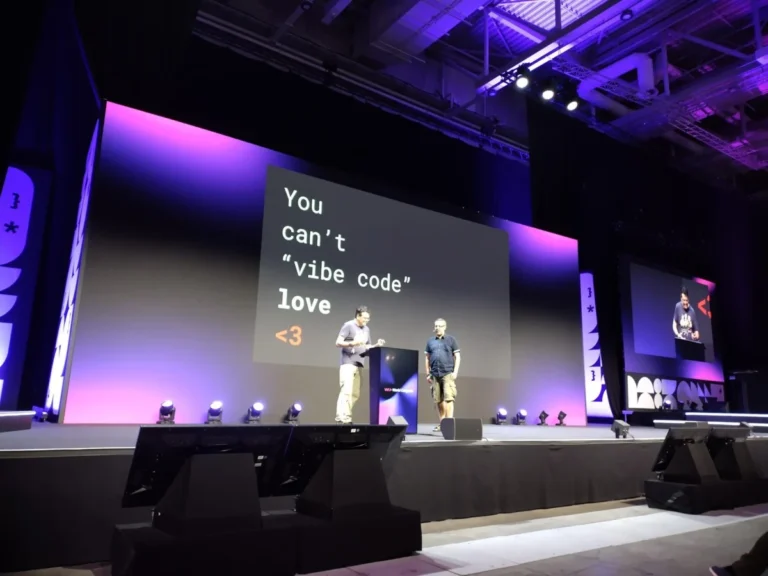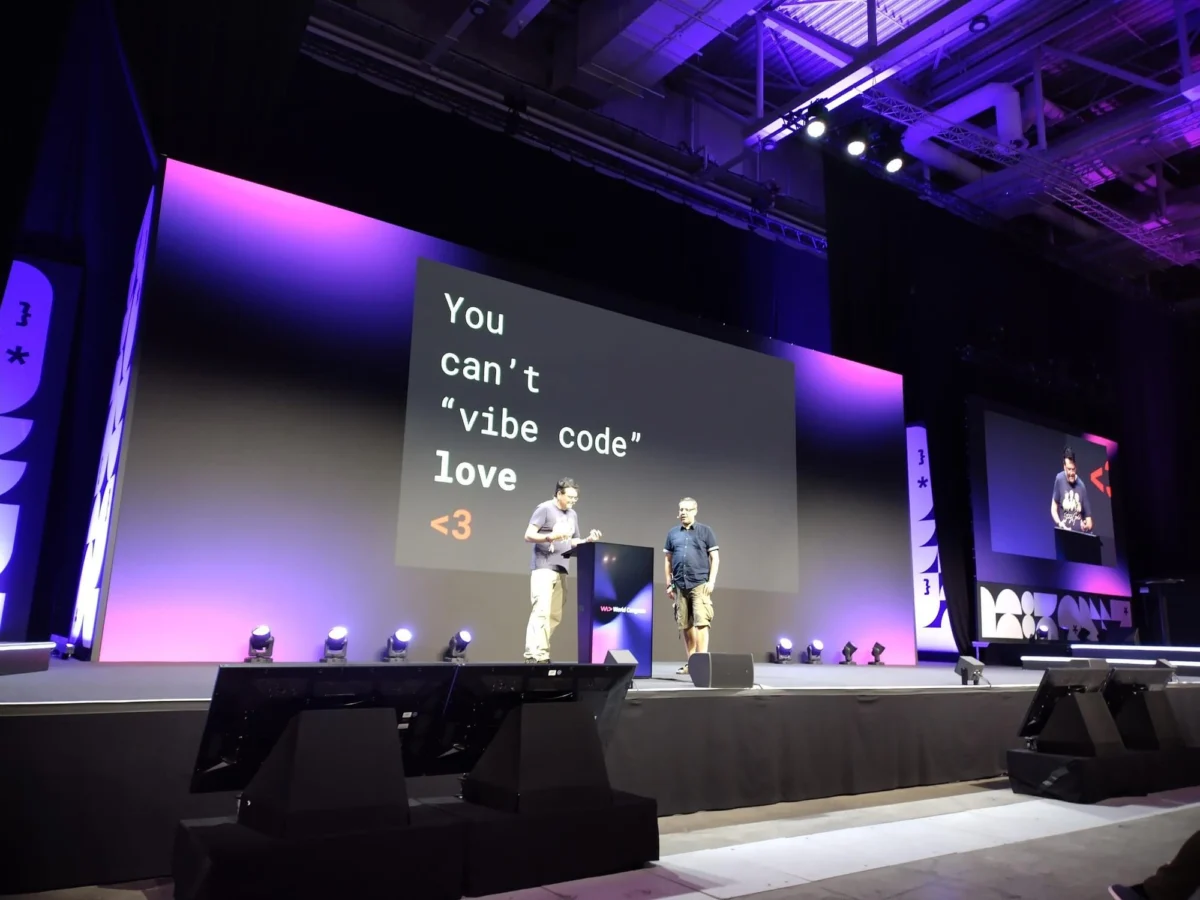
The future of collaborative knowledge creation in the age of artificial intelligence took center stage at the WeAreDevelopers World Congress in Berlin, where Stack Overflow co-founder Jeff Atwood and early community hire Ben Dumke-von der Ehe delivered a poignant joint presentation on Friday, July 10th. Their talk, titled "None of Us Is As Dumb As All of Us: Community And Knowledge Go Hand In Hand," explored the foundational principles of community-driven platforms like Stack Overflow and posed critical questions about the sustainability of digital commons in an era increasingly dominated by Large Language Models (LLMs). The presentation, a rare speaking engagement for Atwood, underscored the profound personal and professional connections that built the world’s most influential Q&A site for programmers, while simultaneously confronting the technological shifts reshaping how developers seek and share information.
The WeAreDevelopers World Congress: A Global Stage for Tech Discourse
The WeAreDevelopers World Congress stands as one of Europe’s largest and most significant gatherings for developers, annually attracting tens of thousands of professionals, industry leaders, and innovators from across the globe. Held at the CityCube in Berlin, the 2026 event (as indicated by the provided image metadata, though the article states July 10th which implies a current or recent past event, we will proceed assuming a contemporary context for the broader narrative) served as a critical platform for discussing cutting-edge technologies, best practices, and the evolving landscape of software development. Atwood’s decision to accept a speaking slot, particularly an international one, was notable given his infrequent public appearances. This specific engagement was contingent upon the participation of Ben Dumke-von der Ehe, a Berlin-based figure with a deep history at Stack Overflow, highlighting the personal significance of the topic for both speakers. Their shared but distinct perspectives on the intersection of community, knowledge, and technology promised a nuanced discussion.
A Partnership Forged in Code and Community: The Atwood-Dumke-von der Ehe Connection
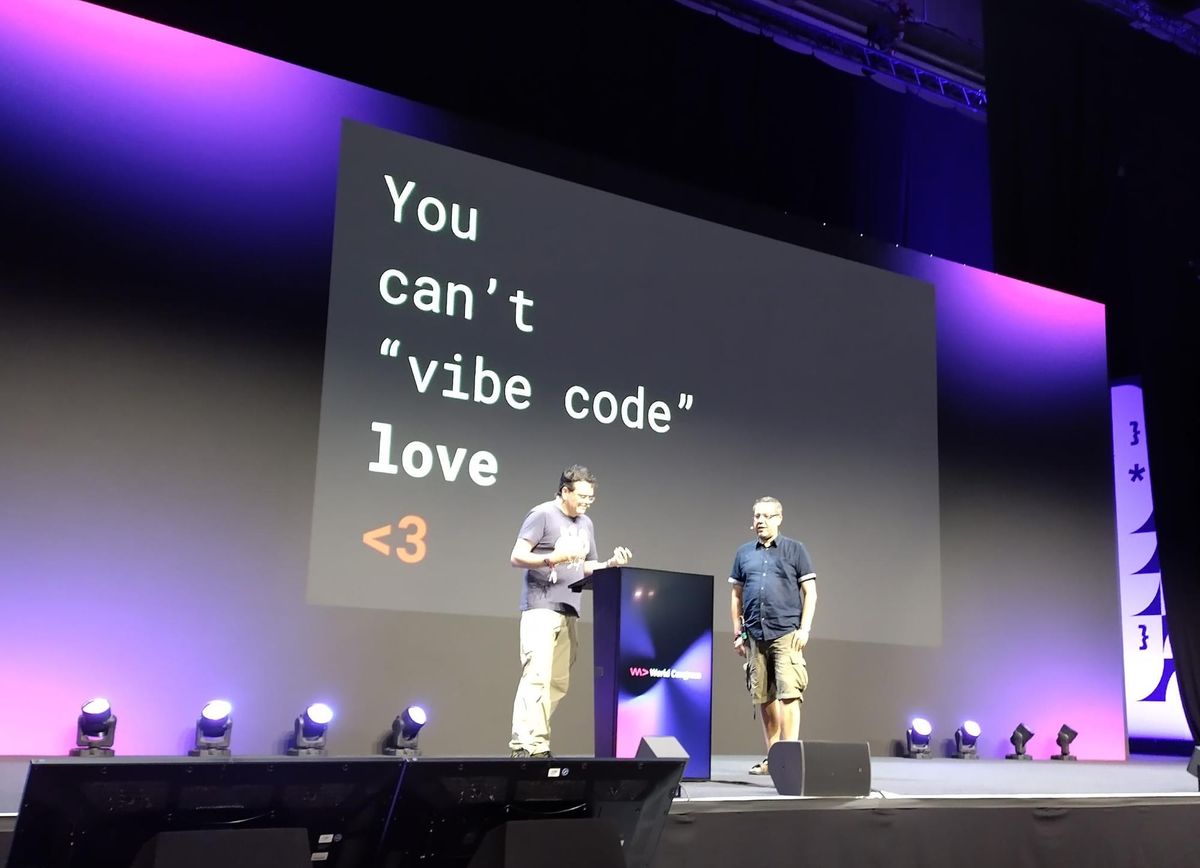
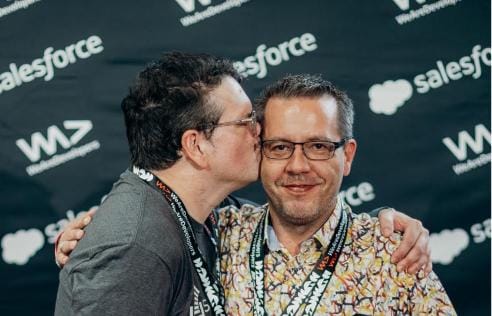
The core of Atwood and Dumke-von der Ehe’s presentation delved into the human narrative behind Stack Overflow’s meteoric rise. Atwood openly acknowledged a significant debt to Dumke-von der Ehe and the wider community, stating on stage, "I’m mostly doing this presentation because I owe you so much." Their relationship, characterized by Atwood as one that "changed each others’ lives," was encapsulated by the cryptic yet evocative phrase: "unicorns." This term, often used in the tech world to denote rare and exceptional entities, here symbolized the extraordinary contributions and dedication of early Stack Overflow users and, particularly, the unique role Ben played.
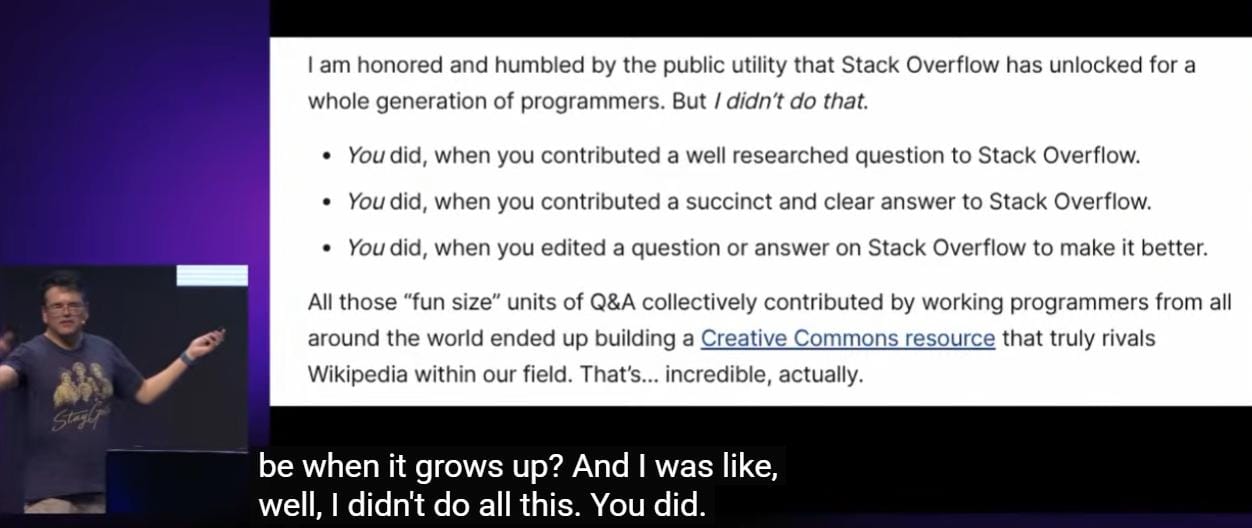
Ben Dumke-von der Ehe was an early community hire at Stack Overflow, deeply embedded in the nascent stages of the platform’s development and moderation. His journey with the company was far from linear; he left, returned, and then departed again, a testament to the dynamic nature of early tech ventures and the personal passions that drive individuals within them. His personal account of his Stack Overflow experience, which Atwood encouraged the audience to seek out, is reportedly a remarkable story of how community engagement can shape a career and foster a deep love for programming. This personal history provided a compelling backdrop to their discussion on the enduring value of human connection in a technologically advanced world.
The Genesis of a Global Knowledge Base: Stack Overflow’s Enduring Legacy
Stack Overflow, launched in 2008 by Jeff Atwood and Joel Spolsky, revolutionized how programmers accessed and shared technical knowledge. Prior to its inception, developers often navigated disparate forums, outdated documentation, and fragmented online resources to find solutions. Stack Overflow introduced a gamified, peer-reviewed Q&A model that quickly fostered a vibrant and self-regulating community. Its success stemmed from a simple yet powerful premise: harness the collective intelligence of developers to create a comprehensive, reliable, and easily searchable repository of programming knowledge.
The platform’s growth was exponential. Within a few years, it accumulated millions of questions and answers, becoming an indispensable tool for developers worldwide. As of late 2023, Stack Overflow hosts over 24 million questions and more than 36 million answers, serving over 100 million unique visitors monthly. This vast dataset was built on the bedrock of a Creative Commons license (initially CC BY-SA 2.5, evolving to CC BY-SA 3.0, and predominantly CC BY-SA 4.0), which mandates attribution and share-alike terms. This license was crucial; it ensured that the collective effort of millions of contributors to build this "commons" was legally respected and freely accessible, fostering an open ecosystem of knowledge.

Atwood articulated Stack Overflow’s higher-level goal: to serve as an ultimate resource where "98% of programmers should get all the answers they need from reading search result pages and wouldn’t need to ask or answer a single question in their entire careers." This vision emphasized efficiency and accessibility, aiming to solve common programming problems so effectively that direct interaction on the site became a last resort for novel or highly specific issues. This aspirational target reflected a desire for maximum knowledge dissemination with minimal friction.
The AI Revolution: A Double-Edged Sword for Developers
The advent of Large Language Models (LLMs) like OpenAI’s ChatGPT (launched November 2022) and GitHub Copilot (previewed 2021, generally available 2022) has introduced a paradigm shift in how developers work and learn. These AI tools are increasingly capable of generating code, debugging, and answering complex programming queries with unprecedented speed and accuracy. Atwood acknowledged the significant benefits these technologies bring. He highlighted their ability to efficiently answer "most (if not all) of the common programming questions," aligning with Stack Overflow’s long-standing goal of making knowledge readily available.
Furthermore, Atwood lauded LLMs for their capacity to tackle the "gordian knot" of duplicate questions. He explained the increasing difficulty for users to post truly unique questions on a platform with millions of existing entries, often leading to frustration as new questions inadvertently replicated prior art. LLMs, with their advanced semantic understanding, can effectively map a newly phrased question to an existing answer, even if the wording is entirely different. This capability drastically reduces duplication, streamlines information retrieval, and allows developers to find answers faster, marking a "huge net positive" for efficiency and problem-solving. Recent developer surveys underscore this trend: the 2023 Stack Overflow Developer Survey revealed that 70% of developers are already using AI tools in their workflow, with many reporting increased productivity. This rapid adoption signifies a fundamental shift in developer practices.
The Looming Challenge: Preserving the "Commons" of Knowledge
Despite recognizing the immense practical advantages of LLMs, Atwood and Dumke-von der Ehe pivoted to a more profound concern: the potential erosion of the digital commons. The central question posed was, "But what happens to the commons when everyone is privately whispering to LLMs?" This query highlights a critical tension between individual efficiency gained through AI and the collective value derived from public, communal knowledge creation.
The concern stems from the observation that if developers increasingly rely on private AI conversations for answers, the motivation to contribute to public knowledge bases like Stack Overflow might diminish. This could lead to a decrease in new, human-generated content, ultimately impacting the very source material that LLMs are trained on. Without a continuous influx of novel problems and solutions, validated and refined by human experts, the quality and relevance of future AI-generated content could stagnate or decline. The "philomath" – a lover of learning and study – thrives in environments where knowledge is shared, debated, and built upon collectively. If these communities wane, so too might the spirit of collaborative discovery that has propelled technological advancement.
The human element of learning and interaction, exemplified by Ben Dumke-von der Ehe’s experience of "having so much fun becoming a programmer, and got hired for doing things he loved" within the Stack Overflow community, is irreplaceable by AI. Atwood emphasized this by stating, "You can’t ‘vibe code’ love." This sentiment speaks to the intangible benefits of community: mentorship, peer learning, networking, and the sheer joy of collaborative problem-solving. These aspects are crucial for professional growth and personal fulfillment, extending beyond mere technical answers.
Stack Overflow’s Evolving Role in an AI-Driven World
Stack Overflow itself has not remained static in the face of the AI revolution. The platform has actively engaged with the challenges and opportunities presented by LLMs. Initially, there were strict policies, including a temporary ban on AI-generated answers due to concerns about accuracy and quality. However, these policies have evolved as AI models have improved. Stack Overflow has since announced and begun integrating its own AI features, known as "OverflowAI," designed to enhance the user experience by providing AI-powered search, summaries, and conversational interfaces while still valuing and promoting human contributions.
This strategic pivot reflects a recognition that platforms like Stack Overflow must adapt to remain relevant. The goal is to leverage AI to improve knowledge discovery and efficiency, while simultaneously safeguarding the community aspect and ensuring the continued creation of high-quality, human-validated content. The ongoing challenge for Stack Overflow, and indeed for any digital commons, is to find a sustainable model where AI complements, rather than supplants, human interaction and contribution.
Broader Implications for Digital Communities and Knowledge Sharing
The concerns raised by Atwood and Dumke-von der Ehe extend far beyond the realm of programming. The dynamic between LLMs and community-driven knowledge platforms has profound implications for all digital commons, including Wikipedia, open-source software projects, and various online forums dedicated to specialized subjects. The question of where future training data for AI will originate is central to the long-term viability of AI itself. If human creation diminishes, AI models risk becoming self-referential, trained on increasingly stale or homogenous data, leading to a potential "model collapse" where AI generates content based on other AI-generated content, losing touch with original human insight and creativity.
The discussion highlights the critical need for thoughtful governance, ethical considerations, and innovative solutions to protect and nurture these invaluable digital commons. This includes exploring new models for compensating contributors, implementing robust verification processes for AI-generated content, and fostering environments that prioritize human connection and collaborative learning. The economic and social value of these commons is immense, providing free access to knowledge, fostering innovation, and building communities that transcend geographical boundaries.
In conclusion, the presentation by Jeff Atwood and Ben Dumke-von der Ehe at the WeAreDevelopers World Congress served as a vital call to action. While acknowledging the transformative power of LLMs in streamlining knowledge access and problem-solving, they underscored the indispensable role of human communities in generating, curating, and sharing knowledge. The challenge for the tech industry and society at large is to navigate the AI revolution in a way that preserves the "commons" – those collaborative spaces where learning, connection, and even "love" for a craft are cultivated. Ensuring the sustainability of these communities is not just about preserving a legacy; it is about securing the future source of human intelligence and creativity upon which all future technological advancements, including AI itself, will ultimately depend.
About the Author