While some video games are designed for a singular, impactful experience, others establish such a profound universe and compelling narrative that they practically demand continuation. The original BioShock undoubtedly falls into the latter category, crafting a dystopian underwater city, Rapture, that captivated millions upon its 2007 release. Its successor, BioShock 2, often finds itself overshadowed by the monumental legacy of its predecessor, despite introducing significant gameplay refinements and a deeply personal narrative. This disparity in recognition is a regrettable oversight, particularly given the sequel’s nuanced exploration of complex philosophical themes and its critically acclaimed writing, which garnered nominations for various awards, including those for writing and dialogue. Developed by 2K Marin, BioShock 2 arguably stands as a worthy continuation, its merit deeply rooted in the evocative and conflicting dialogues exchanged by its characters, which serve to enrich the game’s thematic fabric.
The Legacy of Rapture and the Challenge of Succession
The original BioShock was a cultural phenomenon, lauded for its innovative art direction, atmospheric world-building, and a plot twist that remains a benchmark in interactive storytelling. It plunged players into the objectivist utopia-turned-dystopia of Rapture, a city built by Andrew Ryan beneath the Atlantic, where scientific and artistic freedom ultimately devolved into chaos fueled by genetic modification. Following such a critically and commercially successful title presented an immense challenge for any developer tasked with creating a sequel. 2K Marin, taking the reins from Irrational Games, faced the daunting task of expanding upon an already complete and revered narrative without diluting its impact. Initial expectations were understandably high, with some segments of the gaming community skeptical about the necessity or potential quality of a direct sequel. The game was released on February 9, 2010, across multiple platforms, aiming to recapture the magic while forging its own identity.
A Decade Later: The Story of BioShock 2 Unfolds
BioShock 2 is set approximately a decade after the cataclysmic events of the first game, transporting players back to the decaying art deco grandeur of Rapture. The narrative centers on Subject Delta, a prototype Big Daddy, who awakens from a ten-year coma. His quest is profoundly personal: to locate and rescue Eleanor Lamb, a Little Sister with whom he shares a powerful psychic bond. This bond is not merely a plot device but an emotional anchor, driving Delta through the perilous ruins of the underwater metropolis.
The primary antagonist is Dr. Sofia Lamb, Eleanor’s mother and a clinical psychiatrist who rose to power in Rapture following Andrew Ryan’s demise. Lamb espouses a philosophy diametrically opposed to Ryan’s radical individualism; she champions a doctrine of forced collectivism, believing that the individual self is the root of all suffering and that humanity’s salvation lies in a unified consciousness, free from ego. Her "Rapture Family" seeks to erase individual identity for the perceived greater good, and Eleanor is central to her twisted plans for this new utopia. Delta’s mission thus evolves from a simple rescue operation into a profound philosophical battle for Eleanor’s free will, and by extension, for the very soul of Rapture itself. The game expertly weaves a narrative where personal relationships form the emotional core, and player choices significantly impact the unfolding events, transforming a monster-hunting expedition into an intimate critique of authoritarian collectivism.
Refined Gameplay: Evolving the Underwater Experience
Beyond its intricate narrative, BioShock 2 introduced several notable gameplay innovations that refined the established formula. A significant enhancement was the ability to dual-wield weapons and Plasmids simultaneously, allowing for more fluid and dynamic combat encounters. Players could now shock an enemy with a Plasmid in one hand while firing a shotgun with the other, leading to a greater variety of strategic approaches. The player’s role as Subject Delta, a Big Daddy, also brought unique mechanics. This included the ability to use the iconic drill as a melee weapon and to adopt a Little Sister after defeating her Big Daddy protector, then guiding her to gather ADAM from fallen Splicers. This mechanic provided a different perspective on the Little Sister dynamic and added a layer of tactical defense as players protected the Little Sisters during gathering sequences.
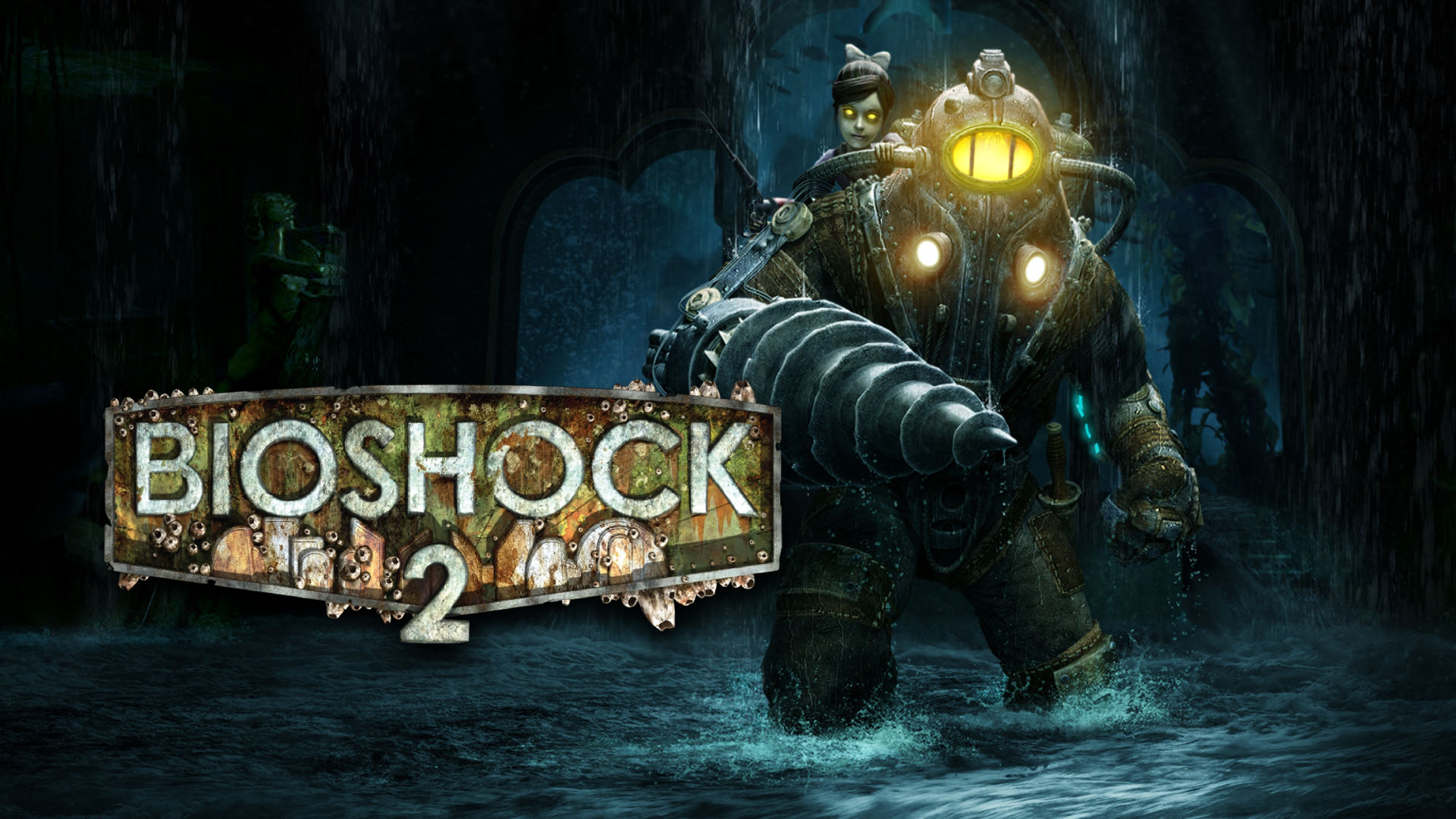
The environment itself was expanded, offering moments of underwater exploration outside the confines of Rapture’s domes, providing breathtaking vistas and a renewed sense of the city’s scale. Enemy variety was also enhanced with the introduction of new Splicer types and the formidable Big Sister, a swift and aggressive foe that posed a significant challenge. These gameplay refinements contributed to a more engaging and versatile combat system, complementing the deeper emotional and thematic explorations of the story.
The Power of Dialogue: Voices of a Drowned Utopia
Given Subject Delta’s role as a silent protagonist who communicates primarily through guttural sounds and body language, the narrative weight of BioShock 2 falls heavily upon the supporting cast and their eloquent, often chilling, dialogue. The characters who inhabit Rapture’s ruins—whether allies, adversaries, or the ghosts of its past—fill the silence with their philosophies, fears, and fragmented hopes. Their lines are not merely exposition; they are instruments through which the game dissects complex ideas, from the nature of free will to the perils of ideological extremism.
Key Figures and Their Philosophies
-
Dr. Sofia Lamb: The Shepherd of the Collective
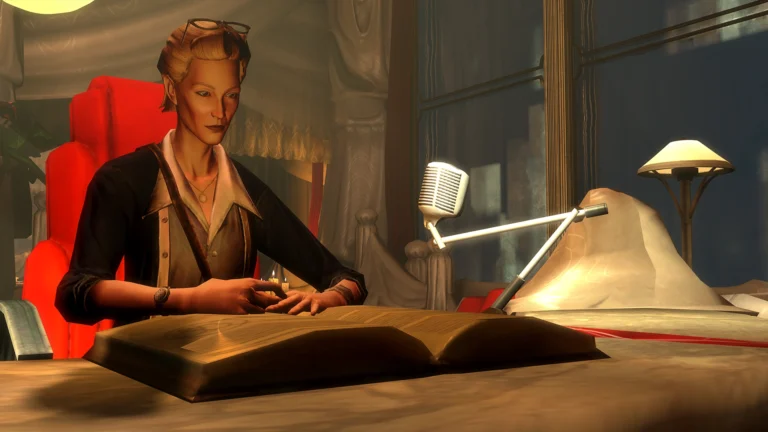
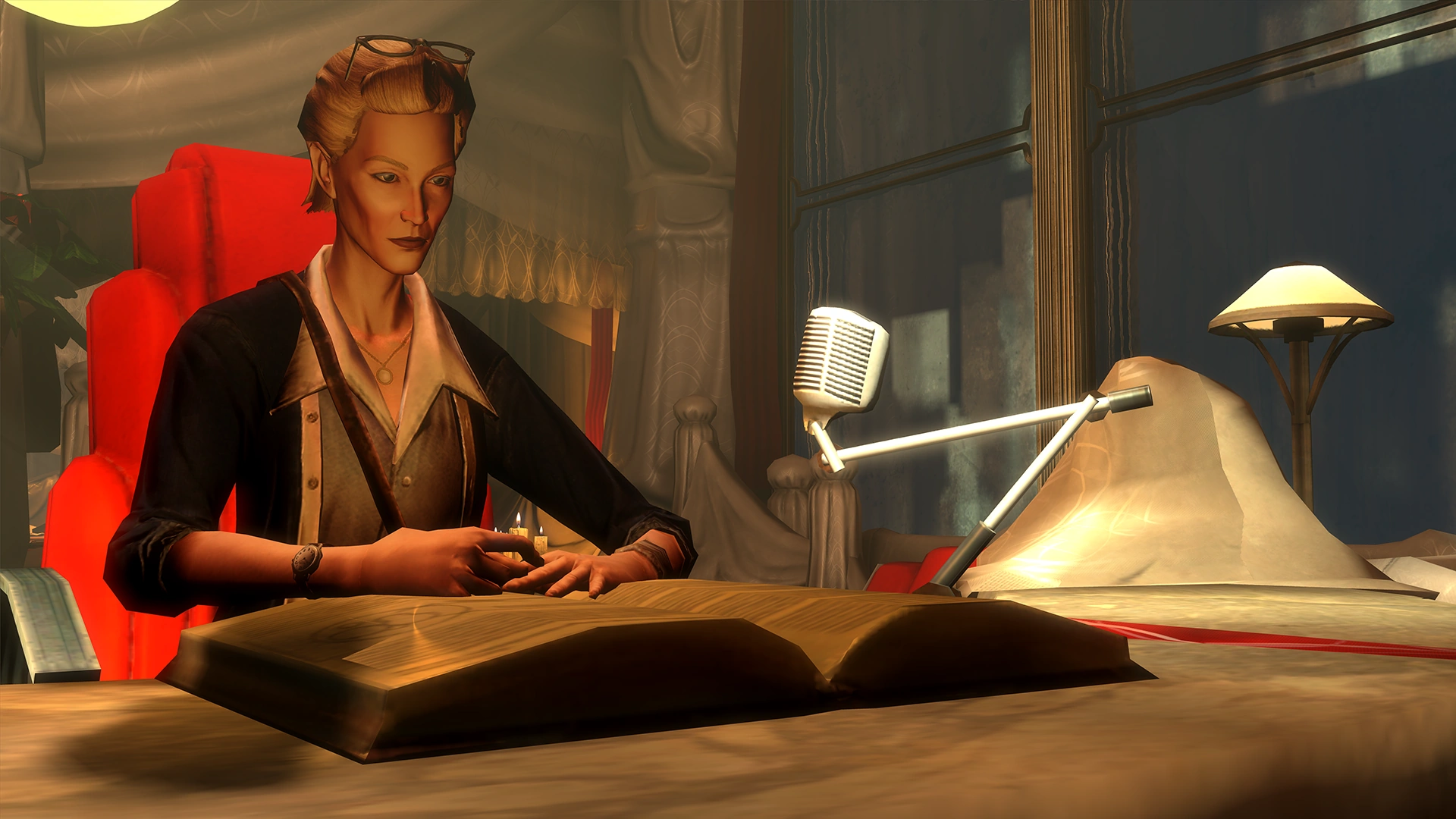
Sofia Lamb emerges as the central antagonist, a clinical psychiatrist who inherited Rapture’s fractured society and sought to reshape it according to her collectivist ideals. Unlike Andrew Ryan’s passionate, individualistic rants, Lamb’s demeanor is consistently polite, calm, and utterly self-assured, even as her actions are undeniably horrific. This chilling juxtaposition makes her dialogue particularly potent, revealing a character convinced of her own righteousness in the pursuit of a world without ego. Her pronouncements often highlight the supposed burdens of individuality and the perceived peace found in communal consciousness.Representative Quotes:
- "The great chain of being binds us all. To break it is to embrace chaos. To embrace unity is to embrace salvation."
- "Individuality is a disease. The self, a tumor. I offer the cure, a family bound by common purpose."
- "Why struggle for your own fleeting desires when you can contribute to something eternal, something greater than yourself?"
- "True freedom is the surrender of self, the dissolution of the ego into the embrace of the collective."
- "Your attachments, Subject Delta, are merely shackles. I offer Eleanor true liberation, a release from the burden of choice."
-
Eleanor Lamb: The Inheritor of Ideals
At the emotional core of Delta’s journey is Eleanor Lamb, Sofia’s daughter and a former Little Sister. Her unique upbringing, marked by her mother’s indoctrination and her bond with Delta, places her at a critical crossroads. She is a tabula rasa, learning and evolving through Delta’s actions and decisions, ultimately leading her to question the rigid doctrines she has been taught. Her dialogue reflects a burgeoning sense of individuality, a struggle for self-definition, and the profound impact of love and choice.Representative Quotes:
- "Mother said the world outside Rapture was cruel, that only here could we find true peace. But I see now that peace can be a cage."
- "You showed me that even a monster can feel love. What does that say about humanity, Father?"
- "To choose is to be free, even if the choice leads to pain. That is a lesson I learned from you."
- "Mother wanted me to be the vessel for her dream. But I choose to be the vessel for my own."
- "The future isn’t written by one mind, Father. It is written by all of us, through our actions."
-
Augustus Sinclair: The Pragmatic Opportunist
Augustus Sinclair, a shrewd and resourceful businessman, serves as Delta’s primary guide and an unexpected ally. Having navigated Rapture’s turbulent history with an eye for profit and survival, Sinclair possesses an encyclopedic knowledge of the city’s inner workings. His smooth, often cynical, dialogue provides a pragmatic counterpoint to the philosophical struggles, frequently injecting dark humor and a sense of detached realism into Delta’s grim mission. He is a survivor, motivated by self-interest, but also capable of surprising loyalty.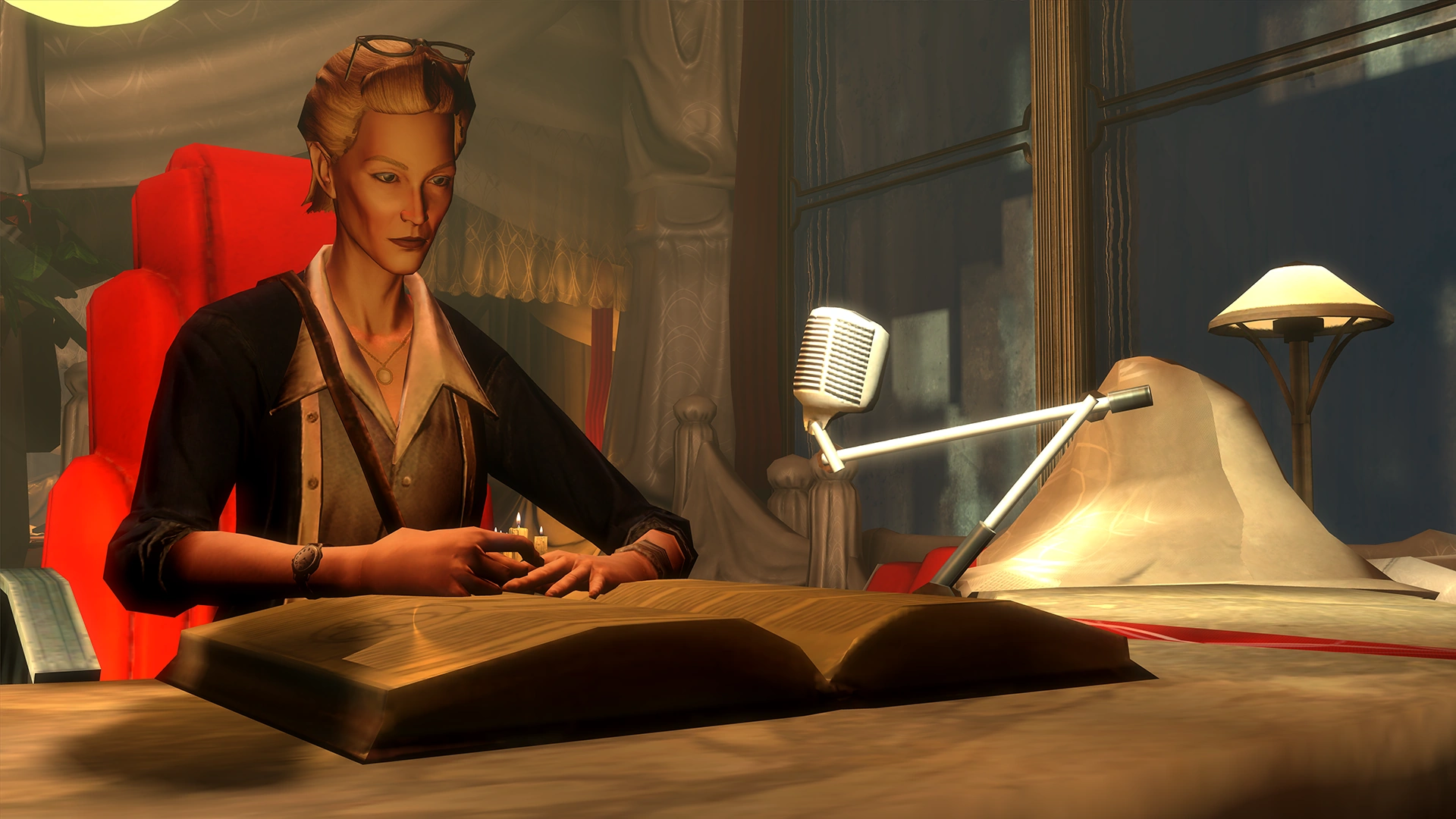
Representative Quotes:
- "In Rapture, friend, you gotta keep your head on a swivel and an eye on the bottom line. Ideals won’t buy you a bullet."
- "Lamb wants to save humanity? I just want to make it out of this mess with my skin and a few fortunes intact."
- "Don’t get sentimental, Big Daddy. This ain’t no fairy tale. Just another day in the deep end."
- "Every man has his price, Delta. And every crisis is an opportunity, if you know how to play the cards."
- "You’re a Big Daddy, kid. Your job is to protect. My job is to make sure you protect the right things, for the right price."
-
Echoes of Rapture: Other Voices and Dark Humor
Beyond the main cast, BioShock 2 is rich with the voices of Rapture’s other inhabitants, both living and deceased. Audio diaries, a staple of the series, provide poignant glimpses into the city’s past, revealing the hopes, fears, and eventual madness of its citizens. The Splicers themselves, though deranged, occasionally utter lines that are darkly humorous or tragically reflective of their former lives, adding layers to the city’s tragic downfall.Representative Quotes:
- (From a Splicer) "Oh, look at me! I’m a pretty butterfly… with a wrench!"
- (From an audio diary) "Ryan promised us a paradise. He just forgot to mention the price tag was our very souls."
- (From a Splicer) "Just a little more ADAM… just a little more, and I’ll be beautiful again!"
- (From a minor NPC) "Don’t you understand? There’s no escaping Rapture. Not anymore. We’re all just waiting for the end."
- (From a Splicer) "They took my face! My beautiful face! I’ll take yours!"
Critical Reception and Enduring Impact
Upon its release, BioShock 2 received generally positive reviews, with an aggregate score of 88% on Metacritic for the Xbox 360 version. Critics praised its refined gameplay, particularly the dual-wielding mechanic and the Big Daddy experience, as well as its immersive atmosphere and strong narrative. The game was nominated for several awards, including a BAFTA for Original Score and the WGA Award for Videogame Writing, underscoring the quality of its narrative and dialogue.
However, it often faced the inevitable comparison to its groundbreaking predecessor. While many acknowledged its merits, some critics and players felt it didn’t quite reach the same philosophical heights or deliver a narrative twist as impactful as the original. Despite this, BioShock 2 has enjoyed a significant reappraisal over the years. Many now recognize its unique contributions, especially its more intimate, character-driven story focusing on parental bonds and the struggle against forced collectivism. Its narrative depth and gameplay innovations are increasingly celebrated, cementing its place as a crucial, albeit often underrated, entry in the BioShock saga.
Conclusion
BioShock 2‘s quotes and narrative demonstrate that even a conflict as personal as Subject Delta’s quest for Eleanor can carry the profound weight of an entire fallen city and its warring ideologies. It is a game that, despite living in the considerable shadow of its predecessor, carved out its own distinct identity through refined mechanics, an emotionally resonant story, and dialogue that consistently challenges and provokes. Far from being a mere retread, BioShock 2 stands as a testament to compelling world-building and character-driven storytelling, leaving an indelible mark on the landscape of narrative-rich video games. Its enduring merit lies in its willingness to delve deeper into the philosophical consequences of Rapture’s collapse, making it a worthy and essential chapter in the saga of the underwater utopia.
About the Author