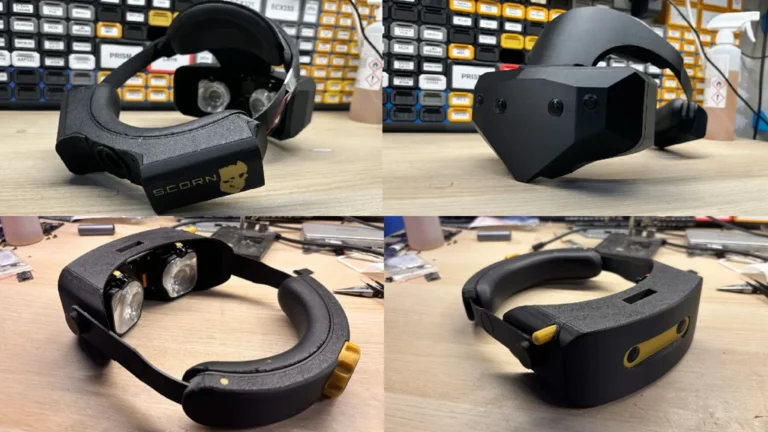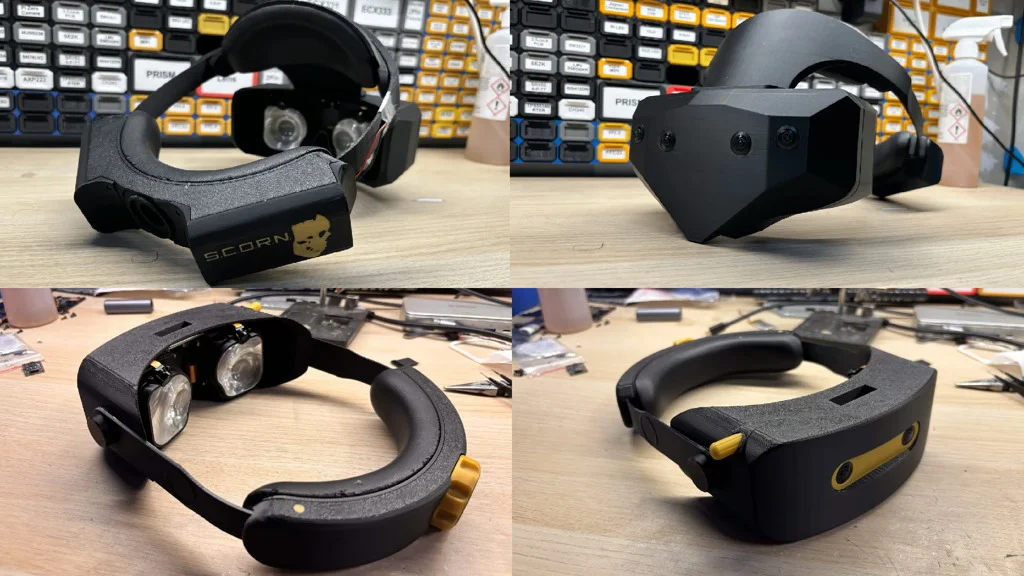
Walker Industries, a Japan-based hardware developer comprised of virtual reality enthusiasts and engineers, has officially launched a Kickstarter crowdfunding campaign for its flagship Vector Gear headset and the Andromeda PC-tethered series. This project represents a significant shift in the extended reality (XR) market, moving away from the "walled garden" ecosystems favored by major corporations toward a fully open-source hardware and software architecture. The Vector Gear is positioned as a mid-range, versatile device capable of both standalone and PC VR operations, while the Andromeda series offers specialized tiers for budget-conscious users and high-fidelity enthusiasts. By providing the community with complete access to hardware schematics and software source code, Walker Industries aims to empower researchers, developers, and hardware "makers" who require deep customization capabilities that are currently unavailable in consumer-grade products like the Meta Quest 3 or the Valve Steam Frame.
Development History and Project Origins
The Vector Gear project is the culmination of nearly a decade of development. The company’s founder has cited early inspirations from speculative fiction and anime, specifically "Sword Art Online," as the catalyst for pursuing immersive technology. Over the past nine years, the team evolved from a group of hobbyists into a specialized hardware firm focused on solving the limitations of proprietary VR systems. For several months leading up to the Kickstarter launch, Walker Industries maintained a transparent development cycle, providing regular technical updates to the VR community via platforms such as Reddit. This grassroots approach helped build a foundation of trust and technical validation before the company sought public funding.
The mission of Walker Industries centers on the "right to repair" and the "right to modify." Unlike contemporary headsets that utilize locked bootloaders and proprietary tracking algorithms, the Vector Gear is designed to be disassembled, modified, and reprogrammed. This philosophy extends to the manufacturing process, where the company offers "devkit" versions at a discount for users willing to assemble the hardware themselves, further emphasizing the project’s focus on the maker community.

Technical Specifications: Vector Gear and Andromeda
The Kickstarter campaign introduces three distinct hardware configurations to address different segments of the XR market. The flagship Vector Gear is a hybrid device, whereas the Andromeda 2160 and 2560 are dedicated PC VR headsets.
Vector Gear (Flagship Hybrid)
The Vector Gear is powered by the Qualcomm Snapdragon XR2 Gen 2 chipset, supported by 12GB of LPDDR5X RAM and 256GB of internal storage. Its visual stack features dual 2.5K x 2.5K LCD panels with a refresh rate capable of 90Hz or 120Hz. The device utilizes pancake lenses to maintain a slim profile, offering a 100-degree horizontal field of view (FOV). Notably, it includes an automatic IPD (inter-pupillary distance) adjustment system, ranging from 58mm to 72mm, and built-in eye and face tracking.
Andromeda Series (PC VR)
The Andromeda line removes the standalone processing components to focus on high-fidelity PC-tethered experiences:
- Andromeda 2160: Designed as an entry-level PC VR solution, it features dual 2160 x 2160 LCD panels, a 90Hz refresh rate, and Fresnel lenses. It offers a 100-degree horizontal FOV and manual IPD adjustment.
- Andromeda 2560: The premium PC VR tier, utilizing 2.5K x 2.5K LCD panels, pancake lenses, and a 120Hz refresh rate. It includes the same automatic IPD and tracking features as the Vector Gear but relies entirely on external PC processing.
Proprietary In-House Software Modules
A distinguishing factor of the Walker Industries project is the development of critical software modules in-house, rather than relying on third-party licensed solutions. This ensures that every layer of the stack remains open-source and adaptable.

Shinra Meisin Face Tracking
Named "Shinra Meisin," the integrated face-tracking system was developed to enhance social presence in VR. The algorithm is designed to stream data via Open Sound Control (OSC), making it natively compatible with social platforms such as VRChat and Resonite. By providing high-fidelity avatar facial animations, Walker Industries seeks to bridge the gap between physical and digital expression.
AstroSLAM Tracking
The "AstroSLAM" system handles spatial positioning for both the headset and the controllers. The controllers are particularly noteworthy as they feature independent inside-out tracking via onboard cameras. This allows for continuous tracking even when the controllers are placed behind the user’s head or used as independent object trackers—a capability typically missing from standard consumer VR controllers. The system is fully compatible with SteamVR, ensuring a broad library of supported content at launch.
XRUIOS and the Yuuko Protocol
Walker Industries has developed a custom operating system, XRUIOS, based on Arch Linux. Described as a "spatial runtime" similar in philosophy to a modular sandbox, XRUIOS allows users to organize their virtual environment with 3D widgets and spatial applications. The OS includes FEX integration, enabling the execution of x86 applications on the headset’s ARM64 architecture.
Furthermore, the "Yuuko Protocol" was introduced as a cross-platform synchronization tool. This protocol facilitates a continuous experience across different devices. For example, a user can pause media or an application on the Vector Gear and resume it from the exact same state on a smartphone or PC. This level of ecosystem integration is intended to treat all of a user’s devices as part of a single, coherent system.

Market Implications and Competitive Analysis
The launch of the Vector Gear comes at a time when the VR industry is increasingly bifurcated between mass-market consumer devices and high-end enterprise solutions. The Vector Gear occupies a unique niche for "prosumers" and academic researchers. While Valve’s "Steam Frame" offers a similar chipset and resolution, the Vector Gear’s appeal lies in its total transparency. For research institutions, the ability to access raw sensor data without corporate oversight or data-harvesting concerns is a primary selling point.
However, the project faces significant hurdles. History has shown that hardware startups often struggle with the transition from prototypes to mass production. Companies such as Lynx and Tilt Five have previously encountered substantial delays or financial instability during the manufacturing phase. Walker Industries must navigate the complexities of global supply chains and quality control with a fraction of the budget available to industry titans like Meta or Valve.
Pricing, Logistics, and Availability
The Kickstarter campaign outlines a clear pricing structure for the initial production run:
- Vector Gear: $980
- Andromeda 2160: $650
- Andromeda 2560: $1,250
Discounted "devkit" tiers are available for those who prefer to handle the final assembly. Walker Industries has set an estimated worldwide delivery date of May 2027. While the team has demonstrated a consistent ability to meet development milestones over the past year, the company acknowledges the inherent risks of hardware manufacturing and the potential for shifts in the delivery timeline.

The success of the Vector Gear will likely depend on the robustness of its developer community. By open-sourcing the hardware and software, Walker Industries is betting that a decentralized group of creators will provide the support and innovation necessary to sustain the platform, much like the community-driven success seen in the 3D printing and Linux server markets. As the campaign progresses, the industry will be watching closely to see if this "maker-first" approach can successfully challenge the dominance of closed XR ecosystems.
About the Author