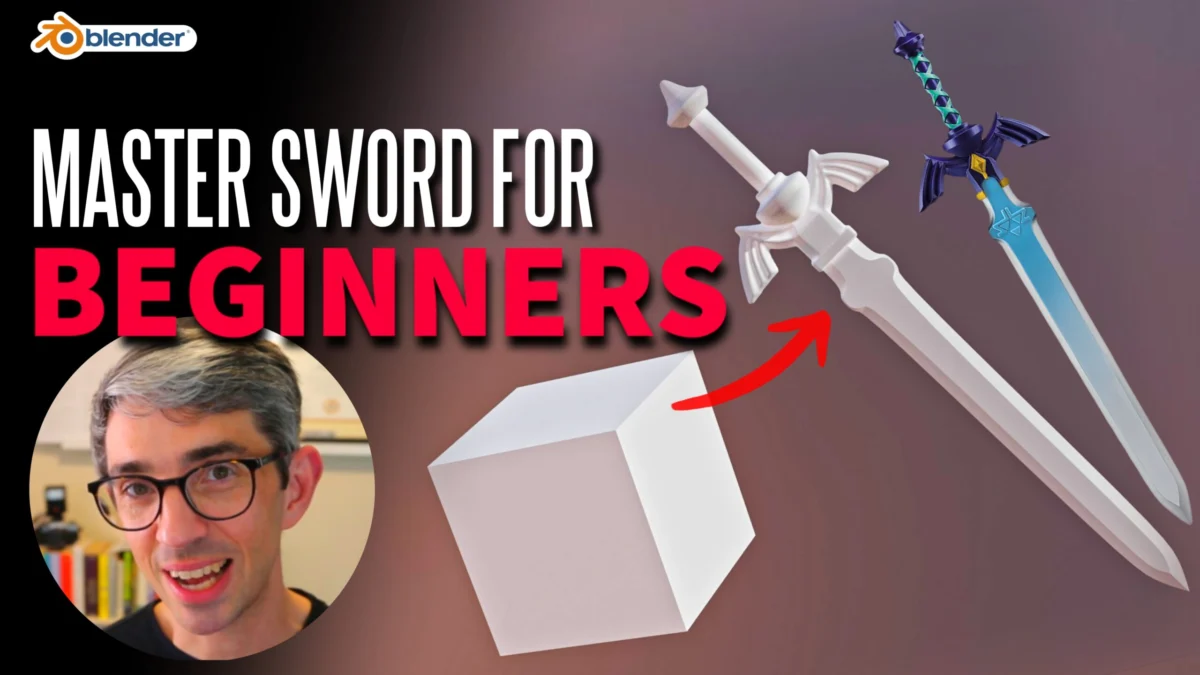
Chris Bailey has released a detailed instructional video tutorial, accessible to Blender enthusiasts of all levels, that meticulously guides users through the process of modeling the iconic Master Sword from Nintendo’s acclaimed Legend of Zelda series. The tutorial, shared via the popular Blender Nation platform, aims to demystify 3D modeling techniques by utilizing fundamental tools within the open-source software. This release not only caters to aspiring 3D artists but also highlights the growing accessibility of professional-grade digital art creation through community-driven educational content.
The Genesis of a Digital Icon: From Game Asset to Tutorial
The Legend of Zelda franchise, a cornerstone of video game history since its debut in 1986, has captivated audiences with its rich lore, innovative gameplay, and memorable character and item designs. Among its most enduring symbols is the Master Sword, a divine blade of evil’s bane, representing courage, wisdom, and power. Its distinctive silhouette and legendary status within the game’s narrative have made it a coveted object for fans and digital artists alike.
This tutorial by Chris Bailey represents a modern approach to fan engagement and skill development. By breaking down the complex process of replicating such a well-known asset into manageable steps, Bailey empowers a new generation of digital creators to engage with their favorite fictional worlds on a deeper, more interactive level. The choice of Blender, a free and open-source 3D creation suite, further democratizes this process, making high-quality 3D modeling accessible to anyone with a computer and an internet connection.
A Step-by-Step Journey: From Default Cube to Legendary Blade
Bailey’s tutorial begins with the most basic element in Blender: the default cube. This foundational approach underscores the tutorial’s beginner-friendly nature, demonstrating that complex forms can be achieved through iterative manipulation of simple shapes. By employing reference images, a standard practice in 3D modeling for accuracy and detail, users are guided through the application of Blender’s core modeling tools. These tools, often referred to as the "basic modeling toolkit," include operations such as extruding, scaling, rotating, and manipulating vertices, edges, and faces.
The initial phase of the tutorial focuses on constructing the distinct components of the Master Sword: the blade, the hilt, and the pommel. Bailey’s methodical instruction ensures that viewers can follow along, replicating the forms and proportions accurately. The emphasis on fundamental techniques ensures that the skills learned are transferable to other modeling projects, providing a robust foundation for further exploration within Blender.
Advanced Techniques for Dedicated Learners: The Volumetric Hilt
For those seeking to delve deeper into more advanced techniques, Bailey offers an exclusive segment for Channel and Patreon members. This advanced module introduces volumetric modeling, a sophisticated approach to creating seamless and unified forms. In the context of the Master Sword’s hilt, this technique would allow for the creation of a single, cohesive piece from individually modeled components, offering a more refined and professional finish.
Volumetric modeling, while more complex, offers significant advantages in terms of creating organic shapes and achieving smooth transitions between different parts of a model. This feature of the tutorial caters to intermediate and advanced users, demonstrating the scalability of Blender’s capabilities and providing a pathway for continuous learning and skill enhancement. The tiered access to content also reflects a common model in online education, where supplementary materials and advanced lessons are offered as a reward for community support.
Community Engagement and the Future of Digital Art Education
The release of this tutorial on Blender Nation signifies a broader trend in digital art education: the power of community collaboration and knowledge sharing. Blender Nation has established itself as a vital hub for Blender users, providing news, tutorials, and a platform for artists to showcase their work. By hosting tutorials like Bailey’s, the platform fosters a supportive environment where both novice and experienced users can learn, grow, and contribute to the ever-expanding Blender ecosystem.
The proliferation of accessible tutorials for complex software like Blender has a significant impact on the digital art industry. It lowers the barrier to entry, enabling a more diverse range of individuals to pursue careers in 3D modeling, animation, game development, and visual effects. This democratization of tools and knowledge can lead to a richer and more varied creative landscape, as more voices and perspectives enter the field.
The Impact of Accessible Modeling: Implications for Creators and Consumers
The ability to create detailed 3D models of beloved fictional items has far-reaching implications. For aspiring game developers and indie studios, tutorials like this provide cost-effective ways to acquire game assets or to train their own teams. For fan artists and hobbyists, it opens up avenues for personal projects, fan films, and even 3D printing creations.
Furthermore, the increasing sophistication of readily available tutorials contributes to the overall quality and complexity of fan-made content. As more individuals master tools like Blender, the line between professional and amateur creations blurs, leading to a higher standard across the board. This benefits consumers of digital media, who can expect to see more intricate and visually appealing content, whether in games, animations, or virtual reality experiences.
The Master Sword, as a symbol of heroism and adventure, resonates deeply with a vast audience. By providing a clear and accessible path to recreating this iconic weapon in 3D, Chris Bailey’s tutorial not only imparts technical skills but also fosters a sense of accomplishment and creative empowerment. It serves as a testament to the potential of accessible technology and the collaborative spirit of online learning communities. As the digital art landscape continues to evolve, such educational resources will undoubtedly play an increasingly pivotal role in shaping the next generation of digital storytellers and visual artists. The journey from a simple cube to a legendary sword is a powerful metaphor for the creative process itself, showcasing how dedication, guidance, and the right tools can transform imagination into tangible digital reality.
About the Author