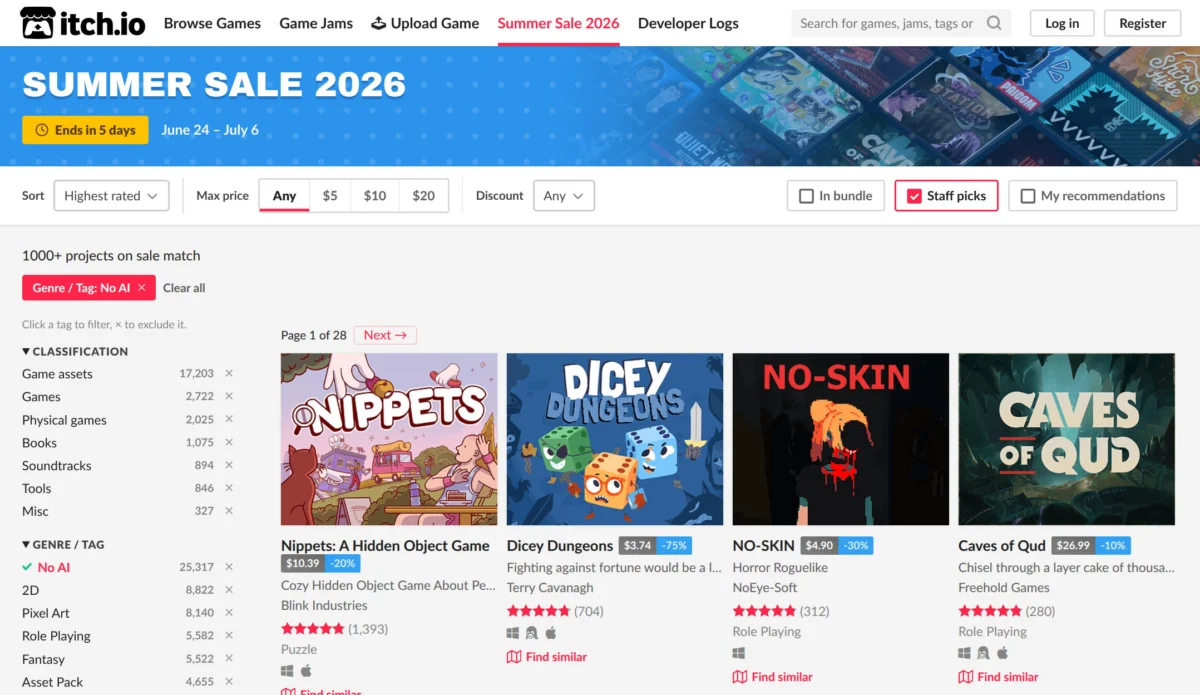
The dynamic independent game marketplace, itch.io, has rolled out a comprehensive series of platform enhancements, detailed in its latest changelog. These updates, previously disseminated through its Developer Updates forum, signify a strategic effort to refine user experience, empower creators, and streamline critical community functionalities. Key among the new features are the introduction of the Sale Explorer, a complete overhaul of the bundle hosting system, a modernized jam theme editor, and a rebuilt Patreon integration, each designed to address longstanding community feedback and improve the platform’s robust ecosystem.
The Evolution of itch.io: A Commitment to Indie Development
itch.io has long distinguished itself as a creator-centric digital storefront, prioritizing flexibility, transparency, and community engagement for independent game developers, artists, and creators of digital content. Founded in 2013, the platform quickly garnered a reputation for its open approach, allowing creators to set their own revenue splits, host DRM-free content, and engage directly with their audience through forums, devlogs, and game jams. Unlike larger, more centralized marketplaces, itch.io thrives on its grassroots appeal, fostering a vibrant ecosystem where experimental projects and niche titles can flourish. This latest wave of updates underscores itch.io’s continuous commitment to evolving its infrastructure to better serve its growing user base, which includes millions of monthly visitors and hundreds of thousands of active creators. The cumulative nature of these changelog announcements, rather than individual feature rollouts, highlights a philosophy of iterative improvement, steadily enhancing the platform’s core functionalities based on direct developer and player feedback. These updates are not merely cosmetic; they represent significant architectural shifts aimed at making the platform more efficient, scalable, and user-friendly, directly influencing everything from content discovery to creator monetization strategies.
Navigating the Digital Bazaar: Introducing the Sale Explorer
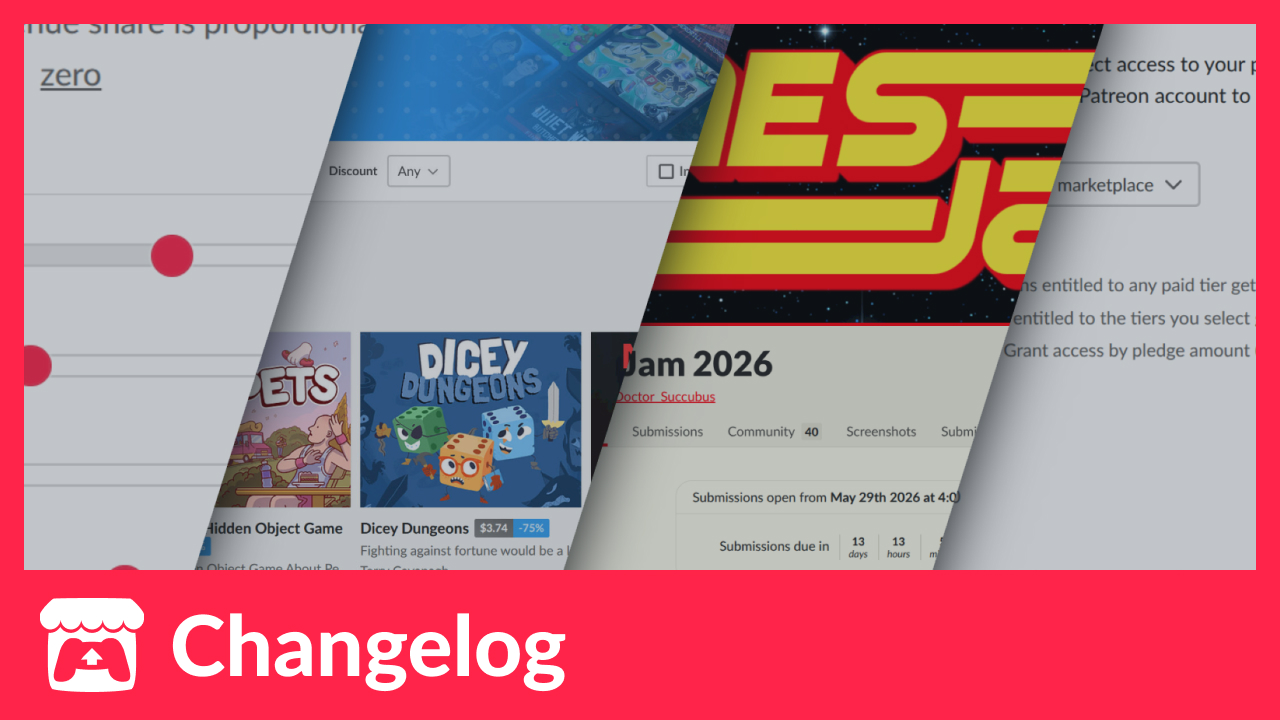
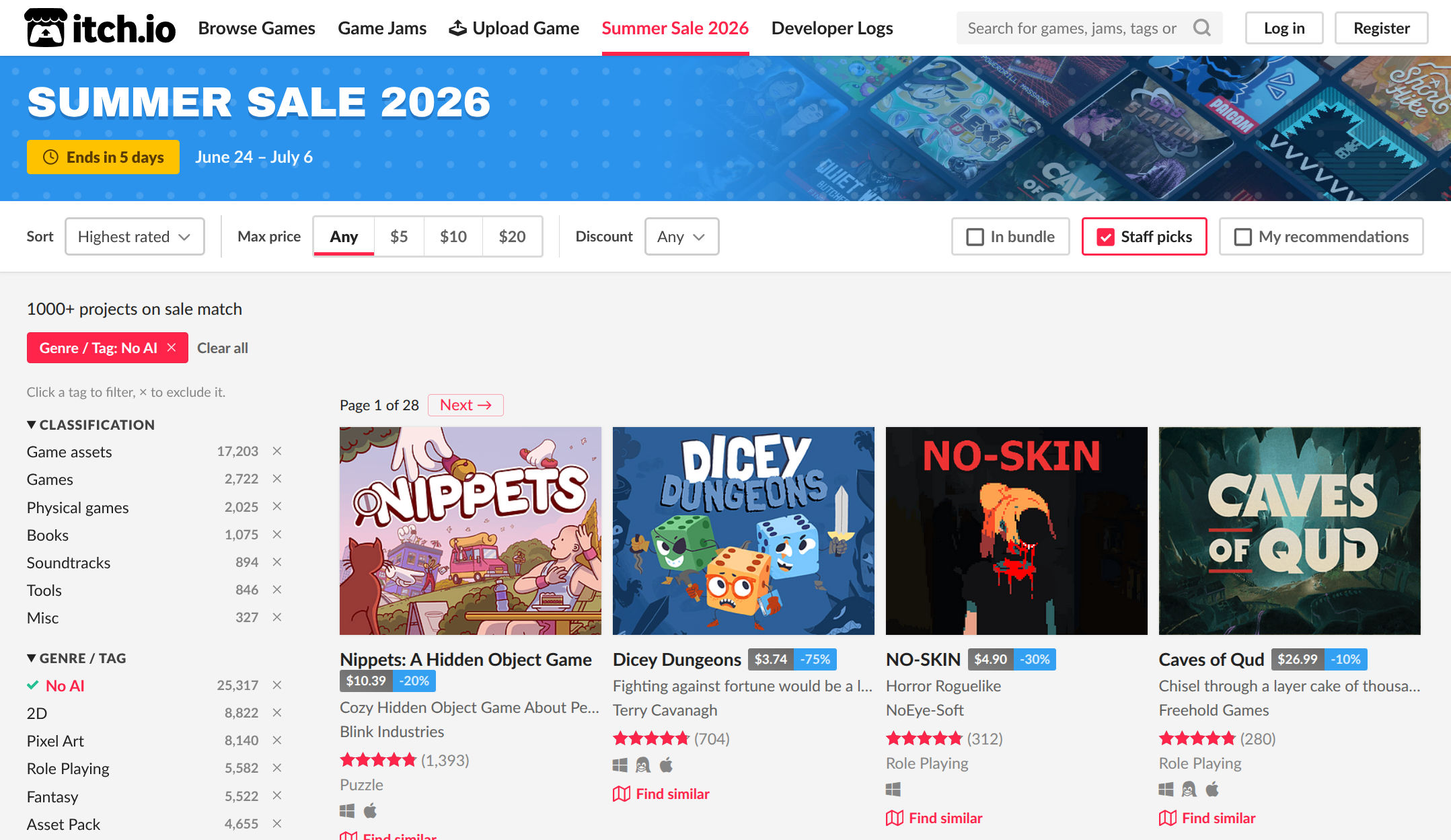
One of the most anticipated additions is the Sale Explorer, a sophisticated browsing interface designed to transform how users discover discounted projects during site-wide sales. This feature debuted concurrently with the platform’s Summer Sale 2026, which featured an impressive catalog of over 30,000 discounted projects available until July 6th. The sheer volume of content on itch.io, while a testament to its vibrant creator community, often presented a challenge for users attempting to sift through thousands of titles to find specific interests. The Sale Explorer directly addresses this discoverability hurdle by integrating advanced filtering and search capabilities.
The new explorer offers granular control, allowing users to filter by genre, platform, price range, tags, and even specific developer profiles. Early user reactions highlight the utility of features such as the ability to exclude certain genres or utilize "find similar" recommendations, dramatically enhancing the browsing experience. For instance, a user seeking a pixel-art RPG but wishing to avoid visual novels can now easily refine their search parameters. This level of customization ensures that players can more efficiently unearth hidden gems tailored to their tastes, moving beyond the limitations of traditional category browsing. The implications for both players and creators are substantial. For players, it means less time spent searching and more time playing, leading to increased satisfaction and engagement with the platform. For creators, particularly those participating in large sales, the Sale Explorer offers enhanced visibility. By making it easier for users to find precisely what they are looking for, developers’ projects are more likely to be discovered by a highly targeted audience, potentially leading to higher conversion rates for discounted titles. itch.io has indicated that many of these advanced browsing enhancements, currently exclusive to the Sale Explorer during seasonal events, are slated for integration into the standard browse pages in the future, promising a permanent uplift in general content discovery across the platform. This strategic move aims to elevate the everyday browsing experience, making the vast catalog of independent creations more accessible and navigable year-round.
Streamlining Collaboration: The Bundle Hosting Revamp
The platform’s bundle system, a cornerstone of its community and charity initiatives for over a decade, has undergone a comprehensive overhaul. itch.io bundles have gained significant prominence, particularly through large-scale events like the "Bundle for Racial Justice and Equality" in 2020, which raised over $8 million for charity and featured nearly 1,700 games. While incredibly successful, the underlying hosting infrastructure, being over ten years old, had begun to show its age, particularly when organizing collaborative bundles involving hundreds or even thousands of creators.
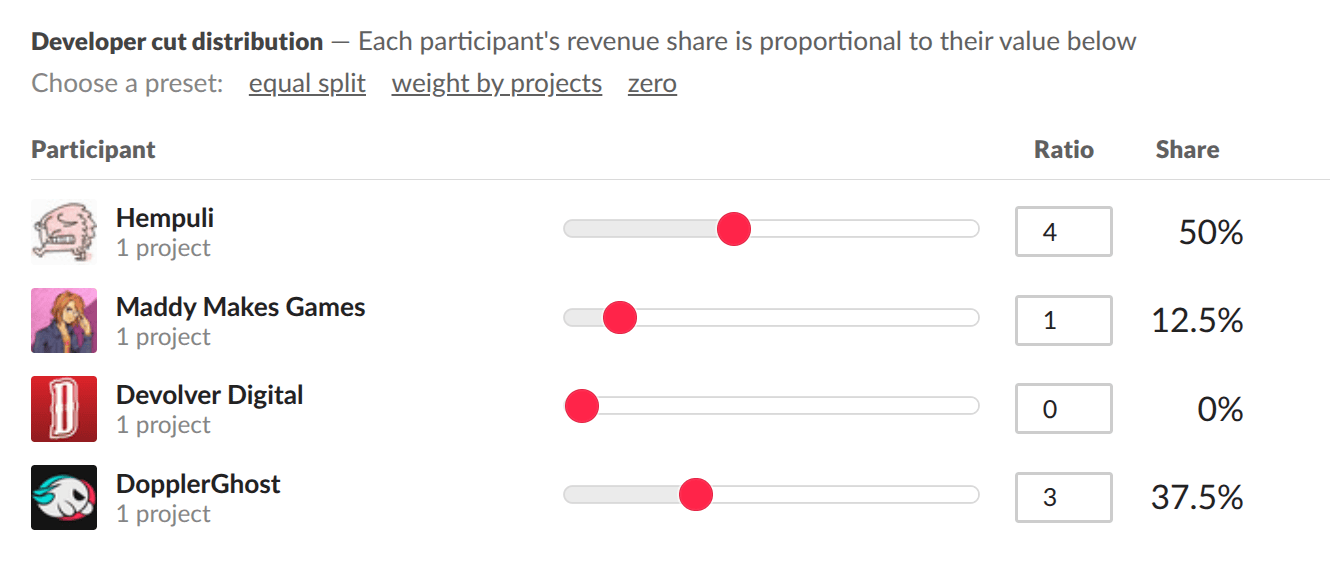
The revamped bundle hosting system introduces a suite of improvements specifically tailored for large-scale collaborative efforts. Organizers now benefit from a modernized dashboard that simplifies project management, participant coordination, and contribution tracking. The previous system, while functional, often required manual workarounds and extensive communication to manage the complexities of multiple contributors, varying project assets, and revenue distribution. The new system addresses these pain points by offering intuitive tools for adding and removing projects, managing contributor access, and streamlining the approval process. For example, a bundle organizer can now more easily send invitations, track responses, and manage the specific assets and details for each contributing project from a centralized interface. This significantly reduces the administrative burden associated with creating and managing large bundles, encouraging more frequent and ambitious collaborative projects.
The implications of this revamp are far-reaching. By simplifying the organizational process, itch.io anticipates an increase in the number and scale of collaborative bundles, which in turn benefits both creators and buyers. Creators gain additional avenues for exposure and monetization, often contributing to charitable causes or themed collections that resonate with specific audiences. Buyers, meanwhile, gain access to curated collections of games and content at compelling price points, further enhancing the value proposition of the itch.io platform. Existing pending bundles can seamlessly transition to the new features by resetting their participation, ensuring that ongoing projects can immediately benefit from the enhanced functionality. This upgrade is a strategic investment in the community’s capacity for collective action, leveraging technology to amplify the impact of independent creators.
Empowering Event Organizers: The Jam Theme Editor Modernization
Game jams are integral to the identity of itch.io, serving as vibrant hubs for creativity, experimentation, and community building within the independent game development scene. Thousands of game jams are hosted on itch.io annually, ranging from small, informal gatherings to large, internationally recognized events. The platform’s commitment to fostering this culture is evident in the recent modernization of its jam theme editor. The previous editor, while functional, had limitations in terms of customization and user interface, often requiring advanced CSS knowledge for hosts to achieve their desired aesthetic and layout.
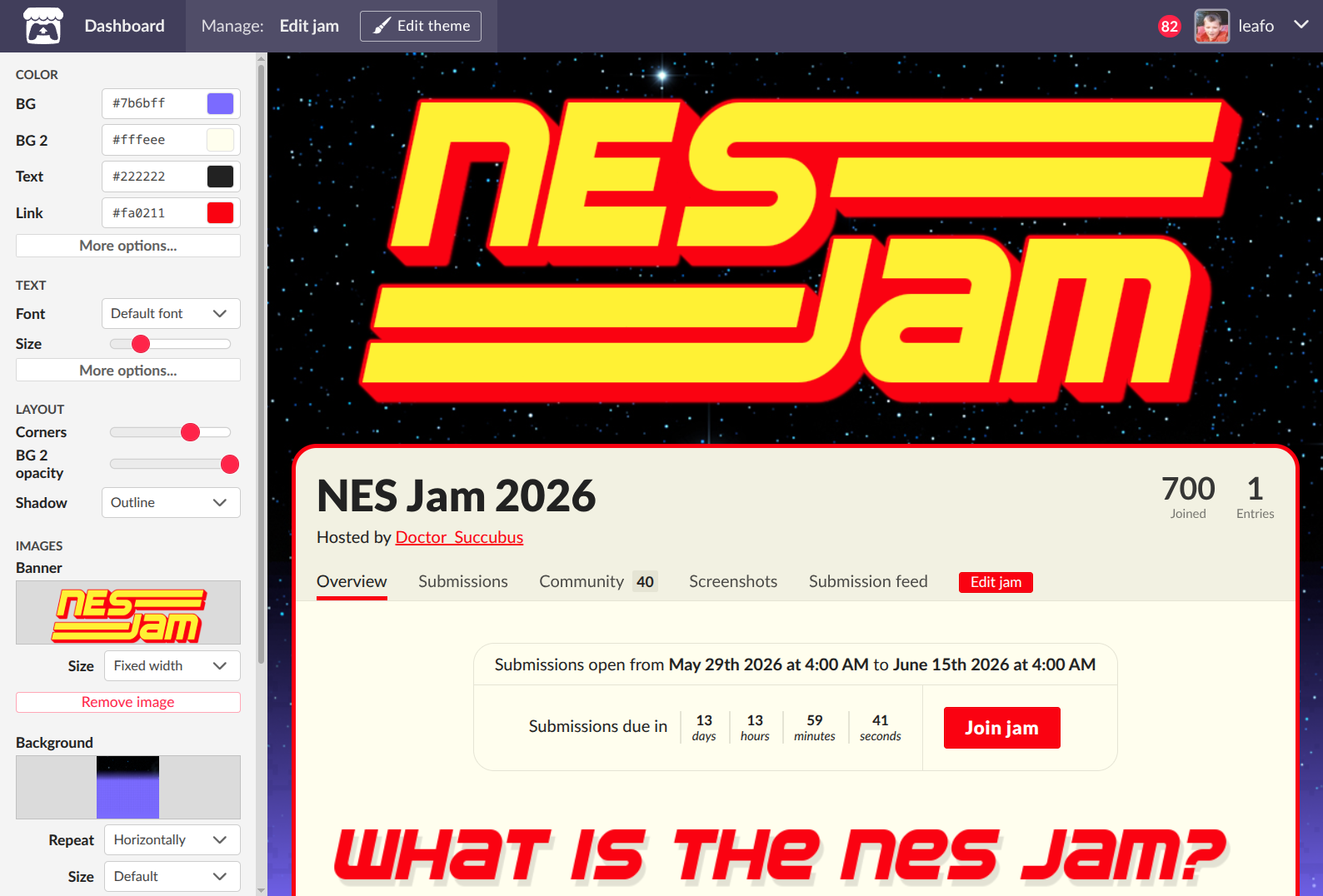
The revamped jam theme editor migrates to the same standardized theme editor UI used across other parts of the itch.io site, providing a more consistent and intuitive experience. This update ensures that jam hosts can leverage a wide array of new customization options without needing to delve deep into custom CSS, although existing custom CSS jam pages have been carefully preserved to ensure continuity. New customization options include granular control over fonts, color schemes, background images, and layout elements, allowing hosts to create visually distinctive and branded jam pages that accurately reflect the event’s theme and identity. For instance, a host organizing a horror-themed jam can now easily implement a dark, moody aesthetic with specific fonts, while a retro-themed jam can adopt a pixel-art style with appropriate color palettes.
The implications for the game jam community are significant. More visually appealing and functionally robust jam pages can enhance the participant experience, making events more engaging and professional. This ease of customization can attract more individuals and organizations to host jams on itch.io, fostering an even more diverse range of creative challenges and community interactions. Furthermore, by reducing the technical barrier to creating polished event pages, organizers can focus more on the creative aspects of their jam, such as promoting the event, engaging with participants, and showcasing submitted projects. itch.io has provided detailed documentation on markup changes for those who wish to continue utilizing custom CSS, ensuring that advanced users retain full control while offering a more accessible pathway for newcomers. This dual approach underscores the platform’s commitment to both flexibility and user-friendliness.
Seamless Creator Support: Enhanced Patreon Integration
In an era where creator economies are increasingly vital for independent artists, seamless integration with crowdfunding platforms like Patreon is paramount. Patreon, which allows fans to support creators through recurring pledges, has become a critical income stream for many independent developers on itch.io. The platform’s previous Patreon integration, while functional, had encountered longstanding issues, particularly concerning how access to projects was granted to patrons. The primary challenge stemmed from the system’s reliance on pledge amounts, which often led to inconsistencies for patrons paying in different currencies, creating administrative headaches for creators and potential frustration for supporters.
To address these critical issues, itch.io has completely rebuilt its Patreon integration, leveraging Patreon’s V2 API. This fundamental shift allows access to be granted based on membership tiers rather than specific pledge amounts. This tier-based system is a significant improvement, ensuring that patrons receive appropriate access regardless of their local currency or fluctuations in exchange rates. Creators now have three distinct ways to grant access to their projects: automatic granting for new patrons who join a specific tier, manual granting for individual patrons, and bulk granting for existing patrons. This flexibility allows creators to manage their patron rewards with greater precision and efficiency.
The new system also effectively resolves several complex scenarios that the old integration struggled with. For example, it can now accurately handle situations where a patron’s pledge changes, where they lapse and then resubscribe, or where they switch tiers. The system ensures that access is consistently and correctly assigned according to the creator’s defined tiers. A crucial policy remains: once a patron claims access to a project through their Patreon membership, they retain that access indefinitely, even if their Patreon pledge changes or lapses. This "forever access" model rewards loyal patrons and reduces potential friction points between creators and their supporters. The enhanced Patreon integration simplifies the creator’s workflow, reduces administrative overhead, and provides a more reliable and equitable experience for patrons, ultimately strengthening the financial stability of independent creators on itch.io. This update is a testament to itch.io’s understanding of the modern creator landscape and its proactive efforts to provide robust tools for sustainable development.
Official Statements and Community Echoes
While itch.io’s changelog posts typically serve as direct announcements from the development team, the consistent tone reflects a broader organizational philosophy. The implicit statement from itch.io is one of continuous improvement, driven by community feedback and a deep understanding of the needs of independent creators and players. The concluding remarks in the changelog, inviting users to provide feedback on community forums or through support, reinforce this user-centric approach.
Community reactions, as observed in the comments section of the original announcement, largely echo positive sentiments and further illustrate the direct impact of these updates. Users expressed enthusiasm for the Sale Explorer, with one commenter noting, "Loving the Sale Explorer additions, being able to exclude genres and get ‘find similar’ recommendations makes browsing a sale with thousands of games actually manageable." This highlights the tangible benefit of improved discoverability. Similarly, the Patreon integration received praise, with a user stating, "The patreon feature is really neat. Nice to see big update happening on itch," and another contemplating setting up a Patreon due to the enhanced features. These responses underscore the practical utility and perceived value of the updates from the perspective of the end-user and creator. Some comments also offered constructive suggestions, such as the request for an "AI assisted" tag exclusion filter, demonstrating the active engagement of the community in shaping the platform’s future development. The direct interaction between the itch.io team and users, such as the response from ‘leafo’ (presumably the founder, Leaf Corcoran) acknowledging a request for a per-project revenue split feature, further exemplifies the platform’s responsive development culture.
Broader Impact and Future Trajectory
Collectively, these updates represent a significant step forward for itch.io, reinforcing its position as a leading, creator-friendly platform in the independent games space. The Sale Explorer not only enhances discoverability during major events but also lays the groundwork for more sophisticated browsing capabilities across the entire site, promising a more engaging experience for every visitor. The revamped bundle hosting system streamlines complex collaborative efforts, potentially fostering more ambitious community projects and increasing revenue opportunities for developers. The modernized jam theme editor empowers event organizers to create more professional and engaging experiences, nurturing the platform’s vibrant game jam culture. Finally, the enhanced Patreon integration provides crucial, accurate, and flexible monetization tools, directly supporting the financial sustainability of creators.
These improvements are more than just feature additions; they are strategic investments in the core pillars of itch.io’s success: community, creativity, and creator empowerment. By consistently refining its tools and infrastructure, itch.io ensures that it remains an attractive and viable platform for independent developers seeking autonomy and direct connection with their audience. The commitment to iterative development, driven by user feedback and a clear vision for an open, accessible digital marketplace, positions itch.io for continued growth and influence in the evolving landscape of digital content distribution. As the platform continues to evolve, these foundational updates are expected to foster an even more dynamic and supportive environment for independent creation and consumption.
About the Author