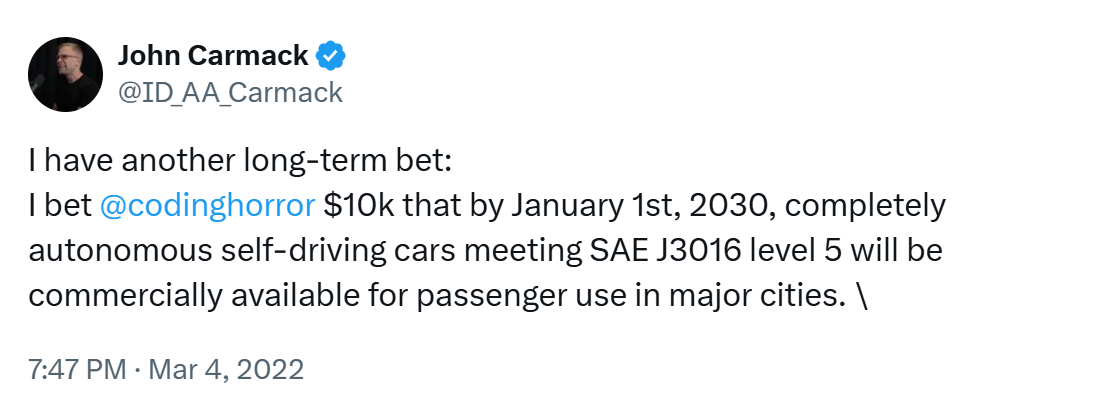
In a move set to spark considerable discussion within the technology and automotive sectors, renowned software developer and entrepreneur Jeff Atwood, creator of Coding Horror and co-founder of Stack Overflow, has announced a friendly $10,000 wager with legendary programmer and aerospace engineer John Carmack. The bet, intended to generate publicity for STEM fields, centers on the ambitious timeline for the commercial availability of completely autonomous self-driving cars, specifically those meeting SAE J3016 Level 5 standards, by January 1st, 2030. Atwood is taking the position against this achievement, while Carmack is betting in favor, with the proceeds designated for the winner’s chosen 501(c)(3) charity. The sum may be adjusted for inflation by mutual agreement in 2030 to ensure its intended impact.
The Wager Defined: A Deep Dive into Level 5 Autonomy
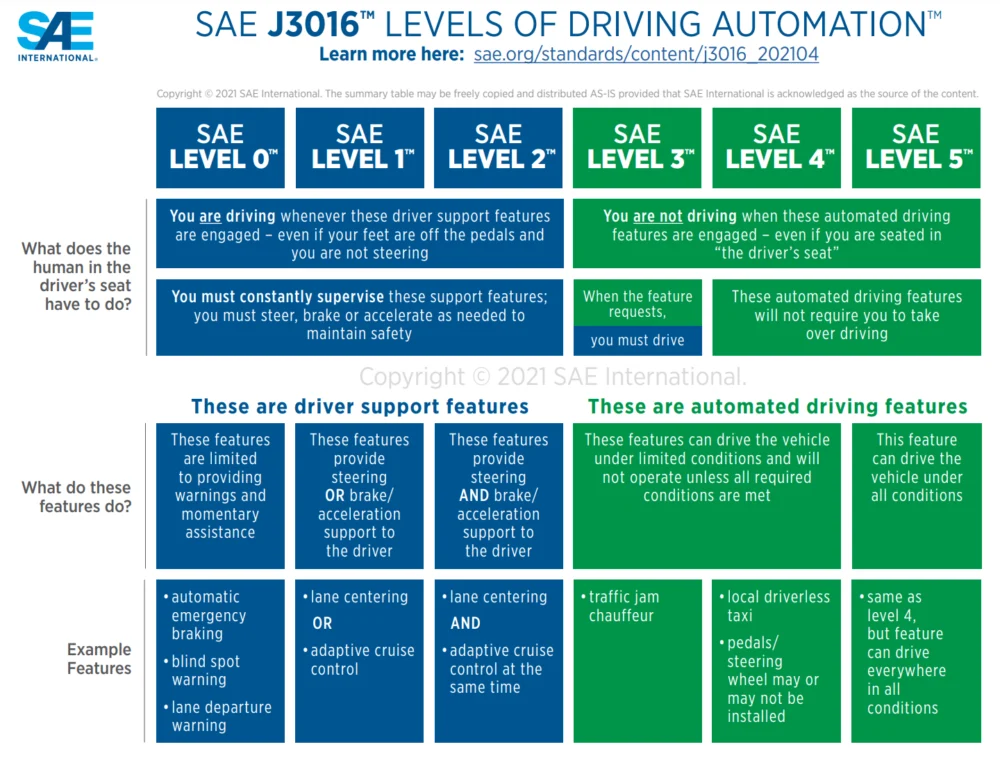
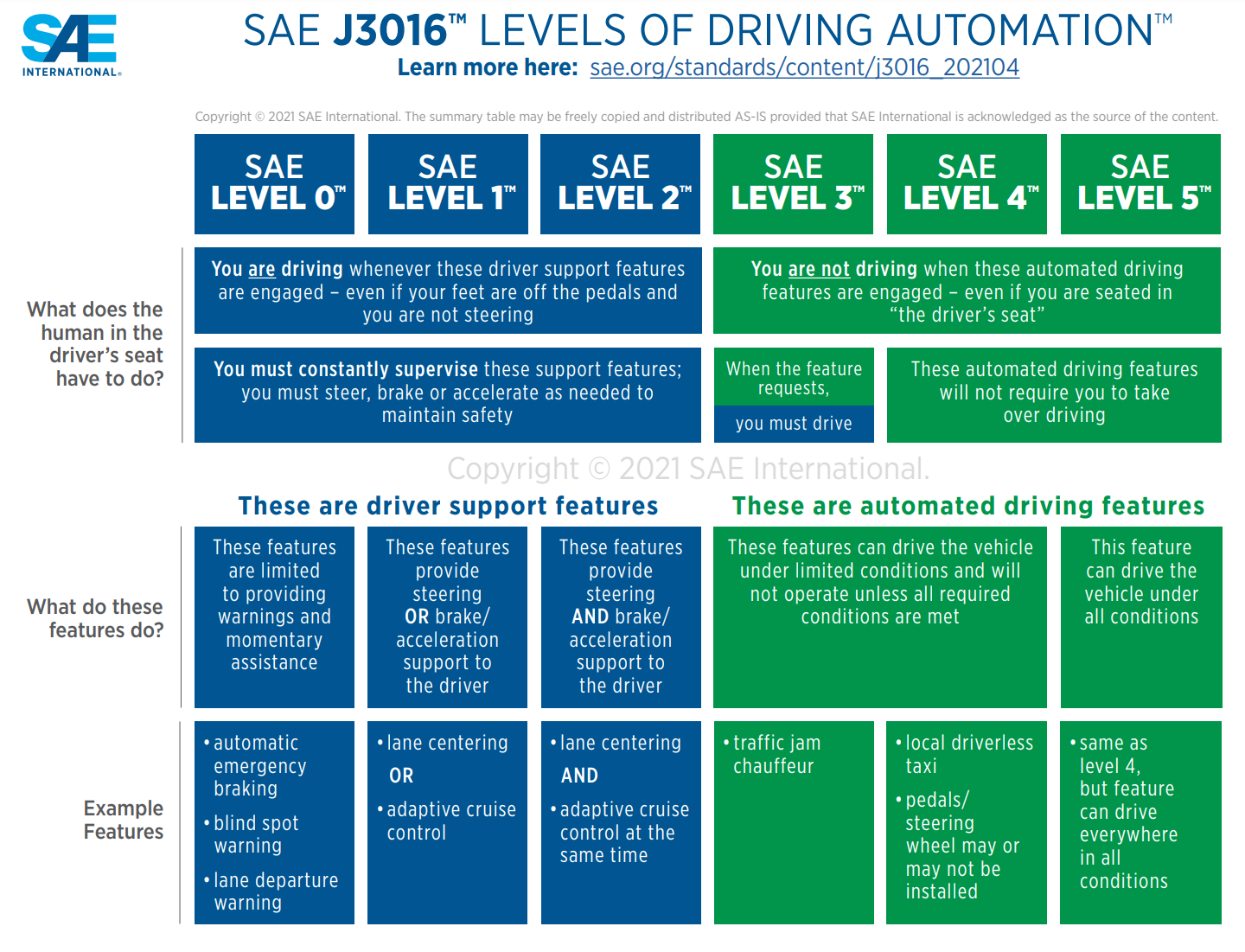
The core of the bet hinges on a precise definition of "completely autonomous." According to the Society of Automotive Engineers (SAE) J3016 standard, Level 5 represents the pinnacle of driving automation. At this level, the automated driving system (ADS) performs all driving tasks under all conditions, with the notable exception of natural disasters or extreme emergencies that would render human driving impossible as well. Crucially, a human passenger in a Level 5 vehicle would simply enter, select a destination, and require zero attention or interaction during the entire journey. This contrasts sharply with lower levels of autonomy, where human oversight, intervention, or specific operational domains are still required. For instance, Level 2 systems offer partial automation like adaptive cruise control and lane-keeping assistance, necessitating constant driver monitoring. Level 3 introduces conditional automation, allowing the driver to disengage under specific conditions but requiring readiness to intervene. Level 4, often seen in current limited commercial deployments, provides high automation within defined operational design domains (ODDs), such as geofenced areas or specific weather conditions, where the vehicle can handle all driving tasks and even perform a minimal risk maneuver if the driver fails to respond. Level 5, however, implies true "go anywhere, anytime" capability without human input.
The geographical scope of the bet is also specific: commercial availability must be established in "major cities," defined as any of the top 10 most populous cities in the United States. As of recent estimates, these typically include New York City, Los Angeles, Chicago, Houston, Phoenix, Philadelphia, San Antonio, San Diego, Dallas, and Austin. This stipulation adds another layer of complexity, as these urban environments present diverse and challenging driving scenarios, from dense traffic and unpredictable pedestrians to varied infrastructure and weather conditions.
The Minds Behind the Bet: Profiles of Tech Luminaries
The individuals behind this high-stakes intellectual wager are titans in their respective fields. Jeff Atwood is widely recognized for his influential blog, Coding Horror, which has shaped discussions around software development for nearly two decades. He co-founded Stack Overflow, a cornerstone resource for programmers worldwide, and later Discourse, an open-source discussion platform. His insights often blend deep technical understanding with pragmatic observations on the challenges of technological advancement. Atwood’s stance against Level 5 autonomy by 2030 stems from his belief that the industry is significantly "underestimating how difficult fully autonomous driving really is." While he expresses enthusiasm for the potential benefits of self-driving vehicles – desiring to use travel time for reading or socializing – he frames the Level 5 challenge as an incredibly complex computer science problem. He openly invites engineers and researchers to "prove me wrong," underscoring his desire to see such innovation succeed, even if he doubts the timeline.
John Carmack, on the other hand, is a legendary figure in computer graphics and game development, co-founding id Software and pioneering technologies behind iconic games like Doom and Quake. His relentless pursuit of performance and innovation has consistently pushed the boundaries of computing. Later, he served as CTO of Oculus VR, contributing significantly to the resurgence of virtual reality. More recently, Carmack founded Keen Technologies, focusing on artificial general intelligence (AGI). His optimistic outlook on the 2030 timeline for Level 5 autonomy is consistent with his career-long dedication to overcoming seemingly insurmountable technical challenges through ingenuity and persistent engineering. Atwood refers to Carmack as "one of my biggest heroes," highlighting the mutual respect underlying this public challenge. The suggestion for the wager originated from Carmack, signaling his confidence in the rapid pace of technological progress.
The Road to Autonomy: A Timeline of Self-Driving Car Development
The journey towards autonomous vehicles has been a protracted and complex one, marked by periods of fervent optimism and sobering reality checks. Early concepts date back to the mid-20th century, but serious engineering efforts gained traction in the 1980s with projects like Carnegie Mellon University’s ALVINN. A pivotal moment arrived with the DARPA Grand Challenge series, beginning in 2004, which spurred significant advancements in robotic perception and navigation, transitioning autonomous driving from academic theory to tangible prototypes.
Google’s Waymo (formerly the Google self-driving car project), established in 2009, is often credited with reigniting public and industry interest. Waymo has been at the forefront of developing and deploying Level 4 autonomous technology in geofenced areas, notably in Phoenix, Arizona, and later in San Francisco and Los Angeles. Competitors like Cruise (majority-owned by GM), Mobileye (an Intel company), and Argo AI (a joint venture that has since ceased operations, reflecting the industry’s volatility) have also invested billions, achieving varying degrees of success in limited Level 4 deployments. Tesla, under Elon Musk, has pursued a different strategy, emphasizing a vision-only approach to "Full Self-Driving" (FSD) capabilities, though its current iteration remains a sophisticated Level 2 system requiring active driver supervision and intervention.
Initially, many industry leaders, including Musk, projected widespread Level 5 autonomy by the mid-2020s. However, the immense complexity of replicating human-like perception, decision-making, and "common sense" in infinitely varied real-world scenarios has led to a recalibration of these timelines. Current commercial offerings largely fall into Level 2 (advanced driver-assistance systems) or Level 4 (highly automated driving within specific operational domains). No true Level 5 system is commercially available anywhere in the world today.
The Technical Hurdles: Why Level 5 Remains Elusive
Atwood’s skepticism regarding the 2030 deadline for Level 5 autonomy is rooted in the formidable technical challenges that persist. Achieving Level 5 requires systems to reliably perform in virtually all driving conditions, something humans, despite their imperfections, are remarkably adept at. Key challenges include:

- Perception in Edge Cases: While autonomous vehicles excel in structured, predictable environments, they struggle with "edge cases" – rare, unusual, or unexpected scenarios that are difficult to train for. These can range from ambiguous road markings, complex construction zones, and sudden debris, to erratic human behavior (pedestrians, cyclists, other drivers) and unique environmental conditions (heavy rain, snow, fog, glare). Sensors (Lidar, radar, cameras) can be occluded, confused, or provide incomplete data, making robust perception a significant hurdle.
- Prediction and Planning in Dynamic Environments: Predicting the intent and future actions of other road users, especially humans, is incredibly complex. A Level 5 system must anticipate, plan, and execute maneuvers in real-time, accounting for an infinite number of variables, many of which are non-deterministic. This requires sophisticated AI models capable of probabilistic reasoning and rapid adaptation.
- Decision-Making and "Common Sense" AI: Humans possess an intuitive understanding of the world, often referred to as common sense, which allows them to navigate novel situations or make ethical decisions (e.g., choosing between two bad outcomes in an unavoidable accident scenario). Replicating this generalized intelligence in an AI system remains one of the grand challenges of artificial intelligence. Current AI excels at specific tasks but struggles with generalized reasoning.
- Validation and Safety Standards: Proving the safety of Level 5 systems to a degree that surpasses human driving performance, across all possible conditions, is an unprecedented undertaking. The sheer number of miles required to validate such systems in real-world scenarios is astronomical, leading to reliance on simulations, which, while powerful, cannot fully replicate reality. Regulatory frameworks are still evolving, further complicating deployment.
- Computational Power and Energy Efficiency: The amount of data processed by a Level 5 autonomous vehicle’s sensor suite and AI systems is immense, requiring significant computational power. Ensuring this can be done efficiently, affordably, and reliably within the constraints of a vehicle platform is another engineering challenge.
These obstacles underscore Atwood’s point that the difficulty is often underestimated. While impressive progress has been made in specific domains, the leap from highly capable Level 4 in defined ODDs to universal Level 5 without any human intervention by 2030 is a monumental task.
Industry Perspectives: Expert Opinions on the 2030 Goal
The industry consensus on Level 5 autonomy by 2030 is increasingly mixed, leaning towards skepticism for widespread deployment. While companies like Tesla continue to express ambitious timelines for "Full Self-Driving," most established autonomous vehicle developers, such as Waymo and Cruise, have adopted a more cautious, incremental approach. Their focus is primarily on perfecting Level 4 operations within specific, well-mapped geofenced areas, gradually expanding their operational design domains as technology matures and regulatory approvals are secured.
Many experts in academia and safety organizations believe that while Level 5 technology might exist in a highly controlled, experimental setting by 2030, its commercial availability for passenger use across multiple major U.S. cities is highly improbable. The regulatory hurdles, public acceptance issues, liability concerns, and the need for truly robust performance in every conceivable "corner case" are seen as significant inhibitors. For instance, testing a system in California’s sunny, well-marked roads is one thing; deploying it flawlessly in a blizzard in Chicago or navigating the chaotic streets of New York City during rush hour is an entirely different order of magnitude. The financial investment required to develop, validate, and scale such systems to meet the demands of major urban environments is also staggering, with many startups in the sector struggling to maintain funding in the face of protracted development cycles.
Economic and Societal Implications of Level 5 Autonomy
Should Level 5 autonomy indeed become a reality by 2030, its implications would be nothing short of revolutionary. Transportation would be fundamentally transformed. Urban planning could shift dramatically, with less need for parking spaces and potentially redesigned road networks. Logistics and delivery services would become vastly more efficient, operating 24/7 without human drivers. The economic impact could include significant job displacement in the driving professions, but also the creation of new industries related to autonomous vehicle maintenance, software development, and in-car services.
Societally, Level 5 vehicles promise enhanced safety by eliminating human error, which is responsible for the vast majority of accidents. This could save countless lives and reduce injuries. Increased accessibility for the elderly, disabled, and those unable to drive would open up new freedoms and opportunities. Passengers would reclaim commuting time, converting it into productive or leisure hours. However, ethical considerations, such as programming vehicles for unavoidable accident scenarios, and privacy concerns related to data collection, would become paramount. The legal framework for liability in the event of accidents would also need a complete overhaul. The bet, therefore, isn’t just about a technological achievement but about the readiness of society to integrate such a profound change.
The Broader Context: Wagers and Public Discourse in Tech
This bet between Atwood and Carmack is not an isolated incident in the tech world; such public wagers often serve as catalysts for focused discussion and a clear articulation of differing perspectives on future technological trajectories. They provide a tangible measure against which progress can be evaluated, injecting an element of friendly competition into complex technical debates. For instance, similar bets have been made on the future of AI, space travel, and renewable energy, often drawing attention to the challenges and opportunities in these fields.
It’s also interesting to note Atwood’s broader perspective on technological adoption. In a separate observation, he expresses a far more pessimistic view on the future of virtual reality (VR), stating that it "just isn’t going to happen, in any ‘changing the world’ form, in our lifetimes." He contrasts this with augmented reality (AR) and projection technologies, which he believes will have a more immediate and significant impact. This highlights a discerning approach to nascent technologies, where he separates the genuine, perhaps overhyped, potential from the truly transformative. His bet on Level 5 autonomy, while skeptical of the timeline, is framed as a challenge, reflecting a desire to see the innovation succeed, even if his current assessment points to its immense difficulty.
As the countdown to January 1st, 2030, begins, the tech world will undoubtedly watch with keen interest. Whether Level 5 autonomous vehicles will be a commercial reality in major U.S. cities by then remains one of the most compelling questions facing the industry. Regardless of the outcome, the wager has already served its intended purpose: to ignite public discourse and challenge the brightest minds to push the boundaries of what is possible in the realm of artificial intelligence and transportation. Atwood himself concludes with a call to action: "Prove me wrong! Make it happen by 2030, and I’ll be popping champagne along with you and everyone else!"
About the Author