In an era where video game narratives often guide players through meticulously crafted worlds, the recently released action roguelike Absolum presents a compelling inversion of this paradigm. Developed by a collaborative team comprising Dotemu, Guard Crush Games, and Supamonks, Absolum distinguishes itself by crafting a gameplay experience where the narrative primarily serves to accentuate and elevate the game’s striking art direction. This approach, while unconventional, has garnered significant attention for its ability to foster deeper player engagement through environmental observation and intuitive discovery, currently available on PC via Steam and generating anticipation for potential future console releases.
The Genesis of an Art-Driven Experience
Absolum emerges from a lineage of developers celebrated for their contributions to revitalizing classic gaming genres. Dotemu, a prominent French publisher, has built a reputation for breathing new life into beloved arcade and beat-em-up titles, notably with critically acclaimed successes like Streets of Rage 4, Windjammers 2, and Teenage Mutant Ninja Turtles: Shredder’s Revenge. Their partnership with Guard Crush Games, the primary developer behind Streets of Rage 4, further solidifies Absolum‘s foundation in precise, satisfying beat-em-up mechanics. The involvement of Supamonks, an animation studio, provides a clear explanation for the game’s immaculate and imaginative fantasy world, characterized by a vibrant, comic book-inspired art style.
This collaborative expertise laid the groundwork for a game that, from its inception, aimed for visual excellence. In a landscape increasingly saturated with roguelikes and action titles, Absolum sought to carve its niche not just through challenging combat, but through an aesthetic that demanded, and rewarded, close scrutiny. The developers’ decision to prioritize art and integrate it directly into the gameplay loop represents a deliberate design choice, moving beyond mere visual appeal to make the art itself a critical component of player progression and narrative understanding.
Unconventional Narrative: Guiding the Gaze
Unlike many contemporary games that rely on extensive dialogue, cutscenes, or UI-driven quest markers to convey story, Absolum adopts a minimalist narrative strategy. Its storytelling moments are sparse, yet impactful, serving a distinct gameplay purpose: compelling players to pay meticulous attention to the visual details of their surroundings. This stands in stark contrast to titles like Supergiant Games’ Hades II, another action roguelike praised for its stunning visual style. While Hades II‘s lush, isometric environments brilliantly complement its fast-paced combat and rich character interactions, its narrative rarely requires players to actively dissect the environment for progression cues.

In Absolum, this redirection of player focus is achieved through subtle, integrated quest design. Characters frequently issue directives that lack traditional UI support, instead relying on environmental cues. For instance, a pirate queen might instruct a player to "look behind the bushes in a glen near the starting point of each run" to uncover a secret. A goblin might request assistance in navigating to a swamp without providing any explicit directions, forcing players to interpret the visual landscape. Perhaps most tellingly, a mysterious narrator character might urge players to observe the backgrounds of levels for specific, small fantasy creatures – such as a tiny one-eyed rabbit – which signify the presence of hidden areas or pathways. This design philosophy fosters a sense of genuine discovery, rewarding players who engage with the world on a deeper, more observant level.
This method transforms the act of exploration from a passive traversal of space into an active, investigative process. Players are not merely passing through beautifully rendered scenes; they are actively deciphering them, searching for the implicit hints embedded within the art itself. This design choice mirrors elements found in classic adventure games or "hidden object" genres, where success hinges on keen observation and pattern recognition within visually rich, static environments. In Absolum, this concept is dynamically integrated into an action-packed, procedurally generated roguelike framework, adding a layer of complexity and immersion rarely seen in the genre.
Combat as a Masterclass in Visual Acuity
The symbiotic relationship between art and narrative in Absolum extends profoundly into its core combat mechanics. The game is a beat-em-up fundamentally centered around precise parrying. Unlike many action games where a "block" action might offer damage reduction, Absolum‘s parry system demands perfect timing with a dodge maneuver. Players either successfully evade, parry the blow, or take full damage, creating a high-stakes, reactive combat loop. This is further complicated by a "clash" system, where specific "Skill" or "Arcanum" attacks can interrupt enemy assaults.
Mastering Absolum‘s combat requires an exceptional level of attention to enemy animations. Each foe possesses complex attack patterns, often prefaced by a brief, shining light that telegraphs an incoming parryable strike. However, the precise timing between this telegraph and the actual impact varies significantly across enemy types, forcing players to learn and internalize these visual cues. This is a far cry from games where enemy proximity is the primary concern, or where attack animations are less crucial, as seen in bullet-hell or horde-based titles.
Compared to other parry-heavy games, such as Clair Obscur: Expedition 33 where players often focus on a single enemy’s windup, Absolum throws players into chaotic, multi-directional engagements. The window for parrying is tight, and the environment is constantly in motion with multiple threats. The theory posited by some critics is that this intense demand for visual processing in combat serves a dual purpose: it not only elevates the challenge and satisfaction of the fighting but also subtly trains players to apply the same heightened observational skills to the broader game world. If players are conditioned to meticulously scrutinize enemy frames for survival, they are more likely to apply that same level of detail to the environment when seeking hidden pathways or quest objectives. This intentional design creates a cohesive experience where the core gameplay loop reinforces the narrative’s subtle demands.
Developer Philosophy: Layers, Hints, and the Joy of Discovery
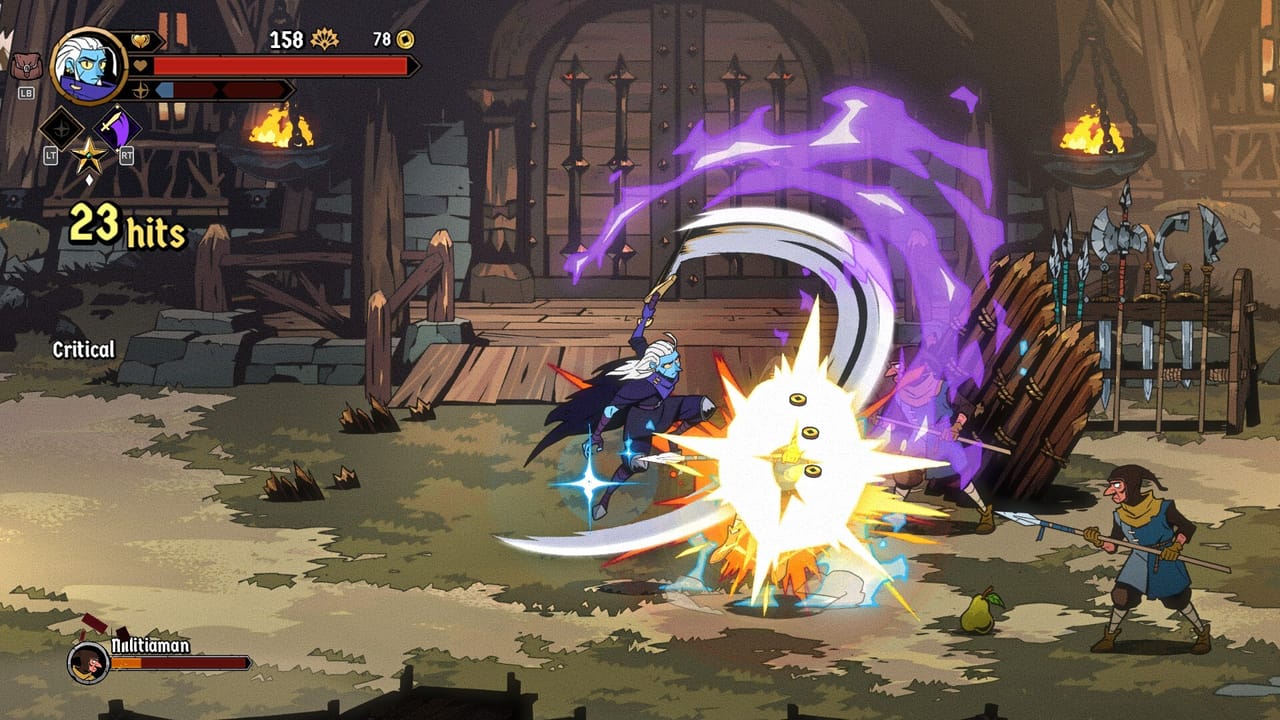
The developers behind Absolum have openly discussed their motivations for this unique design philosophy. Jordi Asensio, head of game design at Dotemu, articulated that the primary goal was to "interrupt the player as little as possible" in an action-oriented game. This commitment translated into keeping dialogue concise and relying heavily on "environmental storytelling to convey the world and the atmosphere." This statement underscores a desire for immersion, where the world itself speaks volumes without needing explicit verbal exposition.
Gautier Knittel, the game’s writer and narrative designer, expanded on this, explaining that the narrative was intended to be exposed through "layers and hints," trusting the player’s "intuition and intelligence" to piece together the overarching story and lore. This approach empowers players, making them active participants in unraveling the game’s mysteries rather than passive recipients of information. It fosters a sense of accomplishment that comes from genuine discovery, akin to solving a visual puzzle.
Asensio further elaborated on the team’s deep affection for secrets in games, recalling personal "best gaming memories" derived from uncovering hidden paths or unexpected elements. This personal passion directly informed Absolum‘s design, leading them to fill the game with numerous concealed areas. Recognizing that some of these secrets might be "too hidden," art director Maxime Mary introduced the ingenious solution of placing the small, one-eyed rabbit in the environment as a recurring, subtle hint. This self-correction in design demonstrates a commitment to making the secrets discoverable while still retaining their elusive quality.
Beyond individual moments of discovery, the developers also saw this environmental storytelling and secret integration as a vital tool in combating the inherent challenges of the roguelike genre. Roguelites, by their nature, involve repetition, which can lead to monotony. Asensio noted that "secrets and alternate paths help keep players curious and constantly exploring," effectively fighting the potential for player fatigue. By weaving narrative clues and hidden content directly into the visual fabric of each run, Absolum ensures that even repeated traversals of familiar environments offer new potential for revelation, maintaining player interest and extending replayability.
Impact and Implications for Game Design
Absolum‘s distinctive approach carries significant implications for future game design, particularly within the action and roguelike genres. By demonstrating a successful model where narrative actively encourages visual engagement rather than merely decorating it, the game challenges conventional wisdom regarding storytelling in interactive media.
Firstly, it highlights the immense potential of "show, don’t tell" in its purest form. Instead of relying on lengthy text logs or exposition dumps, Absolum proves that a rich, engaging narrative can be communicated through subtle environmental cues, character interactions that prompt observation, and gameplay mechanics that demand visual literacy. This can lead to more immersive experiences, as players are actively interpreting the world around them, rather than being spoon-fed information.
Secondly, the game underscores the value of player agency and the satisfaction derived from genuine discovery. In an era of ubiquitous quest markers and detailed mini-maps, Absolum‘s deliberate omission of such UI elements forces players to engage their observational skills, making the act of finding a hidden path or solving an environmental puzzle feel more earned and rewarding. This fosters a stronger connection between the player and the game world, enhancing a sense of achievement and ownership over their progress.
Thirdly, for developers, Absolum offers a case study in integrating different design pillars. The seamless connection between the game’s intricate combat animations and its environmental storytelling demonstrates how core gameplay mechanics can be leveraged to reinforce narrative and exploration goals. This holistic approach can lead to more cohesive and impactful game designs, where every element serves a multi-faceted purpose.
However, such a design also presents challenges. The reliance on subtle visual cues might not appeal to all players, particularly those accustomed to more explicit guidance. There is a delicate balance between fostering discovery and risking player frustration due to overly obscure hints. The success of Absolum‘s model lies in its careful calibration of these elements, providing just enough information to pique curiosity without fully revealing the path. This balance is crucial for encouraging a vibrant community eager to share discoveries and collaborate on unraveling the game’s deeper secrets, further extending the game’s longevity and engagement.
In conclusion, Absolum stands as a testament to innovative design, offering a refreshing perspective on how narrative and art can intersect within the interactive medium. By purposefully crafting a world where the story guides players to scrutinize its breathtaking visuals and intricate animations, Dotemu, Guard Crush Games, and Supamonks have delivered an action roguelike that not only challenges players with its demanding combat but also rewards them with a deeper, more personal connection to its imaginative fantasy realm. This emphasis on visually-driven discovery and intuitive progression marks Absolum as a noteworthy title, potentially influencing a new wave of game designs that champion the subtle power of environmental storytelling and the profound satisfaction of uncovering secrets through keen observation.
About the Author