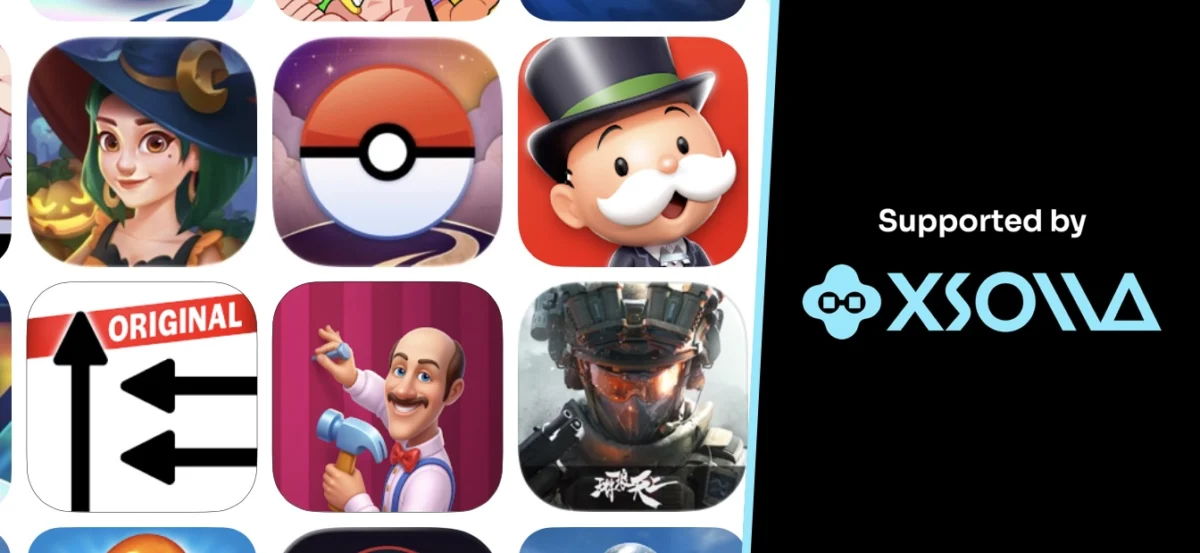
The global mobile gaming industry continues to undergo significant structural shifts as 2026 progresses, marked by evolving user acquisition strategies, the maturation of long-standing puzzle franchises, and a diversifying revenue base for established publishers. Recent data from industry analysts Sensor Tower and AppMagic, alongside quarterly financial disclosures from major players like Tencent, Gameloft, and Playrix, highlight a market that is increasingly bifurcated between high-velocity new releases and resilient "forever games." As developers navigate the complexities of privacy-centric advertising and the rising costs of player retention, the focus has shifted toward hyper-efficient ad spend and the exploitation of intellectual property (IP) to secure early-stage profitability.
Strategic Realignment in Mobile Advertising and User Acquisition
A comprehensive report from Sensor Tower regarding the state of game advertising in the United States reveals a sophisticated landscape where top spenders are tailoring their platform choices to specific genre demographics. The data suggests that the "one-size-fits-all" approach to digital marketing has been replaced by highly surgical deployments across in-app networks and social video platforms.

Gossip Harbor, currently a dominant force in the merge genre, exemplifies this trend by concentrating 51% of its ad impressions through AppLovin. This strategy leverages the network’s strength in reaching casual gamers through interactive formats. Conversely, Scopely-owned giants Pokémon GO and Monopoly GO have found greater resonance within the Google-owned AdMob network, which accounts for 47% and 31% of their respective ad impressions. Analysts suggest that the reliance on in-app networks is a calculated move to place playable and rewarded ad formats directly in front of audiences already engaged with casual titles.
In contrast, the strategy and 4X (explore, expand, exploit, and exterminate) subgenres have pivoted heavily toward social video platforms. Kingshot, for instance, directs 62% of its total impressions to YouTube, Facebook, and Instagram. This trend is mirrored by Whiteout Survival and Raid: Shadow Legends, which allocate 51% and 42% of their impressions to these social channels, respectively. The visual fidelity and community-centric nature of these platforms are deemed essential for converting high-value players in complex strategy games. Meanwhile, the recent success of Pokémon TCG Pocket on YouTube, where it captures 42% of its impressions, underscores the platform’s role as a primary discovery engine for IP-driven titles.
The Lifecycle of the Arrow Puzzle Trend
The "arrow puzzle" phenomenon, which saw a surge of releases in early 2026, appears to have reached a critical inflection point. According to AppMagic data, downloads for the genre peaked in June 2026. While the initial "gold rush" of installs has cooled, the financial health of the subgenre remains robust. In-app purchase (IAP) revenue reached a new historical high in September, indicating that while fewer new players are entering the ecosystem, the existing user base is being effectively monetized.

The competitive hierarchy within this niche is dominated by three major entities. Lessmore, a subsidiary of Miniclip, leads with 138 million lifetime downloads. They are followed by Oakever Games (under the Learnings umbrella), whose title Amaze Go—formerly known as Arrows Go—has secured 105 million downloads. Easybrain rounds out the top three with 87 million installs. Despite the heavy reliance on ad-based monetization common in the hyper-casual and puzzle sectors, these top three contenders have successfully separated themselves from the field in terms of IAP revenue, suggesting a deeper level of meta-progression or competitive features that encourage spending.
Playrix Celebrates Nine Years of Homescapes Dominance
In an industry often criticized for the short lifespan of its products, Playrix’s Homescapes has reached a milestone that underscores the power of live-ops and long-term player retention. On the occasion of its ninth anniversary, Playrix confirmed that the title has surpassed 773.4 million lifetime installations. This figure places Homescapes among the most successful mobile titles in history, maintaining a massive global footprint nearly a decade after its launch.
The publisher released specific engagement metrics that illustrate the depth of the game’s community. Remarkably, approximately 750,000 players have remained active for the entirety of the game’s nine-year history. To cater to this dedicated audience, the development team has expanded the game to include over 21,000 levels. Playrix also noted that 550,000 players have successfully completed every available stage, a testament to the ongoing demand for content. This "forever game" status is a primary goal for modern mobile publishers, as it provides a stable revenue floor that is less susceptible to the volatility of the UA market.

Tencent’s Delta Force Scales to 58 Million DAU in China
Tencent’s tactical shooter, Delta Force, continues to demonstrate the immense scale of the Chinese domestic market. On October 8, 2026, Tencent announced that the game had reached 58 million daily active users (DAU) on its China servers. This represents a significant increase from the 50 million DAU reported in March of the same year.
The growth trajectory of Delta Force provides a blueprint for successful large-scale service games in the region. Launched in September 2024, the game hit 12 million DAU by April 2025. It reached the 30 million mark by September 2025 and surged to 41 million in January 2026. Much of this recent momentum was attributed to the Spring Festival period, which historically serves as a peak engagement window for Chinese gamers. Tencent’s latest financial reports indicate that the game achieved record-breaking revenue alongside its DAU milestones, solidifying its position as a cornerstone of the company’s domestic portfolio.
Gameloft and Nitro Games: A Study in Divergent Quarterly Results
The third quarter of 2026 has yielded contrasting financial outcomes for two prominent European publishers, Gameloft and Nitro Games. Gameloft reported a 6% year-on-year increase in revenue, reaching $80 million (€72 million). A key driver of this growth is the company’s successful pivot toward a multi-platform strategy. Currently, PC and console gaming account for 50% of Gameloft’s total revenue, a significant shift for a company historically rooted in mobile development.

Gameloft’s revenue mix is heavily bolstered by its partnership with Disney, with Disney Dreamlight Valley, Disney Magic Kingdoms, and Disney Speedstorm occupying three of the top five revenue spots. Asphalt Legends and March of Empires continue to perform reliably, rounding out the top earners. This performance suggests that Gameloft’s strategy of leveraging high-profile IPs across multiple platforms is insulating the company from the headwinds facing the pure-mobile market.
In contrast, Finland-based Nitro Games reported a challenging third quarter. Revenue fell by 35.2% year-on-year to $1.5 million (€1.4 million), with the decline attributed to a sharp drop in game-specific revenue, which totaled only $0.2 million. The majority of the company’s income ($1.3 million) was derived from its services business. Nitro Games posted an operating loss of $318,000 for the quarter. However, the company’s outlook is buoyed by the successful launch of Warhammer 40,000: Boltgun Boom, which garnered over 1 million pre-registrations—double the company’s internal targets. Furthermore, a new co-publishing agreement with Team17 is expected to provide a more stable framework for future releases.
The Economics of the First Million: Genre and IP Analysis
A detailed study by AppMagic into the 158 games that surpassed $1 million in IAP revenue during 2026 provides critical insights into the "time-to-market" for profitability. The study reveals that puzzle games, while slower to reach the $1 million milestone (with a median of 126 days), offer the highest median lifetime revenue at $4.3 million. This suggests that the puzzle genre benefits from a "slow-burn" monetization model that compounds over time.

In contrast, RPGs reached the $1 million mark much faster, with a median of 62.5 days, but showed a lower median lifetime revenue of $2 million. This indicates a front-loaded revenue model typical of the genre’s reliance on "gacha" mechanics and launch-window hype. Within the puzzle sector, "Merge 2" and "Sort" games are the primary drivers, accounting for 80% of the combined revenue of the 26 puzzle titles that met the $1 million criteria.
The influence of intellectual property remains a decisive factor in early-stage success. Of the 42 IP-based games studied, 20 reached the $1 million revenue mark within 30 days of release. Only seven of the 116 original IP games achieved the same feat. The median lifetime revenue for IP-based games currently stands at $2.6 million, compared to $2 million for original titles, highlighting the reduced user acquisition costs and higher conversion rates associated with established brands.
A notable outlier in the data is NTE: Neverness to Everness, which crossed the $1 million threshold just one day after its launch and has generated $3.2 million in its first month. Conversely, Jelly Busters took 144 days to reach the initial million but has since scaled impressively, earning $5.8 million in the last 30 days alone. These examples serve as a reminder that while IP and genre can predict general trends, individual game quality and live-ops execution remain the ultimate arbiters of long-term commercial success in the mobile arena.
About the Author