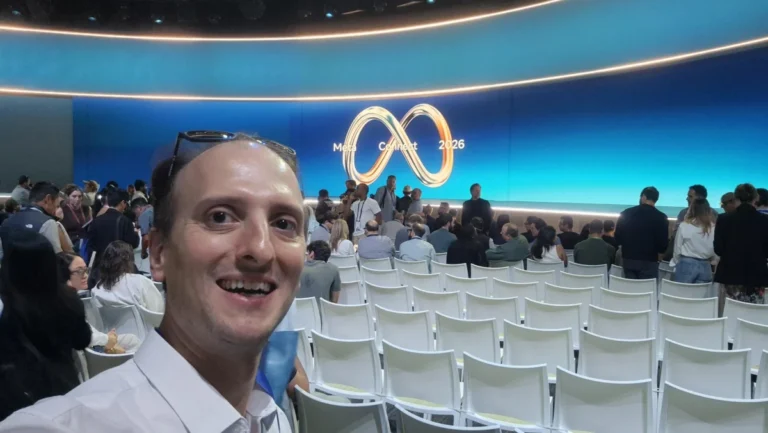
Meta Connect 2026 arrives at a pivotal moment for the social media and technology giant as it seeks to solidify its dominance in the mixed reality (MR) and artificial intelligence (AI) sectors. Following a period of internal restructuring and a strategic shift toward "Year of Efficiency" financial discipline, the upcoming event is expected to showcase a refined vision for spatial computing. The centerpiece of this year’s presentation is anticipated to be a departure from traditional bulky virtual reality (VR) headsets in favor of more wearable, lightweight form factors. Industry analysts and internal leaks suggest a heavy emphasis on hardware codenamed Phoenix, a significant overhaul of the HorizonOS user experience, and the deeper integration of multimodal AI across the Meta ecosystem.
The Debut of Phoenix: A New Category in Mixed Reality
The most significant hardware announcement expected at Connect 2026 is the unveiling of a lightweight mixed-reality headset, currently known by the internal codename "Phoenix." Unlike the standalone Quest series, Phoenix is rumored to adopt a distributed processing architecture similar to recent reference designs seen in the Asian manufacturing sector. This design separates the display and sensors from the battery and computational components, moving the latter into a dedicated "puck" or tethered unit.
Technical specifications leaked ahead of the event suggest that Phoenix will feature a passthrough mixed-reality experience with a resolution of approximately 2.5K per eye. The device is expected to offer a field of view (FOV) of roughly 90 degrees, positioning it as a direct competitor to high-end spatial computers but with a significantly lower weight profile. By utilizing eye-tracking and advanced hand-tracking as the primary input methods, Meta aims to market Phoenix as a productivity and media consumption tool—a "lightweight Apple Vision Pro" for the broader consumer market. Analysts predict a retail price point near $1,000, with pre-orders potentially opening immediately following the keynote for a late 2026 or early 2027 shipping window.

Strategic Expansion of the Wearables Portfolio
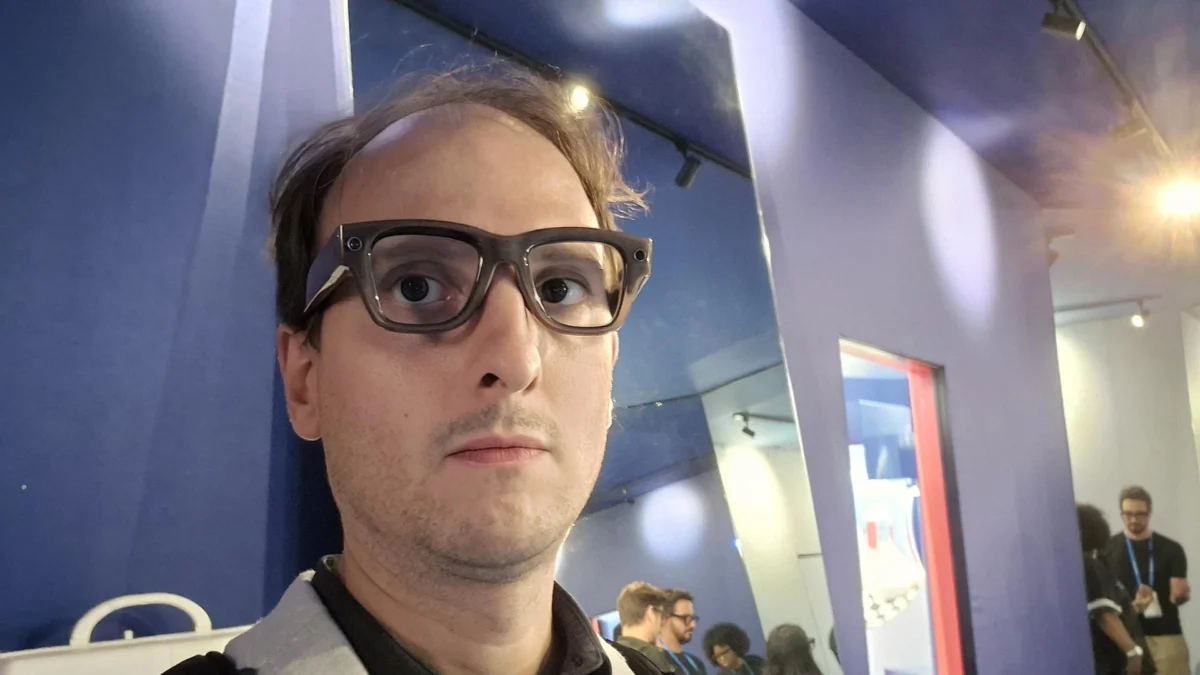
Beyond the Phoenix headset, Meta is expected to broaden its smartglasses lineup, a category that has seen surprising commercial success through its partnership with EssilorLuxottica. Reports indicate the introduction of "Luna," a camera-less version of Meta’s smartglasses. This move is viewed as a strategic response to ongoing privacy concerns and the "bad reputation" occasionally associated with wearable cameras in public spaces. By removing the camera, Meta can offer a sleeker, more socially acceptable frame that focuses exclusively on audio integration and AI assistance.
There is also speculation regarding an updated iteration of the Ray-Ban Meta glasses. This new model may introduce stereo displays, allowing for basic augmented reality (AR) overlays while maintaining the form factor of traditional eyewear. Such an advancement would bridge the gap between simple audio-visual recording glasses and full AR spectacles. Furthermore, Meta may revisit the wearable market with a new smartwatch, codenamed "Malibu 2." While the smartwatch market is highly saturated, industry experts suggest Meta’s entry would only be viable if it integrates electromyography (EMG) technology. This would allow the watch to act as a neural interface controller for Phoenix or Ray-Ban Meta glasses, translating subtle wrist movements into digital commands.
The Evolution of HorizonOS and User Experience
The software backbone of Meta’s XR efforts, HorizonOS, is reportedly undergoing its most significant transformation to date. Following the recruitment of high-profile design talent, including former Apple designer Alan Dye, Meta is expected to debut a completely redesigned user interface (UI). The current iteration of the Quest UI has frequently been criticized for its lack of intuitiveness and fragmented navigation.
The new HorizonOS is anticipated to feature a "liquid" design language that prioritizes spatial fluidity and ease of use. This redesign is not merely aesthetic; it is a functional necessity to support the new control schemes introduced with the Phoenix headset. Data leaks have hinted at a more modular windowing system and improved multitasking capabilities, aimed at transforming the OS from a gaming-centric launcher into a robust productivity environment.

Realistic Digital Presence: The Arrival of Codec Avatars
Meta has long teased the development of "Codec Avatars"—hyper-realistic, 3D digital representations of users generated through machine learning. While these have been demonstrated in research settings for years, Connect 2026 is expected to mark their first commercial implementation. Executives Mark Zuckerberg and Andrew Bosworth are rumored to showcase a live "call" using full-body Codec Avatars to demonstrate the technology’s readiness.
The implementation of these avatars has previously been hindered by the lack of eye-tracking hardware in consumer-grade devices following the commercial underperformance of the Quest Pro. With Phoenix expected to include eye and face tracking as standard features, Meta finally has a hardware platform capable of supporting the nuances of realistic digital expression. This move is seen as a direct response to Apple’s "Personas," as Meta seeks to reclaim its position as the leader in social presence within the metaverse.
Muse AI and the Proactive Assistant
Artificial Intelligence will undoubtedly serve as the connective tissue for all announcements at Connect 2026. Meta is expected to detail the integration of "Muse AI," its next-generation multimodal assistant, across its entire hardware suite. Unlike previous voice assistants, Muse AI is designed to be proactive, utilizing the sensors on Phoenix and smartglasses to understand the user’s environment in real-time.
Functionality is expected to include real-time translation, object identification, and context-aware scheduling. For instance, a user wearing Luna glasses might receive a proactive suggestion for a nearby restaurant based on their previous preferences and current location. This integration mirrors similar moves by competitors like Google with Gemini and Snap with its "SPECS Intelligence," signaling a shift toward AI-first wearable computing.

Content Strategy and Media Partnerships
Meta’s approach to content has shifted significantly over the past 24 months. Following the closure of several first-party gaming studios and the cancellation of high-budget VR projects, the company is pivoting toward high-impact media and sports. A cornerstone of the Connect 2026 keynote is expected to be a partnership with filmmaker James Cameron. Given Phoenix’s focus on media consumption, a high-fidelity immersive cinematic experience produced by Cameron could serve as the "killer app" for the new hardware.
Additionally, Meta is likely to announce expanded partnerships with major sports leagues, such as the NBA, to provide immersive "courtside" viewing experiences. By focusing on live events and cinematic content, Meta aims to attract a demographic beyond the core gaming community, positioning its headsets as the ultimate personal theater system.
Market Context and Chronology
The transition to the "Phoenix" era represents a strategic pivot in Meta’s hardware chronology.
- 2019-2023: Focus on standalone VR gaming (Quest 1, 2, and 3).
- 2024-2025: Entry into mixed reality and affordable MR (Quest 3S).
- 2026: The shift toward "VR Glasses" and wearable spatial computing (Phoenix).
By positioning Phoenix as a premium productivity and media device, Meta is attempting to avoid the "Osborne Effect"—where the announcement of a new product kills the sales of the current one. To protect the sales of the Quest 3 and 3S, Meta is expected to remain vague regarding a potential "Quest 4," likely offering only a brief confirmation that a next-generation gaming-focused headset remains in development for a later date.

Industry Impact and Broader Implications
The announcements at Meta Connect 2026 will likely set the trajectory for the XR industry for the remainder of the decade. If Phoenix successfully delivers a $1,000 spatial computing experience in a lightweight form factor, it could force competitors to accelerate their own hardware cycles. Furthermore, the successful deployment of Codec Avatars and Muse AI would represent a significant step toward the "Metaverse" vision that Mark Zuckerberg outlined years ago, albeit in a more practical, AI-driven form.
As Meta continues to navigate the complexities of hardware manufacturing and software ecosystem growth, Connect 2026 stands as a litmus test for whether the company can successfully transition from a social media giant into a diversified leader in the next generation of personal computing. The focus on usability, realistic avatars, and proactive AI suggests a company that is no longer just building toys for gamers, but tools for the future of human interaction.
About the Author