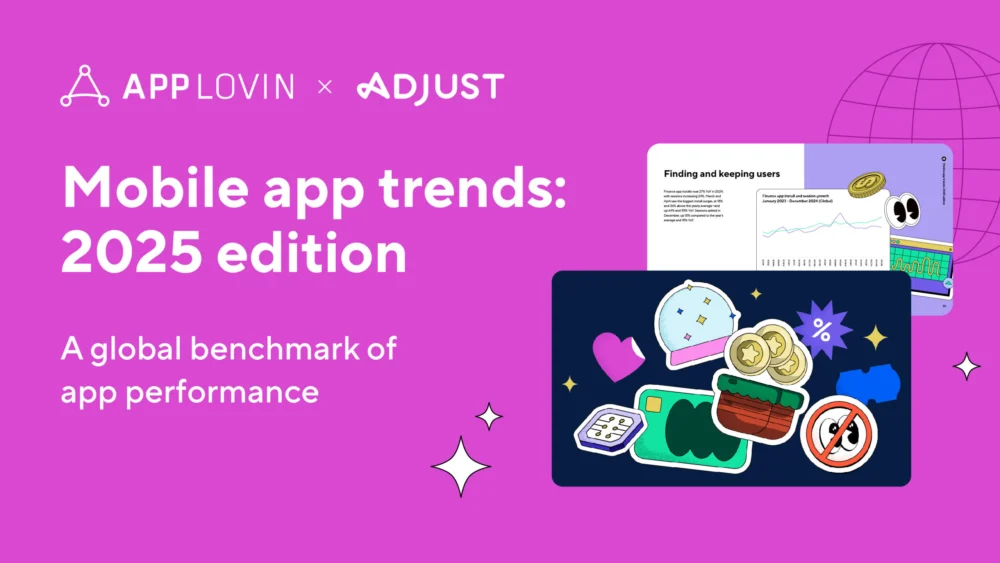
The mobile app landscape is poised for a significant evolution in 2025, shifting from a period of experimentation to a strategic focus on scaling growth. This transition is highlighted in the newly released "Mobile App Trends Report 2025," a collaborative effort by leading mobile technology companies AppLovin and Adjust. The report, drawing on extensive industry data and expert analysis, forecasts a year where app marketers and developers will leverage the lessons learned in 2024 to achieve sustainable, large-scale success. The findings underscore a maturing industry that is increasingly reliant on data-driven strategies, advanced technologies, and a deep understanding of consumer behavior.
The foundation for this scaled growth is the continued integration of mobile devices into daily life. Consumers now spend an average of five hours per day on their mobile devices, actively engaging with approximately 26 different applications each month. This pervasive mobile-centricity presents a fertile ground for both app marketers seeking to acquire and retain users, and direct-to-consumer (DTC) brands looking to establish a strong digital presence. Further bolstering this optimistic outlook, in-app spending has seen a robust year-over-year increase of 15.7%, indicating not only strong industry momentum but also a growing consumer confidence in making purchases directly through mobile applications. This trend suggests that the mobile channel is no longer just a touchpoint but a primary engine for commerce and engagement.
In response to these dynamic market forces, companies are proactively future-proofing their strategies. A key development is the increasing adoption of artificial intelligence (AI) within advertising workflows. AI is being deployed to optimize campaign performance, personalize user experiences, and automate complex decision-making processes. Furthermore, marketers are expanding their reach by extending campaigns to new and emerging channels, most notably Connected TV (CTV). This diversification is crucial for capturing audiences that are increasingly consuming content across multiple screens. Simultaneously, there is a heightened emphasis on refining measurement strategies. As the advertising ecosystem becomes more complex and privacy regulations evolve, accurate and comprehensive measurement is paramount for understanding campaign effectiveness, demonstrating ROI, and making informed strategic adjustments to maximize performance.
The "Mobile App Trends Report 2025" serves as a comprehensive guide for navigating these evolving market conditions. It synthesizes expert insights from AppLovin, a leading platform for mobile app growth, and leverages Adjust’s deep expertise in mobile attribution and analytics. The report aims to equip industry stakeholders with the knowledge and foresight necessary to thrive in the coming year.
Key Findings from the 2025 Mobile App Trends Report
While the full report offers an in-depth analysis of numerous facets of the mobile app industry, several overarching themes and critical findings emerge:
-
The Imperative of Scalable User Acquisition (UA): The report emphasizes that 2025 is the year to move beyond initial testing phases and focus on building robust, scalable user acquisition strategies. This involves optimizing existing channels, exploring new acquisition avenues, and refining targeting methodologies to reach the right users efficiently and at scale. The increasing cost of user acquisition in competitive markets necessitates a strategic approach that prioritizes quality over sheer volume.
-
AI as a Catalyst for Efficiency and Personalization: Artificial intelligence is no longer a nascent technology in mobile marketing; it is becoming an indispensable tool. The report details how AI is being integrated across the advertising lifecycle, from predictive analytics for campaign optimization and fraud detection to personalized ad creative generation and dynamic bidding strategies. This integration promises to unlock new levels of efficiency and effectiveness in reaching and engaging target audiences.
-
The Rise of CTV as a Strategic Advertising Frontier: Connected TV is rapidly emerging as a significant channel for mobile app marketers. As audiences shift their viewing habits, CTV offers a compelling opportunity to reach engaged consumers in a premium, immersive environment. The report highlights the growing integration of CTV into mobile marketing strategies, focusing on how to effectively leverage this platform for brand building and user acquisition.
-
Data Privacy and Measurement Sophistication: In an era of evolving privacy regulations and the eventual deprecation of third-party cookies, robust and privacy-compliant measurement strategies are critical. The report delves into the importance of first-party data, advanced analytics, and privacy-preserving measurement techniques. Marketers are being urged to invest in sophisticated measurement stacks that can provide accurate insights without compromising user privacy, thereby building trust and ensuring long-term campaign viability.
-
The Evolving Consumer Journey and Retention Strategies: Understanding the complete user journey, from initial discovery to long-term engagement and monetization, is more crucial than ever. The report discusses the importance of developing sophisticated retention strategies that go beyond basic engagement tactics. This includes personalized in-app experiences, loyalty programs, and proactive customer support to foster lasting relationships with users. The increased in-app spending further underscores the value of retaining high-value users.
Background and Chronology of Industry Evolution
The mobile app industry has undergone rapid transformations over the past decade. The early days were characterized by rapid growth and relatively low barriers to entry. As the market matured, competition intensified, leading to a greater emphasis on user acquisition and monetization. The introduction of privacy-focused changes by major platforms like Apple (App Tracking Transparency) and Google (Privacy Sandbox) in recent years forced a significant recalibration of marketing strategies.
2023 can be seen as a year of adaptation, where companies grappled with the implications of these changes and began exploring new approaches. This included a deeper dive into first-party data, experimentation with alternative measurement solutions, and a renewed focus on organic growth channels.
2024 then emerged as a year of intense experimentation. Marketers and developers actively tested new advertising technologies, refined their understanding of shifting consumer behaviors influenced by economic factors and digital saturation, and prepared for further regulatory adjustments and platform updates. This period was marked by a willingness to explore uncharted territory, from new ad formats to emerging markets.
Now, in 2025, the industry is transitioning into a phase of scaling. The insights and technologies honed during the experimental phase are being applied to drive sustainable growth across the board. This implies a move from piloting new strategies to implementing them at a larger, more impactful level, supported by robust data and sophisticated tools.
Supporting Data and Market Indicators
The trends highlighted in the report are underpinned by several key data points and market indicators:
- Increased Mobile Usage: The average daily time spent on mobile devices (five hours) signifies a deeply ingrained mobile habit, creating consistent opportunities for app engagement.
- High App Engagement: With consumers interacting with 26 apps monthly, the potential for apps to become integral parts of users’ lives is substantial.
- E-commerce Growth: The 15.7% year-over-year increase in in-app spending is a strong indicator of consumer trust and the efficacy of mobile commerce, directly impacting monetization strategies for app developers.
- Ad Spend Diversification: The growing interest in channels like CTV suggests a strategic reallocation of advertising budgets to capture audiences across a wider digital ecosystem.
Analysis of Implications
The findings from the AppLovin and Adjust report have significant implications for various stakeholders in the mobile app ecosystem:
-
For App Marketers: The emphasis on scaling means that success will hinge on efficient campaign management, sophisticated targeting, and a deep understanding of LTV (Lifetime Value) for acquired users. Investing in AI-powered tools and diversifying ad spend across channels like CTV will be critical for sustained growth. The need for robust measurement will require a move towards more advanced analytics platforms and a greater reliance on first-party data.
-
For App Developers: Beyond user acquisition, the report implicitly underscores the importance of product-market fit and delivering exceptional user experiences to drive retention and in-app spending. Developers who can effectively integrate AI into their app functionalities and leverage data to personalize user journeys will likely see greater success. The ability to monetize effectively within the app, supported by a strong understanding of user behavior and spending patterns, will be a key differentiator.
-
For Technology Providers: Companies like AppLovin and Adjust, which offer platforms and services for mobile app growth, are well-positioned to support this shift towards scaling. Their continued innovation in areas such as AI, attribution, and measurement will be essential for empowering their clients. The demand for integrated solutions that streamline the entire mobile marketing lifecycle is expected to grow.
-
For Consumers: While not directly addressed in the report’s findings, the trends suggest an evolution towards more personalized and potentially more intrusive advertising. Consumers can expect to see more tailored ad experiences, but also a greater need to manage their privacy settings and be aware of how their data is being used. The growth in in-app spending also indicates that consumers are finding increasing value and convenience in mobile purchasing.
Official Statements and Industry Reactions (Inferred)
While specific quotes from AppLovin and Adjust spokespersons were not provided in the original text, the release of such a report typically follows extensive internal analysis and collaboration. Industry observers would infer that the leadership at both companies views these trends as pivotal for the future of mobile marketing.
A representative from AppLovin might state, "Our collaboration with Adjust on the 2025 Mobile App Trends Report reflects our commitment to providing the industry with actionable insights. We’ve moved past the ‘what ifs’ of the past few years, and now it’s about empowering our partners to execute effectively at scale. AI and intelligent automation are no longer optional; they are the engines of efficient growth."
Similarly, an Adjust executive might comment, "The data is clear: 2025 is about realizing the potential that marketers have been cultivating. Our role is to provide the transparent, accurate measurement and analytics that underpin this scaling. As the mobile ecosystem continues to evolve, particularly with the ongoing focus on privacy, our ability to deliver reliable insights is more critical than ever. The expansion into channels like CTV is a natural progression, and we are equipping our clients to navigate this with confidence."
The broader industry reaction is likely to be one of informed anticipation. Marketing agencies, brand managers, and ad tech professionals will be poring over the report to refine their strategies for the year ahead. The focus on scaling, coupled with the technological advancements and evolving consumer behaviors, signals a period of significant opportunity and challenge for all players in the mobile app space.
Looking Ahead: Navigating the Year of Scaling
The "Mobile App Trends Report 2025" by AppLovin and Adjust serves as a critical roadmap for the mobile app industry. It encapsulates the transition from a phase of exploration to one of strategic expansion. The report’s emphasis on AI, CTV, sophisticated measurement, and scalable user acquisition provides a clear directive for marketers and developers aiming for sustained success. As mobile devices continue to be central to consumers’ lives, the ability to effectively engage, retain, and monetize users at scale will define the leaders in the evolving mobile landscape of 2025. Accessing the full report is presented as an essential step for any professional seeking to gain a competitive edge in this dynamic market.
About the Author