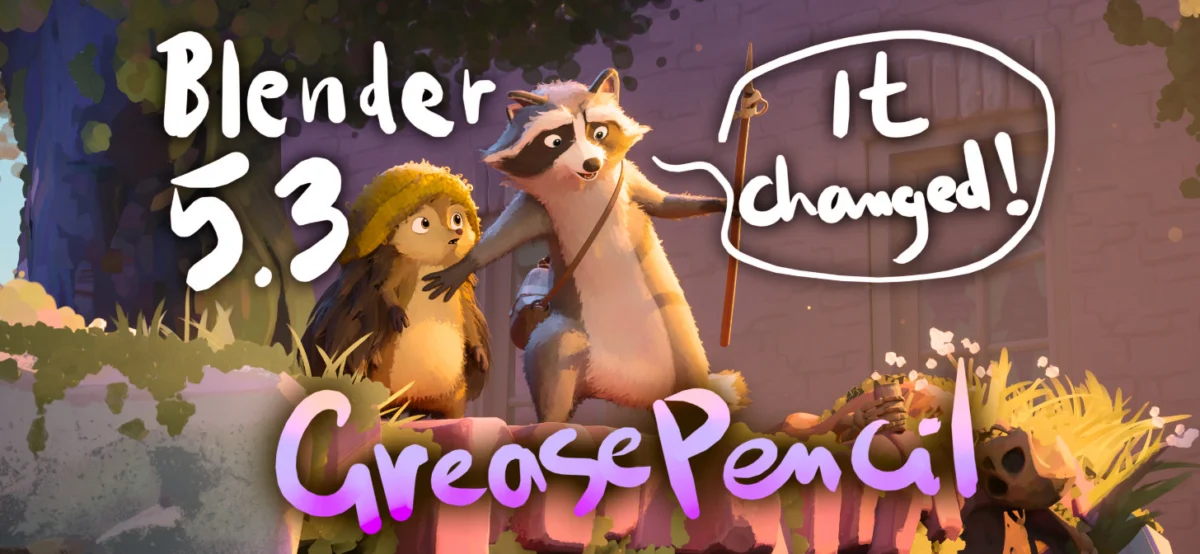
The latest iteration of the open-source 3D creation suite, Blender, has ushered in a significant paradigm shift for 2D artists within its ecosystem. Blender 5.3, released on October 26, 2026, directly addresses long-standing user frustrations, particularly the cumbersome transition between drawing and editing 2D strokes, and introduces a suite of intuitive canvas manipulation tools. This update, developed under the stewardship of the Blender Foundation and a global community of contributors, promises to streamline the animation and illustration pipeline for digital artists.
Addressing Persistent Workflow Friction
For years, 2D artists utilizing Blender’s Grease Pencil functionality have voiced a common complaint: the jarring necessity of switching between "Draw Mode" and "Edit Mode" to make even minor adjustments to a line or shape. This binary toggling often interrupted the creative flow, transforming what should be an organic artistic process into a series of discrete, often frustrating, technical steps. The original design, while robust, demanded a conscious mental shift from the intuitive act of drawing to the precise manipulation of vector data.
"One of the biggest friction points for 2D artists in Blender has been jumping between Draw Mode and Edit Mode just to tweak a line, along with the lack of intuitive canvas controls," a recent analysis from Mumu Mundo, a prominent Blender educator and artist specializing in rigging and animation with Grease Pencil, highlighted. This sentiment has been echoed across numerous online forums, community feedback sessions, and developer discussions for several release cycles. The core issue revolved around the perceived lack of seamlessness, where the act of artistic creation felt divorced from the tools of refinement.
Blender 5.3: A Unified Approach to 2D Creation
Blender 5.3 fundamentally rearchitects this workflow by integrating core drawing and editing functionalities. While specific technical details of the implementation remain under review by the Blender development team, early demonstrations and user feedback suggest a significant reduction, if not elimination, of the need for constant mode switching for basic line adjustments. This implies that tools traditionally relegated to Edit Mode, such as node manipulation, vertex refinement, and curve smoothing, are now more readily accessible and contextually aware within the Draw Mode environment.
Enhanced Canvas Navigation and Manipulation
Beyond the Draw/Edit mode unification, Blender 5.3 introduces a comprehensive overhaul of canvas controls. This includes:
- Intuitive Zoom and Pan Gestures: Artists can now expect more fluid and responsive zooming and panning, potentially mirroring the gestural controls found in dedicated 2D illustration software. This could involve multi-touch gestures on compatible hardware or refined mouse-and-keyboard shortcuts designed for speed and precision.
- Rotation and Tiling: The ability to freely rotate the canvas, a critical feature for ergonomic drawing and perspective work, has been significantly improved. Furthermore, options for tiling or mirroring the canvas could be introduced, further enhancing the artist’s ability to work from different angles and perspectives without physically reorienting their drawing surface.
- Customizable Workspace Layouts: While not explicitly detailed in the initial announcement, it is highly probable that Blender 5.3 offers more robust options for customizing the workspace, allowing artists to tailor the layout of toolbars, panels, and the 3D viewport to their specific drawing and animation needs. This aligns with Blender’s broader philosophy of user-driven customization.
The implications of these canvas enhancements are profound. For illustrators working on detailed character designs or environments, the ability to quickly and precisely navigate their canvas without interrupting their drawing stroke can drastically reduce the time spent on repetitive actions. For animators, smoother canvas control translates to more fluid character posing and expression work, allowing them to focus on performance rather than technical hurdles.
Community and Developer Collaboration
The development of Blender 5.3 is a testament to the collaborative spirit of the open-source community. While the Blender Foundation provides the overarching direction and core development infrastructure, significant contributions often come from individual developers, studios, and community members who identify specific needs and propose solutions.
Mumu Mundo’s observation, quoted earlier, likely stems from direct engagement with the Blender development mailing lists, bug reporting systems, or community forums where these pain points have been repeatedly discussed. The inclusion of these features in Blender 5.3 suggests a direct response to this accumulated user feedback.
The release of a major version like 5.3 typically follows a structured development cycle. This cycle often involves:
- Alpha Testing: Early builds are released to a limited group of developers and testers for initial feedback and bug identification.
- Beta Testing: A more stable version is made available to a wider audience for broader testing and refinement.
- Release Candidate (RC) Builds: These are versions deemed feature-complete and are released to catch any last-minute critical bugs before the final release.
While the exact timeline for the Blender 5.3 development cycle is not publicly detailed in the provided excerpt, the official release date of October 26, 2026, indicates that the project has successfully navigated these stages.
Supporting Data and Technical Advancements
While the provided content focuses on the user-facing improvements, the underlying technical advancements enabling these changes are crucial. The integration of Draw and Edit mode functionalities likely involves a refactoring of the Grease Pencil’s data structure and drawing engine. This could include:
- Unified Data Representation: A more cohesive internal representation of Grease Pencil strokes, allowing drawing and editing operations to access and modify the same data streams without requiring a context switch.
- Real-time Node Editing: Potentially, the ability to manipulate stroke nodes (vertices) in a manner that feels more like drawing or sculpting, rather than the traditional point-and-click selection and manipulation.
- Optimized Drawing Pipeline: Improvements to the rendering and update mechanisms of the Grease Pencil, ensuring that drawing and editing operations are processed efficiently and reflected instantly on the canvas.
The improvements to canvas controls likely involve deeper integration with the underlying graphics API and potentially the use of more advanced user interface toolkits. The goal is to provide a responsive and predictable user experience that feels natural and unencumbered.
Analysis of Implications
The impact of Blender 5.3 on the 2D art community within Blender is multifaceted:
Increased Accessibility and Adoption
By removing significant workflow barriers, Blender 5.3 is poised to attract more 2D artists who may have previously been deterred by its learning curve or perceived limitations in its 2D capabilities. This could lead to a broader adoption of Blender for illustration, comic creation, and 2D animation projects.
Enhanced Productivity for Existing Users
For artists already invested in Blender’s 2D pipeline, these updates translate directly to increased productivity. Less time spent wrestling with software mechanics means more time dedicated to creative execution, leading to faster project completion and potentially higher quality output.
Competitive Edge in the Digital Art Software Market
The 2D animation and illustration software market is highly competitive. By continuously innovating and addressing user feedback, Blender strengthens its position against established proprietary software. The open-source model allows for rapid iteration and community-driven feature development, a significant advantage.
Potential for New Artistic Possibilities
With more intuitive and fluid tools, artists may be encouraged to explore new artistic techniques and styles within Blender. The seamless integration could foster a more experimental approach to 2D creation, pushing the boundaries of what is achievable with Grease Pencil.
Future Outlook and Community Expectations
The release of Blender 5.3 sets a high bar for future iterations. Community expectations will likely focus on continued refinement of these new features, along with the potential introduction of advanced functionalities such as:
- AI-assisted drawing tools: While speculative, the integration of AI for tasks like stroke stabilization, style transfer, or even rudimentary in-betweening could be a future avenue.
- Enhanced brush engine: Further development of the brush engine to offer a wider array of customizable brush types and textures.
- Improved color management and painting tools: More sophisticated color palettes, blending modes, and painting features could further solidify Blender’s position as a comprehensive 2D art solution.
The video linked in the original article, titled "Blender 5.3 Just Changed How Grease Pencil Works (New Draw Mode Review)," likely provides a visual demonstration of these improvements in action. Such reviews are crucial for the community to understand the practical application of new features and provide further constructive feedback.
In conclusion, Blender 5.3 represents a significant evolutionary leap for Grease Pencil. By directly addressing user-identified pain points and introducing a more integrated and intuitive workflow for 2D artists, the Blender Foundation and its community have once again demonstrated their commitment to making powerful creative tools accessible to a global audience. The implications of these advancements extend beyond mere software updates, promising to foster a more vibrant and productive 2D art ecosystem within the Blender universe.
About the Author