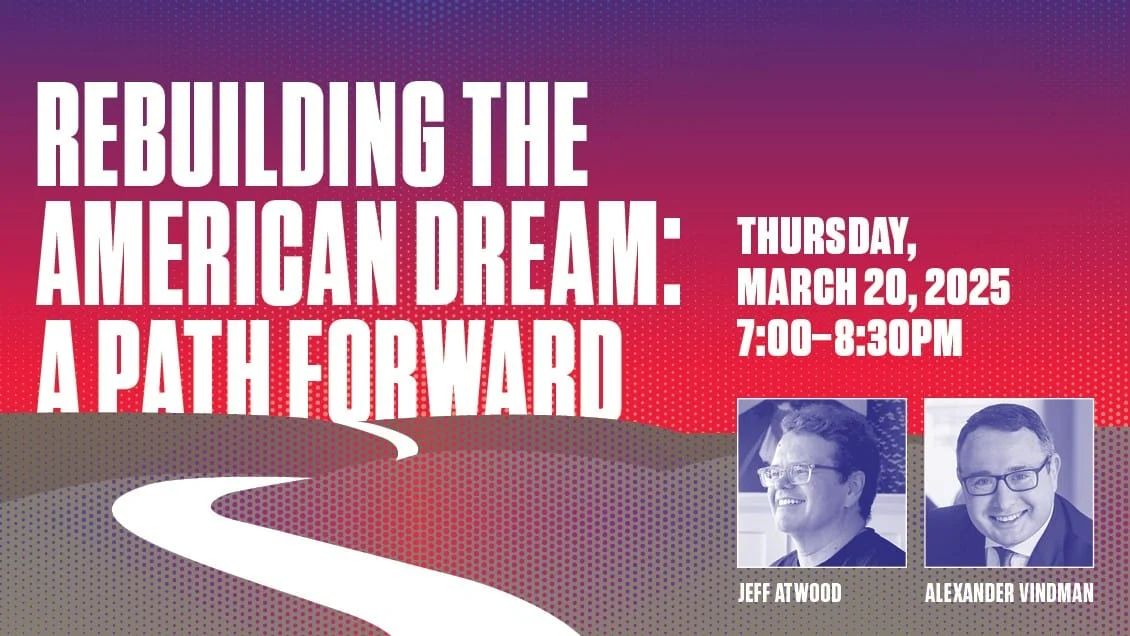
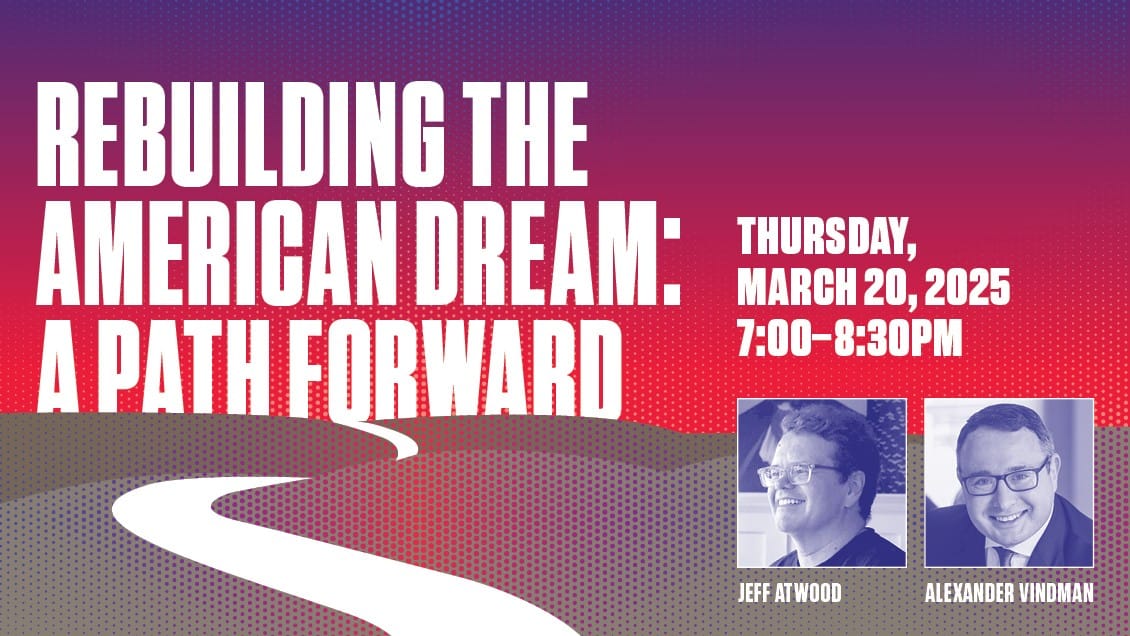
A significant public dialogue, "Rebuilding The American Dream: A Path Forward," convened at the historic Cooper Union Great Hall, featuring Colonel Alexander Vindman, a decorated military veteran and former National Security Council official, alongside Jeff Atwood, a prominent figure in internet community development and co-founder of platforms like Stack Overflow and Discourse. The event, held in late 2025, aimed to dissect the contemporary challenges facing the American Dream and propose actionable strategies for fostering greater equity, opportunity, and civic engagement across society. This discussion built upon Atwood’s prior reflections on what it means to "stay gold"—to preserve and actively cultivate the foundational strengths of individuals, communities, and the nation’s core ideals—and underscored the necessity of active participation and difficult conversations to navigate the country’s trajectory.
Contextualizing the Dialogue: The Urgency of 2025
The year 2025 serves as a critical juncture for examining the promise of the American Dream, which fundamentally posits that hard work, fairness, and opportunity can collectively pave the way to a better future. However, in recent years, this promise has increasingly been framed as a question rather than an assured reality, prompting widespread concern about its accessibility and universality. Issues such as widening economic inequality, declining social mobility, and increasing political polarization have cast shadows over the traditional narrative of progress and upward advancement. Against this backdrop, the collaboration between Colonel Vindman and Mr. Atwood offered a unique interdisciplinary approach, blending insights from national security and civic duty with principles of digital community building and systemic design. Their joint presentation sought to explore how to evolve the American Dream to genuinely work for all citizens, focusing on the interconnected pillars of democracy, community, and economic mobility.
Colonel Alexander Vindman: A Life Dedicated to Civic Duty
Colonel Alexander Vindman’s participation in the dialogue brought a profound perspective rooted in a lifetime of unwavering commitment to American ideals. Born in the Soviet Union and immigrating to the United States as a child, Vindman’s journey from a young immigrant in Brooklyn to a distinguished military officer exemplifies a certain facet of the American Dream itself. His 21-year career in the U.S. Army was marked by exceptional service, including earning a Purple Heart for injuries sustained during combat in Iraq. He rose through the ranks to become the Director for European Affairs for the National Security Council, a position that placed him at the nexus of critical foreign policy decisions.
Vindman’s public profile significantly elevated during the 2019 impeachment inquiry against President Donald Trump. His testimony, delivered under oath, courageously upheld the values he swore to protect, even when it meant confronting powerful political forces. His decision to prioritize integrity and constitutional fidelity over personal career advancement resonated deeply with many, symbolizing a steadfast dedication to civic duty. This principled stand ultimately cost him his military career, yet it solidified his reputation as an individual willing to sacrifice personal gain for the greater good of the nation. His experiences offer a potent case study in the personal cost and profound importance of civic courage, providing invaluable lessons on what it means to defend democratic principles when they are perceived to be under threat. His insights into the practical application of democratic ideals and the challenges of upholding them within complex systems were central to the Cooper Union discussion.
Jeff Atwood: Architect of Digital Communities and Systemic Design
Complementing Colonel Vindman’s perspective was Jeff Atwood, a highly influential figure in the realm of internet technology and community development. Atwood is widely recognized as the co-founder of Stack Overflow, a groundbreaking question-and-answer platform that has become an indispensable resource for software developers worldwide, demonstrating the power of collaborative knowledge-sharing. He also co-founded Discourse, an open-source platform designed to foster civil, structured, and engaging online discussions, addressing the pervasive challenges of moderation and constructive dialogue in digital spaces.
Atwood’s extensive experience in building and managing large-scale online communities has provided him with a unique lens through which to view societal challenges. His work has consistently focused on designing systems that promote fairness, encourage participation, and enforce clear expectations and boundaries—principles he argues are equally applicable to the governance of nations as they are to internet forums. He emphasizes the importance of creating "artifacts for the common good," whether these are digital knowledge bases like Stack Overflow or physical communal spaces like local parks, where everyone can benefit collectively. His approach to problem-solving, rooted in systems thinking and user experience design, offered practical frameworks for considering how to engineer structural changes that can generate opportunity and security for all, moving beyond reliance on individual generosity towards robust, equitable systems. Atwood’s journey from a programmer to a thought leader on digital democracy highlights the growing relevance of technological insights in addressing broader societal and political issues.
The Historic Cooper Union Great Hall: A Stage for Pivotal Discourses
The choice of the Cooper Union Great Hall as the venue for this significant discussion was deliberate and symbolic. Located in New York City, the Great Hall has a storied history as a cradle of American intellectual and political discourse. It famously hosted Abraham Lincoln’s "Might Makes Right" speech in 1860, a pivotal address that significantly boosted his presidential campaign and articulated his stance against the expansion of slavery. Throughout its history, the Hall has been a platform for abolitionists, suffragists, labor leaders, and civil rights activists, serving as a forum where ideas that shaped the nation were debated and disseminated. This historical context imbued the "Rebuilding The American Dream" talk with an added layer of gravitas, connecting the contemporary challenges of democracy and opportunity with a legacy of transformative American movements. The venue itself reinforced the notion that the pursuit of a more perfect union is an ongoing, evolving endeavor requiring continuous public deliberation.
Dissecting the American Dream: Challenges and Aspirations
The core of the discussion revolved around the query: "How can we build on our dream so that it works for everyone?" This question acknowledges that while the American Dream promises upward mobility and success through diligence, its realization has become increasingly uneven.
Economic Mobility and Opportunity: Data from organizations like the Pew Charitable Trusts and the Economic Policy Institute consistently show that intergenerational economic mobility in the United States has stagnated or even declined in recent decades compared to other developed nations. For instance, a child born into the bottom fifth of the income distribution has a significantly lower chance of reaching the top fifth than in previous generations. Factors contributing to this include persistent wealth gaps, particularly along racial and ethnic lines, rising costs of education and healthcare, and a labor market increasingly characterized by precarious employment. The discussion likely delved into these structural impediments, seeking systemic solutions beyond individual effort. This would involve examining policies that promote equitable access to quality education, affordable healthcare, fair labor practices, and wealth-building opportunities for marginalized communities.
Democracy and Community: The health of American democracy was another critical theme. Recent analyses from institutions like Freedom House and the Varieties of Democracy (V-Dem) Institute have pointed to concerning trends, including declining public trust in institutions, increased political polarization, and challenges to electoral integrity. Atwood’s insights into building robust, self-governing digital communities offered a unique perspective on these issues. He posited that the same principles essential for a thriving online forum—clear expectations, fair systems, strong boundaries, and a shared sense of purpose—are equally vital for a functioning democracy. This involves fostering environments where constructive discourse can occur, where dissent is managed productively, and where collective decision-making is valued. Vindman’s experiences in national security provided real-world examples of how democratic institutions face internal and external pressures, underscoring the need for vigilant protection of foundational values.
The Call for Systemic Structural Change
A central tenet articulated during the discussion was the imperative to move "beyond individual generosity and toward systems that create security, dignity, and possibility for all." This represents a profound shift in focus from charity-based solutions to structural reforms. While individual acts of kindness and philanthropy are valuable, the speakers emphasized that they are insufficient to address deeply entrenched systemic inequalities. Instead, the focus must be on designing and implementing policies and institutions that inherently promote fairness, opportunity, and stability for every member of society.
This systemic approach could encompass a wide range of policy areas:
- Education Reform: Investing in early childhood education, ensuring equitable funding for K-12 schools, and making higher education more accessible and affordable.
- Economic Policy: Implementing progressive taxation, strengthening labor unions, ensuring a living wage, and expanding social safety nets.
- Healthcare Access: Working towards universal healthcare coverage to alleviate financial burdens and improve public health outcomes.
- Justice System Reform: Addressing systemic biases, reducing mass incarceration, and promoting restorative justice practices.
- Civic Infrastructure: Investing in local communities, supporting civic engagement initiatives, and strengthening local democratic processes.
The complexity of these challenges was openly acknowledged, yet the speakers expressed optimism that focused effort in particular areas could yield foundational changes. The collaboration between Vindman, who personifies the defense of American ideals, and Atwood, who specializes in building scalable, self-governing systems, provided a compelling framework for imagining how these ideals could be translated into tangible, structural improvements.
Broader Implications and Public Engagement
The "Rebuilding The American Dream" event transcended a mere discussion; it served as a call to action, urging both policymakers and citizens to engage in the difficult, sustained work of societal improvement. The convergence of a national security expert and a technology pioneer highlighted an emerging understanding that the future of democracy and the American Dream depends not just on traditional political engagement but also on innovative approaches to community building and systemic design.
The event’s live stream via the Cooper Union Great Hall YouTube channel ensured broad accessibility, allowing a national and international audience to participate in this vital conversation. This digital reach amplified the message, engaging diverse segments of the population who are grappling with similar questions about societal progress and equity. The comments and reactions generated across social media platforms following the broadcast indicated a significant public appetite for honest, unfiltered conversations about national direction and specific pathways forward. Academics, policy analysts, and civic leaders likely viewed the event as a significant contribution to the ongoing national discourse, providing a fresh interdisciplinary perspective on perennial challenges.
In essence, the dialogue at Cooper Union was not about providing easy answers but about fostering a shared commitment to a rigorous, data-informed search for solutions. Colonel Vindman and Jeff Atwood, from their distinct yet complementary vantage points, articulated a vision where the American Dream is not a static ideal but a dynamic, actively cultivated promise that demands collective responsibility and innovative thinking. Their joint call to action underscored that achieving a more secure, dignified, and opportunity-rich future for all necessitates not just individual effort, but a concerted, collaborative societal endeavor to reimagine and rebuild the very systems that shape the American experience.
About the Author