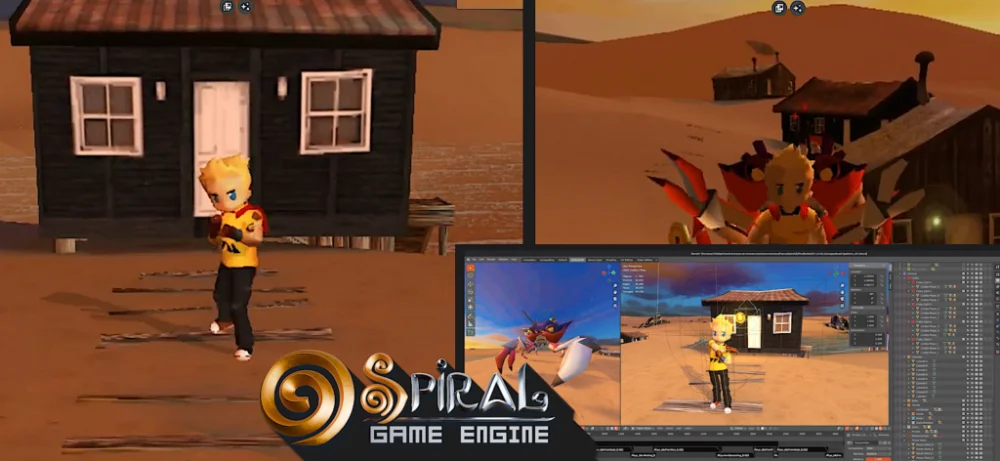
The world of indie game development and retro console enthusiasts has been abuzz with the recent unveiling of the Spiral Game Engine, a revolutionary tool that bridges the gap between modern 3D modeling software and the iconic Sega Dreamcast. This innovative engine allows developers to craft game assets directly within Blender, the widely-used open-source 3D creation suite, and then seamlessly export them to run on actual Dreamcast hardware. This development represents a significant leap forward for retro game development, potentially democratizing the creation of new titles for a beloved, yet aging, platform.
The implications of this technology are far-reaching, offering a more accessible and integrated workflow for creators who might have previously found the technical hurdles of Dreamcast development insurmountable. By leveraging Blender’s intuitive interface, developers can now conceptualize, model, animate, and even script their game logic, all within a single, familiar environment before deploying to the console. This eliminates the need for complex and often arcane toolchains that have historically characterized Dreamcast homebrew development.
A recent demonstration of the Spiral Game Engine’s capabilities came in the form of "Soul Blaze," a brand-new Dreamcast game developed by a small, independent trio. The game showcases the engine’s potential by featuring original 3D models and gameplay, all created using the Blender-to-Dreamcast pipeline. The video demonstration, widely shared within retro gaming communities, provides tangible proof of the engine’s effectiveness and the creative possibilities it unlocks. For those eager to experience this new Dreamcast title firsthand, "Soul Blaze" is currently available as a free download for anyone possessing a functional Sega Dreamcast console.
The Genesis of Spiral Game Engine: A Vision for Integrated Development
The concept behind the Spiral Game Engine appears to stem from a desire to streamline the development process for retro consoles, specifically the Sega Dreamcast. Historically, creating games for the Dreamcast involved a steep learning curve, often requiring mastery of specialized, and sometimes proprietary, development kits and software. This often limited the pool of potential developers to those with significant prior experience in console development or a deep dedication to overcoming the technical barriers.
The Spiral Game Engine aims to dismantle these barriers by integrating the creation pipeline directly into Blender. This approach capitalizes on Blender’s extensive feature set, which includes powerful modeling, sculpting, texturing, animation, and rendering capabilities. By designing the engine to work within Blender, developers can leverage their existing skills and workflows, significantly reducing the time and effort required to bring a game from concept to reality on the Dreamcast.
While the exact timeline of the Spiral Game Engine’s development is not publicly detailed in the provided information, its emergence suggests a period of dedicated research, coding, and testing. The success of projects like "Soul Blaze" indicates that the engine has reached a level of maturity where it can reliably support the creation of complete game experiences. The developers’ choice to utilize a well-established platform like Blender as the primary interface is a strategic one, tapping into a vast community of 3D artists and developers who are already proficient with the software.
"Soul Blaze": A Testament to the Engine’s Potential
The release of "Soul Blaze" serves as a crucial proof of concept for the Spiral Game Engine. The game, developed by an independent trio, demonstrates the practical application of the engine’s features, from the creation of 3D assets in Blender to their successful execution on Dreamcast hardware. While the specific genre and gameplay mechanics of "Soul Blaze" are not detailed in the initial announcement, its existence as a playable Dreamcast title built through this new pipeline is significant.
The availability of "Soul Blaze" for free download is a generous move by the developers, allowing the wider community to experience the fruits of their labor and the capabilities of the Spiral Game Engine. This accessibility is vital for fostering adoption and encouraging further development within the retro gaming sphere. For long-time Dreamcast owners, it represents an opportunity to play a new, albeit independent, title on their cherished console, rekindling the nostalgia associated with the platform.

Technical Underpinnings and the Dreamcast’s Legacy
The Sega Dreamcast, launched in 1998, was a pioneering console known for its advanced graphics and online capabilities for its time. Despite a relatively short lifespan, it cultivated a dedicated fanbase and a rich library of unique games. The console’s architecture, while now dated, presented a distinct set of challenges and opportunities for developers. The Spiral Game Engine’s ability to translate Blender’s modern 3D assets into a format compatible with the Dreamcast’s hardware is a testament to sophisticated engineering.
The engine likely employs a custom export pipeline that converts Blender’s internal data structures into a format that the Dreamcast’s graphics processing unit (GPU) and central processing unit (CPU) can understand and render efficiently. This would involve considerations such as polygon counts, texture resolutions, material properties, and animation data, all optimized to fit within the Dreamcast’s memory and processing constraints. The success of "Soul Blaze" suggests that the engine has effectively navigated these technical intricacies.
Supporting Data and Community Impact
The impact of tools like the Spiral Game Engine can be measured by the potential increase in new game development for legacy hardware. Historically, the creation of new games for consoles like the Dreamcast has been a niche activity, often undertaken by experienced programmers and artists using specialized tools. By lowering the barrier to entry, the Spiral Game Engine could foster a new wave of creativity.
- Blender User Base: Blender boasts a massive and active global community, with millions of users ranging from hobbyists to professionals. This vast pool of talent can now potentially be directed towards Dreamcast game development.
- Retro Gaming Market: The retro gaming market continues to grow, with enthusiasts actively seeking new experiences for classic consoles. The Spiral Game Engine taps directly into this demand.
- Indie Development Trends: The rise of independent game development has been a significant trend in recent years. Tools that democratize development, like the Spiral Game Engine, align with this movement.
Reactions and Future Implications
While specific official statements from Sega or its current rights holders regarding the Spiral Game Engine are unlikely, the reaction from the retro gaming and indie development communities is expected to be overwhelmingly positive. Developers and players alike are likely to view this as a significant advancement that breathes new life into a beloved platform.
The success of the Spiral Game Engine could inspire similar efforts for other retro consoles, potentially leading to a broader ecosystem of modern development tools for classic gaming hardware. This could foster a new era of "demake" or "remake" projects, where modern artistic sensibilities and technical approaches are applied to older systems, offering unique and nostalgic gaming experiences.
Furthermore, the Spiral Game Engine could serve as a valuable educational tool. Aspiring game developers could learn fundamental game design principles and 3D asset creation within a familiar environment like Blender, with the added incentive of being able to see their creations come to life on actual vintage hardware. This hands-on approach can be far more engaging than purely theoretical learning.
The long-term implications include:
- Increased Homebrew Content: A greater volume and variety of new games for the Dreamcast, catering to diverse tastes and genres.
- Preservation Efforts: Facilitating the creation of new titles can also contribute to the ongoing preservation of the Dreamcast’s legacy by keeping the platform relevant and active.
- Cross-Pollination of Skills: Developers accustomed to modern workflows can bring new ideas and techniques to the retro development scene, and vice-versa.
- Economic Opportunities: While likely small-scale, successful indie titles developed through this engine could create opportunities for independent developers.
The Spiral Game Engine represents a significant stride in making retro game development more accessible and integrated. By harnessing the power of Blender and targeting the enduring appeal of the Sega Dreamcast, this innovative tool is poised to empower a new generation of creators and delight a dedicated fanbase with fresh, home-grown gaming experiences. The free availability of "Soul Blaze" provides an immediate and tangible demonstration of this exciting new possibility.
About the Author