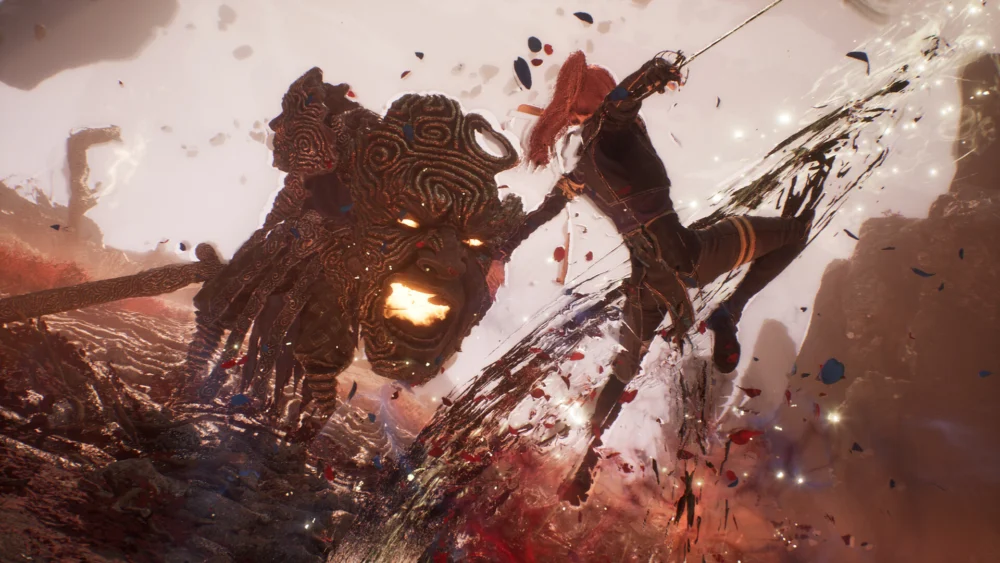
The recent revelation regarding the production methodology behind Sandfall Interactive’s highly acclaimed title, Clair Obscur: Expedition 33, has sent ripples of discussion across the global game development community. During a compelling session at the GDC Festival of Gaming, Sandfall’s Chief Technical Officer Tom Guillermin and Senior Gameplay Programmer Florian Torres unveiled a development process that, while achieving a "smash hit" status with a studio of fewer than 40 core employees, largely eschewed extensive C++ coding in favor of Unreal Engine’s visual scripting system, Blueprints. This approach, which saw 95 percent of the game constructed using Blueprints, challenges conventional wisdom and has ignited fresh debates about efficiency, team structure, and the future of game engine utilization.
The Genesis of a "Vanilla-First" Approach
Clair Obscur: Expedition 33 has garnered significant attention not only for its critical reception but also for the perceived polish and scope often associated with much larger development teams. Sandfall Interactive, a studio whose internal headcount is notably lean, managed to deliver a product that rivals the visual and mechanical complexity of many triple-A titles. This achievement naturally sparked widespread curiosity within the industry, leading many to speculate about the underlying production secrets.
The answer arrived during Guillermin and Torres’s GDC presentation, which was notably titled to manage expectations: "Clair Obscur: Expedition 33 – Delivering a Wide Scope of Features & Content When You Only Have Four Programmers." Despite the tantalizing title, Guillermin explicitly cautioned the audience against viewing their methods as a prescriptive roadmap. "This is not meant to be a tutorial or like a how-to guide on how to make games," he stated, clarifying that the session was a retrospective on their unique journey.
However, the details that emerged were inherently instructional for many. The core revelation was Sandfall’s unwavering commitment to a "vanilla-first" philosophy regarding Unreal Engine. This meant a deliberate choice to utilize the engine’s native tools and functionalities to their absolute limits, rather than investing heavily in developing bespoke tools or extensively modifying the engine’s core C++ codebase. This strategy stands in stark contrast to many larger studios, which often undertake significant engine customization to meet their specific project requirements or to optimize performance at a granular level.
Unveiling the Power of Blueprints
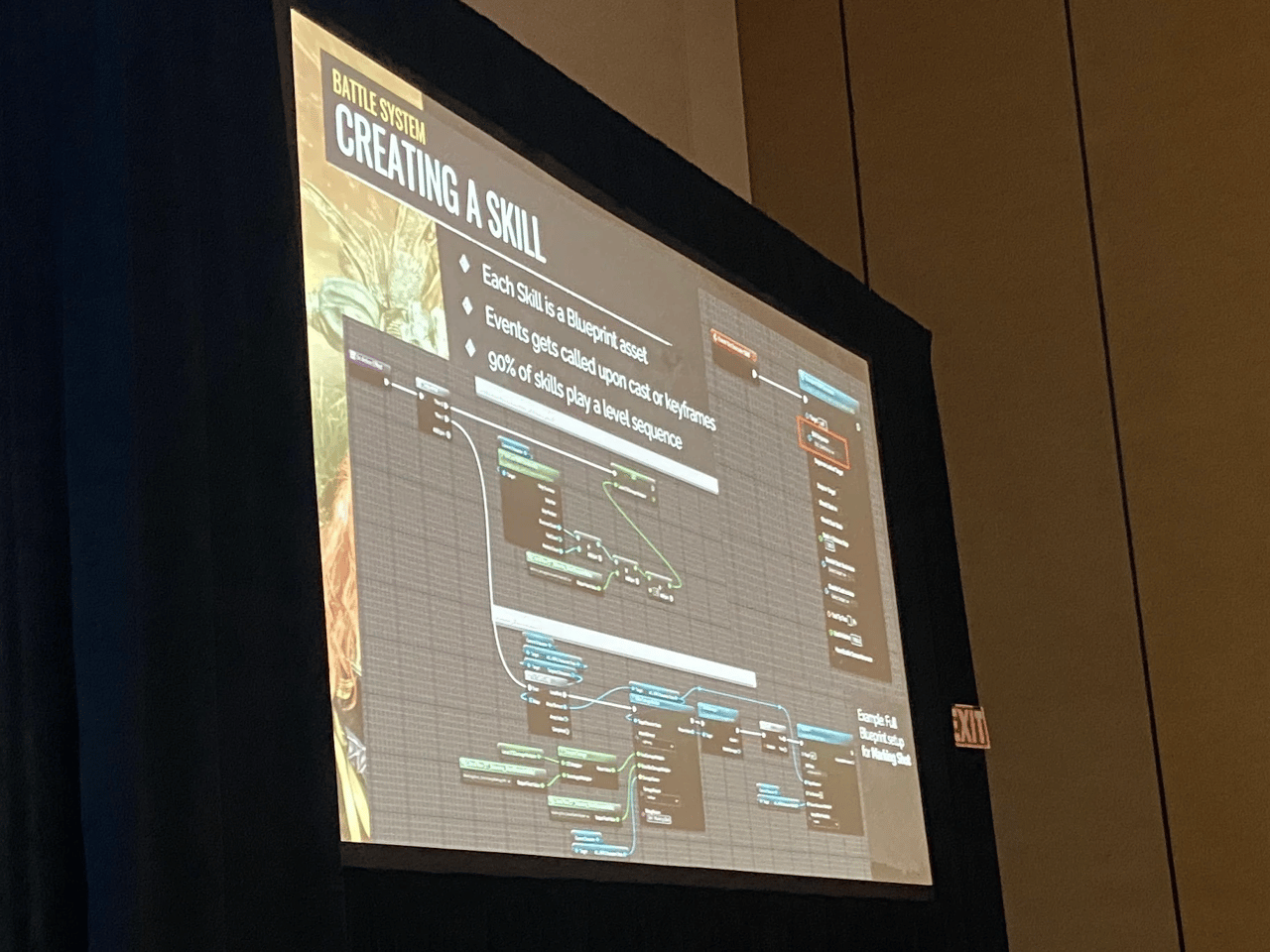
The cornerstone of Sandfall’s "vanilla-first" approach was the heavy reliance on Unreal Engine’s Blueprint visual scripting system. For those unfamiliar, Blueprints offer a powerful and intuitive visual interface for game logic creation. Instead of writing lines of C++ code, developers connect "nodes" in a graphical editor, each representing a function, variable, or event. This allows for the creation of complex gameplay elements, object behaviors, and interactive systems without deep programming knowledge. Essentially, it enables developers to assemble game logic by stringing together pre-defined scripting blocks, defining object-oriented classes and interactions within the engine.
The staggering statistic shared by Torres – that 95 percent of Expedition 33 was built using Blueprints – underscores the depth of Sandfall’s commitment to this methodology. This high percentage is particularly striking for a game of Clair Obscur‘s visual fidelity and gameplay complexity, which often implies a foundational layer of highly optimized C++ code for performance-critical systems.
This strategic choice had profound implications for Sandfall’s internal workflow. By largely operating within the Blueprint environment, the core programming team (comprising Guillermin, Torres, and two others) could effectively offload significant content and feature development tasks to designers and artists. These team members, often possessing strong logical thinking but not necessarily C++ proficiency, could directly implement and test game elements within the engine. This significantly reduced bottlenecks that would typically arise from designers needing to submit requests to programmers for every minor gameplay tweak or new feature, thereby accelerating iteration cycles and fostering greater creative autonomy across the team.
Plugins as Pillars, Not Modifications
Further illustrating their "vanilla-first" ethos, Sandfall Interactive confirmed that their only "modifications" to Unreal Engine came in the form of existing, well-established Unreal plugins. These included CommonUI for user interface solutions, GeometryScripting for procedural mesh generation, ALS (Advanced Locomotion System) for character movement, and KawaiiPhysics, a freeware project known for its "swooshy anime hair physics." The use of these readily available, community-vetted plugins reinforces the studio’s preference for leveraging existing robust tools rather than developing proprietary solutions from scratch. This approach significantly reduces development overhead and maintenance burdens, allowing the small team to focus their limited resources on creative output rather than foundational engine engineering.
Industry Reactions: A Spectrum of Surprise and Validation
The GDC presentation elicited a palpable reaction from the audience. The initial "collective murmur of shock" that swept through Moscone West reflected a widespread industry perception that high-fidelity, complex games necessitate extensive C++ coding and engine modification. Many seasoned programmers, accustomed to years of wrestling with engine source code and building bespoke systems, seemed genuinely surprised by Sandfall’s streamlined approach.
This surprise quickly segued into nuanced debate, particularly online. A triple-A programmer, speaking anonymously to Game Developer, acknowledged the viability of Sandfall’s process but highlighted a significant hurdle for larger teams: version control. In environments like Perforce, Blueprints typically can only be "checked out" by one individual at a time. This limitation means that if a programmer needs to address a bug in a Blueprint currently being worked on by another team member, the fix could be delayed for days, severely impacting production efficiency in larger, more parallelized pipelines. This concern underscores a fundamental trade-off: what works for a lean, agile team might become an impediment in a sprawling, multi-disciplinary development environment.
However, the discussion also saw a strong contingent of veteran developers validating Sandfall’s strategy. Joe Wintergreen, a developer, posted on social media, "What if I told you this is what usually happens?" UI artist and UX designer Jo Stringer commented, "Kinda unsurprised over here… You can get excellent results with out-of-the-box tools if you know what you’re doing!" Indie developers, such as Kim Aucuff Steiner (co-creator of Ghost Hunter Simulator) and William Davis (Age of the Deep developer), echoed this sentiment, confirming that they, too, often work almost exclusively within Blueprints.
This back-and-forth highlights a long-standing philosophical divide within game development, reminiscent of earlier debates about the merits of using off-the-shelf game engines versus developing custom, language-based frameworks. The underlying discomfort for many revolves around the idea of being prescribed a workflow that doesn’t align with their existing practices or the fear of becoming overly reliant on proprietary tools, as exemplified by the industry-shaking "Unity Runtime debacle of 2023."
Implications for Modern Game Development
Sandfall Interactive’s success with Clair Obscur: Expedition 33 carries several significant implications for the broader game development landscape:
-
Democratization of High-Fidelity Development: The ability to achieve such a polished product with a small team and minimal C++ intervention demonstrates that visual scripting tools like Blueprints are powerful enablers for smaller studios. They lower the barrier to entry for producing visually impressive and mechanically deep games, potentially fostering a new wave of innovative titles from independent and mid-sized developers. This could lead to a greater diversity of experiences in the market, as resource constraints become less of a limiting factor for ambitious projects.
-
Rethinking Team Structures and Skill Sets: A Blueprint-heavy workflow shifts the emphasis. While core C++ programmers remain essential for engine extensions, performance optimization, and complex systems, the demand for designers and artists with strong logical thinking and Blueprint proficiency increases. This fosters a more collaborative environment where content creators have greater agency, reducing the traditional "hand-off" delays between departments.
-
The "Vanilla-First" Advantage: Sandfall’s approach validates the strategy of maximizing existing engine features. By avoiding costly and time-consuming custom tool development and engine modifications, studios can allocate resources directly to creative content. This efficiency can be a game-changer for budget-conscious projects, allowing them to punch above their weight in terms of output quality. However, this strategy requires a deep understanding of the engine’s capabilities and limitations, pushing existing tools to their "limits" as Guillermin described.
-
Version Control Challenges in Scalability: The issue of Blueprint version control remains a critical point of contention for larger studios. While solutions like text-based diffing for Blueprints exist, they are often less robust than traditional code versioning. As teams grow, the likelihood of multiple individuals needing to modify the same Blueprint simultaneously increases, potentially leading to merge conflicts, lost work, and significant pipeline slowdowns. This suggests that while Blueprints are highly effective for smaller, more agile teams, larger organizations may still need to balance Blueprint usage with a stronger C++ foundation for shared, critical systems.
-
A Broader Industry Dialogue: The Clair Obscur case reignites crucial conversations about the optimal balance between abstraction and control in game development. It prompts developers to critically assess their workflows, team compositions, and engine utilization strategies. As game engines continue to evolve, offering increasingly powerful visual scripting and AI-assisted development tools (as hinted by Unity’s recent announcements regarding AI prompting for full casual games), these discussions will only become more pertinent.
Ultimately, Sandfall Interactive’s experience with Clair Obscur: Expedition 33 serves as a powerful testament to the fact that exceptional game development is not solely dictated by the tools or methodologies employed. As Guillermin aptly put it, their journey is not a "how-to guide" but a "helpful reference point." The game’s success, its ability to win "hearts and minds," stems fundamentally from the creative vision and execution of its designers, writers, artists, and performers. The programming team’s judicious use of Blueprints and a "vanilla-first" approach simply provided the efficient and accessible scaffolding upon which that magnificent creative edifice could be built. It underscores that innovation in game development can come not just from revolutionary technology, but also from clever and disciplined application of existing ones.
About the Author