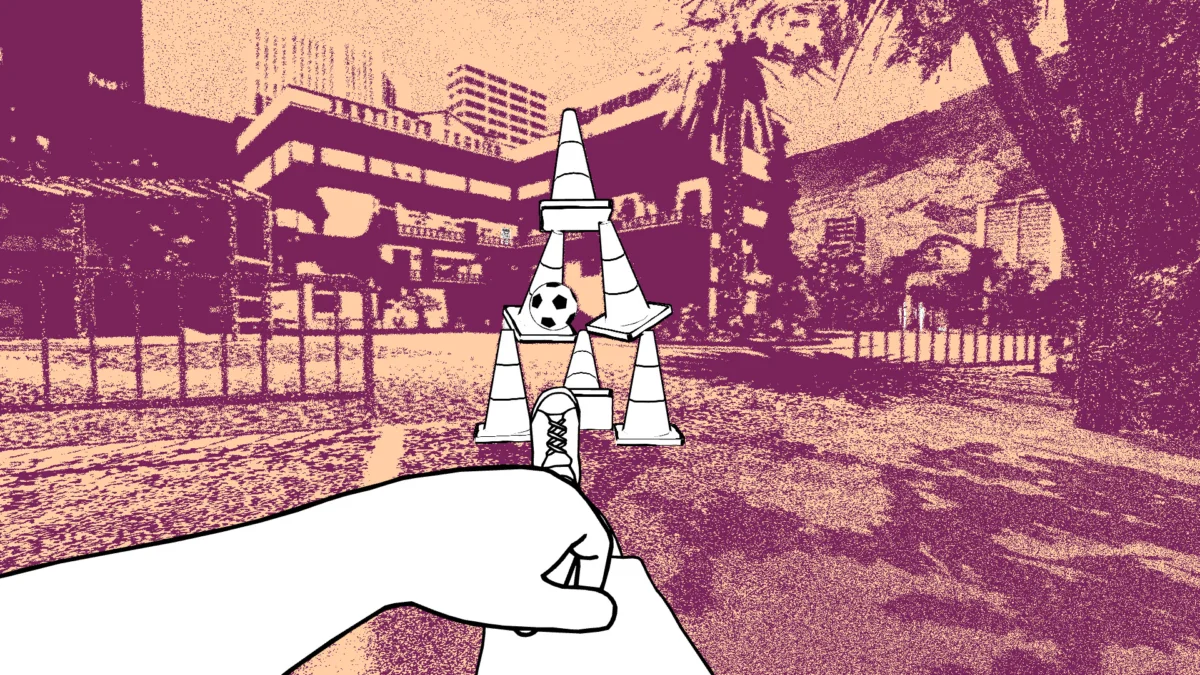
Despelote, the critically acclaimed narrative game that captivated players in 2025, achieved its profound sense of authenticity and immersion through a groundbreaking development approach centered on improvised dialogue and a neorealist philosophy. This innovative methodology was detailed by game creator and lead developer Julián Cordero during a compelling presentation at the GDC Festival of Gaming 2026, where he shed light on the game’s semi-biographical story set in a small Ecuadorian community around 2001. Despelote emerged as a standout title for its ability to transport players into a bygone era, fostering genuine connections through the universal language of football and spontaneous, lifelike interactions.
The Genesis of Despelote: A Personal Narrative Unfolds
Cordero’s vision for Despelote was deeply rooted in his personal history and a profound appreciation for the unifying power of football. The initial spark for the game came from a picture book titled Magnum Football, a gift from his grandmother during his youth. This book showcased people from across the globe engaging with football in their everyday environments, often in makeshift pitches within their communities rather than formal stadiums. The images resonated deeply with Cordero, illustrating how kicking a ball transcended cultural barriers and served as a powerful bonding activity, fostering a tangible sense of community. Growing up in Ecuador, Cordero experienced this firsthand, making the sport a central pillar of his early life and social interactions.
This formative influence laid the groundwork for Despelote. Cordero sought to create a game that was not merely about playing football, but about the social dynamics, unspoken connections, and shared curiosities that revolve around the sport in a tight-knit community. The game follows the protagonist, Julián, as he navigates his love for football and, through it, strengthens his bonds with the diverse characters inhabiting his 2001 Ecuadorian town. This slice-of-life experience deliberately eschews grand narratives for intimate, surprisingly evocative, and realistic encounters that mirror the complexities and simple joys of real-world human interaction.
GDC Festival of Gaming 2026: A Platform for Innovation
The GDC Festival of Gaming, a prominent segment of the larger Game Developers Conference, consistently serves as a vital platform for showcasing innovation, sharing development insights, and fostering dialogue within the global gaming industry. Held annually, the GDC is renowned for attracting thousands of game developers, publishers, and enthusiasts, offering a diverse array of lectures, panels, tutorials, and roundtables. The 2026 iteration, where Cordero presented, continued this tradition, highlighting cutting-edge techniques and forward-thinking design philosophies.
Cordero’s session on Despelote was particularly noteworthy for its detailed account of how the development team leveraged unconventional methods to achieve unparalleled realism. His revelation that improvisation played a crucial role in the game’s performance capture was a significant talking point, underscoring a shift towards more organic and less rigidly scripted approaches in game development. This presentation positioned Despelote not just as a successful indie title, but as a case study for future developers seeking to infuse their games with greater authenticity and emotional depth, moving beyond traditional methods of character interaction and narrative delivery. The GDC provides a forum for such ideas to propagate, influencing the next generation of game design.
From Silent Kicks to Spontaneous Conversations: The Evolution of Dialogue
Early in Despelote‘s development, Cordero embraced a minimalist design philosophy, initially conceiving a game where communication would primarily occur through the act of kicking a ball. This experimental prototype, devoid of NPC voiceovers, aimed to embody his belief in football as a universal language, allowing players to connect with characters through shared activity rather than spoken words. The intent was to create a subtle, non-verbal narrative that mirrored the nuanced interactions often observed on real-world pitches.

However, as development progressed, it became evident that this purely non-verbal approach presented significant challenges in effectively conveying gameplay ideas and guiding player understanding within the game’s immersive world. The absence of verbal cues, while artistically bold, risked creating ambiguity and hindering player engagement with the narrative’s finer points. This realization prompted a pivotal re-evaluation of the game’s communication strategy.
The turning point came through discussions with game producer and NYU professor Gabe Cuzzillo. Cuzzillo, recognizing the potential for enhanced immersion and narrative richness, advocated for the inclusion of dialogue. Cordero, initially hesitant due to his commitment to the non-verbal concept, was ultimately persuaded by Cuzzillo’s arguments, but with a crucial condition: the dialogue had to be entirely improvised. This stipulation was born from a desire to maintain the organic, unscripted feel that Cordero initially sought, avoiding the artificiality often associated with pre-written game scripts.
"After long discussions with our producer, Gabe Cuzzillo, he finally convinced me to try using dialogue for the characters, but under the conditions that I wouldn’t write any of it and that it be improvised," Cordero recounted during his GDC presentation. This decision marked a significant departure from conventional game development practices. The team began by recording Cordero’s friends having normal conversations over video calls, discussing everyday topics, football, and local politics. These raw, unscripted audio snippets were then integrated into the game, playing in the background as players interacted with the environment and characters. This experimental approach proved remarkably successful, injecting a vibrant, lifelike atmosphere into the 2001 Ecuadorian setting. The ambient chatter provided seamless context, drawing players deeper into the world and significantly enhancing the game’s sense of realism.
Neorealism in Gaming: A Documentary Approach to Design
The successful integration of improvised dialogue fundamentally shaped Despelote‘s artistic direction, drawing heavily from the neorealist movement in film. Neorealism, originating in post-World War II Italy, emphasized realistic settings, non-professional actors, and stories about ordinary people facing everyday struggles. It sought to capture life as it was, often employing long takes, natural lighting, and a documentary-like aesthetic to achieve a profound sense of authenticity.
Cordero explicitly cited game designer and educator Robert Yang’s influential 2018 blog post, "A Call for Video Game Neorealism," as a major intellectual touchstone for Despelote. Yang’s thesis challenged the prevailing notion of realism in video games, which often defaults to photorealism in graphics and hyper-realistic simulation in gameplay, particularly within AAA titles. Yang argued for an alternative understanding of realism—one focused on "documentation." This approach, according to Yang, allows for "unexpected textures, ideas, and stories to proceed into the game," moving beyond purely visual fidelity to capture the nuances of human experience and environment.
Despelote embodies this documentary realism. By eschewing perfectly scripted lines and meticulously choreographed actions for spontaneous, improvised recordings of real people, the game captured a living, breathing essence. The background chatter, filled with authentic accents, colloquialisms, and natural conversational flow, became an integral part of the game’s atmosphere, making the digital world feel genuinely lived-in. This method allowed Cordero to document aspects of his past and his community in a uniquely interactive format.
"Thinking about realism as documentation allows for unexpected textures, ideas, and stories to proceed into the game," Cordero explained. "Through the process of making this game, I was able to document all these places that I miss so much, living in New York, and reminisce with my friends about the fun things we did as kids." This personal connection to the project further deepened its neorealist roots, transforming the game into a living archive of memory and experience. Cordero’s team delved into historical archives, watching hours of footage of the Ecuadorian national football team and interviewing older community members to reconstruct the atmosphere and events of a time he was too young to fully remember. He even engaged his parents to share their memories from when they were together, embedding layers of personal and collective history into the game’s fabric. This painstaking process of research and personal recollection, coupled with the improvised performances, allowed Despelote to achieve a form of realism that transcended graphical fidelity, offering a truly unique and deeply resonant experience.
The Dynamic Design Loop: When Improvisation Shapes Development
One of the most compelling aspects of Despelote‘s development was the dynamic interplay between improvised content and game design. The commitment to unscripted dialogue meant that the development team often had to react and adapt the game’s mechanics and assets based on the organic unfolding of recording sessions. This created an iterative design loop where real-world spontaneity directly informed and enriched the digital experience.
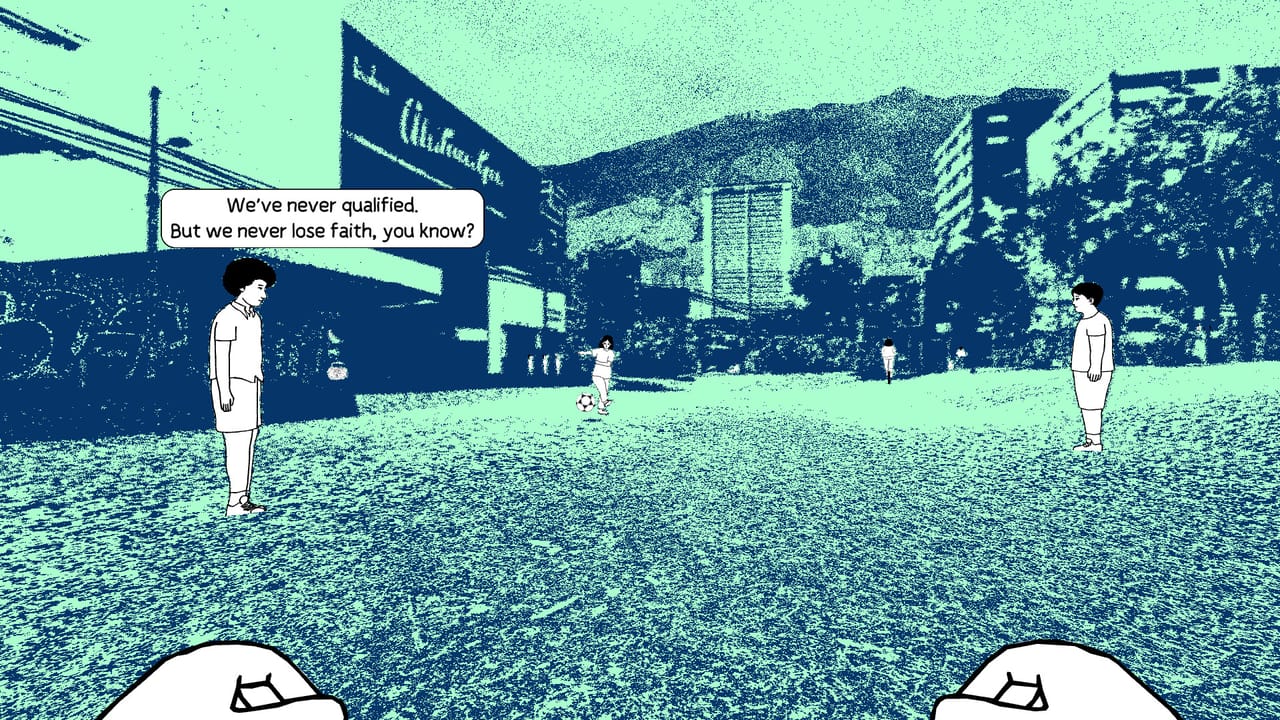
Cordero shared a particularly illustrative anecdote during his GDC talk: "The first test I showed was so successful that we committed to dialogue in the game being completely improvised. We gave friends and family different scenarios and reported them chatting about soccer, politics, and daily life, so that we could absorb them as they ran around the park. We attempted to report in as natural a location as possible, and were surprised by how easy it felt for people to just start talking and bring so much of themselves to the recordings."
This approach led to unexpected narrative developments. In one instance, during a recording session, a group of children spontaneously began teasing the player character about having a girlfriend, in the vein of authentic schoolyard banter. This unplanned interaction, rich with genuine human expression, was enthusiastically received by the development team. Rather than discarding it for not fitting a pre-conceived script, they embraced it.
"I didn’t think that the kids would tease the player as much as they did—they came up with all of that," Cordero admitted. Integrating this improvised scenario into the game posed a unique challenge. Since the game was initially designed with minimal direct verbal communication from the player, the team had to creatively adjust character behaviors and even build new assets to match this emergent narrative. In the final game, during this "girlfriend scenario," the kids would physically crowd around the player, and one even pretends to spot the supposed girlfriend in the distance. This required modifying NPC animations, spatial interactions, and potentially even creating new visual cues to support the improvised dialogue.
This incident exemplifies the game’s responsive design philosophy. "This kind of approach made it feel like whatever happened in the real world was in conversation with the game’s design. It was very freeing to see this, the game became alive during the recording sessions," Cordero concluded. This fluid, adaptive development process allowed Despelote to capture a level of organic interaction and narrative depth rarely seen in video games, blurring the lines between simulated reality and documented human experience. The game became a testament to how embracing the unpredictable nature of real-life conversations can lead to more vibrant and believable virtual worlds.
Broader Implications and Industry Resonance
Despelote‘s minimalist yet profoundly immersive approach to narrative-driven gameplay has resonated widely across the gaming industry and among players. Its success underscores a growing appetite for games that prioritize authentic experiences and emotional resonance over high-octane action or sprawling open worlds. By emphasizing the simple act of kicking a football and listening to the rich tapestry of ambient sounds and spontaneous chatter, Despelote carved out a unique niche, proving that profound immersion can be achieved through subtle, human-centric design.
The game’s influence extends beyond its critical acclaim. It serves as a compelling case study for narrative designers and indie developers, demonstrating the power of unconventional development methodologies. Despelote‘s reliance on improvisation and neorealist principles offers a blueprint for creating culturally specific, deeply personal stories that still possess universal appeal. In an industry often dominated by large-scale productions, Despelote champions the artistic merit of smaller, focused experiences that leverage innovative techniques to connect with players on a deeper level.
Furthermore, Despelote‘s portrayal of an Ecuadorian community in 2001 contributes significantly to the ongoing conversation about cultural representation in video games. By centering an authentic, semi-biographical narrative in a setting often underrepresented in mainstream media, the game offers players a window into a specific cultural context, fostering empathy and understanding. This approach aligns with a broader industry trend towards greater diversity in game settings, characters, and stories, reflecting the global nature of gaming and its audience.
The critical and commercial success of Despelote suggests a potential paradigm shift, or at least a significant alternative, in how "realism" is perceived and achieved in interactive entertainment. Moving beyond the pursuit of ever-higher polygon counts and physics simulations, Despelote champions an emotional, documentary realism that taps into the human experience itself. As game developers continue to explore new frontiers, the lessons learned from Despelote‘s innovative development and its neorealist philosophy are likely to inspire a new generation of games that are not only captivating but also deeply authentic and personally resonant. The game stands as a powerful reminder that sometimes, the most complex and memorable experiences can emerge from the simplest, most human interactions.
Game Developer and GDC Festival of Gaming are sibling organizations under Informa Festivals.
About the Author