
It was a scene that, in some ways, surprised even its architect: Bernd Lehahn, founder and CEO of Egosoft, standing at PAX East in 2026, still championing a game released in 2018, X4: Foundations. This longevity is particularly remarkable given that X4, the latest installment in the venerable, nearly thirty-year-old X space simulation series, operates outside the conventional "live service" model typically associated with multiplayer online games. Instead, it’s a deeply complex, single-player franchise that immerses players in an interstellar odyssey through intricately simulated universes, evolving from the rudimentary spaceflight simulations of the 1990s into a sophisticated economic empire builder of the modern era.
From Anticipated End to Enduring Success: X4’s Live Service Evolution
When X4: Foundations first launched, Egosoft’s initial strategy was straightforward and conventional for a studio of its size and genre. The intent was to release the base game, follow it with a couple of paid expansions to capitalize on its economic "long tail," and then pivot development towards the next iteration of the X series. This traditional approach, common among single-player game developers, did not anticipate the fervent player reception that would fundamentally alter the studio’s trajectory.
A pivotal moment arrived with the release of the first two significant updates for X4: Split Vendetta and Cradle of Humanity. Far from being mere add-ons, these expansions resonated deeply with the existing player base, achieving an unusually high "attach rate." Lahahn recounted to Game Developer that between 70 and 80 percent of X4 players purchased these expansions. This level of engagement was unprecedented for the studio and signaled a profound connection between the game’s evolving content and its dedicated community. The subsequent release of a third expansion, Tides of Avarice, maintained a robust 50 percent attach rate. It was at this juncture, Lehahn explained, that the financial viability of long-term support for X4 became undeniable for the 50-person German studio. What began as a finite product lifecycle transformed into an ongoing commitment, with annual expansions for X4 now forming the core revenue stream for Egosoft. This organic shift into a de facto live service model, driven by player demand rather than design, is an anomaly in an industry increasingly dominated by externally driven monetization strategies.
A Legacy Forged in Space: Egosoft’s Three-Decade Journey
Egosoft’s journey is one steeped in the history of PC gaming. Recognized as one of Germany’s oldest video game studios, its nearly three-decade existence has been a testament to perseverance and a steadfast commitment to a genre that has seen its fortunes wax and wane. Lahahn himself acknowledged the risk of falling into "survivorship bias" when reflecting on the company’s endurance, candidly admitting that a misstep with their 2013 title, X Rebirth, nearly brought the studio to its knees. Their salvation came unexpectedly from the back catalog: the 2005 game X3 experienced a resurgence in sales "through the roof" years after its debut, thanks to its availability on Steam, illustrating the unpredictable nature of digital distribution and evergreen content.

The X series originated during the golden age of space simulations in the 1990s, a period when titles like Elite, Wing Commander: Privateer, and LucasArts’ X-Wing and TIE Fighter captivated PC gamers. These games leveraged nascent 3D polygonal graphics, offering visually impressive experiences that defined a significant portion of the PC market. Elite laid the groundwork for blending complex space exploration with intricate economic trading systems, a blueprint that Egosoft would refine and expand upon. While many competitors pivoted to more mainstream genres like first-person shooters (e.g., id Software’s Doom) or pursued the burgeoning console market, Egosoft launched X: Beyond the Frontier in 1999, choosing to double down on its niche.
Egosoft’s survival, according to Lahahn, was anchored in an "iterative" development model. This approach, now popularized by Early Access, involved continuous engagement with their community, soliciting feedback, and progressively refining their games. Before Early Access became a standard, this iteration manifested through sequels, with each new X game building upon and polishing the foundations of its predecessors, rather than pursuing radical generational shifts.
The ill-fated X Rebirth represented a significant departure from this philosophy. The studio embarked on a decade-long endeavor to overhaul its entire tech stack and engine, aiming for a fresh direction. However, the resulting game, perceived as smaller in scope and diverging too much from the established X formula, was met with strong disapproval from the dedicated fanbase. Lahahn cited a "communication problem with the community," emphasizing that Rebirth was intended as a standalone experience rather than a direct X4. The cost of adopting a widely used engine like Unreal Engine, he noted, would have been the sacrifice of the X series’ unique gameplay foundations – a price Egosoft deemed too high. This painful lesson reinforced the importance of their core competency and iterative refinement. Egosoft’s sustained success is also underpinned by an exceptionally stable and experienced development team, with 18 employees boasting over a decade of service, some even exceeding two decades. This deep institutional knowledge and shared vision are invaluable assets in a notoriously volatile industry.
The Heart of the Universe: X4’s Deep Simulation and Emergent Gameplay
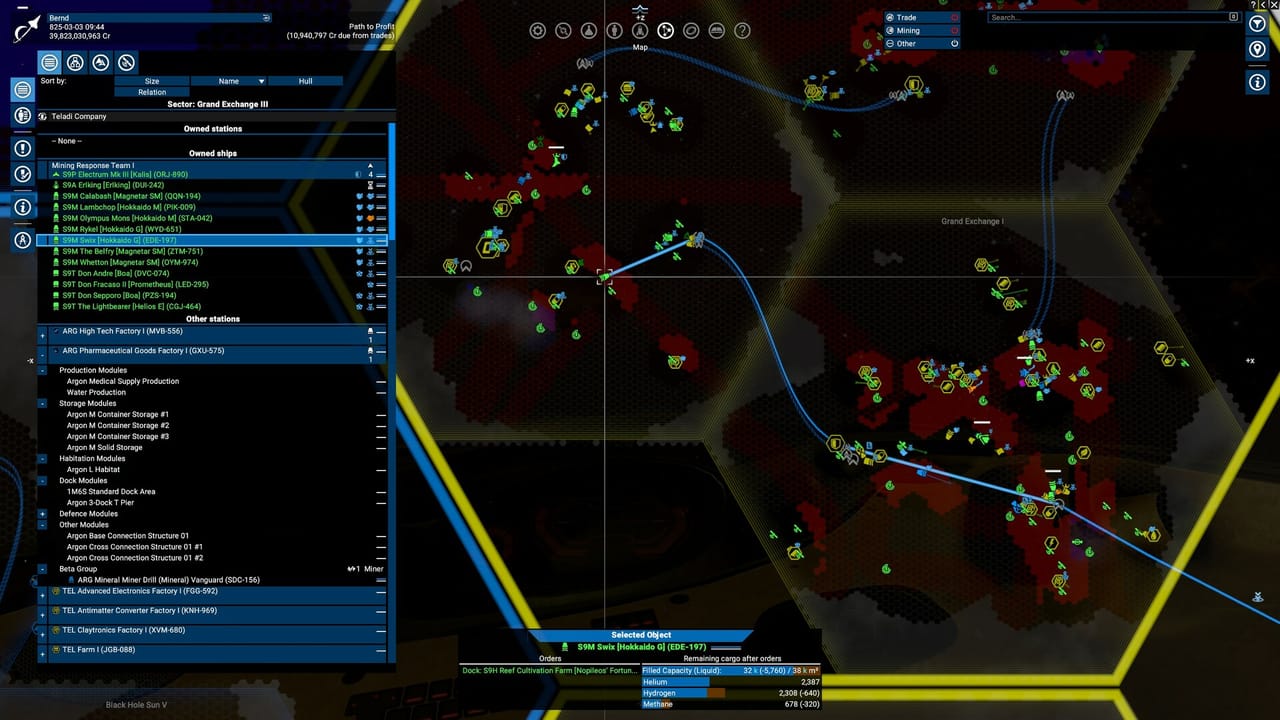
At the core of X4‘s enduring appeal lies its unparalleled "bottom-up" universe simulation. Unlike many games that rely on static backdrops or scripted events, X4 dynamically generates its universe on each player’s individual PC. This sophisticated engine simulates "tens of thousands" of AI agents interacting autonomously within an interconnected economic system so detailed that it models the bona fide supply chain fueling the construction of every spaceship the player encounters. From mining raw materials to manufacturing advanced components and final assembly, every element of the galactic economy is simulated, creating a living, breathing universe.
This deep simulation is the engine of "emergent gameplay situations," a key factor in driving long-term player motivation. Players are not merely following a predetermined narrative but are active participants whose actions—whether building a trade empire, engaging in piracy, or leading a fleet—have tangible and often unpredictable impacts on the simulated economy and political landscape. This fosters a sense of agency and discovery that keeps players invested for hundreds, if not thousands, of hours. Lahahn draws a compelling parallel to the engagement found in massively multiplayer online games (MMOs). However, he highlights a crucial distinction: while MMOs are sustained by vast player counts and often gate progression to encourage retention and monetization, X4 offers a "much steeper progression curve." Players can rapidly ascend from a lone pilot to the commander of vast armadas and economic empires within days, a pace that would be unfeasible in most MMOs.

The allure of an online X game has always been present, but Lahahn expressed gratitude that Egosoft never fully committed to one. His concern was that tying the gameplay experience too closely to the monetization requirements of an online game would inevitably compromise the core tenets of the X series. "We would have lost the core of what makes our game good," he stated, emphasizing that "fast progression is part of making a fun game." This strategic decision underscores Egosoft’s commitment to player experience over potentially lucrative, but compromising, business models.
Navigating the Cosmic Divide: Attracting New Generations
Despite its deep engagement, X4 and the X series as a whole grapple with a significant challenge: approachability. Lahahn readily admits the series has a "problem" with complexity. "It’s so complex, and it has so many features that it’s hard to get into," he acknowledged. "The user interface sometimes scares people away because it looks too complicated. We struggle with a good onboarding experience." Over X4‘s eight-year lifespan, Egosoft has continuously iterated on this, implementing new tutorials and overhauling the new player experience to provide a more hands-on educational approach. While these usability improvements have benefited veteran players, the initial learning curve remains steep.
This challenge is magnified when considering younger generations of players, who represent the future customer base. The wider game industry frequently expresses anxiety over how this demographic gravitates towards social-friendly, simpler experiences like Roblox and Fortnite. The concern is whether these players will "age into" complex, single-player simulations like X4. Egosoft shares this concern to some extent but maintains a long-term perspective on audience growth. Lahahn states, "We want new players, and we want younger players." However, he recognizes the inherent barrier: "It’s very, very rare that we get teenagers to play this game. It does work sometimes, but it doesn’t work for the masses."
Yet, there is a silver lining in the natural progression of life. As younger players mature, some develop the patience and cognitive capacity to engage with the intricate systems of games like X4. The enduring appeal of "cool space action" transcends generational divides. "Cool action in space attracts 20-year-olds now the same way it did 20 years ago," Lahahn observed. This phenomenon is not new for Egosoft; even in 1999, when X: Beyond the Frontier launched at the tail end of the space sim boom, the debut of Star Wars Episode I: The Phantom Menace helped propel the game’s sales.
Lahahn believes that the game’s survival hinges on its multifaceted appeal. "What saved us, I would say, is that the game is more than just the [basic] space sim. It has that deeper level of building an empire and trading. That works in space—it would also work in an entirely different setting. But we have it in space so there’s always this connection." This combination of exploration, combat, and sophisticated economic management creates a rich tapestry that sustains interest beyond superficial action.
The Future Trajectory: Innovation Within a Niche
The deep investment in its proprietary simulation technology means Egosoft is, in Lahahn’s humorous words, "doomed" to make space games. Abandoning the core simulation tech, refined over decades, would gut the company’s fundamental competency and leave it struggling to compete in other genres. Fortunately, there is no compelling reason to do so. The company harbors ambitions for a new X game someday, but a fascinating dynamic has emerged: features originally earmarked for future titles frequently find their way into X4 as new expansion content.
Lahahn explains, "We’ve been working on some things for a future game—we do all the time, because some things are not compatible with the idea of bringing into a live game." However, the iterative success of X4 has repeatedly demonstrated the adaptability of their engine and the community’s hunger for new content. "But over and over again, we basically ported a lot of that stuff into X4. A lot of stuff that we originally thought wasn’t possible in a live game turned out to be possible." This continuous integration of innovation into an existing, beloved platform not only extends X4‘s lifespan but also refines the underlying technology for whatever comes next, demonstrating a unique form of sustainable development.
Conclusion: A Blueprint for Enduring Niche Development
Egosoft’s journey with X4: Foundations offers compelling lessons for the broader video game industry, particularly for studios navigating the challenges of sustainability in a competitive landscape. Their accidental pivot to a live service model, driven by genuine player enthusiasm and high attach rates rather than corporate mandate, showcases the power of community-centric development. The studio’s unwavering commitment to a niche genre, its iterative design philosophy, the cultivation of deep simulation leading to emergent gameplay, and a long-term strategy for audience growth — recognizing that players "age into" complex experiences — provide a distinctive blueprint. In an era marked by studio closures and a constant search for the next big trend, Egosoft stands as a testament to the enduring viability of focused, passionate development within a well-understood niche, proving that profound depth and player loyalty can indeed fuel an unexpected and remarkable longevity.
About the Author