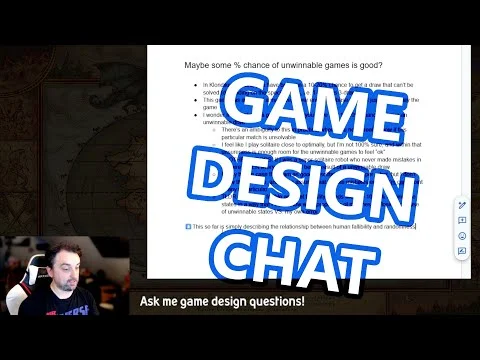
A recent online broadcast has catalyzed significant discussion within the gaming community and among industry professionals, delving into the provocative concept of integrating "plausibly deniable guaranteed losses" as a deliberate design element within video games. The stream, which featured a detailed thought experiment, explored whether a systemic inclusion of approximately 10-20% such losses could, counterintuitively, contribute positively to the overall player experience and game longevity. The dialogue centered not on outright failure, but on subtle, system-driven setbacks that appear random or player-induced, yet are designed to occur within a calculated frequency, influencing player progression, resource management, and emotional engagement.
The Core Concept: Defining Plausibly Deniable Guaranteed Losses
At its heart, "plausibly deniable guaranteed losses" refers to game mechanics engineered to impose minor, non-catastrophic setbacks on players through systems that maintain an illusion of randomness, player error, or environmental factors. Unlike explicit failure states (e.g., losing a boss fight, falling off a cliff), these losses are designed to be frustrating but not game-ending, and crucially, their systemic nature is obscured. Examples might include a percentage chance for crafting to fail even with high skill, items degrading faster than expected, specific resource nodes yielding consistently less than average over time, or seemingly random encounters that disproportionately deplete a particular resource. The "plausibly deniable" aspect is key: players are left to wonder if it was truly bad luck, their own misplay, or an inherent system characteristic, preventing direct accusation of developer malice or unfairness.
The discussion initiated by the stream and its accompanying documentation, available via a linked video and Google Docs notes, serves as a catalyst for developers and players alike to scrutinize the ethical and psychological ramifications of such design choices. It prompts a deeper look into the delicate balance between challenge, frustration, and engagement, and how seemingly minor systemic interventions can profoundly shape player perception and long-term commitment.
Historical Context and Evolution of Loss Mechanics in Gaming
The concept of loss, setback, and challenge has been fundamental to video game design since its inception. Early arcade games, for instance, were inherently designed with high difficulty and frequent, unavoidable losses to encourage coin insertion. Permadeath in roguelikes, resource management in survival games, and random number generator (RNG) mechanics in role-playing games (RPGs) all incorporate elements of loss and unpredictability. However, the explicit consideration of "plausibly deniable guaranteed losses" as a positive design element marks a nuanced shift.
- Early Gaming (1970s-1980s): High difficulty and limited lives were standard. Losses were overt and served the clear purpose of extending playtime in arcades or providing a steep learning curve for home console titles.
- The Rise of RPGs and Simulation (1990s): RNG mechanics became prevalent, particularly in combat and item drops. While these introduced randomness and potential losses (e.g., missing an attack, not getting a rare drop), they were often transparently communicated as probabilistic outcomes.
- Online Multiplayer and Live-Service Games (2000s-Present): With the advent of persistent online worlds and games as a service (GaaS), player retention and long-term engagement became paramount. This era saw the introduction of more sophisticated resource sinks, item degradation, and progression gates, sometimes disguised as "grind" or "difficulty." The monetization models of free-to-play (F2P) games, in particular, often rely on creating friction or artificial scarcity that can be overcome by spending real money, blurring the lines between fair challenge and engineered frustration.
The current discussion pushes this evolution further by explicitly questioning the intentionality behind seemingly random negative events. It moves beyond simply having "RNG" to actively designing systems where a certain percentage of negative outcomes are not merely possible but are guaranteed to occur within a statistical window, while still appearing organic to the player.
Psychological Underpinnings and Player Perception
The efficacy and ethics of "plausibly deniable guaranteed losses" are deeply intertwined with player psychology. Game designers often leverage psychological principles to enhance engagement, and understanding these can illuminate the potential impact of such mechanics:
- Intermittent Reinforcement: This powerful psychological principle, often associated with slot machines, dictates that unpredictable rewards (or, in this case, unpredictable punishments or setbacks) can be highly effective in maintaining engagement. If losses feel truly random, players might be more inclined to keep trying, hoping for a different outcome next time.
- Sunk Cost Fallacy: As players invest time, effort, and potentially money into a game, they become more resistant to abandoning it, even in the face of frustration. Plausibly deniable losses can exacerbate this by adding friction that players feel compelled to overcome due to their existing investment.
- Attribution Theory: Players constantly try to understand why things happen in a game. If a loss can be plausibly attributed to bad luck or their own minor miscalculation, rather than a rigged system, it can prevent outright quitting due to perceived unfairness. However, if the pattern of "bad luck" becomes too frequent or predictable, it risks breaking the illusion and fostering resentment.
- Frustration-Aggression Hypothesis: While some frustration can motivate players to overcome challenges, excessive or perceived unfair frustration can lead to aggression, disengagement, and ultimately, player churn. The optimal percentage (e.g., the suggested 10-20%) is crucial here, aiming for a level of friction that drives engagement without alienating the player base.
The proposed 10-20% figure is not arbitrary; it suggests a sweet spot where enough friction is introduced to make successes feel more earned and to slow progression, without tipping into overwhelming unfairness that drives players away. It aims to create moments of tension and minor disappointment that contribute to the emotional roller coaster of gameplay, ultimately making the victories feel more impactful.
Implications for Game Economies and Monetization Strategies
For live-service games, where player retention and monetization are critical, the strategic implementation of "plausibly deniable guaranteed losses" holds significant economic implications.
- Resource Sinks: These losses inherently act as resource sinks, creating demand for in-game currencies, crafting materials, or items. If a player consistently loses a small percentage of resources due to failed attempts or unexpected wear-and-tear, they will need to acquire more, extending their engagement with the game’s core loops.
- Driving Engagement with Premium Content: When progression is slowed or made more challenging by these losses, players might be incentivized to engage with premium options. This could include purchasing "time-saver" items, boosts that reduce the chance of failure, or bundles of resources that circumvent the grind.
- Encouraging Social Interaction: Overcoming these recurring setbacks might encourage players to seek help from others, engage in trading, or form guilds, thereby strengthening the social fabric of an online game and increasing retention.
- Balancing Progression: In games designed for long-term play, managing the rate of player progression is crucial. Too fast, and players run out of content; too slow, and they become frustrated. Plausibly deniable losses offer a subtle lever to fine-tune this progression without explicitly gating content or drastically altering core mechanics.
Industry data consistently shows a correlation between player engagement depth and monetization. Games that successfully retain players over extended periods tend to generate higher average revenue per user (ARPU). If "plausibly deniable guaranteed losses" can genuinely enhance long-term engagement by providing a persistent, subtle challenge, then their economic utility becomes clear. However, this utility must be weighed against the potential for negative player sentiment if the "deniability" wears thin.
Diverse Perspectives: Developer Intent vs. Player Experience
The discussion surrounding this concept inevitably draws varied reactions from different stakeholders within the gaming ecosystem.
- Game Developers and Designers: From a design perspective, such mechanics could be argued as tools to create a more dynamic, challenging, and ultimately rewarding experience. A designer might see these losses as a form of "friction" that makes success more meaningful, prevents players from becoming complacent, and encourages strategic thinking. It could also be a subtle way to manage game economies and progression in complex live-service environments. As one might infer from the discourse, the intent is often to enhance depth, not to maliciously trick players.
- Player Communities: Reactions from player communities are often polarized. While some players appreciate a game that doesn’t hold their hand and presents genuine challenges, others are highly sensitive to perceived manipulation or artificial roadblocks. If players feel that losses are engineered rather than truly emergent, it can erode trust, lead to accusations of "dark patterns," and foster a sense of being exploited for time or money. Forums and social media platforms frequently buzz with debates about "rigged RNG" or "hidden nerfs," highlighting player vigilance.
- Industry Analysts and Ethicists: Analysts might view these mechanics through the lens of business sustainability and player retention metrics. Ethicists, however, would raise concerns about transparency and consumer protection. The line between challenging gameplay and psychological manipulation is thin, and intentionally obscured systemic losses could potentially cross it. This raises questions about whether developers have a moral obligation to be fully transparent about the underlying probabilities and systems governing player outcomes. The debate around loot boxes and their gambling-like mechanics serves as a precedent for regulatory scrutiny when game design choices venture into ethically ambiguous territory.
Broader Impact and Future Implications
The deliberate exploration of "plausibly deniable guaranteed losses" highlights a continuing evolution in game design philosophy, particularly as the industry leans heavily into live-service models.
- Transparency vs. Immersion: This concept forces a re-evaluation of the balance between game system transparency (showing players all the numbers and probabilities) and maintaining immersion (allowing players to believe in the organic nature of the game world). Achieving both simultaneously is a significant design challenge.
- The Definition of "Fair Play": The discussion pushes the boundaries of what constitutes "fair play" in a digital environment. Is it fair to design systems that impose setbacks while actively obscuring their underlying mechanisms? This question becomes particularly salient in competitive games or those with real-money economies.
- Innovation in Player Engagement: On a positive note, exploring such nuanced mechanics could lead to innovative ways to keep players engaged over extended periods without resorting to endless content creation or overt difficulty spikes. It suggests a move towards more sophisticated, psychological engagement loops.
- Potential for Regulatory Scrutiny: If these mechanics become widespread and are perceived by players as exploitative, there is a non-trivial risk of increased regulatory attention, similar to the debates surrounding loot boxes or predatory monetization. Consumer protection agencies may eventually look into design practices that intentionally obscure system functions to influence player behavior.
The dialogue sparked by the recent stream is more than just an academic exercise; it reflects a crucial ongoing conversation about the future of interactive entertainment. As games become increasingly complex, persistent, and intertwined with digital economies, the ethical considerations and psychological impacts of their underlying design principles will continue to be a focal point for developers, players, and the broader society. The nuanced understanding and responsible implementation of concepts like "plausibly deniable guaranteed losses" will ultimately shape the trust, longevity, and overall health of the gaming industry.
About the Author