The GB Pixel Art Jam 2024 has officially concluded, drawing to a close another successful annual event that challenged artists worldwide to harness the iconic aesthetic of Nintendo’s original Game Boy handheld console. This year’s jam saw an impressive 378 submissions, each meticulously crafted to adhere to the stringent technical and artistic limitations characteristic of the classic portable gaming device. Participants were tasked with creating original pixel art using a severely restricted four-color palette and a low-resolution canvas, mirroring the hardware specifications that defined a generation of gaming. The culmination of this creative endeavor will soon be a compiled ROM, allowing enthusiasts to experience all submitted artworks in a format reminiscent of the original Game Boy itself, a testament to both the artists’ skill and the enduring legacy of the retro platform.
The Enduring Legacy of the Game Boy and Pixel Art
The Nintendo Game Boy, first released in 1989, revolutionized portable gaming and left an indelible mark on popular culture. Its monochromatic (or rather, four shades of green) display, simple controls, and robust design made it an instant classic. While its technical specifications might seem primitive by today’s standards – a 160×144 pixel screen and a limited palette – these very constraints often fostered immense creativity among game developers and artists. The necessity to convey complex ideas, detailed characters, and expansive environments with such limited resources pushed the boundaries of visual storytelling. This "less is more" philosophy is at the heart of the GB Pixel Art Jam, encouraging contemporary artists to revisit and master these foundational principles.
Pixel art, as a broader discipline, has experienced a significant resurgence in recent decades. Far from being merely a relic of gaming’s past, it is now celebrated as a distinct and sophisticated art form. Its appeal lies in its clean lines, deliberate use of color, and the inherent challenge of conveying emotion and detail through a minimal number of pixels. For many, it evokes a powerful sense of nostalgia, connecting them to cherished childhood memories of early video games. For others, it represents a fresh artistic challenge, demanding precision, planning, and an understanding of how light, shadow, and form can be suggested rather than explicitly rendered. The GB Pixel Art Jam specifically narrows this focus, celebrating the unique flavor of the Game Boy’s visual identity, which, despite its limitations, produced some of the most memorable character designs and environmental art in gaming history.
Itch.io Jams: A Platform for Diverse Creativity
Itch.io, a prominent open marketplace for independent digital creators, has become a vital hub for game development and digital art communities. Its "Jams" feature is a cornerstone of this ecosystem, providing a flexible and robust framework for organizing a wide array of creative challenges. These jams range from game development marathons, where participants create full games within a tight deadline, to specialized art challenges like the GB Pixel Art Jam. The platform’s intuitive tools allow organizers to set specific rules, timelines, and submission guidelines, while also facilitating community engagement through forums, voting systems, and integrated submission processes.
The versatility of itch.io’s jam system has been instrumental in fostering innovation and collaboration across various creative disciplines. It provides a structured environment for artists and developers to experiment with new ideas, hone their skills, and receive constructive feedback from peers. Beyond the competitive aspect, many jams prioritize learning, community building, and the sheer joy of creation. The GB Pixel Art Jam 2024 exemplifies this, demonstrating how a platform designed primarily for game distribution can effectively support and showcase niche artistic endeavors, cultivating a vibrant sub-community dedicated to specific retro aesthetics. An itch.io spokesperson, reflecting on the platform’s community engagement, highlighted that "the diverse applications of our Jam feature consistently impress us, showcasing the boundless creativity within our community. Events like the GB Pixel Art Jam prove that specific constraints can ignite incredible artistic output and foster strong, supportive networks among creators."
GB Pixel Art Jam 2024: A Deep Dive into Constraints and Creativity
The GB Pixel Art Jam 2024, as an annual fixture, builds upon a tradition of challenging artists to work within the specific technical confines of the original Game Boy. While the exact dates for the 2024 iteration extended over a period typically ranging from two to four weeks, allowing artists ample time for conceptualization and execution, the core requirements remained steadfast. Participants were instructed to create pixel art that would authentically render on a Game Boy screen, implying not only the 160×144 pixel resolution but, critically, adherence to the four-color palette. This palette traditionally consists of four shades of green, ranging from a dark hue to a very light one, simulating grayscale. Artists had to master dithering techniques and clever color substitution to create depth, texture, and visual interest with this severely limited spectrum.
Beyond the color and resolution, artists also considered the limitations of sprite sizes and background tiles, though the jam primarily focused on static art pieces rather than animated sprites. This deliberate set of restrictions is not merely an homage; it serves as a powerful creative catalyst. By removing the infinite possibilities of modern digital art tools, artists are forced to think more critically about composition, form, and storytelling. Every pixel becomes a deliberate choice, every shade shift a calculated decision. This process often leads to highly stylized and impactful art, demonstrating that artistic merit is not contingent on technological sophistication but rather on ingenuity and mastery of the medium. Participants frequently cite these specific constraints as both the greatest challenge and the most rewarding aspect of the jam, often stating, "Working within the Game Boy’s palette forces a level of creative problem-solving that pushes my artistic boundaries in ways modern tools simply don’t."
Spotlight on Submissions: A Gallery of Pixelated Ingenuity
The 378 submissions to the GB Pixel Art Jam 2024 showcased an extraordinary range of themes, styles, and interpretations, all unified by the distinctive Game Boy aesthetic. Each piece demonstrated a unique approach to overcoming the severe palette and resolution limitations, transforming them into strengths. A selection of these standout artworks offers a glimpse into the creative depth of the participants:
-
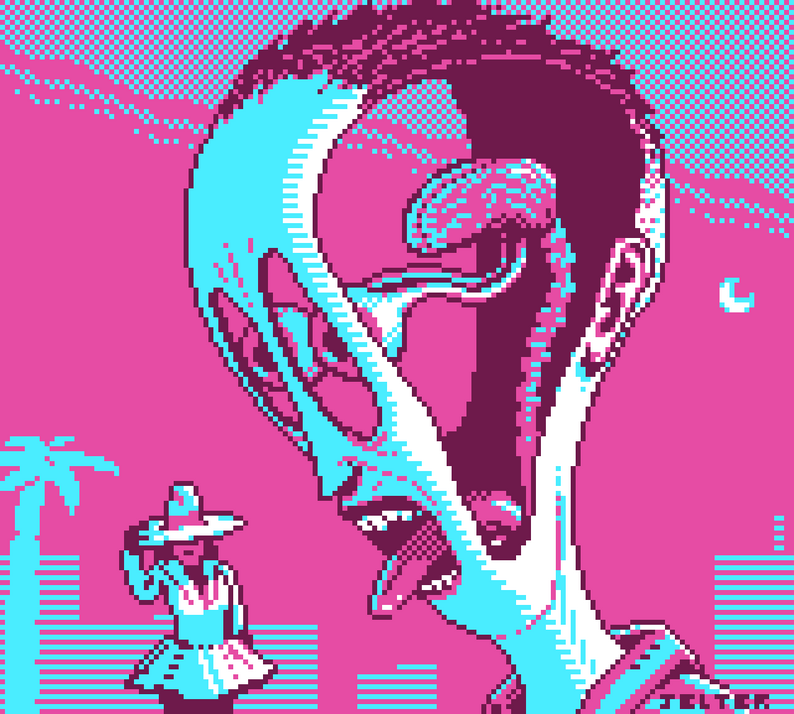
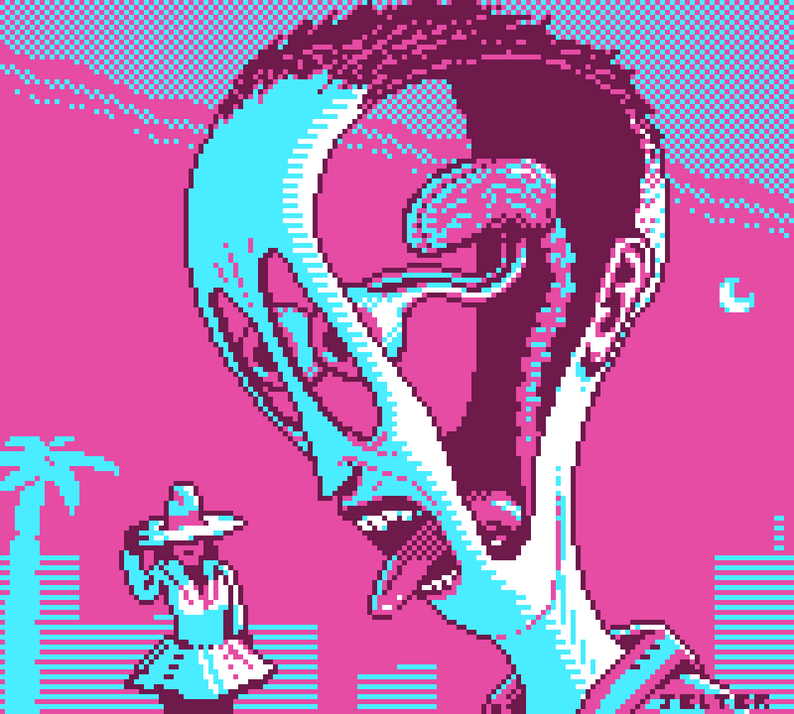
"Malibu Dream" by BenJelter: This artwork presents a serene coastal scene, likely depicting a beach or poolside vista under a bright sky. The artist expertly utilized the four-color palette to convey the shimmering quality of water, the texture of sand or pavement, and the subtle variations in foliage. The composition likely features elements like palm trees, a lounge chair, or distant waves, all rendered with crisp pixel precision. The "dream" aspect might be suggested through soft light effects or a tranquil, idyllic atmosphere, demonstrating how a limited palette can still evoke warmth and relaxation. The success of "Malibu Dream" lies in its ability to transport the viewer to a sun-drenched locale, despite the inherent coolness of the Game Boy’s green tones, through clever shading and contrast.
-
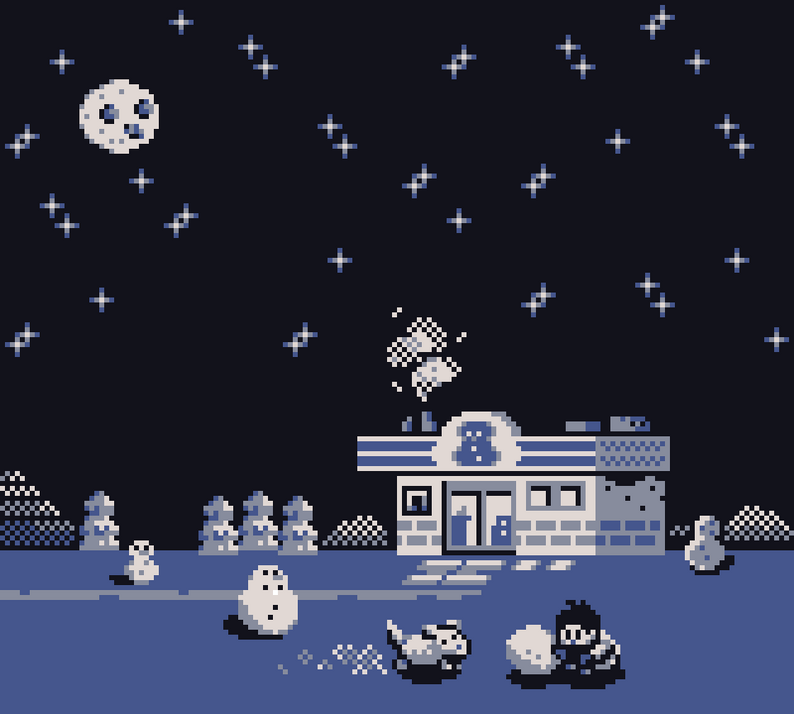
"Night time at Snowball Conbini" by howdy riceball: This piece plunges the viewer into a nocturnal urban or suburban setting, focusing on a "conbini" (convenience store). The challenge here was to depict night and artificial light sources with a limited palette. The artist likely employed the darkest shades for the night sky and deep shadows, while using lighter tones to represent glowing signs, streetlights, or the interior illumination of the store. The "snowball" element might be literal, with subtle snow textures, or metaphorical, hinting at a cozy, isolated feeling. The artwork likely captures the quiet ambiance of a late-night stop, with careful attention to architectural details and the interplay of light and shadow on the surrounding environment, creating a sense of realism within the pixelated framework.
-
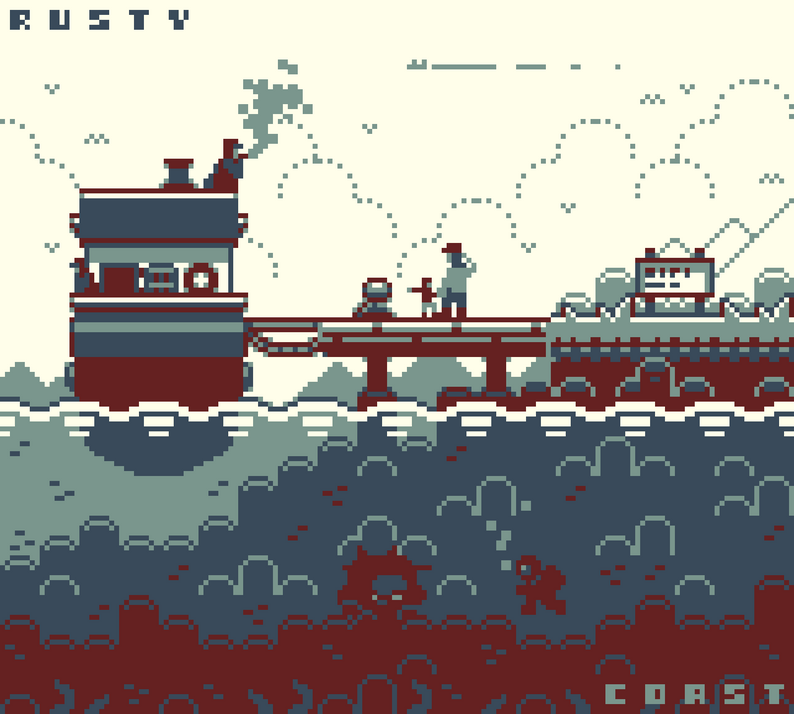
"Rusty Coast" by Birds Probably: This submission suggests a more rugged and perhaps melancholic landscape. The title "Rusty Coast" implies themes of industrial decay, abandonment, or a natural environment slowly being reclaimed. The artist likely used the darkest and mid-range greens to depict weathered metals, rocky shores, and perhaps turbulent waters or overcast skies. Details such as corroded structures, discarded machinery, or gnarled vegetation would be rendered with precise pixel placement to convey texture and age. The piece likely evokes a strong mood, demonstrating how the Game Boy’s palette, often associated with simplicity, can be manipulated to create grittier, more complex emotional landscapes.
-
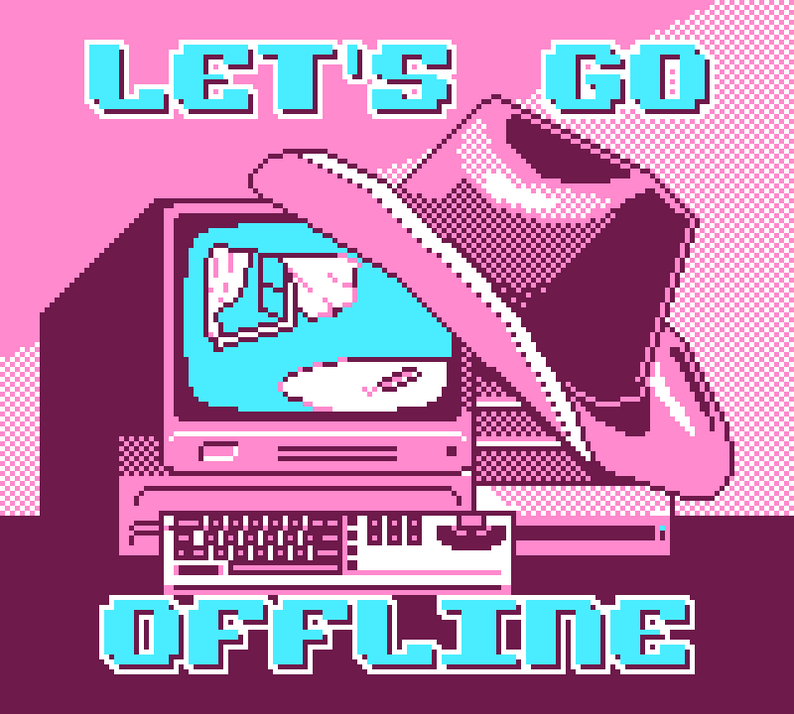
"Let’s Go Offline" by Robert Doman: This artwork likely plays on the nostalgia inherent in the Game Boy itself, possibly depicting a scene related to retro technology or a moment of disconnection from modern digital life. It could feature elements like a classic game console, a CRT television, or a quiet room devoid of contemporary distractions. The artist would use the palette to create a sense of cozy intimacy or perhaps a slightly melancholic reflection on simpler times. The composition might focus on an object or a person engaging in a quiet activity, using subtle lighting to highlight details and draw the viewer’s eye, celebrating the charm of analog experiences through a digital retro medium.
-
"A Lament for Forgotten Souls" by Annagmo: This piece immediately suggests a somber, perhaps supernatural or ethereal theme. The artist would have faced the challenge of conveying spectral or otherworldly elements using the Game Boy’s green scale. This might involve clever use of transparency effects (simulated through dithering), ghostly figures, or haunting landscapes. The darkest shades would likely form deep backgrounds, while lighter greens could represent wisps of fog, ethereal glow, or the faint outlines of spirits. The artwork likely prioritizes atmosphere and emotional impact, proving that even with minimal colors, profound and evocative narratives can be communicated.
-
"Aren, Orc Warrioress" by Rohezk: This submission is a character-focused piece, presenting a fantasy figure. The artist would have concentrated on conveying the strength and personality of Aren, the Orc Warrioress, through her pose, armor, and facial features. The green palette would be used to define musculature, the texture of her skin (often depicted as green for orcs), and the details of her weaponry or attire. High contrast would be crucial for making the character "pop" against a background, while subtle shading would give her form and depth. This piece showcases the ability to create dynamic and detailed character portraits within the Game Boy’s artistic constraints, reminiscent of classic RPG character sprites.
-
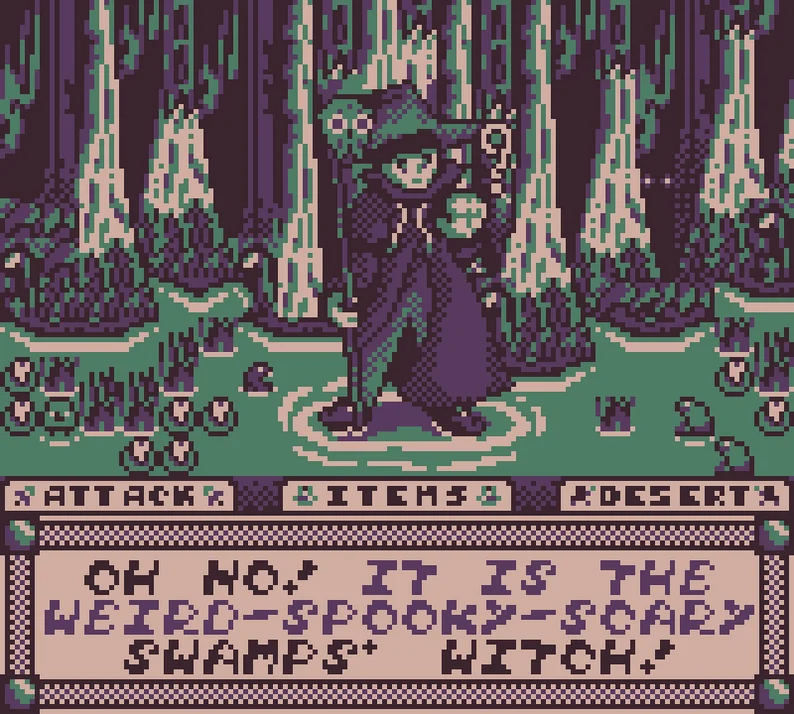
"Swamps’ Witch" by BifStek: This artwork conjures images of dark fantasy and mysterious natural settings. The artist would have focused on depicting a witch character within a swamp environment. This would involve intricate pixel work to render gnarled trees, murky water, and perhaps a hut or mystical elements. The palette would be expertly used to differentiate between water, land, and foliage, with particular attention to reflective surfaces and deep shadows. The witch herself would be a focal point, with her attire, magical accouterments, and expression rendered to convey her character, whether benevolent or sinister, demonstrating the versatility of the palette in crafting atmospheric and character-driven scenes.
These examples, representing a fraction of the total submissions, underscore the incredible talent and dedication within the pixel art community. Each artist not only respected the Game Boy’s limitations but actively leveraged them to produce distinctive and memorable art.
The Creative Process and Community Engagement
For many participants, game jams are more than just competitions; they are intensive learning experiences. The GB Pixel Art Jam encourages artists to dive deep into the specific techniques required for retro pixel art, such as efficient sprite design, color ramp management, and effective dithering. These skills are highly transferable, not only for other pixel art projects but also for understanding fundamental principles of visual design and composition. The community aspect of itch.io jams is also paramount. Participants often engage in constructive feedback sessions, share progress, and draw inspiration from each other’s work. This collaborative environment fosters growth and strengthens the bonds within the digital art community. The jam’s forums and social media presence provide platforms for artists to discuss challenges, share tips, and celebrate successes, creating a supportive ecosystem around a shared passion for retro aesthetics.
Post-Jam Output: The Compiled ROM and Its Significance
A particularly exciting outcome of the GB Pixel Art Jam 2024 is the upcoming compilation of all submitted artworks into a single ROM file. This initiative serves several crucial purposes. Firstly, it provides a tangible and accessible artifact of the jam’s collective creativity. Users will be able to load this ROM onto Game Boy emulators or even flash carts for physical Game Boy hardware, experiencing the art as it was truly intended – on a virtual or actual Game Boy screen. This authentic presentation underscores the jam’s commitment to the original console’s spirit.
Secondly, the ROM acts as a digital archive, preserving the submissions in a standardized, easily distributable format. This ensures that the artworks remain accessible and viewable for years to come, contributing to the broader digital art history. For artists, having their work included in such a compilation is a mark of recognition and a valuable addition to their portfolio. For the community, it’s a curated gallery that celebrates the talent and diversity of the participants, allowing for easy browsing and appreciation of the full scope of the jam’s output. This initiative reflects itch.io’s ongoing commitment to supporting and showcasing the work of its creative community in innovative and meaningful ways.
Broader Implications: Retro Aesthetics in the Modern Digital Landscape
The continued success of events like the GB Pixel Art Jam has broader implications for the digital art landscape, the indie game development scene, and the preservation of digital heritage.
-
Preservation of Retro Aesthetics: These jams actively contribute to the preservation and evolution of retro art styles. By challenging contemporary artists to work within historical constraints, they ensure that the techniques and artistic philosophies of bygone eras are not forgotten but instead reinterpreted and revitalized. This helps maintain a crucial link to the history of digital art and interactive entertainment.
-
Influence on Modern Game Design: The indie game development scene frequently draws inspiration from retro aesthetics. Games like Shovel Knight, Celeste, and countless others leverage pixel art not out of technical necessity but as a deliberate artistic choice. Jams like the GB Pixel Art Jam serve as fertile ground for developing new talent and pushing the boundaries of what can be achieved with limited palettes, directly influencing the visual language of modern independent games. They demonstrate that aesthetic appeal and engaging experiences do not solely depend on photorealism or cutting-edge graphics.
-
Democratization of Art Creation: Pixel art, particularly in its more constrained forms, can have a relatively low barrier to entry in terms of software and hardware. This democratizes art creation, allowing aspiring artists without access to expensive tools or extensive training in complex software to participate and develop their skills. The focus on fundamental artistic principles over technical prowess makes it an accessible entry point into digital art.
-
Community Building and Skill Development: Itch.io’s jam system, exemplified by this event, fosters strong, engaged communities. These platforms provide invaluable opportunities for skill development, peer learning, and networking among artists. The structured challenge encourages discipline, problem-solving, and creative thinking, benefiting individual artists and the collective art community.
-
The Power of Constraints: The jam reinforces the artistic principle that constraints can be liberating. Rather than stifling creativity, strict limitations often force artists to innovate, find novel solutions, and deepen their understanding of their craft. This lesson extends beyond pixel art, offering insights into creative problem-solving in any artistic or design field.
Looking Ahead
The conclusion of the GB Pixel Art Jam 2024 marks another significant milestone in the ongoing celebration of retro aesthetics and community-driven creativity. With 378 unique submissions now awaiting compilation into a browsable ROM, the event stands as a testament to the enduring appeal of the Game Boy’s distinctive visual style and the vibrant talent within the itch.io community. As the digital art landscape continues to evolve, events like this remain crucial for honoring the past, inspiring the present, and shaping the future of artistic expression within the realm of interactive media. The success of this jam underscores the fact that the spirit of retro gaming, far from being a mere relic, continues to thrive as a dynamic and influential force in modern digital art.
About the Author