The GB Pixel Art Jam 2024, a highly anticipated annual event for digital artists, has successfully concluded, drawing a remarkable 378 submissions that brilliantly reimagine the iconic aesthetics of Nintendo’s classic Game Boy. Participants from around the globe were tasked with crafting pixel art within the stringent, yet creatively fertile, limitations of the original handheld console, utilizing a restricted four-color palette and adhering to specific technical parameters. This year’s jam, hosted on itch.io’s versatile "Jams" feature, underscored the enduring appeal of retro gaming visuals and the innovative spirit of the art community. Following the event’s closure, organizers have announced plans to release a compiled ROM containing all submitted artwork, transforming the collective creations into an interactive digital archive accessible to enthusiasts and historians alike.
The Enduring Allure of Game Boy Aesthetics
The Game Boy, originally launched by Nintendo in 1989, revolutionized portable gaming and left an indelible mark on popular culture. Its distinctive monochrome green/grey screen, featuring a modest 160×144 pixel resolution and a palette of just four shades, presented unique challenges and opportunities for game developers and artists of its era. Far from being a mere technical limitation, this aesthetic has cultivated a strong sense of nostalgia and a dedicated following in the modern digital art landscape. The GB Pixel Art Jam directly taps into this sentiment, challenging contemporary artists to not only replicate the look but also to understand and creatively transcend the technical constraints that defined a generation of gaming.
The appeal of working within such limitations is multifaceted. For many artists, it’s a nostalgic journey back to simpler times, evoking memories of childhood gaming. For others, it’s a rigorous artistic exercise, forcing them to distill complex ideas into their most fundamental visual forms. The four-color palette, for instance, demands exceptional skill in dithering, shading, and composition to create depth and visual interest where a broader spectrum of colors might typically be used. Similarly, the low resolution necessitates precision in pixel placement, where every single pixel carries significant visual weight. This discipline often leads to highly stylized and impactful results, proving that true creativity can thrive under constraint. The GB Pixel Art Jam serves as a testament to this principle, demonstrating how artists can produce incredibly diverse and expressive pieces even when confined to a seemingly restrictive canvas.
itch.io’s Jams Feature: A Catalyst for Creative Communities
The success of events like the GB Pixel Art Jam 2024 is significantly amplified by platforms like itch.io and its innovative "Jams" feature. itch.io, an open marketplace for independent digital creators, has cultivated a reputation as a vibrant hub for game developers, artists, and enthusiasts. Its Jams feature, designed to host time-limited creative challenges, has proven remarkably adaptable, supporting a wide array of events ranging from traditional game development sprints to unique art challenges, music composition jams, and even narrative writing competitions.
The flexibility and accessibility of itch.io’s Jams system democratize participation, allowing anyone with an account to either host a jam or submit their work. This fosters a global community of creators, enabling cross-pollination of ideas and providing a supportive environment for experimentation and skill development. The platform handles submission management, community voting (if applicable), and communication, allowing organizers to focus on the creative aspects of the jam. The diverse utilization of this feature, as noted by itch.io itself, is a cornerstone of its community engagement strategy. From game design challenges that last mere hours to month-long artistic endeavors, the Jams feature continually demonstrates its capacity to unite creators around shared passions and unique themes, effectively nurturing emerging talent and celebrating niche interests within the broader digital arts sphere. The GB Pixel Art Jam is a prime example of how a specific, retro-themed art challenge can leverage this robust platform to achieve widespread participation and produce a wealth of creative output.
Jam Timeline and Mechanics: A Structured Creative Sprint
The GB Pixel Art Jam 2024, though recently concluded, followed a structured timeline typical of many itch.io jams, designed to provide participants with adequate time to conceive, create, and refine their submissions while maintaining a sense of urgency. While specific start and end dates were not detailed in the immediate announcement, such annual events typically span several weeks, allowing for a focused period of artistic production. Artists registered for the jam, familiarized themselves with the rules – primarily the Game Boy’s 4-color palette and resolution (often 160×144 pixels) – and then embarked on their creative journeys.
Throughout the submission period, participants could upload their pixel art pieces to the jam’s dedicated page on itch.io, often accompanied by descriptions of their process, inspirations, or the narrative behind their work. The platform facilitated interaction among participants through forums and comment sections, fostering a collaborative and encouraging atmosphere. Upon the submission deadline, the jam entered a period of review, which in some jams involves community voting or judging. For the GB Pixel Art Jam, the focus was on the collective artistic output, culminating in the exciting promise of a compiled ROM. This ROM, a digital file mimicking a Game Boy cartridge, will serve as an interactive gallery, allowing users to experience all 378 submissions in a format authentic to the original console. This unique compilation method not only celebrates the individual artists but also creates a cohesive digital artifact that encapsulates the entire event, preserving its creative legacy in a truly retro fashion. The anticipation for this ROM’s release underscores the community’s excitement and the innovative approach to showcasing digital art.
A Showcase of Ingenuity: Highlights from the 378 Submissions
The 378 submissions to the GB Pixel Art Jam 2024 represent a remarkable spectrum of artistic interpretations within the strict Game Boy constraints. Each piece demonstrates the artists’ ingenuity in manipulating a limited palette and resolution to convey intricate scenes, compelling characters, and evocative moods.
-
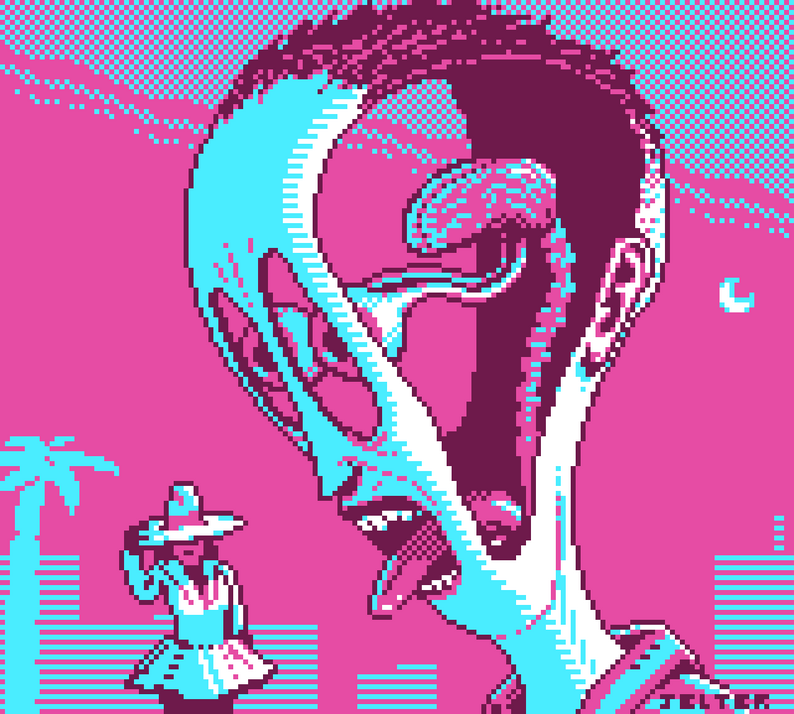
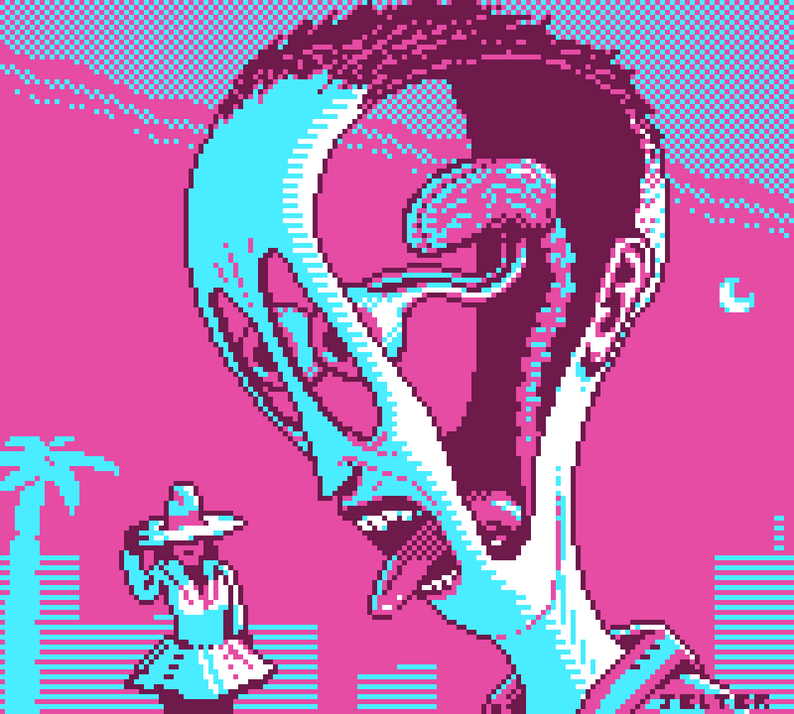
"Malibu Dream-Game Boy Art" by BenJelter: This piece exemplifies how artists can evoke a sense of place and atmosphere with minimal resources. The composition likely uses careful dithering and value contrast to suggest sunlight, shadows, and the gentle undulations of water or landscape, transporting the viewer to an idyllic, perhaps nostalgic, setting reminiscent of classic adventure game backdrops. The "dream" aspect might be conveyed through softened edges or ethereal forms, a challenge expertly met within the pixel grid.
-
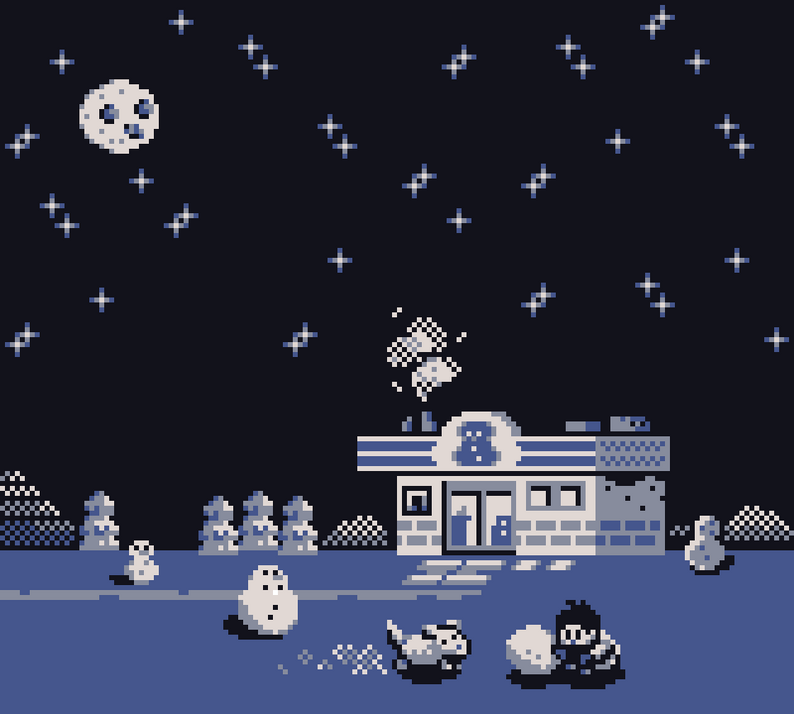
"Night time at Snowball Conbini" by howdy riceball: This submission showcases narrative potential within pixel art. The depiction of a convenience store at night, likely featuring subtle lighting effects created through strategic pixel placement, suggests a quiet, perhaps lonely, urban scene. The "Snowball" element could refer to the store’s theme or a literal snowy environment, further demonstrating environmental storytelling using only four colors to distinguish between light sources, reflections, and the textures of the building and its surroundings.
-
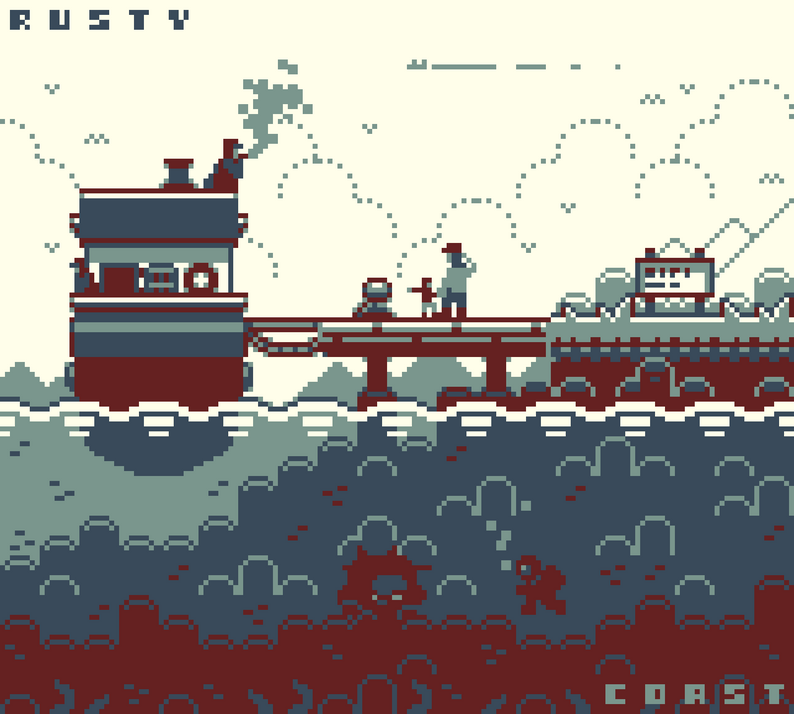
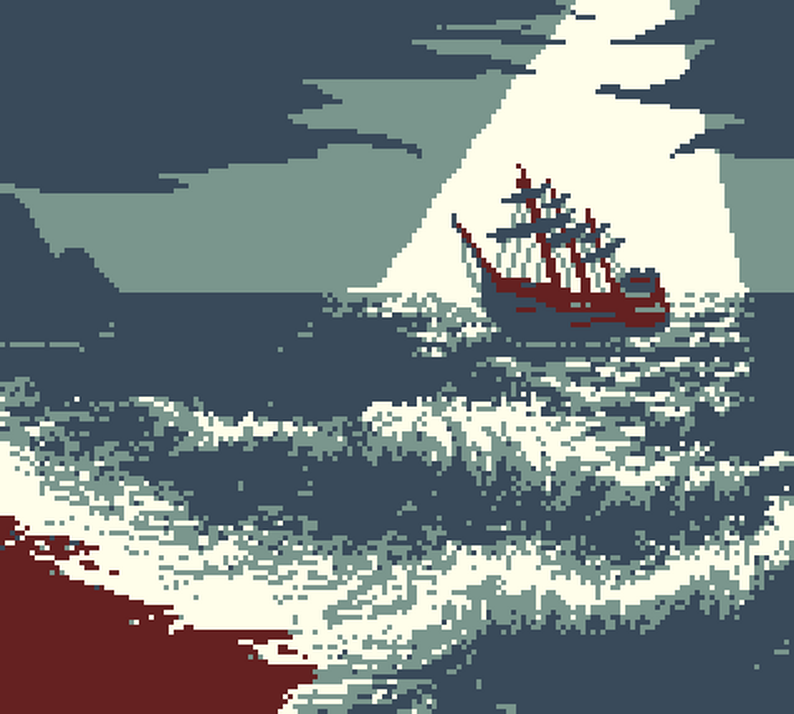
"Rusty Coast" by Birds Probably: This piece likely focuses on environmental detail and texture, a significant challenge with limited colors. Artists must rely on patterns and careful value shifts to convey the roughness of rust, the coolness of water, and the desolation of a coast. The title suggests a mood of decay or rugged beauty, which, when translated into Game Boy aesthetics, requires a keen eye for abstract representation and effective use of the four available shades to create a sense of depth and material quality.
-
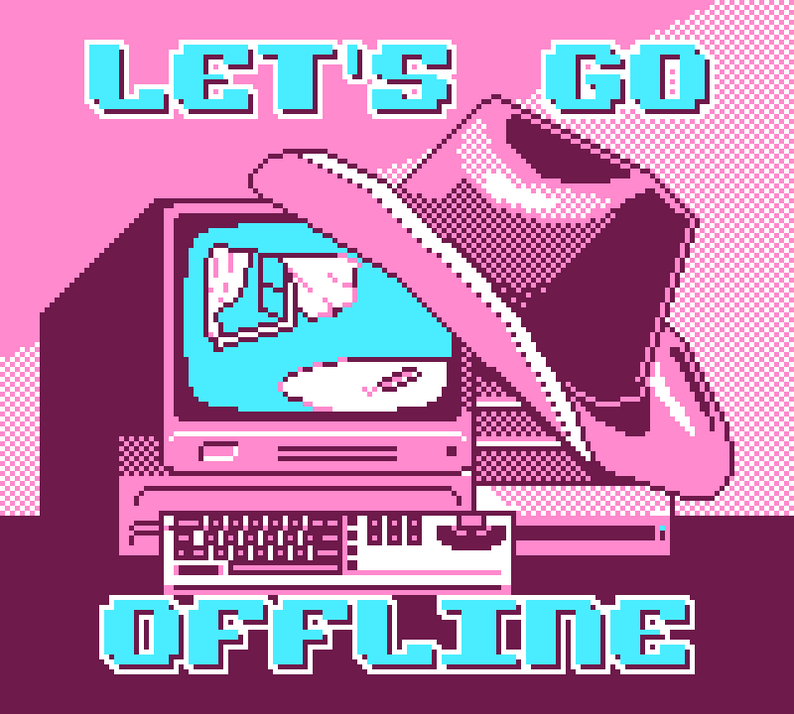
"Let’s Go Offline" by Robert Doman: This artwork’s title hints at a thematic exploration, possibly reflecting on technology, solitude, or a desire for simpler times, themes that resonate deeply with the retro Game Boy aesthetic itself. The visual representation could involve a character interacting with retro tech, or a scene symbolizing disconnection, using the limited palette to emphasize stark contrasts or a sense of quiet introspection. The challenge here is to convey complex ideas through simplified visual metaphors.
-
"A Lament for Forgotten Souls" by Annagmo: An evocative title like this suggests a piece rich in emotion and potential narrative. Such an artwork would need to use the four Game Boy colors to express somber tones, perhaps depicting spectral figures, ancient ruins, or desolate landscapes. The skill lies in using value and contrast to create a sense of mystery, sadness, or reverence, relying on composition and subtle visual cues to convey the weight of its subject matter, often leveraging the inherent melancholic quality of monochrome.
-
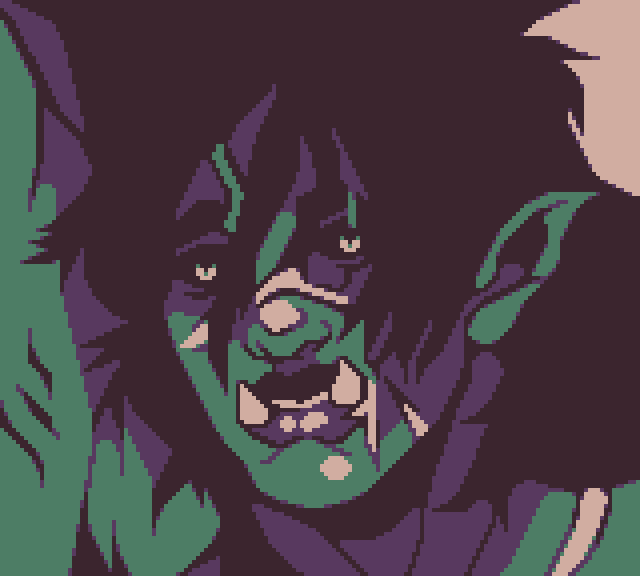
"Aren, Orc Warrioress" by Rohezk: Character art in a limited palette requires strong design principles. This submission would focus on distinctive silhouettes, clear armor or clothing details, and expressive facial features (even with minimal pixels). The challenge is to differentiate between skin, armor, and weapon textures using only four shades, ensuring the character’s strength and personality shine through, much like classic RPG sprites that conveyed rich detail with few pixels.
-
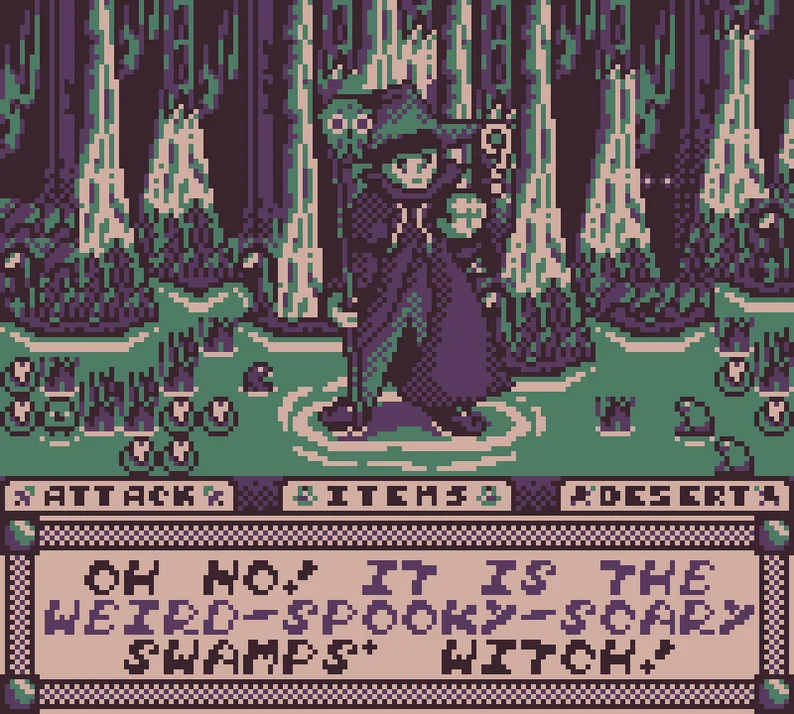
"Swamps’ witch" by BifStek: Combining character and environment, this piece likely portrays a figure within a specific, atmospheric setting. Depicting a swamp requires careful consideration of water, murky vegetation, and perhaps eerie light sources, all within the four-color constraint. The "witch" element would necessitate distinct character design, perhaps with magical elements subtly suggested through pixel effects, demonstrating how artists can build complex scenes and characters with a restricted color set.
These selections, along with the other 371 submissions, collectively illustrate the immense creativity that flourishes when artists are presented with a focused challenge and a supportive community.
Community Engagement and Organizer Perspectives
The GB Pixel Art Jam 2024’s success, evidenced by its substantial participation rate of 378 submissions, is a clear indicator of a thriving and engaged community dedicated to pixel art and retro gaming. Such numbers speak volumes about the event’s appeal and the strong desire among artists to test their skills against classic constraints. While no direct quotes were provided in the initial announcement, it is logical to infer positive reactions from both itch.io and the jam’s organizers.
An itch.io spokesperson might express satisfaction, stating, "We are consistently impressed by the ingenuity and passion demonstrated by creators utilizing our Jams feature. The GB Pixel Art Jam 2024 is a shining example of how a specific, creative challenge can unite a global community, fostering artistic expression and celebrating digital heritage. Events like this reaffirm our commitment to providing accessible platforms for independent creators." This would align with itch.io’s broader mission to empower independent developers and artists.
Similarly, the organizers of the GB Pixel Art Jam would likely voice profound gratitude and excitement. They might comment, "The overwhelming response to this year’s jam has been incredibly inspiring. Seeing 378 unique interpretations of the Game Boy aesthetic underscores the enduring power of these classic limitations to spark innovation. We are immensely proud of every artist who participated and are thrilled to compile their collective talent into a ROM that will serve as a lasting tribute to their creativity." This sentiment would reflect the dedication involved in organizing an annual event and the satisfaction of seeing it flourish. Participants, in turn, often cite the challenge, the supportive community, and the opportunity to hone their skills as key motivations, reinforcing the jam’s role as both an artistic proving ground and a social hub.
Broader Implications: Preserving Digital Heritage and Fostering Talent
The GB Pixel Art Jam 2024 is more than just an art competition; it represents a significant contribution to the preservation of digital heritage and the ongoing development of artistic talent. In an era dominated by high-fidelity graphics and expansive color palettes, events like this ensure that the distinct aesthetics and technical disciplines of retro gaming remain relevant and understood. They act as a living museum, continually reinterpreting and celebrating the foundational art forms of early digital entertainment.
From an educational standpoint, participating in such a jam offers invaluable experience. Artists learn to prioritize visual information, master color theory within severe limits, and develop an acute understanding of composition – skills transferable to any artistic medium. It encourages problem-solving and fosters a deep appreciation for the craft behind seemingly simple graphics.
Furthermore, these jams play a crucial role in community building. They create spaces where artists with shared interests can connect, exchange feedback, and inspire one another. This collaborative environment is vital for artistic growth and the formation of lasting professional relationships. The upcoming ROM compilation is a powerful symbol of this collective effort. It transforms individual submissions into a unified, interactive experience, offering not just a gallery but a playable piece of digital history. This format ensures that the artwork is not merely viewed but experienced in a manner consistent with its inspiration, further embedding the artists’ work within the context of retro gaming culture. Such initiatives highlight the potential for platforms like itch.io to foster niche art movements, push the boundaries of creative expression within specific constraints, and ultimately contribute to a richer, more diverse digital arts landscape. The continued success of the GB Pixel Art Jam points towards a vibrant future for retro-inspired artistry and community-driven creative endeavors.
About the Author