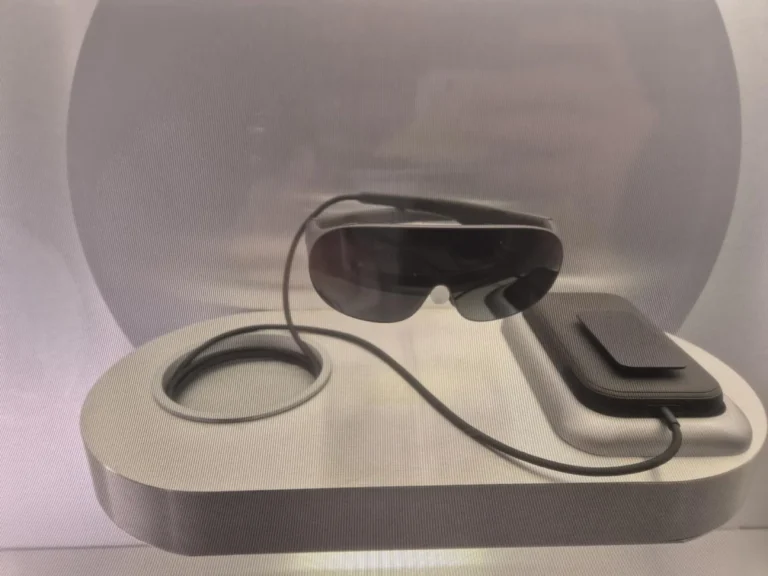
Meta Platforms Inc. is currently navigating a significant legal and reputational crisis following allegations of severe privacy breaches involving its Ray-Ban Meta smartglasses. The controversy stems from a report published by the Swedish investigative magazine Svenska Dagbladet, which revealed that images and videos captured by the device’s AI systems are being reviewed by human contractors in low-wage regions, including Kenya. These contractors, speaking under conditions of anonymity, reported viewing highly sensitive and private footage, including intimate moments and images of individuals in states of undress, often without the users’ knowledge or explicit consent for human oversight.
The fallout from these revelations has been immediate and multifaceted. In the United Kingdom, the Information Commissioner’s Office (ICO) has formally launched an investigation to determine if Meta’s data processing practices comply with national data protection laws. Simultaneously, in the United States, the Clarkson Law Firm has initiated a class-action lawsuit against the tech giant. The legal challenge focuses less on the technicality of data collection—which is often obscured in lengthy terms and conditions—and more on Meta’s marketing claims. The plaintiffs argue that Meta’s promotional language, which frequently utilizes slogans such as “designed for privacy” and “controlled by you,” constitutes deceptive trade practices when contrasted with the reality of human contractors viewing private domestic scenes.
Chronology of the Meta Privacy Controversy
The timeline of the current dispute highlights a growing friction between AI development needs and consumer privacy expectations. In early March 2026, the Svenska Dagbladet report first surfaced, detailing the working conditions and the nature of the content viewed by Kenyan contractors. Within days, digital rights advocacy groups began calling for transparency regarding Meta’s "human-in-the-loop" (HITL) processes used to train its multimodal AI. By the end of the week, the UK’s ICO issued its first statement regarding the investigation, and the U.S. class-action filing followed shortly thereafter.

Analysts suggest that while Meta may technically be covered by its user agreements, the reputational damage could be long-lasting. The industry is currently at a crossroads where consumer trust is the primary currency for face-worn wearables. If Meta cannot reconcile its "privacy-first" marketing with its AI training requirements, it risks losing market share to competitors like Apple, which has historically leveraged privacy as a core hardware feature.
Valve and Samsung Signal Hardware Milestones for 2026
While Meta deals with legal headwinds, other major players are refining their hardware release schedules. Valve Corporation has recently clarified the launch window for its highly anticipated "Steam Frame" hardware. Despite internal delays attributed to a global shortage of critical components, including high-performance RAM and specialized semiconductors, Valve reiterated in a recent corporate communication that the device remains on track for a 2026 release.
The Steam Frame, along with updated Steam Controller and Steam Machine listings, recently transitioned to a “coming soon” status on official digital storefronts. While Valve is notorious for its flexible development timelines—often referred to by the community as "Valve Time"—the update to the store pages suggests that the hardware design is finalized and the company is now moving into the production and logistics phase.
Concurrently, Samsung has confirmed its entry into the smartglasses market for late 2026. Developed in a high-profile partnership with Google and Qualcomm, the Samsung glasses are expected to utilize Qualcomm’s latest XR chipset and Google’s specialized Android-based micro-OS. Samsung executives have confirmed that the device will feature integrated cameras and will require a tethered connection to a smartphone for processing. This move signals Samsung’s intent to compete directly with Meta’s Ray-Ban line, potentially offering a more robust integration with the Android ecosystem.

Economic Volatility and Structural Shifts in VR Development
The extended reality (XR) sector continues to experience significant economic turbulence, characterized by both the emergence of new market entrants and the downsizing of established studios. nDreams, a prominent developer in the VR space, recently announced its third round of layoffs, resulting in the closure of two subsidiary studios: nDreams Compass and nDreams Near Light. The reduction affects approximately 78 employees across all levels of the organization, including senior leadership. This move reflects a broader trend in the gaming industry where studios are consolidating resources amidst a cooling venture capital environment and slower-than-expected consumer adoption of high-end VR headsets.
Conversely, the industry saw the launch of Evolution Publishing, a new firm dedicated to supporting XR developers. Led by industry veteran Kevin Joyce, formerly of VR Focus, Evolution Publishing aims to provide a lifeline for independent studios navigating the current market. The publisher has already secured a portfolio of three titles for 2026, including Darts VR2: Bullseye and the horror experience Affected: The Asylum.
In a related strategic shift, HTC has signaled a pivot away from the consumer "at-home" VR market. In recent communications, company spokespersons indicated that HTC is diversifying its XR portfolio to focus on enterprise solutions, location-based entertainment (LBE), and its "Viverse" metaverse platform. This transition suggests that HTC views the enterprise and professional sectors as more sustainable than the highly competitive and subsidized consumer hardware market dominated by Meta.
Technological Innovations in Privacy and Display
In direct response to the privacy concerns plaguing the industry, the startup Brilliant Labs has unveiled its "On-Device Privacy Engine" for the Halo smartglasses. Unlike Meta’s current architecture, which relies on cloud-based processing for many AI tasks, Brilliant Labs claims that all video and audio data captured by the Halo glasses will be processed locally on the user’s mobile device. This approach eliminates the need for cloud uploads, effectively bypassing the risk of human review by third-party contractors and providing a potential blueprint for future privacy-centric wearables.

On the hardware innovation front, VividQ has announced "Starfish AR," a 3D light engine designed for wearable displays. The technology aims to provide "true AR" by using high-performance holographic projections that allow digital objects to sit naturally within the user’s field of view with correct focal depth. This addresses one of the primary technical hurdles in AR—vergence-accommodation conflict—which often causes eye strain in current-generation devices.
Broader Industry Implications and Future Outlook
The events of early 2026 illustrate an industry in a state of rapid evolution. The legal scrutiny facing Meta highlights the urgent need for standardized privacy regulations concerning wearable cameras and AI training. As devices become more integrated into daily life, the tension between data-hungry AI models and the sanctity of the private home will likely become a central theme in tech litigation.
Furthermore, the hardware roadmaps for 2026—involving Valve, Samsung, and Google—suggest that the next two years will see a transition from experimental wearables to more mature, ecosystem-driven products. The shift toward local processing, as seen with Brilliant Labs, and the enterprise focus of companies like HTC, indicate that the XR market is fragmenting into specialized niches: privacy-conscious consumers, high-end gamers, and industrial enterprise users.
As the industry moves forward, the success of these platforms will depend not only on technical specifications but on the ability of manufacturers to provide transparent data governance. The forthcoming 2026 hardware cycle will likely serve as a definitive test for whether XR can move beyond its current "early adopter" phase into a stable, mainstream consumer category.
About the Author