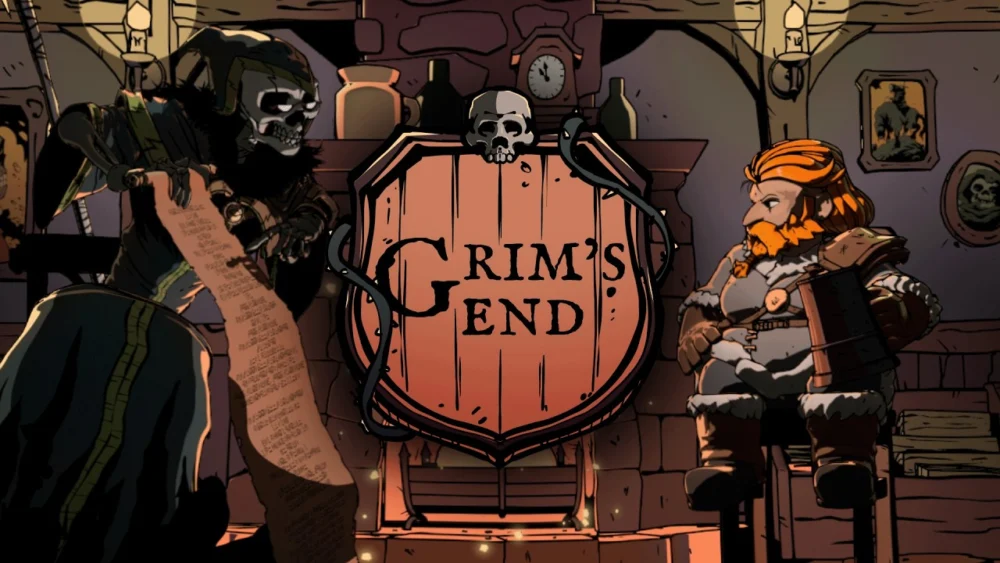
A compelling proof of concept video, "Grim’s End," has emerged from the digital artistry of Nixin, showcasing a distinctive cell-shaded aesthetic applied to 3D character animation. The project, which centers on a dark narrative set in a foreboding wilderness inn, has garnered attention for its artistic execution and technical demonstration of Blender’s capabilities. The video, embedded above, offers a glimpse into a narrative that juxtaposes the supernatural with the mundane drudgery of contractual obligations, all rendered with a visually arresting style.
The Narrative Premise: A Descent into Grim’s End
The narrative of "Grim’s End" plunges viewers into a desolate and perilous environment known as the Howling Woods. This perpetual winter landscape is characterized by unrelenting snow and chilling winds, creating an atmosphere of isolation and dread. Within this unforgiving terrain lies Grim’s End, an inn described as a sanctuary for the deceased. Far from offering genuine solace, the inn functions as a deceptive lure, drawing in lost and vulnerable souls with the promise of refuge from the storm. The true purpose of this apparent shelter is revealed to be a mechanism for ensnaring these weary travelers, compelling them to sign away their lives to an unseen entity for reasons that remain obscure to all involved.
The central character, Hilde, finds herself facing the grim reality of her predicament. While the prospect of confronting death at Grim’s End is undeniably unpleasant, the video suggests that the bureaucratic intricacies of the contracts she must sign are a source of even greater despair, making her wish for oblivion more profound than the existential threat itself. This narrative choice injects a darkly humorous and relatable element into the supernatural horror, highlighting the absurdities that can accompany even the most dire circumstances.
Artistic Vision and Technical Execution
Nixin’s creative direction for "Grim’s End" is deeply rooted in a visually distinctive approach, employing a cell-shaded aesthetic that mimics the look of traditional 2D animation. This style is particularly evident in the character models, which were meticulously crafted by Nixin themselves using the powerful 3D creation suite, Blender. The success of the visual execution hinges on a sophisticated combination of techniques.
The project leverages hand-drawn grease pencil lines, a feature within Blender that allows for 2D drawing directly within the 3D environment. These lines are instrumental in defining the expressive contours and details of the characters, imbuing them with a hand-crafted feel. Complementing the grease pencil work is the strategic application of Blender’s outline modifier. This modifier is employed to generate crisp silhouettes, a hallmark of the cell-shaded look, ensuring that the characters possess a strong visual presence and clarity against their backgrounds. The integration of these two techniques results in a unique hybrid visual style that bridges the gap between 2D and 3D animation, offering a fresh perspective on character design and rendering.
Development Context and Timeline
While specific details regarding the development timeline for "Grim’s End" have not been publicly disclosed, proof of concept projects of this nature typically represent a focused effort by an individual or a small team to explore a particular artistic or technical direction. Such endeavors often precede larger, more ambitious productions, serving as a vital testing ground for concepts, workflows, and visual styles.
The creation of the character models in Blender, a process that can be time-consuming depending on complexity, suggests that Nixin has dedicated a significant amount of effort to the foundational elements of the project. The subsequent integration of animation and rendering, even for a short proof of concept, would likely involve iterative refinement to achieve the desired visual fidelity and narrative impact. The emergence of this video indicates that these developmental stages have reached a point where Nixin is ready to share their work and solicit feedback or gauge interest in further development.
The Significance of Cell Shading in 3D Animation
The adoption of cell shading, also known as toon shading, in 3D animation has been a gradual but impactful trend within the industry. This technique aims to replicate the visual appearance of traditional cel animation, characterized by flat colors, distinct outlines, and a reduction in smooth shading gradients. The appeal of cell shading lies in its ability to evoke a sense of nostalgia for classic cartoons while simultaneously offering a modern, stylized aesthetic for digital content.

Early examples of cell shading in mainstream media can be traced back to the late 1990s and early 2000s, with notable titles like "The Legend of Zelda: The Wind Waker" (2002) on the Nintendo GameCube popularizing the style in video games. In animation, films like "Spider-Man: Into the Spider-Verse" (2018) and its sequel "Spider-Man: Across the Spider-Verse" (2023) have pushed the boundaries of what is possible with stylized 3D animation, incorporating a rich tapestry of comic book aesthetics, including strong linework and dynamic visual effects, which share thematic similarities with cell shading.
The technical implementation of cell shading in 3D software like Blender has become increasingly sophisticated. Beyond simple outline modifiers, artists can now employ advanced shader networks and rendering techniques to achieve nuanced and stylized looks. Nixin’s approach, combining grease pencil with outline modifiers, demonstrates a practical and effective method for achieving a compelling cell-shaded effect within Blender, making it an accessible option for independent animators and studios alike.
Potential Implications and Future Directions
The successful creation of a visually engaging proof of concept like "Grim’s End" has several potential implications for Nixin and the broader animation community. For Nixin, it serves as a powerful portfolio piece, demonstrating their proficiency in 3D modeling, character design, and stylized rendering using industry-standard tools. This could lead to opportunities for collaboration on larger animation projects, feature films, or television series that embrace similar artistic sensibilities.
Furthermore, the project contributes to the growing body of work that showcases the versatility of Blender as a professional animation tool. As Blender’s capabilities continue to expand and its user base grows, more independent creators and smaller studios are leveraging its power to produce high-quality content. "Grim’s End" stands as an example of how artists can achieve unique and compelling visual styles without necessarily relying on prohibitively expensive proprietary software.
The narrative premise itself, with its blend of supernatural horror and mundane bureaucracy, offers fertile ground for further exploration. A full-length animated short or even a feature film based on "Grim’s End" could delve deeper into the lore of the Howling Woods, the nature of the invisible force to which souls are bound, and Hilde’s attempts to navigate her predicament. The cell-shaded aesthetic would undoubtedly enhance the atmospheric storytelling, making the dark and mysterious world of Grim’s End all the more immersive.
Community and Industry Reactions (Inferred)
While direct quotes from industry professionals or the broader animation community regarding "Grim’s End" are not available at this time, the emergence of such a project on platforms dedicated to 3D art and animation typically elicits positive and encouraging responses. Artists often share their work to receive constructive feedback, gain exposure, and connect with like-minded individuals.
Based on the quality of the visual execution and the intriguing narrative concept, it can be inferred that Nixin’s work would likely be met with appreciation for its artistic merit and technical skill. The use of Blender for such a polished result would also likely be a point of discussion and admiration among users of the software. Developers of 3D software often monitor community projects to understand user needs and identify emerging trends, making well-executed proofs of concept valuable feedback for software development.
Conclusion: A Promising Display of Artistic and Technical Prowess
Nixin’s "Grim’s End" proof of concept stands as a testament to the creative potential that can be unlocked with dedicated artistry and proficient use of powerful 3D software. The project not only delivers a visually striking presentation through its innovative cell-shaded aesthetic but also hints at a compelling narrative that blends dark fantasy with a touch of relatable human frustration. As a demonstration of character modeling and rendering within Blender, it showcases the viability of independent artists in producing professional-grade animation. The continued exploration of such stylized approaches in 3D animation promises to diversify the visual landscape of digital storytelling, and "Grim’s End" is a notable contribution to this evolving field.
About the Author