HTC has formally addressed ongoing industry speculation regarding the future of its Vive brand, clarifying that the company remains deeply committed to the extended reality (XR) sector despite a perceived slowdown in consumer hardware releases. In a series of official statements, a company spokesperson emphasized that HTC’s business model has evolved into a multi-faceted ecosystem encompassing specialized hardware, 5G infrastructure, and spatial computing software. This clarification comes at a critical juncture for the XR market, as competitors like Meta and Apple pivot toward mixed reality and lightweight wearables, prompting questions about whether traditional high-end virtual reality (VR) manufacturers can maintain their market relevance.
The discourse surrounding HTC’s potential exit from the VR space has gained momentum in recent months, fueled by the absence of a direct successor to the Vive Focus 3 or Vive Pro 2 in the high-volume consumer segment. Industry analysts have pointed to the 2017 sale of a significant portion of HTC’s smartphone engineering team to Google as a historical precursor to concerns about the company’s long-term hardware ambitions. However, HTC officials have dismissed these concerns, stating that the company continues to see a "bright future for XR and immersive technology," though the nature of that future may differ significantly from the early days of the PC-tethered VR boom.
A Chronology of Strategic Evolution
To understand HTC’s current position, it is necessary to examine the company’s trajectory within the XR landscape. Since the launch of the original HTC Vive in 2016—a product developed in partnership with Valve—the company has shifted from a consumer-centric approach to a specialized enterprise and professional focus.

- 2016–2018: Early market leadership with the Vive and Vive Pro, establishing a dominant position in high-fidelity, room-scale VR.
- 2019–2021: Introduction of the Vive Focus series, signaling a move toward standalone enterprise hardware and the phasing out of consumer-grade smartphone production.
- 2022–2023: Launch of the Vive XR Elite and the expansion of the Viverse, HTC’s proprietary metaverse platform.
- 2024–Present: A strategic shift toward "Vive Eagle" AI smartglasses and deep integration with 5G edge computing via the G-REIGN division.
This timeline illustrates a move away from the "headset-only" identity that characterized the brand’s inception. The company now operates across several distinct business units, including Vive Arts, Vive X (its global accelerator), and G-REIGN, which focuses on industrial 5G applications.
The Pivot to AI-Integrated Wearables: Vive Eagle
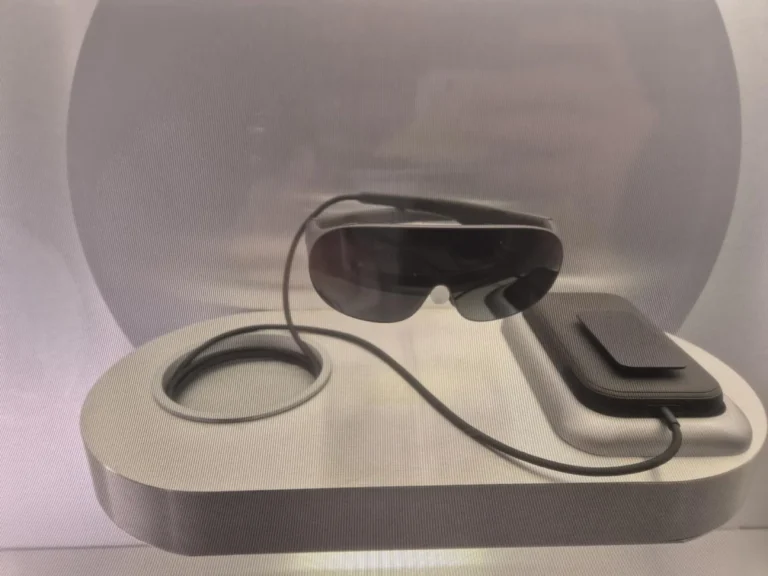
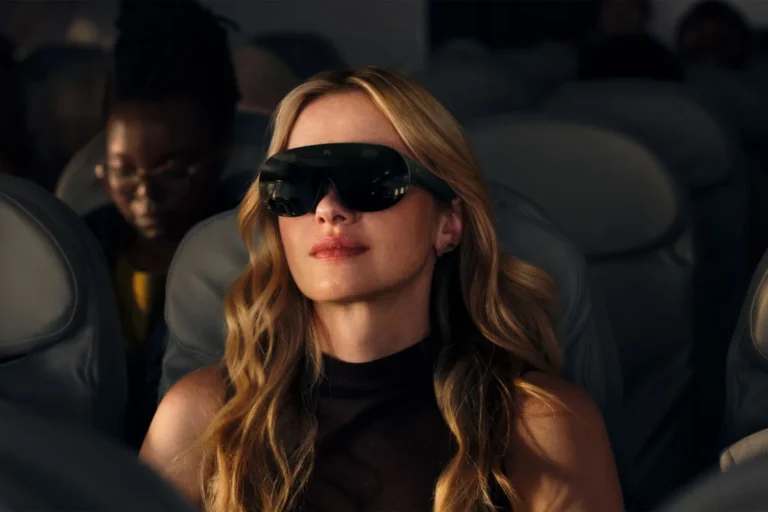
One of the most significant indicators of HTC’s new direction is the announcement of the Vive Eagle smartglasses. Unlike the Meta Ray-Ban glasses, which are targeted primarily at the consumer social media market, the Vive Eagle is positioned as an enterprise-grade tool for AI integration. A key differentiator for HTC in this space is the support for on-premises Large Language Models (LLMs).
In professional environments—particularly in sectors like healthcare, defense, and high-tech manufacturing—data privacy is a paramount concern. By allowing companies to run custom LLMs on their own servers rather than routing data through third-party clouds like Meta AI or Google Gemini, HTC is catering to a specific B2B niche. The company confirmed that it is currently rolling out Vive Eagle across global regions, viewing the device as a foundational step toward the eventual convergence of AR and VR into lightweight, all-day wearable glasses.
Infrastructure and the Role of 5G G-REIGN
HTC’s strategy is also heavily predicated on the advancement of network infrastructure. The company’s G-REIGN division has become a central pillar of its XR business, focusing on the deployment of private 5G networks that can handle the massive data throughput required for high-fidelity XR rendering.

According to company representatives, the "heavy lifting" of graphical processing must eventually move off the wearable device and into the cloud or edge servers. By utilizing 5G and high-capacity Wi-Fi, HTC aims to reduce the physical footprint of future headsets. If the rendering is handled remotely, the hardware on the user’s head can become significantly smaller, cooler, and more ergonomic. This infrastructure-first approach suggests that HTC is preparing for a future where the device is merely a thin client for a much larger cloud-based spatial computing network.
Sustained Dominance in Location-Based Entertainment (LBE)
While the consumer VR market has faced volatility, the Location-Based Entertainment (LBE) sector remains a stronghold for the Vive brand. HTC continues to dominate this space, providing hardware and software solutions for museums, theme parks, and cultural institutions.
Recent successes in this department include "La Magie Opéra," which received the Best Visual Experience award at the XR Awards, and "Playing With Fire" at the Paris Philharmonie. To support these partners, HTC has maintained a steady cadence of software updates. A notable recent addition is an optimized "wheelchair mode," designed to enhance accessibility in large-scale VR installations. Partners such as Excurio have reported robust ticket sales for these immersive experiences, reinforcing the financial viability of HTC’s specialized enterprise hardware in the cultural sector.
Financial Indicators and Ecosystem Investment
Contrary to rumors of a financial retreat, HTC remains an active investor in the XR ecosystem. The company was recently identified as the lead investor in a $6 million funding round for Atlas V, a renowned creative studio specializing in immersive storytelling. This follows a long history of strategic investments through the Vive X accelerator, which has supported companies like VRChat, ENGAGE, and the neurotechnology firm Neurable.

Investment analysts suggest that these capital injections are a clear signal of corporate health. A company preparing for liquidation or a market exit rarely commits multi-million dollar sums to external content creators. Instead, these moves suggest HTC is attempting to secure a pipeline of high-quality content for its Viverse platform.
Viverse and the Creator Economy
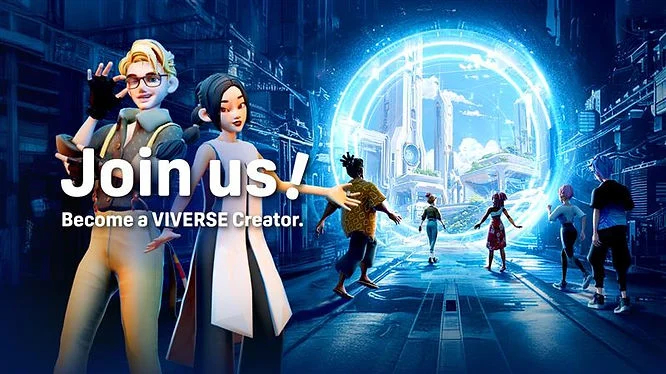
The Viverse platform itself is undergoing a significant transformation. HTC recently announced that the platform would expand its capabilities to include native video hosting and application support. Perhaps more importantly, the company has introduced a new monetization model for creators. Departing from traditional ad-based revenue, the new system ties creator compensation directly to content engagement and view counts.
This shift is intended to attract professional developers and digital artists who have become disillusioned with the low margins of traditional social VR platforms. By porting successful LBE projects—such as "Versailles: Lost Gardens of the Sun King"—directly into the Viverse, HTC is attempting to bridge the gap between physical installations and home-based spatial computing.
Market Analysis: The Future of Vive Hardware
Despite the robust activity in software and enterprise services, the question of a next-generation consumer VR headset remains unanswered. HTC’s official communications have notably avoided confirming the development of a "Vive Focus 4" or a "Vive Pro 3."

In the broader context of the XR industry, this silence is telling. As Meta continues to subsidize its Quest line to capture the mass market, and Apple targets the ultra-premium "prosumer" segment with the Vision Pro, the middle ground for high-end PC VR has shrunk. HTC’s emphasis on "multiple business units" and "lightweight form factors" suggests that the company may be moving away from the bulky, high-performance headsets that defined its early years.
Industry analysts posit that HTC is likely waiting for a technological breakthrough in micro-OLED displays or battery efficiency before committing to a new flagship headset. In the interim, the company appears content to service its existing enterprise client base while pivoting its research and development toward the burgeoning smartglasses and AR sector.
Implications for the XR Industry
HTC’s evolution reflects a broader trend in the technology sector: the shift from "Virtual Reality" as a gaming peripheral to "Spatial Computing" as an enterprise utility. While the lack of a new consumer headset may disappoint early adopters and VR enthusiasts, the company’s focus on 5G, AI privacy, and accessibility features positions it as a critical infrastructure provider for the next decade of immersive tech.
As the market moves toward convergence, HTC’s survival will likely depend on its ability to integrate these disparate elements—hardware, network, and platform—into a cohesive ecosystem that provides tangible value to the B2B sector. For now, the "Vive is dead" narrative appears to be an oversimplification of a company that is fundamentally reinventing its role in the digital landscape.
About the Author