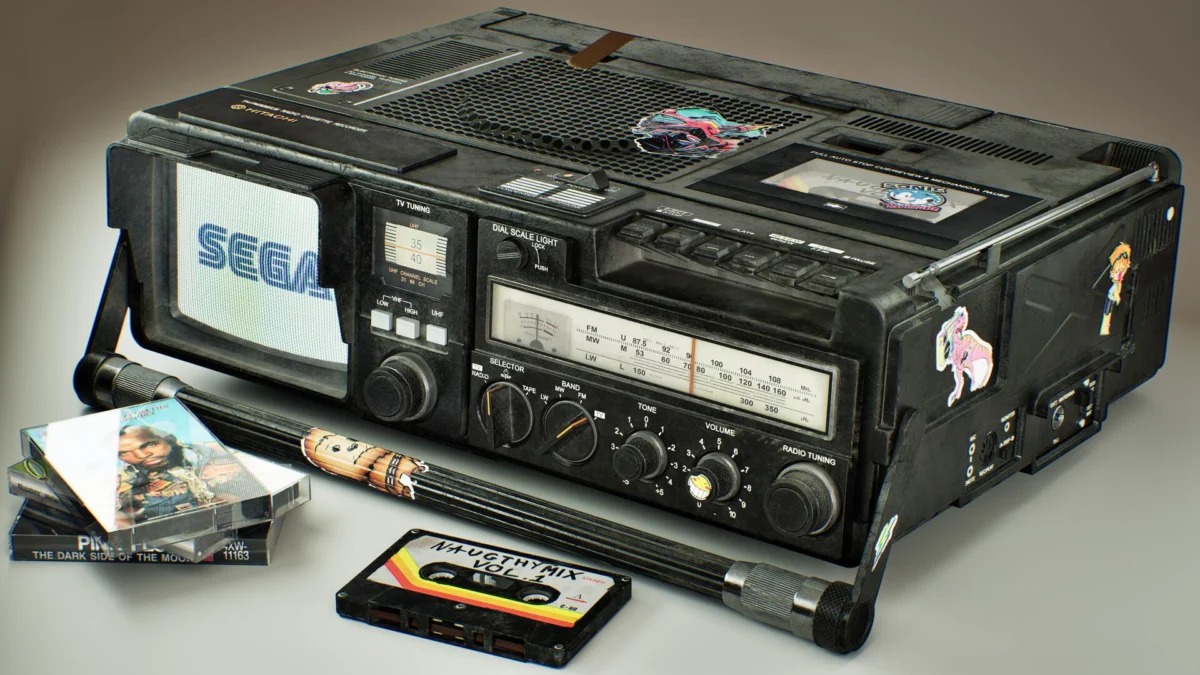
The digital art community is abuzz with admiration for a meticulously crafted 3D rendition of the Hitachi K-50L/70S, a project that has recently captured significant attention within the Blender ecosystem. This detailed visualization, shared on the Blender Artists forum by an undisclosed artist, exemplifies the remarkable capabilities of modern 3D modeling and rendering software, specifically Blender, a powerful open-source program that continues to democratize professional-grade digital creation. The project, which focuses on the intricate details of vintage audio equipment, serves as a compelling testament to the dedication and technical prowess of 3D artists worldwide.
A Deep Dive into the Hitachi K-50L/70S Recreation
The core of this artistic endeavor lies in the faithful and highly detailed recreation of the Hitachi K-50L/70S, a respected piece of audio engineering from a bygone era. The original Hitachi K-50L/70S, a cassette deck, was known for its robust build quality and sound fidelity, making it a sought-after item among audiophiles and collectors. This 3D model goes beyond a simple visual representation; it captures the essence of the physical object through precise modeling of its various components, including the delicate mechanisms, the textured surfaces of the casing, and the iconic control knobs and buttons.
The artist’s commitment to accuracy is evident in the subtle nuances of the design. The brushed metal textures, the reflective surfaces of the display, and the subtle wear and tear that might be present on a well-loved piece of vintage equipment are all rendered with exceptional realism. This level of detail is not merely for aesthetic appeal; it speaks to a deeper understanding and appreciation of the original object, transforming a static digital model into a piece that evokes a sense of nostalgia and respect for its historical context.
The Blender Ecosystem: A Hub for Digital Artistry
The sharing of such high-caliber work on the Blender Artists forum underscores the platform’s vital role in the global 3D art community. BlenderArtists.org, established in 2006 by Bart van der Molen, has grown into one of the largest and most active online communities dedicated to Blender users. It serves as a crucial nexus for artists to showcase their portfolios, solicit feedback, exchange techniques, and discover emerging talent. The weekly "Blender Artists Spotlight" feature, curated by van der Molen himself, brings exceptional projects to a wider audience, highlighting the diverse applications of Blender across various industries, from architectural visualization and product design to character animation and visual effects.
The journey of Blender itself is a remarkable story of open-source collaboration and innovation. Originally developed by the Dutch animation studio NeoGeo, it was later acquired by Not a Number (NaN). When NaN faced financial difficulties in 2002, the company’s founder, Ton Roosendaal, initiated a groundbreaking crowdfunding campaign to purchase the software’s source code and make it freely available to the public. This pivotal moment not only saved Blender but also ignited a global movement that has propelled it to the forefront of 3D creation software. Today, Blender boasts a vast and dedicated community of developers, artists, and educators who contribute to its continuous evolution, making it a powerful and accessible tool for creators of all levels.
Technical Prowess and Artistic Vision

The creation of the Hitachi K-50L/70S model likely involved a sophisticated workflow within Blender. This would typically include:
- High-Polygon Modeling: Building the complex geometry of the cassette deck with a high level of detail to ensure accurate proportions and intricate features. This often involves techniques like subdivision surface modeling to achieve smooth curves and refined shapes.
- Texturing and Material Creation: Applying realistic materials to simulate different surfaces such as brushed metal, plastic, glass, and rubber. This process involves using texture maps (diffuse, specular, normal, roughness) to define the visual properties of each surface, making them appear lifelike under various lighting conditions.
- UV Unwrapping: A crucial step in texturing, where the 3D model’s surface is flattened into a 2D representation, allowing textures to be applied accurately without distortion.
- Lighting and Rendering: Setting up a lighting environment that accentuates the model’s form and highlights its details. Blender’s powerful Cycles and Eevee render engines are capable of producing photorealistic results, simulating the behavior of light in the real world. The choice of render engine often depends on the desired level of realism and render time constraints. Cycles, a path tracer, excels at photorealism, while Eevee, a real-time render engine, offers faster iteration and animation previews.
- Post-Processing: Further enhancing the rendered image through compositing and color correction in software like Blender’s compositor or external applications like Adobe Photoshop. This stage allows for fine-tuning of contrast, color balance, and the addition of subtle effects like bloom or depth of field to achieve a polished final look.
The success of this project lies in the artist’s ability to combine technical mastery with a keen artistic eye. The choice of the Hitachi K-50L/70S itself suggests an appreciation for analog audio technology and its aesthetic appeal. Such projects often resonate with audiences who share a passion for vintage technology, adding an emotional layer to the digital artwork.
Broader Implications for the Digital Art and Design Industries
The proliferation of such high-quality 3D recreations has significant implications for various industries:
- Product Visualization and Marketing: Companies can leverage these skills for creating hyper-realistic product renders for marketing campaigns, e-commerce websites, and virtual showrooms. This allows potential customers to experience products in detail before they are even manufactured or released, reducing the need for expensive physical prototypes and photo shoots.
- Archival and Restoration Projects: The ability to meticulously recreate historical objects in 3D can be invaluable for museums, archives, and historical societies. These digital models can serve as virtual replicas for educational purposes, preservation efforts, or even for recreating lost or damaged artifacts.
- Education and Training: Detailed 3D models of complex machinery, like the Hitachi K-50L/70S, can be used as powerful educational tools. Students can explore the internal mechanisms, understand the principles of operation, and learn about the design evolution of such devices in an interactive and engaging manner.
- The Creator Economy: Projects like this contribute to the burgeoning creator economy. Artists can monetize their skills through commissions, freelance work, selling 3D assets, or creating educational content. The accessibility of powerful tools like Blender empowers individuals to build successful careers in digital arts and design.
The ongoing development of Blender, fueled by its open-source nature and active community, ensures that such sophisticated artistic achievements will continue to proliferate. Features such as real-time rendering capabilities, advanced shader nodes, and robust modeling tools constantly push the boundaries of what is possible, enabling artists to translate their visions into stunning digital realities with increasing ease and efficiency.
The Community’s Reaction and Future Trends
While specific reactions to this particular Hitachi K-50L/70S model are not detailed in the original snippet, it is highly probable that the project received considerable positive feedback within the Blender Artists forum and related social media channels. Such detailed and passion-driven projects typically garner widespread appreciation for the artist’s skill, dedication, and the nostalgic appeal of the subject matter. Comments often revolve around the accuracy of the details, the quality of the lighting and materials, and the overall presentation.
The trend towards hyper-realistic recreations of everyday objects, historical artifacts, and even fictional elements is a strong indicator of the evolving landscape of digital art. Artists are increasingly using 3D software not just for animation or visual effects but as a primary medium for artistic expression and documentation. The ability to capture the tangible qualities of physical objects in a digital space opens up new avenues for creativity and engagement.
As technology advances, we can anticipate even more intricate and photorealistic 3D creations becoming commonplace. The ongoing improvements in real-time rendering, AI-assisted texturing, and procedural generation techniques will further empower artists to bring their most ambitious projects to life. The Hitachi K-50L/70S model stands as a shining example of what can be achieved through dedication, skill, and the powerful, democratized tools available in the Blender ecosystem. It’s a reminder that art, in its many forms, continues to evolve, finding new mediums and new ways to captivate and inspire audiences globally. The digital canvas is ever-expanding, and artists like the creator of this Hitachi K-50L/70S are at the forefront, pushing its boundaries with every meticulously crafted polygon.
About the Author