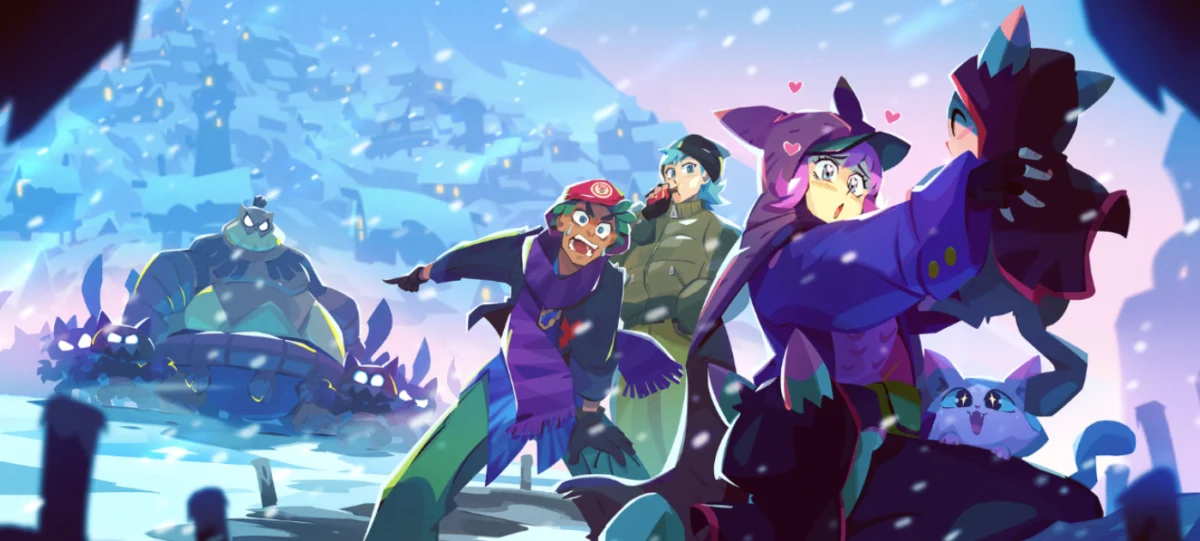
Supercell, the Helsinki-based mobile gaming powerhouse, has officially announced that its latest monster-hunting title, Mo.co, is retreating from its current live-service trajectory to return to a beta development phase. This strategic pivot follows an internal assessment concluding that the game is failing to meet the high performance and engagement standards synonymous with the Supercell brand. The decision marks a significant shift for the project, which was once positioned as a potential pillar in Supercell’s portfolio of global hits. In an official communication shared via the Mo.co developer blog, the company admitted that the title requires fundamental structural changes to achieve the "mass appeal" necessary for a full commercial scale-up.
The transition back to beta implies a drastic reduction in active operations. Supercell confirmed that Mo.co will henceforth run on a "low maintenance" schedule. This means the cessation of new content drops, including the cancellation of upcoming weapon releases and premium battle pass tracks. Players remaining in the ecosystem will see "recycled" content and merchandise from previous seasons as the skeleton crew shifts its focus from live-service upkeep to core mechanical redesigns. This move is characterized by the development team as a necessary "step back" to facilitate a more aggressive iteration process, with the ultimate goal of launching a more robust version of the game before the end of 2026.
Strategic Realignment and the Supercell Quality Bar
Supercell’s reputation in the mobile gaming industry is built upon a ruthless adherence to quality, often referred to internally as the "Supercell Quality Bar." The company is famous for "killing" projects that show even the slightest hint of mediocrity, regardless of how much capital or time has been invested. Titles like Clash Quest, Hay Day Pop, and the high-profile Clash Mini were all shuttered after failing to demonstrate long-term viability during soft-launch phases.
The decision to move Mo.co back to beta, rather than terminating it entirely, suggests that Supercell still perceives a kernel of potential in the monster-hunting concept. However, the admission that the game is "not performing as well as hoped" indicates a mismatch between the current gameplay loop and player retention metrics. By returning to a beta state, the developers aim to increase the frequency of updates and reduce the bureaucratic overhead associated with maintaining a live global product. This environment is intended to allow for "radical experimentation" without the immediate pressure of maintaining a consistent revenue stream from a dissatisfied player base.
A Comprehensive Chronology of Mo.co Development
The journey of Mo.co has been a turbulent one, marked by several shifts in distribution strategy and game design. The project first entered the public consciousness in October 2023, when Supercell initiated limited beta testing to gauge interest in a mobile-first, cooperative monster-hunting experience. Unlike the dark, gritty aesthetic of Capcom’s Monster Hunter series, Mo.co adopted a vibrant, urban-fantasy art style, focusing on "gadgets" and "hunting teams" in a contemporary setting.
Following positive initial feedback from the core testing group, Supercell moved toward a wider rollout. In March 2025, the game was launched worldwide via an invite-only system. This phased approach was designed to stress-test servers while maintaining an air of exclusivity and controlled community growth. By July 2025, the "catch" of the invite-only system was removed, and Mo.co became fully playable for all users globally.
However, the momentum failed to sustain itself. By May 2026, Supercell attempted a "reboot" of the title, introducing new seasonal structures and free "gacha" mechanics to stimulate the in-game economy and improve daily active user (DAU) numbers. By August 2026, the company’s tone shifted further. Executives publicly acknowledged that the game was underperforming and floated the possibility of a second reboot or even cancellation. While the company maintained that killing the title remained an "unlikely scenario," the current move back to beta represents the most severe intervention in the game’s lifecycle to date.
Revenue and Engagement Data Analysis
Data provided by industry analytics firm Appmagic offers a clearer picture of the financial hurdles Mo.co has faced. Since its invite-only debut in early 2025, the game has generated approximately $7 million in lifetime in-app purchase (IAP) revenue. While $7 million is a significant figure for many independent studios, it is considered underwhelming for a Supercell production, especially when measured against the 9.2 million downloads the game has accrued.
The revenue-to-download ratio reveals a low Average Revenue Per User (ARPU) of roughly $0.76. For a mid-core action RPG (ARPG) that relies on deep monetization of equipment and upgrades, these figures suggest that the game’s "monetization funnel" is inefficient or that the core gameplay loop is failing to incentivize long-term spending.
A breakdown of the top markets by revenue shows a heavy reliance on a few key territories:
- United States: 27% of lifetime IAPs
- Japan: 12%
- Germany: 7%
- France: 6%
- South Korea: 5%
The relatively low contribution from South Korea and Japan—markets typically known for high spending in the monster-hunting and ARPG genres—indicates that Mo.co struggled to capture the "hardcore" audience that drives the success of competitors like Niantic’s Monster Hunter Now.
Personnel Shifts and Community Impact
The transition to a "low maintenance" beta has immediate implications for the game’s operational staff. Joao, the prominent community manager for Mo.co, revealed via social media platform X that he is being redeployed to a different role within Supercell. The company determined that a title in a dormant beta stage no longer requires a full-time community management presence.
This reassignment is often a precursor to a "sunsetting" period, though Supercell insists this is a pivot toward development rather than an exit. For the player community, the loss of a dedicated liaison suggests a period of relative silence. The team has stated there is no firm date for the next major update, though they have set a broad target of late 2026 for a potential re-emergence. This 18-to-24-month window suggests that the "big changes" mentioned by the developers may involve a total overhaul of the game’s engine, progression systems, or even its fundamental genre classification.
The Competitive Landscape of Mobile Monster Hunting
Mo.co’s struggle cannot be viewed in isolation from the broader mobile gaming market. The "monster hunting" sub-genre has become increasingly competitive. Niantic’s Monster Hunter Now, which utilizes augmented reality (AR) and a world-renowned IP, has dominated the space since its 2023 launch. By leveraging the existing Monster Hunter fan base and the location-based mechanics perfected in Pokémon GO, Niantic created a high-engagement environment that likely siphoned off potential Mo.co players.
Furthermore, the rise of high-fidelity ARPGs like Genshin Impact and Zenless Zone Zero has raised player expectations for mobile combat systems and narrative depth. Mo.co’s more casual, "gadget-based" approach may have been perceived as too simplistic for the current market, or perhaps too complex for the hyper-casual audience Supercell often targets with titles like Squad Busters.
Analysis of the "Beta" Label as a Strategic Tool
In the modern mobile landscape, the term "beta" is often used elastically. For Supercell, returning a live game to beta is a way to manage expectations while protecting the brand’s financial health. By cutting "premium tracks" and new weapon development, Supercell significantly reduces the "burn rate" (monthly operating costs) of the project.
This move also allows the company to avoid the negative PR associated with a total shutdown. If the developers can find a "fun-first" breakthrough during this quiet period, the game can be relaunched with a fresh marketing blitz. If they cannot, the game can be quietly phased out in 2026 with less fanfare than a mid-hype cancellation would generate. The "one step back, two steps forward" philosophy is a gamble on the creative team’s ability to rediscover the "Supercell magic" that turned titles like Brawl Stars from struggling betas into multi-billion dollar franchises.
Future Outlook and Implications for Supercell
The situation with Mo.co highlights the increasing difficulty of launching new IPs in a saturated mobile market. Even a company with the resources and pedigree of Supercell is not immune to the "hits-driven" nature of the industry. The 2026 timeline for a new update suggests that Supercell is willing to be patient, but it also places Mo.co in a precarious position where it must compete with the next generation of mobile hardware and software.
Industry observers will be watching closely to see if Mo.co can replicate the "Phoenix-like" recovery of Brawl Stars—which underwent a massive perspective shift from portrait to landscape mode during its own extended beta—or if it will join the graveyard of ambitious projects that couldn’t quite reach the mass-market threshold. For now, Mo.co remains in a state of developmental hibernation, a cautionary tale of the challenges inherent in innovating within the highly volatile ARPG sector.
About the Author