The independent game distribution platform itch.io has rolled out a series of substantial updates to its desktop application, introducing versions v26.15.0 and v26.17.0, followed by a critical hotfix, v26.18.0, to address a macOS-specific crashing issue. These enhancements represent a concentrated effort to address long-standing community requests and improve the overall user experience, particularly concerning the management of extensive game bundles, per-game launch configurations, and broader platform compatibility. The updates underscore itch.io’s commitment to providing a robust and flexible environment for both players and independent developers within its unique ecosystem, solidifying its position as a vital hub for indie game discovery and distribution.
Enhanced Bundle Integration Transforms User Libraries
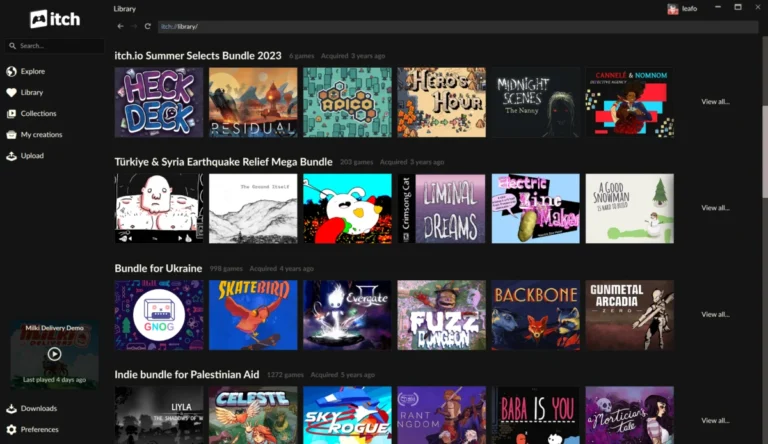
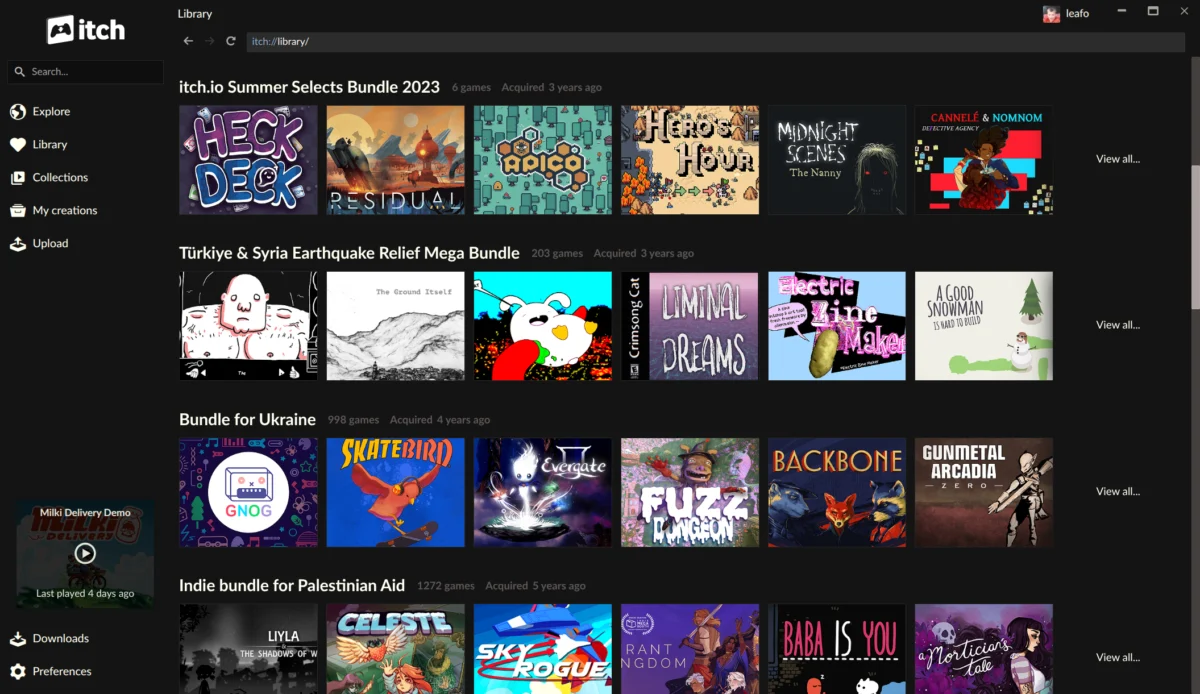
One of the most impactful changes introduced in these updates is the complete overhaul of how game bundles are integrated into the user’s library. Previously, games acquired through itch.io’s often massive and highly successful bundles, such as the "Bundle for Racial Justice and Equality" or the "Bundle for Ukraine," would not appear directly in the app until each individual title was manually claimed via the website. This process proved cumbersome for users who had purchased bundles containing hundreds or even thousands of games, significantly hindering discoverability and ease of access within the desktop client.
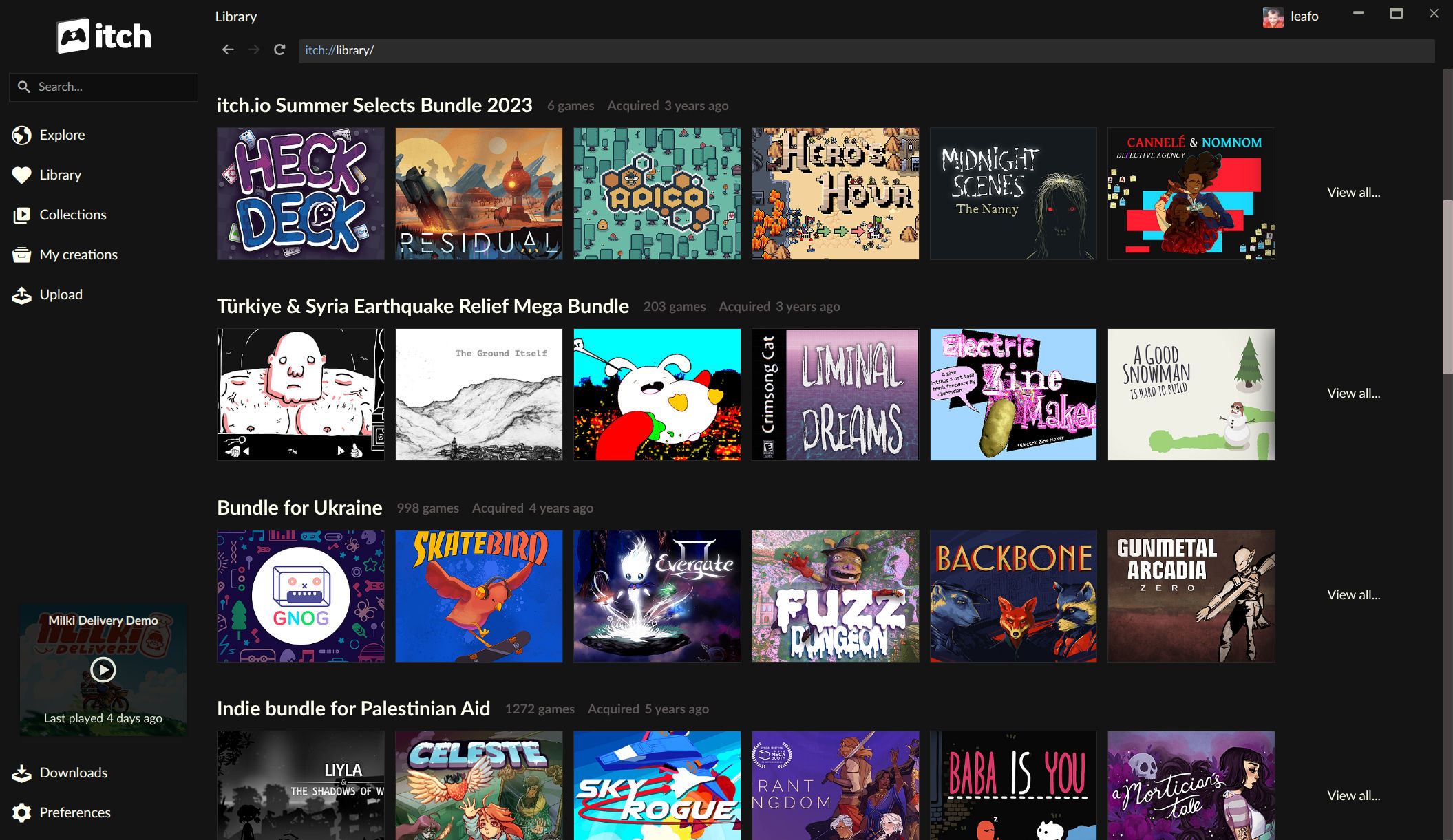
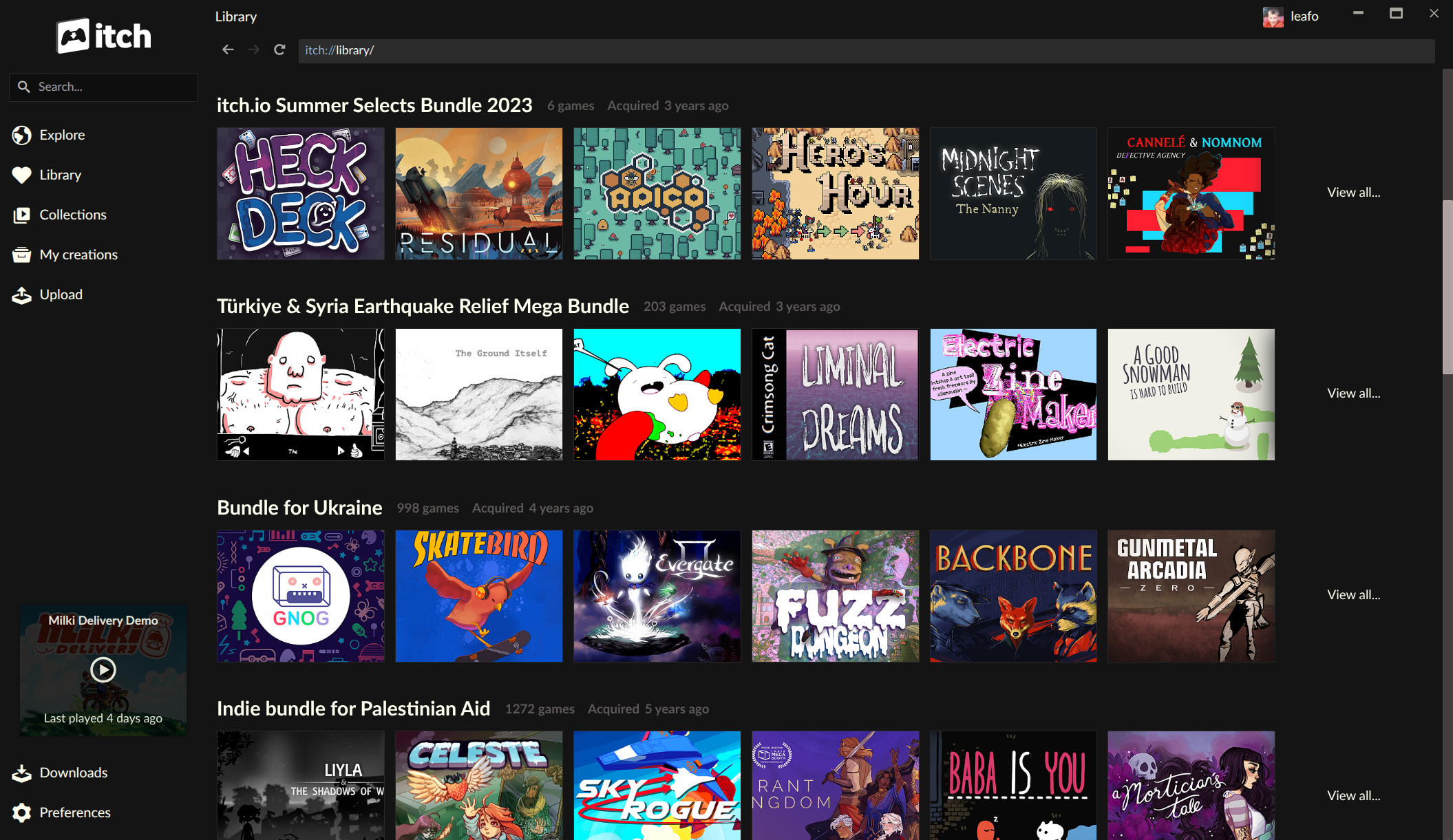
With the latest updates, bundles are now treated as "first-class" entities within the app’s library. Each bundle receives its own dedicated page, meticulously listing every game included within it. This new interface allows users to efficiently sort games by various criteria, search by title, and apply filters based on platform, classification, and installation status. Crucially, games can now be installed directly from these bundle pages, eliminating the cumbersome need to navigate back to the web browser for claiming individual titles. This streamlined approach drastically improves the utility of these large collections, making it far easier for purchasers to explore and enjoy the vast array of content they own, bringing parity between the web experience and the desktop application.
The significance of this update cannot be overstated, especially considering the unprecedented scale and impact of some of itch.io’s past charitable bundles. The "Bundle for Racial Justice and Equality," launched in 2020, stands as a monumental example, featuring an astounding 1,741 items and garnering purchases from over 800,000 individuals. This initiative raised over $8.1 million for the NAACP Legal Defense and Educational Fund and Community Bail Fund. Similarly, the "Bundle for Ukraine," released in 2022, offered nearly 1,000 items and attracted more than 400,000 buyers, raising over $6.3 million for charities supporting those affected by the conflict. These initiatives not only raised millions of dollars for critical causes but also introduced countless players to a diverse catalog of independent games. However, the sheer volume of content presented a significant logistical challenge for users trying to manage their libraries through the desktop application, a challenge now effectively addressed.
The Technical Challenge of Massively Popular Bundles
The implementation of native bundle support within the itch.io app required considerable backend development, highlighting the technical complexities involved in managing such an extensive digital storefront. The original announcement sheds light on the database challenges associated with these large-scale bundles. If itch.io were to generate an individual download key for every single item for every buyer of the "Bundle for Racial Justice and Equality," it would have resulted in an astronomical number of entries—potentially exceeding a billion rows in their database for that bundle alone. To circumvent this, itch.io intelligently records ownership for these bundles differently: a single record covers the entire bundle, and download keys for individual games are only generated upon actual claim.
The app’s previous architecture lacked an understanding of this nuanced bundle ownership model, leading to the aforementioned visibility issues. By integrating direct bundle ownership recognition, the application can now interpret these single-record bundle purchases and dynamically display their contents, facilitating seamless browsing, searching, and installation of games from even the most expansive collections. This not only significantly enhances the user experience but also showcases itch.io’s capacity for innovative technical solutions to unique challenges presented by its community-driven, developer-friendly model. For developers interested in curating their own collections, itch.io also recently revamped its bundle hosting tools, making the process more efficient for creators to organize and distribute their content effectively.
Advanced Launch Settings Empower Players and Developers
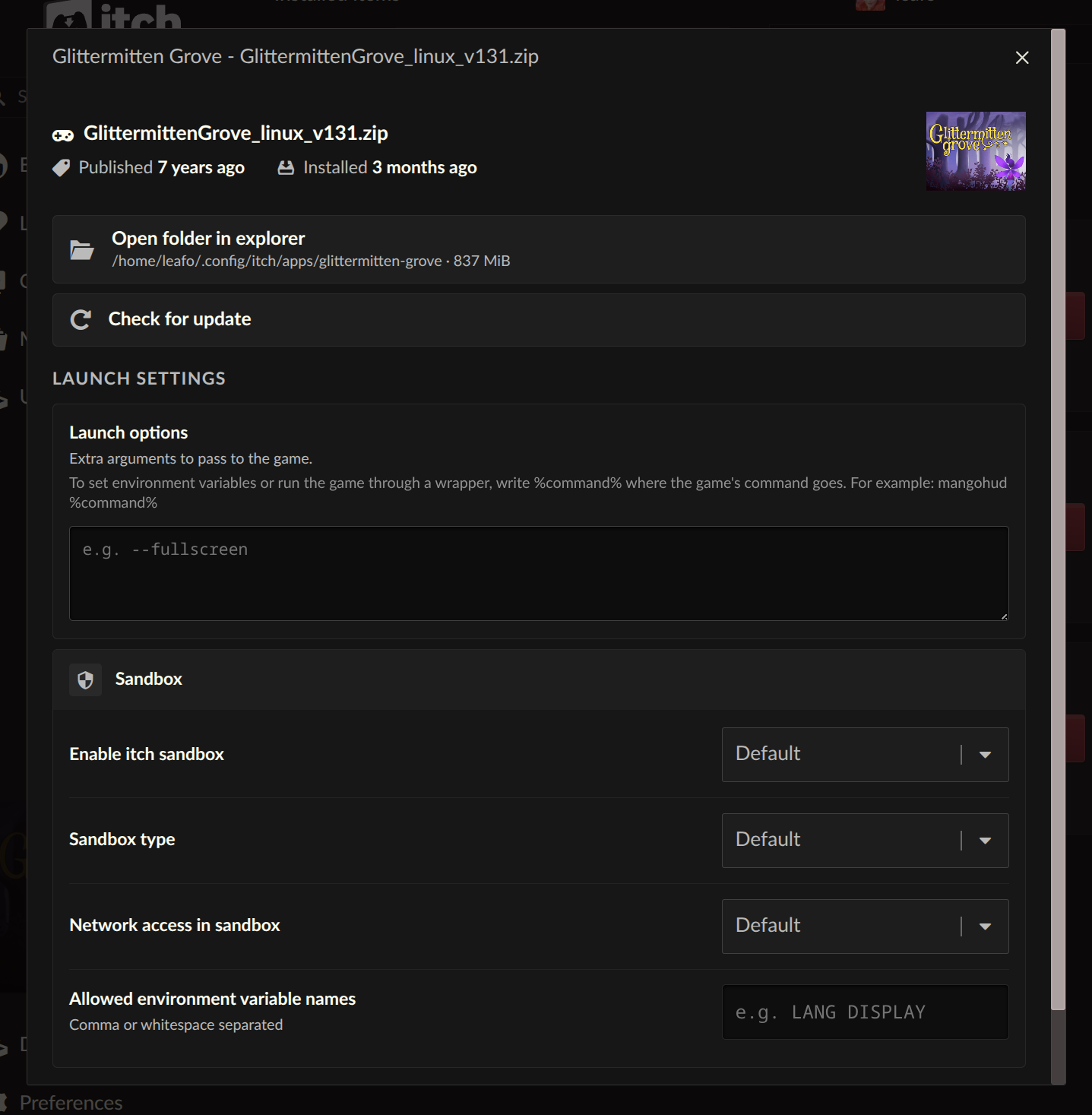
Beyond comprehensive library management, the updates introduce a new level of granular control over game execution through the "Launch settings" area, now accessible from each installed game’s manage dialog. This feature caters directly to power users, modders, developers, and those utilizing compatibility layers, providing extensive customization options on a per-game basis.
Players can now configure sandbox restrictions, network access, and environment variables directly within the app. Sandbox restrictions are crucial for security-conscious users who wish to limit a game’s access to system resources, offering an added layer of protection. Network access controls can be vital for privacy, troubleshooting connectivity issues, or managing online multiplayer experiences. The ability to set custom environment variables offers unparalleled flexibility for specific game requirements, facilitating debugging processes, or integrating seamlessly with third-party tools and utilities that might require particular system configurations.
A particularly anticipated addition, addressing a significant community request, is the new "Command pattern" option for launch arguments. This functionality allows users to pass plain arguments directly to a game’s executable, which is useful for enabling specific game modes or features. More powerfully, it supports a %command% pattern, enabling users to wrap the game’s launch within another command. This feature is invaluable for a variety of advanced scenarios, such as running Windows games through compatibility layers like Wine on Linux, integrating debugging tools, applying custom wrappers for performance monitoring, or managing complex mod installations that require specific launch parameters. For instance, a Linux user wanting to run a Windows-only indie game might set the command pattern to wine %command%, ensuring the game launches correctly within their Wine environment without manual terminal intervention. This level of configurability significantly expands the utility of the itch.io app, transforming it into a more versatile game launcher capable of handling complex setup requirements and fostering greater experimentation.
Breaking Platform Barriers: Untagged Downloads Now Accessible
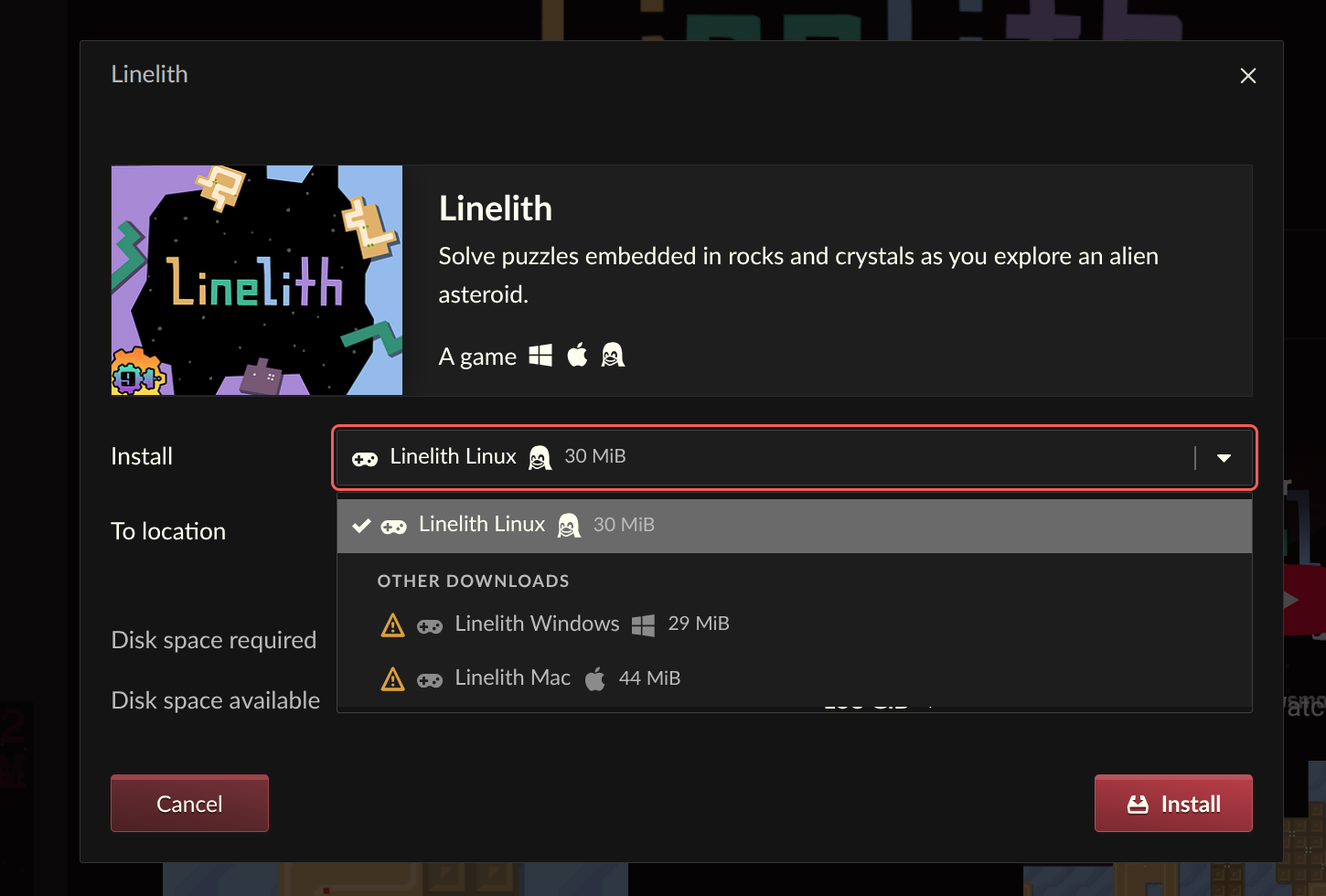
Another significant improvement focuses on expanding accessibility by allowing users to reveal and install downloads that are not explicitly tagged for their operating system. Historically, if a developer failed to tag an upload for a specific OS, or if a user wished to install a version intended for a different platform (e.g., a Windows build on Linux via a compatibility layer), the app would not display these options readily in the install dialog. This often led to frustration and required users to resort to manual downloads from the website or alternative methods.
The updated install dialog now includes functionality to reveal these "untagged" or "unsupported" downloads. This means that users who want to experiment with different versions, perhaps to run a Windows-exclusive title on a Linux machine using tools like Wine or Proton, or even to access older builds, can now directly access and install those files from within the application. This feature directly addresses a common pain point for users operating outside of conventionally supported platforms or those who engage in more advanced setup configurations. It reinforces itch.io’s reputation as a platform that prioritizes flexibility and user autonomy, moving beyond rigid platform tagging to empower users with more control over their game installations and fostering a more inclusive environment for its diverse user base.
Streamlined Navigation and Improved Search Experience
The updates also bring refinements to the application’s navigational elements, specifically targeting the sidebar search functionality. The old search mechanism, which relied on the API’s autocomplete feature, often presented results in a confusing and unhelpful order, making it challenging for users to locate specific titles or discover new content effectively. The prior implementation struggled with relevance and hierarchy, often burying desired results amidst less pertinent suggestions.
Recognizing that autocomplete is most effective for items users already know or have in their library, itch.io has revamped the sidebar search. The new implementation aims to provide a more intuitive and effective search experience, aligning more closely with user expectations for a modern application. The stated goal is to ensure that "everything else should go through the site’s full search experience," suggesting a more robust, perhaps web-integrated, search logic that delivers more relevant and organized results, improving overall discoverability. This change is part of a broader effort to streamline the user interface and enhance discoverability within the vast and ever-growing catalog of independent games on the platform. While specific details on other "Library page updates" were not extensively detailed in the announcement, these improvements collectively point to a continuous commitment to refining the core interface elements for better usability and a more satisfying browsing experience.
Rapid Response: macOS Hotfix Deployed
In a testament to its responsiveness to user feedback and commitment to platform stability, itch.io swiftly deployed a critical hotfix, v26.18.0, to address a severe crashing issue affecting macOS users. Shortly after the initial rollout of v26.15.0 and v26.17.0, reports emerged from macOS users experiencing unexpected application quits, often leading to a persistent crash loop that rendered the app unusable. Several users posted immediate concerns within the announcement’s comment section, highlighting the urgency of the problem.
The itch.io development team promptly identified and rectified the underlying problem, demonstrating an agile development process. Users affected by the crash loop were advised that a simple auto-update might not suffice if their installation was stuck in the loop, recommending a full reinstallation of the application from the official setup program to ensure a clean update to the hotfixed version. This rapid intervention highlights the developers’ commitment to maintaining a stable and reliable application experience across all supported platforms and their proactive approach to addressing critical, community-reported issues. Such prompt action is crucial for retaining user trust and ensuring that new features are accessible without introducing new impediments or compromising the core functionality of the application.
Broader Implications for the Indie Gaming Ecosystem
These comprehensive updates carry significant implications for the independent gaming ecosystem that itch.io champions. By making bundles more accessible and manageable, itch.io directly enhances the value proposition for consumers who invest in these often charitable and highly curated collections. This increased accessibility can, in turn, encourage more purchases of future bundles, providing crucial financial support to independent developers and associated causes. For developers, a more functional and user-friendly app means their games, particularly those included in large bundles, have a greater chance of being discovered, installed, and played, rather than remaining hidden within an unmanageable digital backlog. This fosters better engagement and potentially higher visibility for the thousands of indie titles hosted on the platform.
The introduction of advanced launch settings and the ability to install untagged downloads also caters directly to the diverse and often technically adept user base of independent games. Indie games frequently push boundaries, requiring custom configurations, specific environment variables, or running on non-standard setups. Empowering users with granular control over how games launch—whether for modding, debugging, or cross-platform compatibility—fosters a more engaged and empowered community. This flexibility is a hallmark of the indie scene, and itch.io’s embrace of it strengthens its position as a platform that truly understands and serves its unique audience, distinguishing itself from more restrictive mainstream digital storefronts.
Commitment to Community and Future Development
The recent series of updates for the itch.io app clearly demonstrates the platform’s ongoing commitment to refining its core product based on direct community feedback. By actively delving into its issues tracker and addressing "most commonly requested problems and requests," itch.io reinforces its developer- and user-centric philosophy. This iterative development approach, characterized by consistent improvements and rapid hotfixes, positions itch.io as a responsive and evolving digital storefront dedicated to its niche.
The updates collectively streamline the user experience, making it easier to manage extensive game libraries, customize game launches, and overcome platform-specific installation hurdles. For a platform that prides itself on supporting a vast array of unique and experimental games, enhancing the app’s functionality is paramount to ensuring these titles find their audience and thrive. As itch.io continues to grow, attracting new developers and players, these infrastructural improvements will be critical in maintaining a high-quality, accessible, and flexible environment for independent gaming, further solidifying its role as a vital patron of indie creativity.
Users are encouraged to download the latest version of the itch.io app from https://itch.io/app. Existing installations are designed to update automatically, though a manual reinstallation may be required for macOS users affected by the earlier crash loop. Detailed changelogs for v26.15.0 and v26.17.0 are available on the official GitHub repository, providing transparency into the specific fixes and new features implemented in each release. The itch.io team concluded its announcement by signaling anticipation for future updates, indicating a continuous development roadmap focused on further enhancing the platform’s capabilities and user experience.
About the Author