Riot Games Explores New Horizons: A Strategic Pivot Beyond Free-to-Play
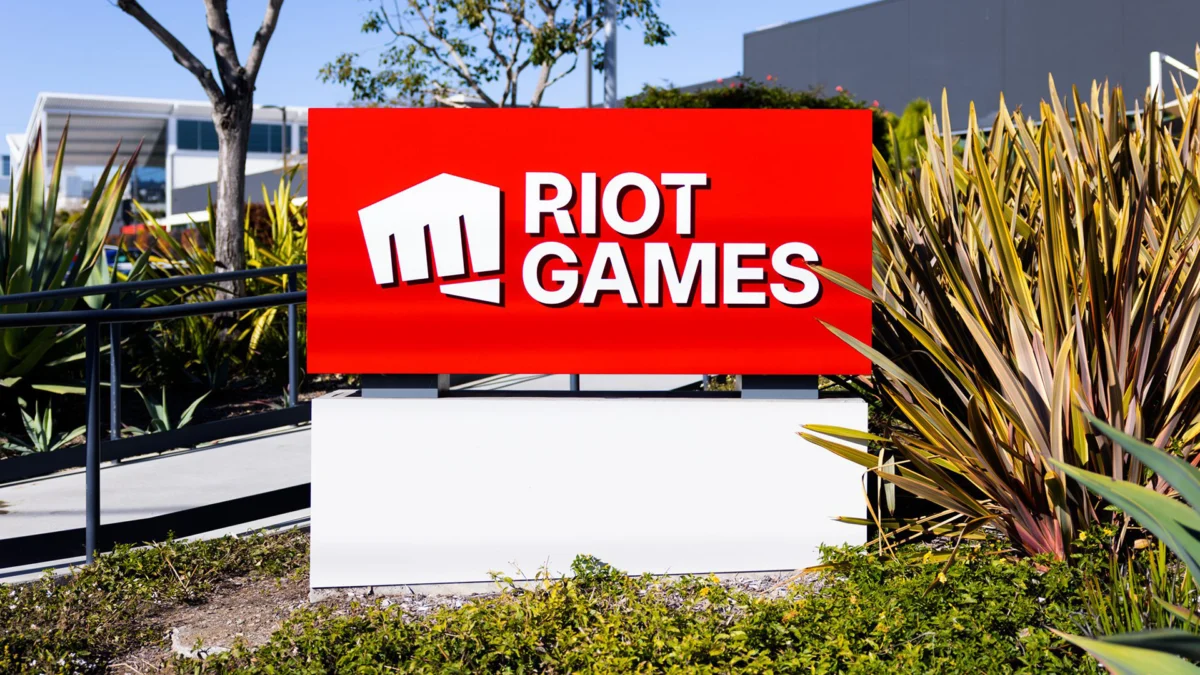
During the anniversary discussion, Merrill, a co-founder of Riot Games, articulated the company’s long-term ambitions, notably referring to the pursuit of a massively multiplayer online role-playing game (MMORPG) as "the Grail." However, it was a less overt comment that signaled an even more profound philosophical shift: the company is actively considering and working on games that will not adhere to its long-standing free-to-play (F2P) model. Merrill explicitly stated that there is "no strategic imperative" dictating that every Riot game must be F2P, adding, "We’re working on some stuff that isn’t [free-to-play]." He emphasized that the chosen business model must align intrinsically with the vision of the game itself.
This revelation marks a significant moment for Riot Games, a company whose formidable success and financial war chest have been almost exclusively built on the F2P model. Titles such as League of Legends, the globally renowned multiplayer online battle arena (MOBA), and Valorant, its tactical first-person shooter, have captivated hundreds of millions of players worldwide. These games monetize through the sale of cosmetic items, battle passes, and other optional in-game purchases, a strategy that encourages deep player investment over extended periods without an upfront cost barrier.
The Genesis of a Free-to-Play Empire: Riot’s Foundational Philosophy
Riot Games was founded in 2006 by Brandon Beck and Marc Merrill with a vision to create a company that would be "fiercely player-focused." At a time when the dominant model for PC games was still premium, single-purchase titles, their proposal to develop a high-quality game and offer it for free was met with considerable skepticism. Merrill recounted that early publishers and venture capital firms dismissed the idea as "the dumbest thing" they had ever heard. Yet, Riot persevered, launching League of Legends in 2009.
The game quickly proved the skeptics wrong. League of Legends not only became a cultural phenomenon but also pioneered and popularized the F2P model, demonstrating its immense potential for player acquisition and long-term revenue generation through optional cosmetic microtransactions. This success paved the way for Riot’s acquisition by Tencent, the Chinese technology conglomerate, which first took a majority stake in 2011 and fully acquired the company by 2015. Under Tencent’s ownership, Riot continued to expand its F2P portfolio, launching Valorant in 2020, which replicated League of Legends‘ success in the competitive FPS genre, and expanding into mobile with League of Legends: Wild Rift and other F2P titles. The F2P model allowed Riot to cultivate massive, dedicated communities around its games, leveraging their global reach and consistent content updates to maintain engagement and profitability.
Challenges in the Contemporary Free-to-Play Landscape: The Case of 2XKO
Despite Riot’s unparalleled success in the F2P space, the market has undergone significant evolution, becoming intensely competitive and saturated. This evolving landscape appears to be a primary driver behind Riot’s strategic re-evaluation. Merrill specifically referenced the fate of 2XKO (formerly known as Project L), Riot’s highly anticipated F2P fighting game, as an illustration of these challenges. While the game will remain live, Riot announced in December 2026 that it would cease further development, a decision that raised eyebrows across the industry.
Merrill explained that for a F2P game to thrive today, it must be "incredible" to stand out. Developers face a dual challenge: fierce competition not only from hundreds of other games launching weekly but also from the "near-infinite amount of content on social media fighting for their attention." He elaborated on this during the panel, stating, "We’re competing for people’s attention and time. That’s a really high bar, and you have to get so many things right to get enough critical mass to build the [game’s] community and have it turn into something sustainable in the long-term." He acknowledged that 2XKO "unfortunately didn’t do that," despite its perceived quality.
The F2P market, once a blue ocean, is now a red ocean. According to industry reports, the global F2P market size, while still enormous, is experiencing increased user acquisition costs and diminishing returns for all but the most exceptional titles. Player fatigue with aggressive monetization schemes, loot boxes, and perpetual content updates has also grown, making it harder for new F2P entries to carve out a sustainable niche. The sheer volume of content vying for player engagement across platforms—from streaming services to TikTok—means that even well-made games struggle to capture and retain the critical mass needed for F2P sustainability.
The Rationale Behind Premium: "Not Every Game Needs to be Infinite"
Merrill’s follow-up comments after the panel offered deeper insight into the rationale for exploring premium games. He articulated a core philosophical distinction: "not every game needs to be infinite." This statement encapsulates the inherent design constraints that can arise when a game is conceived with an F2P, perpetually updated, and monetized-through-cosmetics model.
"Free-to-play tends to work really well with long-term engaging games… with optional cosmetics where people play for a long period of time," Merrill observed. This model is ideal for genres like MOBAs, live-service shooters, and certain MMOs, which are designed for continuous engagement and iterative content. However, he cautioned, "In many other game types, it creates these sorts of challenges from a design standpoint that can impact the integrity of the experience."
This suggests that some game concepts or genres might be better served by a traditional premium, single-purchase model. A premium game can offer a complete, curated experience with a definitive beginning and end, allowing designers to prioritize narrative, artistic vision, and mechanical depth without the constant pressure to implement new monetization hooks or endless content cycles. This approach can be particularly appealing for genres like single-player RPGs, story-driven adventures, or certain innovative experiences that might struggle to adapt to the F2P framework without compromising their core design principles. By embracing premium, Riot could potentially broaden its creative horizons and deliver experiences that are fundamentally different from its current offerings.
Distinguishing from Riot Forge: A New Internal Approach to Premium Development
It is important to note that Riot Games is not entirely new to the premium game space. For several years, it operated Riot Forge, a publishing initiative established in 2019, which partnered with external studios to create premium, story-driven single-player games set within the League of Legends universe (Runeterra). Titles like Ruined King: A League of Legends Story (developed by Airship Syndicate) and The Mageseeker: A League of Legends Story (developed by Digital Sun) were well-received and explored different genres and facets of the lore.
However, Riot Forge was officially wound down in 2024, a decision accompanied by significant company layoffs impacting 530 employees. Merrill clarified the distinction between Riot Forge’s mission and the company’s potential new internal premium game strategy. He explained that Riot Forge was primarily stood up to "go tell stories to acquire new customers." The goal was to expand the League of Legends intellectual property’s reach and introduce new players to the universe through different game types.
Merrill contrasted this with the success of Arcane, the acclaimed 2021 Netflix animated series set in Runeterra. He noted, "The reason we did Arcane wasn’t to go acquire new players. [It was] an outcome from doing something great." This suggests a fundamental shift in philosophy: rather than using external projects primarily for customer acquisition, Riot now aims to focus its internal efforts on creating "things that are really excellent, really differentiating," believing that excellence itself will naturally attract an audience. This indicates a desire to create high-quality, impactful games that stand on their own merits, rather than as mere extensions of an existing IP for audience growth. The focus is on quality and innovation, recognizing that the market is already saturated with "content," and what players truly seek are truly exceptional experiences.
The Shifting Sands of the Gaming Market: Broader Industry Context
Riot’s contemplation of premium games aligns with broader trends and challenges facing the video game industry. While the F2P model continues to generate immense revenue, particularly on mobile platforms, the PC and console markets have seen a resurgence of premium titles and subscription services. Companies like Xbox Game Pass and PlayStation Plus have demonstrated a robust demand for curated libraries of high-quality games, often including day-one premium releases.
Moreover, the cost of developing AAA games, whether F2P or premium, has skyrocketed. Modern game development requires massive budgets, extensive teams, and years of effort. For F2P titles, this investment needs to be recouped and sustained over an "infinite" lifespan, which requires constant content updates, community management, and effective monetization strategies. If a F2P game fails to achieve critical mass early on, it can quickly become an unsustainable drain on resources, as exemplified by 2XKO. The premium model, while having a higher upfront revenue barrier, offers a more defined development cycle and a clearer path to profitability upon release, reducing the long-term live-service overhead if the game is not designed for perpetual updates.
This strategic diversification could also be a hedge against potential future market shifts. Relying solely on the F2P model, which is heavily influenced by evolving player preferences, regulatory scrutiny (especially regarding loot boxes and microtransactions), and platform holder policies, carries inherent risks. By exploring premium titles, Riot could build a more resilient and varied portfolio, appealing to different segments of the gaming audience and exploring genres that might not be conducive to F2P monetization without significant design compromises.
Implications for Riot’s Future Portfolio and Player Base
The implications of this potential strategic pivot for Riot Games are multifaceted. For existing players of League of Legends and Valorant, this could signal a wider array of experiences from their beloved developer, moving beyond the highly competitive, live-service environments they are accustomed to. It might open doors to single-player narratives, innovative indie-style experiences, or even more traditional RPGs that prioritize story and world-building over perpetual engagement.
For Riot itself, this move represents a significant expansion of its creative and business model toolkit. It could foster greater design freedom, allowing teams to develop games that are best suited to their core vision, rather than shoehorning them into a F2P framework. It also implies a potential diversification of revenue streams and a broadening of its target audience beyond the core F2P competitive player base.
The "Grail" MMORPG, which Merrill highlighted, remains a cornerstone of Riot’s ambitious future. While an MMORPG traditionally lends itself well to F2P or subscription models due to its inherent long-term engagement, the exploration of premium games suggests that Riot is open to different approaches even for such a monumental project, or perhaps for other titles developed in parallel.
Ultimately, Riot Games, a company that once defied conventional wisdom by championing F2P, now appears poised to challenge its own established paradigm. By acknowledging the limitations and increasing difficulties within the F2P market, and by expressing a desire to create "excellent, differentiating" experiences regardless of their monetization model, Riot is signaling a mature evolution in its corporate strategy. The gaming world will be watching closely to see what new "Grail" the League of Legends maker pursues, and what form these new premium ventures will take.
About the Author