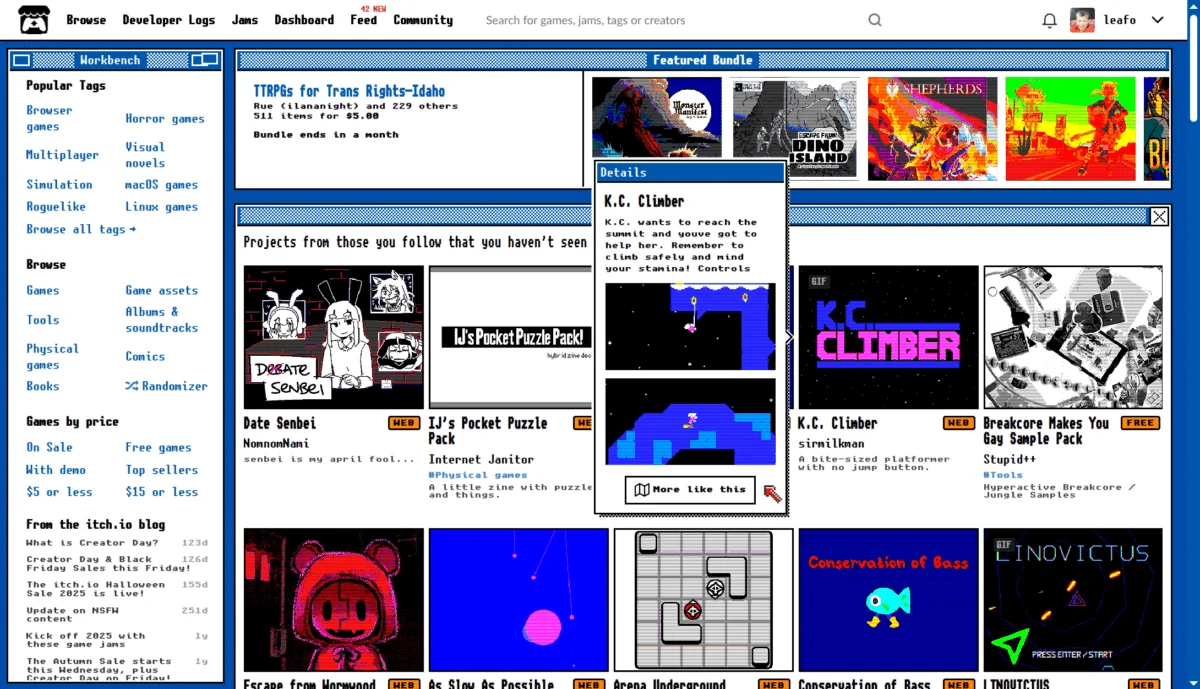
The independent game marketplace itch.io has officially concluded its "Ameyega Mode" experiment, a unique visual overhaul that transformed the platform’s homepage into a retro-inspired, ASCII art aesthetic. Initially rolled out as an April Fools’ Day initiative, the mode was extended beyond the traditional prank window, offering users a nostalgic glimpse into early computing interfaces. While the experimental feature garnered appreciation from many for its charming throwback appeal, it also ignited a robust discussion within the community regarding usability, accessibility, and the delicate balance between creative novelty and functional design.
The Ameyega Mode Experience: A Digital Time Capsule
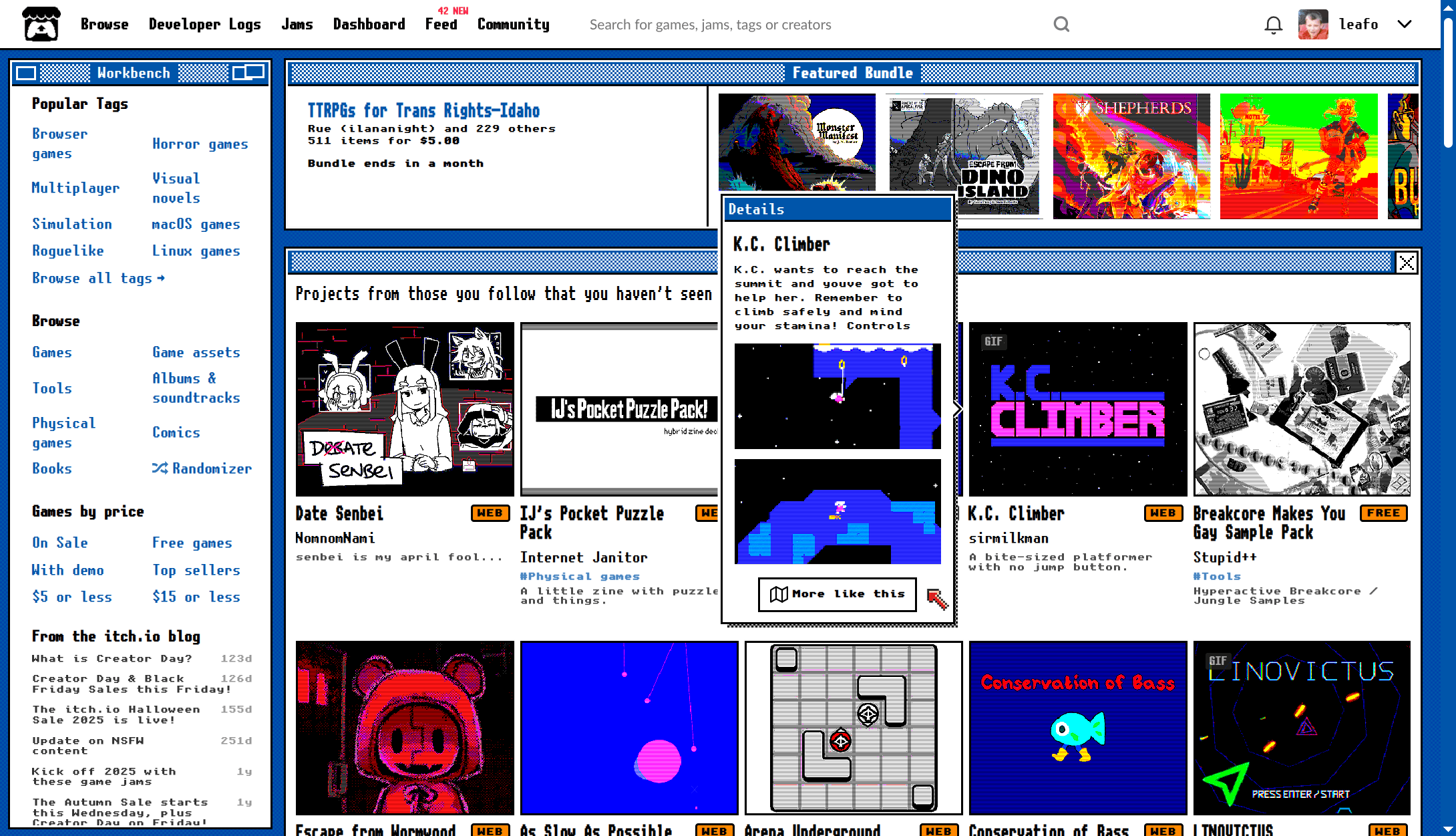
Launched on April 1st, "Ameyega Mode" reimagined the modern itch.io homepage through the lens of early personal computers, specifically evoking the visual style reminiscent of Amiga systems, a popular home computer series from the 1980s and 1990s known for its advanced graphics and sound capabilities for its time. The transformation was striking: contemporary fonts were replaced with blocky, pixelated characters, and graphical elements were rendered in a distinct ASCII art style. The overall effect was a monochrome or limited-palette display, making the entire website appear as if viewed on an antiquated monitor.
Central to this retro aesthetic were the fonts, explicitly credited by itch.io to viznut.fi/unscii/. UNSCII, or Universal Screen Characters for Independent Interpretation, refers to a collection of bitmap fonts designed to emulate the character sets found on various retro computers and terminals. These fonts typically use a grid-based approach, where each character is composed of a limited number of pixels, resulting in a distinct, often chunky appearance. By integrating these fonts, itch.io successfully tapped into a vein of digital nostalgia, offering a stark contrast to its usual sleek and modern interface. For many users, particularly those with a history in computing or retro gaming, the "Ameyega Mode" served as a delightful trip down memory lane, a digital time capsule transporting them back to the foundational era of graphical user interfaces and early game development.
April Fools’ Tradition in the Digital Realm
Itch.io’s "Ameyega Mode" was explicitly framed as an April Fools’ Day joke, a common tradition within the tech and gaming industries. Every year, numerous companies engage in elaborate, often humorous, pranks to entertain their user base. These can range from fictional product announcements to temporary website redesigns, much like itch.io’s initiative. Giants such as Google, known for its annual April Fools’ gags like "Google Nose" or "Gmail Motion," and even gaming platforms like Steam, have historically participated in this tradition. The underlying intent is often to foster a sense of playfulness, connect with the community on a more informal level, and sometimes even subtly showcase technical prowess.
However, the nature of April Fools’ pranks in a digital environment, particularly on platforms critical for work or daily use, can be a double-edged sword. While intended to be lighthearted, such temporary alterations can inadvertently cause confusion, frustration, or even accessibility issues. Itch.io acknowledged the late rollout of "Ameyega Mode" with a jovial "Happy April 1st. We’ll run this one a bit longer because I got it out late," indicating a flexible approach to the tradition. This extension, however, meant the mode persisted longer than a typical one-day joke, giving it more exposure and, consequently, more opportunity for both appreciation and criticism.
Chronology of a Quirky Experiment
The "Ameyega Mode" timeline began on April 1st, the universally recognized day for pranks and hoaxes. While the exact hour of its initial deployment was not specified, itch.io’s post indicated it was "late" in the day, leading to its extended availability. This extension meant that the retro interface remained active on the itch.io homepage for several days following April 1st, allowing a broader segment of the global user base to experience it, given varying time zones and daily usage patterns.
The official announcement of the mode’s conclusion, stating "Ameyega mode is now over, thanks everyone," came sometime after this initial period. However, itch.io demonstrated a commitment to user choice and documentation by making the mode perpetually accessible for logged-in users via a specific URL: https://itch.io/?ameyega. This decision allows those who enjoyed the aesthetic to revisit it and serves as an archived piece of the platform’s history, available "until the next time we make substantial changes to the homepage."
During its active phase, the "Ameyega Mode" also experienced minor technical issues. Several users reported that the temporary homepage design interfered with the site’s dark mode functionality, a popular feature for reducing eye strain. These reports, visible in the comment section of the announcement, highlighted a temporary incompatibility. Notably, itch.io’s development team swiftly addressed this issue. One user, clypsiphaya, noted, "four hours after posting this, the front page is showing Dark mode correctly," indicating a rapid response to community feedback and a dedication to resolving functional glitches. This quick fix underscored the platform’s attentiveness to user experience, even amidst an experimental, temporary feature.
Community Voices: A Spectrum of Reactions
The "Ameyega Mode" elicited a wide array of responses from the itch.io community, reflecting diverse preferences, backgrounds, and needs. The comment section of the official announcement became a vibrant forum for users to share their experiences, oscillating between enthusiastic praise and sharp criticism.
On one end of the spectrum were users who embraced the retro aesthetic with open arms, finding it a "delightful throwback" and "nostalgic and charming." Many expressed a strong desire for the "Ameyega Mode" to become a permanent, optional theme. User "windflash" eloquently captured this sentiment, stating, "The ASCII art homepage was a delightful throwback – it actually made browsing feel nostalgic and charming. Kudos to the team for the creativity, and props for keeping it available a little longer. Would love to see it return as an optional theme someday!" Others echoed this, with "mauisland" remarking, "I would like for itch.io to change to it permanently. I was sad to find out it was a joke," and "katt-kirsch" exclaiming, "Please please please make an option to keep this, it’s SO much easier to read for me wow I love love love it." This segment of the community clearly valued the aesthetic and perceived benefits, such as potentially enhanced readability for some.
Conversely, a significant portion of the community encountered usability and accessibility challenges. The pixelated, blocky text, while evocative of retro computing, proved difficult to read for many, causing eye strain and hindering navigation. User "ulysseandcharybde" voiced a strong concern, declaring, "Oh so cool, i’m disabled and I CAN’T WATCH THIS! How do you get this crap off?!" This critical feedback underscored a crucial point: what is a charming novelty for some can be a significant barrier for others, particularly those with visual impairments or specific cognitive processing styles. Other users echoed these difficulties, with "boveedevin" stating, "omg please change it back this is so hard to navigate and there is no option in my feed to see new updates I follow. I hate thisssss," and "swummo" advising, "please do not keep it as a permanent home page theme, it hurting my eyes and from the perspective of having a professional home page, the standard one is better, the new one is nice as a funny thing temporarily but it will feel pretty odd after couple of days." These comments highlight the tension between aesthetic experimentation and the fundamental need for an accessible and easily navigable platform.
Beyond the aesthetic and usability concerns, there were also technical grievances, primarily revolving around the temporary disruption of the dark mode functionality. User "raidenslayer" expressed frustration, "Yeah, and never do it again, please. Because you messed up, Dark mode and I can’t get it to work." This was a recurring issue, indicating that while the "Ameyega Mode" was visually distinct, its implementation initially overlooked compatibility with existing core features. The swift resolution of this issue, however, mitigated prolonged negative impact. Finally, some users simply expressed general disapproval or "prank fatigue," feeling that the joke went "too far" or was an unnecessary deviation from the platform’s standard, professional interface.
Itch.io’s Stance and Responsiveness
Itch.io’s handling of the "Ameyega Mode" demonstrates a balance between playful experimentation and responsible platform management. The team openly acknowledged the late rollout of the prank, which implicitly led to its extended run. This transparency is characteristic of the indie-friendly platform’s communication style. More importantly, their prompt action in addressing the dark mode incompatibility issue showcased their commitment to maintaining core functionality and responding to user feedback in real-time. The decision to keep the "Ameyega Mode" accessible to logged-in users via a direct URL after its official conclusion is a thoughtful compromise, allowing those who enjoyed it to revisit it without imposing it on the entire user base.
While itch.io did not issue a formal, detailed statement beyond the initial blog post, their actions and the brief notes suggest an understanding of the diverse user experience. An inferred official response might convey: "Our intention with Ameyega Mode was to provide a unique, lighthearted experience for April Fools’ Day, celebrating a piece of computing history. We genuinely value all feedback received, both positive and critical. The technical issues encountered, such as the temporary dark mode incompatibility, were addressed as swiftly as possible to minimize disruption. We are committed to ensuring an inclusive and functional platform for all users, and experiments like this help us better understand our community’s diverse needs and preferences." This approach highlights a commitment to listening and adapting, a crucial trait for a platform deeply embedded in the indie development community.
Implications for User Interface Design and Accessibility
The "Ameyega Mode" experiment, while temporary, offers valuable insights into the broader implications for user interface (UI) design and accessibility on digital platforms. It starkly illustrated that aesthetic choices, even those made in jest, can have a profound impact on user experience, particularly for those with varying visual capabilities or accessibility needs. The strong negative reactions from users who found the mode "hard to navigate" or "hurting my eyes" underscore the critical importance of inclusive design principles. A visually distinctive interface, while appealing to a niche audience or for a specific nostalgic effect, must not inadvertently create barriers to information access or site functionality for others.
The clamor for "Ameyega Mode" to become an optional theme, on the other hand, points to the value of user choice and customizable interfaces. When users are given control over their viewing experience, they can tailor it to their personal preferences and accessibility requirements. This suggests that while full-site, forced aesthetic overhauls might be problematic, offering such themes as opt-in features could be a way to satisfy diverse user tastes without compromising universal usability. The swift resolution of the dark mode issue also serves as a reminder that any new UI element or design experiment must be rigorously tested for compatibility with existing features, especially those related to accessibility and user comfort.
The Future of Itch.io’s Homepage and Thematic Experiments
The "Ameyega Mode" experiment will likely influence itch.io’s approach to future thematic or experimental features. The enthusiastic requests for optional themes might prompt the platform to explore more customizable UI options, allowing users to select from a range of visual styles. This could cater to the nostalgia enthusiasts while preserving the default, accessible interface for the majority. Furthermore, the strong feedback regarding accessibility challenges will undoubtedly inform future design decisions, encouraging more rigorous testing and consideration for diverse user needs before rolling out any significant visual changes, even temporary ones.
Ultimately, the "Ameyega Mode" saga reinforces itch.io’s identity as a platform that champions creativity and is not afraid to experiment, even with its own interface. It also highlights the vibrant, vocal nature of its community, whose feedback is integral to the platform’s evolution. While the experiment had its share of triumphs and tribulations, it served as a memorable moment in itch.io’s history, sparking important conversations about design, accessibility, and the delicate balance between fun and function in the ever-evolving digital landscape. The enduring availability of "Ameyega Mode" for logged-in users stands as a testament to this unique, if polarizing, chapter.
About the Author