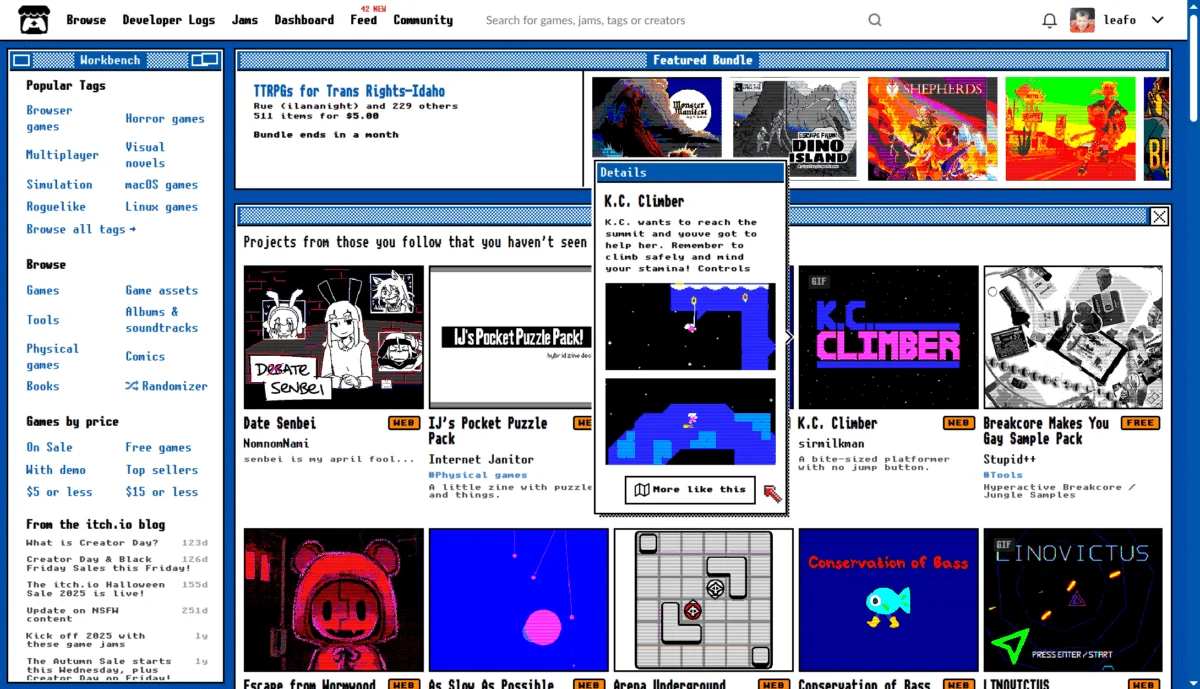
The independent game platform itch.io has officially concluded its temporary "Ameyega mode," an experimental visual interface launched as part of its annual April Fools’ Day tradition. The distinctive ASCII-art-inspired homepage, which transformed the site’s modern aesthetic into a retro computing experience, was originally rolled out on April 1st and extended for a brief period due to its late deployment, according to an official announcement from the platform. While the temporary interface has been deactivated for general browsing, logged-in users are still able to access a snapshot of the "Ameyega mode" via a dedicated URL for a limited time, serving as an archive until the next substantial homepage update. This initiative, credited for its unique font usage to viznut.fi/unscii/, sparked a wide array of reactions across the platform’s diverse user base, highlighting both the community’s appreciation for nostalgic tributes and significant concerns regarding usability and accessibility.
The Ameyega Experiment Concludes: A Retrospective Look
The "Ameyega mode" represented a significant departure from itch.io’s standard sleek and contemporary interface. For a finite period, visitors to the platform’s homepage were greeted with a visual style reminiscent of early personal computers, characterized by pixelated fonts and a monochromatic or limited-color palette, designed to evoke the aesthetic of vintage systems such as the Amiga or Commodore 64. This creative endeavor was a playful nod to the roots of video game development and computer culture, a fitting theme for a platform dedicated to independent game creators. The decision to extend the mode beyond April 1st was unusual for an April Fools’ prank, typically ephemeral by nature. This extension, as noted by the platform, was primarily to compensate for its delayed launch, allowing more users to experience the unique interface. The conclusion of "Ameyega mode" marks the end of a short-lived but memorable chapter in itch.io’s ongoing engagement with its community, prompting reflection on the success and challenges of such thematic experiments.
Genesis of the ‘Ameyega’ Mode: A Nod to Retro Computing
Itch.io, founded in 2013 by Leaf Corcoran, has grown into a pivotal digital storefront and community platform for independent video games, tabletop RPGs, assets, and various digital creations. Unlike larger, more corporate digital distribution platforms, itch.io is known for its creator-friendly revenue sharing, diverse content, and a strong emphasis on community engagement and experimental projects. Its philosophy often encourages creativity and individuality, making it a natural fit for an unconventional April Fools’ Day prank.
The "Ameyega mode" was more than just a visual gimmick; it was a deliberate stylistic choice rooted in the history of computing. ASCII art, a graphic design technique that uses computers for presentation, dates back to the early days of computing when typewriters and teletypes were the primary display devices. Later, it became a popular form of digital art on early personal computers, often seen in BBS (Bulletin Board System) greetings, demoscene productions, and even text-based adventure games. The "Ameyega" moniker itself likely alludes to the Amiga line of personal computers, celebrated for their advanced multimedia capabilities in the 1980s and early 1990s, particularly in gaming and creative applications. By adopting this retro aesthetic, itch.io tapped into a deep well of nostalgia for a segment of its user base, many of whom are developers or enthusiasts with an appreciation for computing history. The use of specific fonts, explicitly credited to viznut.fi/unscii/, underscores the technical and artistic precision involved in recreating such an authentic retro experience. These details suggest that the "prank" was not merely a superficial change but a carefully crafted homage.
A Brief Chronology of the Event
The "Ameyega mode" followed a concise yet impactful timeline:
- April 1st: The "Ameyega mode" was officially rolled out on the itch.io homepage. While many April Fools’ pranks are launched precisely at midnight, itch.io acknowledged a slight delay in its deployment.
- Early April: Following its launch, itch.io announced its intention to keep the mode active for a longer duration than a typical single-day prank. This decision was explicitly stated to compensate for the late rollout, ensuring more users had an opportunity to encounter and interact with the retro interface.
- Mid-April: User feedback began to accumulate on the platform’s forums and social media channels, encompassing a wide range of sentiments from enthusiastic praise to frustrated complaints and technical bug reports.
- Approximately Mid-April (Exact date not specified but implied by the "now over" announcement): The "Ameyega mode" was deactivated for the general public, restoring the standard itch.io interface.
- Post-Deactivation: Itch.io provided a persistent URL for logged-in users to revisit the "Ameyega mode" experience, signifying its status as a temporary, archived feature rather than a permanent removal. This availability is slated to continue until the platform undergoes its next substantial homepage redesign.
This timeline illustrates itch.io’s responsiveness to its community and its unique approach to an annual tradition, balancing playful engagement with practical considerations for user experience.
Community Reaction: A Spectrum of Feedback
The introduction and subsequent conclusion of "Ameyega mode" elicited a highly diverse range of responses from the itch.io community, as evidenced by the comments section of the official announcement. These reactions can broadly be categorized into several distinct groups:
1. Enthusiastic Appreciation and Nostalgia: Many users expressed profound delight and nostalgia for the retro interface. Comments like, "The ASCII art homepage was a delightful throwback – it actually made browsing feel nostalgic and charming," and "I love how most people hate it, and I’m over there being like jack_nicholson_yes.gif," underscored a strong positive sentiment. For these users, the "Ameyega mode" was a successful and enjoyable trip down memory lane, celebrating a bygone era of computing.
2. Calls for Permanent Options: A significant portion of the positive feedback went beyond mere appreciation, advocating for the "Ameyega mode" to become a permanent, optional theme. Statements such as, "I would like for itch.io to change to it permanently. I was sad to find out it was a joke," and "Please please please make an option to keep this, it’s SO much easier to read for me wow I love love love it," highlighted a desire for greater user customization and the perceived benefits of the retro design. Some users even found the ASCII art easier to read, suggesting potential unforeseen accessibility benefits for specific visual preferences.
3. Frustration Over Usability and Navigation: Conversely, a substantial number of users found the "Ameyega mode" to be a hindrance rather than a help. Complaints focused on the difficulty of navigating the site and the perceived visual discomfort. Comments like, "omg please change it back this is so hard to navigate and there is no option in my feed to see new updates I follow. I hate thisssss," and "please do not keep it as a permanent home page theme, it hurting my eyes and from the perspective of having a professional home page, the standard one is better, the new one is nice as a funny thing temporarily but it will feel pretty odd after couple of days," reflected significant dissatisfaction with the temporary UI. This group prioritized functionality and a professional aesthetic over nostalgic appeal.
4. Accessibility Concerns: Beyond general usability, several users explicitly raised accessibility issues. A particularly poignant comment stated, "Oh so cool, i’m disabled and I CAN’T WATCH THIS! How do you get this crap off?!" This feedback underscored a critical oversight: while the retro aesthetic was a playful choice, it inadvertently created significant barriers for users with certain visual impairments or cognitive differences, for whom high contrast, clear typography, and conventional layouts are essential for navigating digital interfaces.
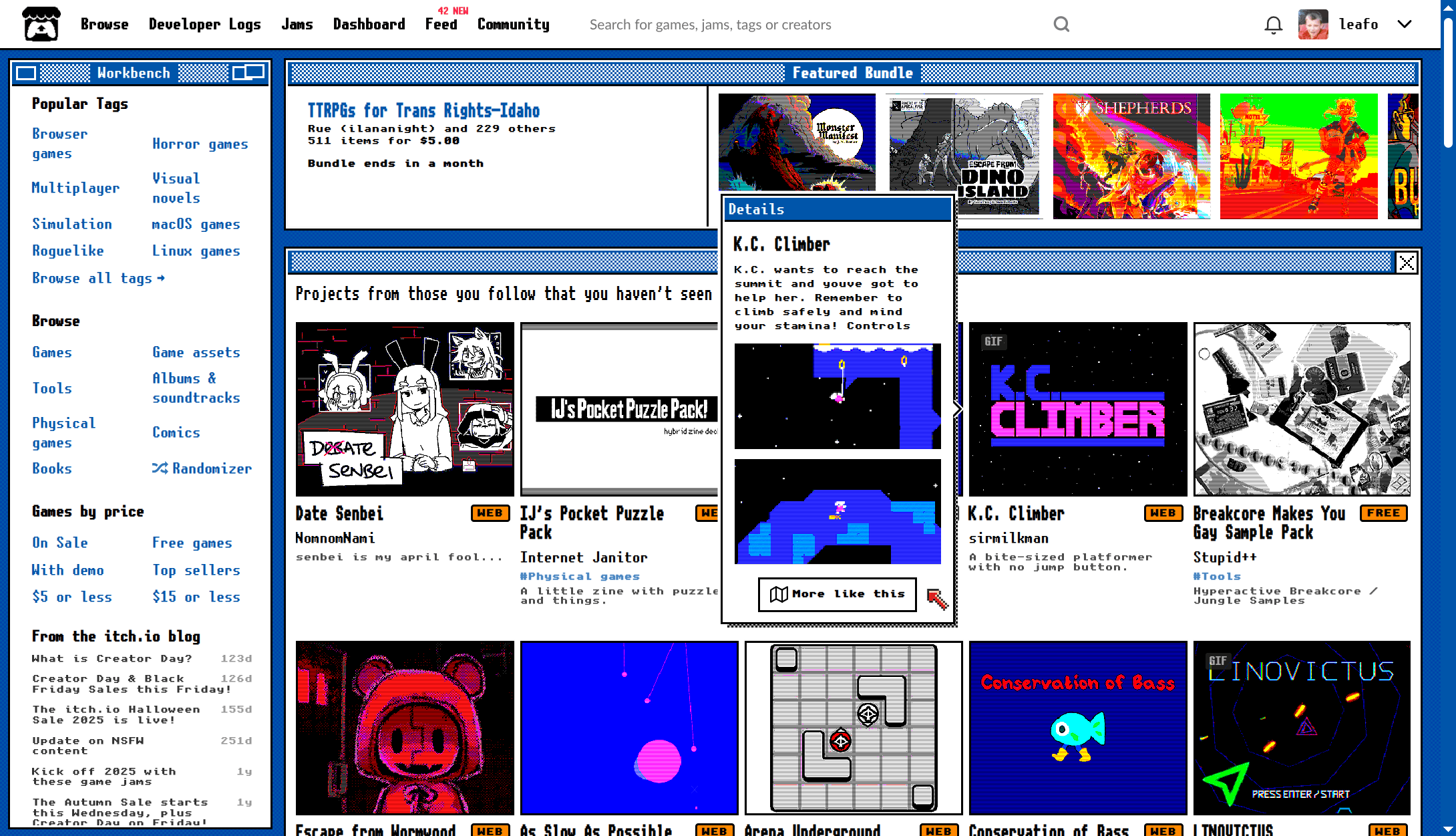
5. Technical Glitches and Dark Mode Issues: A recurring technical complaint centered around the incompatibility of "Ameyega mode" with itch.io’s "Dark mode" setting. Users reported, "it’s over but dark mode is not working now…" and "Because you messed up, Dark mode and I can’t get it to work." This issue, while seemingly minor, affected a considerable segment of the user base who prefer Dark mode for eye comfort or energy saving, disrupting their established browsing preferences. One user later edited their comment to confirm that the Dark mode issue was resolved, indicating itch.io’s prompt attention to critical bugs post-prank.
Technical Hurdles and Accessibility Concerns
The "Ameyega mode," despite its creative intent, inadvertently exposed several technical and accessibility challenges that platforms must consider when implementing significant UI changes, even temporary ones. The most prominent technical issue revolved around the "Dark mode" functionality. Many modern web platforms offer a Dark mode option, which inverts color schemes (typically light text on a dark background) to reduce eye strain, especially in low-light conditions, and for aesthetic preference. When "Ameyega mode" was active, it appears to have overridden or interfered with the Dark mode settings for the homepage, leaving users with a brightly lit, pixellated interface they could not adjust. This disruption, while eventually rectified, caused frustration and highlighted the importance of robust compatibility testing for all UI features.
From an accessibility standpoint, the "Ameyega mode" presented more profound concerns. The reliance on highly stylized, pixelated, or monospaced fonts, while aesthetically aligned with the retro theme, can significantly impair readability for individuals with dyslexia, visual impairments, or certain neurodivergent conditions. Standard web design principles emphasize clear, legible fonts, sufficient contrast, and predictable layouts to ensure content is accessible to the broadest possible audience. The "Ameyega mode," by design, diverged from these principles in pursuit of its thematic goal. The explicit comment from a disabled user who found the interface impossible to navigate serves as a stark reminder that even temporary visual changes can exclude portions of the user base. This incident underscores the ongoing challenge for platform developers to balance creative expression and community engagement with universal design principles, ensuring that playful initiatives do not inadvertently create barriers to access.
The Broader Context: April Fools’ in Tech and User Engagement
April Fools’ Day pranks have become a staple in the tech industry, with major companies like Google, Amazon, and even smaller startups frequently participating. These pranks often range from elaborate fake product announcements to temporary website redesigns, serving as a way for companies to showcase their creativity, engage with their audience, and inject a sense of humor into their corporate image. Itch.io’s "Ameyega mode" fits squarely within this tradition, demonstrating the platform’s playful spirit and its connection to internet culture.
However, the mixed reception of the "Ameyega mode" also reflects a growing discourse around the nature and appropriateness of April Fools’ pranks in an increasingly sensitive digital landscape. While many users appreciate the humor and nostalgia, others prioritize functionality, accessibility, and the sanctity of their digital workspace. The feedback received by itch.io illustrates the delicate balance companies must strike: fostering community engagement through creative initiatives while avoiding disruptions that could alienate or disenfranchise segments of their user base. The intent behind "Ameyega mode" was clearly lighthearted and appreciative of computing history, yet its execution inadvertently triggered discussions about design choices that impact accessibility and user control.
Implications for Platform Development and Community Interaction
The "Ameyega mode" experiment offers valuable insights for itch.io and other digital platforms contemplating similar thematic or temporary UI alterations. Firstly, it reaffirms the power of nostalgia and retro aesthetics to resonate deeply with certain user demographics, particularly within a community like indie game development that often celebrates historical computing and DIY culture. The strong calls for a permanent "Ameyega" theme suggest a market for customizable interfaces that cater to diverse aesthetic preferences.
Secondly, the event underscored the critical importance of accessibility in all design decisions. Even a temporary change, if it impedes navigation or readability for users with disabilities, can generate significant frustration and negative sentiment. Future thematic changes, whether temporary or permanent, would benefit from thorough accessibility audits and perhaps optional activation rather than a forced global rollout. Implementing a toggle or opt-in mechanism from the outset could mitigate many of the negative reactions observed.
Thirdly, the technical glitches, particularly concerning Dark mode compatibility, highlight the complexities of integrating new visual layers onto existing, robust platforms. Ensuring seamless integration with established user preferences and settings is paramount to maintaining a positive user experience. The swift resolution of the Dark mode issue post-prank demonstrates itch.io’s responsiveness, but proactive testing could prevent such issues during live deployment.
Finally, the sheer volume and diversity of comments signify a highly engaged community. This engagement, while sometimes critical, is a valuable asset. Itch.io’s willingness to extend the prank and then provide a temporary access link post-conclusion demonstrates an understanding of this engagement. Moving forward, such community feedback can be channeled into future platform enhancements, potentially leading to the development of optional themes or more robust accessibility features that empower users to tailor their itch.io experience.
The Future of Thematic Experiments on Itch.io
As itch.io continues to evolve as a vital hub for independent creators, the "Ameyega mode" experiment serves as a compelling case study in balancing innovation, community engagement, and user experience. While the retro interface has concluded its run as a primary homepage display, its legacy may inform future platform developments. The platform could explore implementing user-selectable themes, allowing individuals to opt into different visual styles, including retro aesthetics, without forcing them upon the entire user base. Such an approach would empower users with greater control over their browsing experience, addressing both the desire for personalization and the imperative for accessibility.
The incident also highlights the enduring strength of the itch.io community – a vibrant, opinionated, and passionate group of creators and consumers who are deeply invested in the platform’s direction and usability. By carefully listening to this feedback, both positive and critical, itch.io can continue to foster an inclusive and innovative environment that celebrates the diverse facets of digital creativity, ensuring that future playful experiments are met with broad enthusiasm and minimal disruption. The "Ameyega mode" may be over, but its impact on the ongoing dialogue about user interface design, accessibility, and community interaction on itch.io is likely to endure.
About the Author