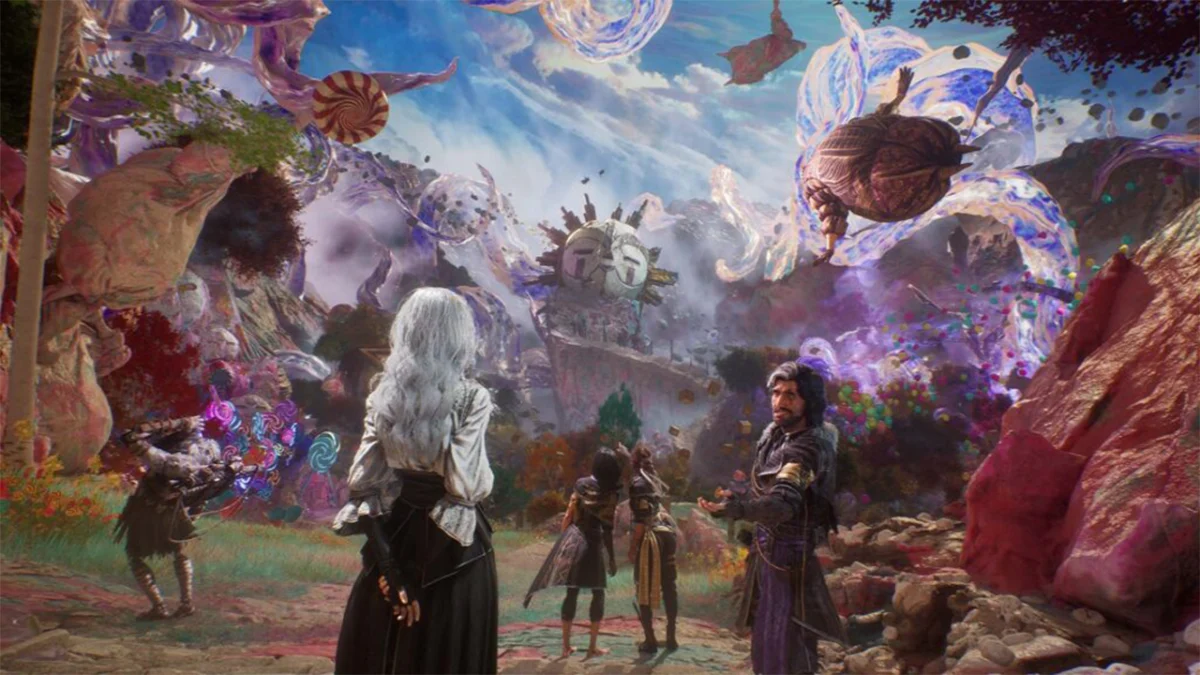
Jennifer Svedberg-Yen, the acclaimed narrative lead behind one of 2025’s most critically-acclaimed titles, Clair Obscur: Expedition 33, has announced her departure from Sandfall Studio and unveiled an ambitious new initiative aimed at fundamentally reshaping how narrative design is funded, developed, and championed within the video game industry. Her move comes just months after Clair Obscur: Expedition 33 achieved significant commercial success, topping 8 million sales worldwide and garnering numerous accolades, solidifying its place as one of the most awarded video games of all time. Svedberg-Yen, leveraging her unique background in finance and private equity, intends to establish a dedicated fund designed to elevate storytelling from an often-overlooked afterthought to a foundational pillar of game development.
A Pillar of Success: The Impact of Clair Obscur: Expedition 33
Svedberg-Yen’s departure from Sandfall Studio in July 2026 marked the end of a highly successful chapter, most notably highlighted by her instrumental role in Clair Obscur: Expedition 33. Released in late 2025, the title quickly captivated audiences and critics alike, earning widespread praise for its intricate plot, compelling characters, and innovative storytelling mechanics. It was lauded across major industry award ceremonies, securing multiple Game Developers Choice Awards (GDCA) nominations, including Best Narrative and Game of the Year, ultimately clinching the GDCA for Best Narrative and a BAFTA Games Award for Story. Its critical reception was underscored by an aggregate Metacritic score consistently in the low to mid-90s, with reviewers frequently citing the depth and emotional resonance of its narrative as a primary factor in its success.
The game’s commercial performance mirrored its critical acclaim, surpassing 8 million units sold globally within its first year. This figure is particularly significant for a narrative-driven adventure title, often a genre that, while critically celebrated, may not always reach the blockbuster sales numbers of action or multiplayer-focused games. Clair Obscur: Expedition 33 demonstrated that a meticulously crafted story, when integrated seamlessly into gameplay, can drive immense commercial appeal. Analysts point to the game’s ability to forge deep player connections through its character arcs and thematic exploration as a key differentiator in a crowded market. Svedberg-Yen’s leadership in weaving these narrative threads throughout the game’s fabric is widely credited as a cornerstone of its unprecedented success.
Jennifer Svedberg-Yen’s Vision: Elevating Narrative from Afterthought to Cornerstone
In a recent profile piece published by GamesBeat, Svedberg-Yen articulated her personal and professional goal: to fundamentally reshape the industry’s approach to developing stories and to provide robust support for the creative talent responsible for them. Her core philosophy, honed through her experiences at Sandfall and her prior career in finance, challenges the prevailing industry wisdom that often relegates narrative to a secondary role, a "skin" applied late in the development cycle.
"A lot of studios think of narrative as a skin," Svedberg-Yen told GamesBeat. "They think you can bring someone in later to make everything make sense. But when you start from the beginning, everyone is building from the same story and the different disciplines naturally reinforce each other." This statement encapsulates her belief that a strong, integrated narrative must serve as the foundational blueprint for a game, guiding artistic direction, gameplay mechanics, sound design, and world-building from conception. When narrative is an afterthought, it often leads to disjointed experiences, plot holes, and a lack of thematic cohesion that can undermine even the most polished gameplay. Conversely, Clair Obscur: Expedition 33‘s success is seen by many as a testament to the power of a narrative-first approach, where the story organically informs and elevates every other aspect of the game.
Svedberg-Yen’s journey to this point is unique. Her background in finance and private equity before transitioning into game development provided her with a dual perspective: a deep understanding of investment models and business strategy, coupled with a passion for creative storytelling. This blend of business acumen and artistic vision positions her uniquely to address the systemic challenges in narrative funding. She aims to leverage this expertise to create new models that prioritize and invest in narrative talent and innovative storytelling from the earliest stages of development.
The Narrative Advancement Fund: A New Paradigm for Creative Support
The core of Svedberg-Yen’s post-Sandfall endeavor is the establishment of a specialized fund dedicated to advancing the art of narrative design. While specific operational details are yet to be fully disclosed, she emphasizes that the fund will focus on curating and nurturing talent, fostering environments where storytelling can flourish without the immediate pressures of traditional publishing cycles. This initiative aims to fill a critical gap in the industry, where securing early-stage funding for purely narrative concepts can be challenging, often requiring a demonstrable gameplay prototype before a story’s potential can be fully explored.
The fund is envisioned to offer several mechanisms for support:

- Seed Funding for Narrative Concepts: Providing initial capital to narrative designers or small teams to develop comprehensive story bibles, character backstories, world lore, and dialogue scripts before significant art or programming resources are committed.
- Grants and Fellowships: Supporting individual narrative designers in their creative pursuits, allowing them to experiment with new storytelling techniques or explore unconventional themes without immediate commercial constraints.
- Mentorship and Development Programs: Connecting emerging narrative talent with established industry veterans, offering guidance on craft, project management, and industry navigation.
- Investment in Narrative Technologies: Supporting the development of tools and software that empower narrative designers, from advanced branching dialogue systems to procedural storytelling engines.
- Diversity and Inclusion Initiatives: Actively seeking out and supporting storytellers from underrepresented backgrounds, fostering a broader range of perspectives and voices within game narratives.
Svedberg-Yen made it clear that her objective is not to compete directly with established publishers. "I’m not trying to compete with publishers," she explained. "But I’m trying to find a way to work with them to get us back on solid ground. Above all, I really would like to champion other people and other creatives to have a chance to pursue their dreams, have a chance to make the games they want to make." This collaborative approach suggests the fund could serve as a vital incubator, de-risking narrative-heavy projects for publishers by providing them with more fully developed and compelling story foundations, or by offering a pipeline of pre-vetted, high-quality narrative IPs. It could also provide a critical bridge for creative teams to secure publisher interest by demonstrating the inherent strength and marketability of their stories, rather than relying solely on early gameplay demos.
Industry Context: The Growing Demand for Strong Narratives
Svedberg-Yen’s initiative arrives at a pivotal moment for the video game industry, which has witnessed a significant evolution in its appreciation for storytelling. Over the past decade, narrative-driven titles have not only garnered critical acclaim but have also proven their commercial viability. Games like The Last of Us series, God of War, Red Dead Redemption 2, Disco Elysium, and Cyberpunk 2077 (despite its initial launch challenges, its narrative depth was often praised) have set new benchmarks for immersive and emotionally resonant storytelling, demonstrating that players are increasingly hungry for rich, character-driven experiences.
However, despite this growing demand, the role of narrative designers within game development often remains challenging. Many narrative teams report being brought into projects late, tasked with patching together disparate gameplay elements into a coherent story, or operating with limited budgets and tight deadlines. The perception of narrative as a "nice-to-have" rather than an essential component persists in some corners of the industry, leading to burnout among narrative professionals and, ultimately, less impactful games. A 2024 industry survey by the Game Developers Conference found that while 85% of developers considered narrative "very important" or "essential" to their projects, only 40% felt their narrative teams were adequately resourced and integrated from the earliest stages of development.
Against this backdrop, Svedberg-Yen’s fund could serve as a powerful catalyst for change. By providing dedicated resources and advocacy for narrative design, it aims to shift the paradigm, empowering storytellers and ensuring that compelling narratives are baked into the core of game development, rather than merely layered on top.
Anticipated Reactions and Broader Implications
The announcement of Jennifer Svedberg-Yen’s ambitious new venture has already begun to generate considerable buzz within the industry. While Sandfall Studio has yet to issue a formal statement regarding the fund, sources close to the studio indicate a mutual understanding and appreciation for Svedberg-Yen’s contributions to Clair Obscur: Expedition 33, wishing her success in her future endeavors. "Jennifer’s vision was integral to the success of Clair Obscur," remarked a Sandfall spokesperson in a brief, generic statement. "We are immensely proud of what we achieved together and wish her all the best in her new chapter."
Industry analysts and fellow narrative designers have reacted with cautious optimism and excitement. Dr. Evelyn Reed, a prominent game studies academic and author of "The Art of Interactive Storytelling," commented, "Jennifer Svedberg-Yen’s initiative could be a genuine game-changer. Her unique blend of creative vision and financial acumen gives this fund a credibility that many grassroots efforts lack. It’s a much-needed push to elevate storytelling to its rightful place at the heart of game development." Veteran narrative designer Mark Harrison, known for his work on several critically acclaimed RPGs, echoed this sentiment: "Many of us have felt the struggle of trying to integrate narrative late in the cycle. A fund like this, focused purely on nurturing narrative talent and ideas, offers a beacon of hope for a more integrated, story-driven future for games."
The broader implications of Svedberg-Yen’s fund could be profound:
- Increased Innovation in Storytelling: By providing a safety net for experimental and unconventional narratives, the fund could foster a new wave of creative game stories that challenge traditional formats and themes.
- Enhanced Recognition for Narrative Professionals: Elevating the importance of narrative design through dedicated funding and support could lead to greater respect, better compensation, and improved working conditions for narrative designers across the industry.
- Diversification of Game Content: With a focus on nurturing diverse voices and stories, the fund could help broaden the range of cultural, social, and personal narratives explored in video games.
- Stronger IP Development: By investing in narrative at the conceptual stage, the fund could help create stronger, more coherent intellectual properties that are not only compelling as games but also hold potential for transmedia adaptations.
- A Shift in Development Paradigms: Should the fund prove successful, it could influence traditional publishers and developers to rethink their own approaches, potentially leading to a wider adoption of narrative-first development methodologies.
However, challenges remain. The scale of funding required to make a truly systemic impact on an industry as vast as video games is significant. Integrating new funding models with existing, often rigid, publishing structures will require delicate negotiation and a clear demonstration of value. Furthermore, measuring the success of narrative initiatives, particularly those focused on artistic merit and talent development, can be more complex than tracking sales figures alone.
Despite these hurdles, Svedberg-Yen’s resolve appears unwavering. She has not yet detailed the exact mechanisms of the fund’s operation, but she emphasizes that its formal launch and the unveiling of its initial programs will be a primary focus for her in 2027, alongside her own ongoing creative projects. "The strongest feeling in me right now for 2027 is I want to help," she concluded in the GamesBeat interview. "That sounds so cheesy and idealistic. I always cringe at myself for saying it. But I don’t know how else to say it and be truthful. I want to help in some way, help the industry." This blend of idealism and practical ambition positions Jennifer Svedberg-Yen as a potentially transformative figure, poised to significantly influence the future of storytelling in video games.
About the Author