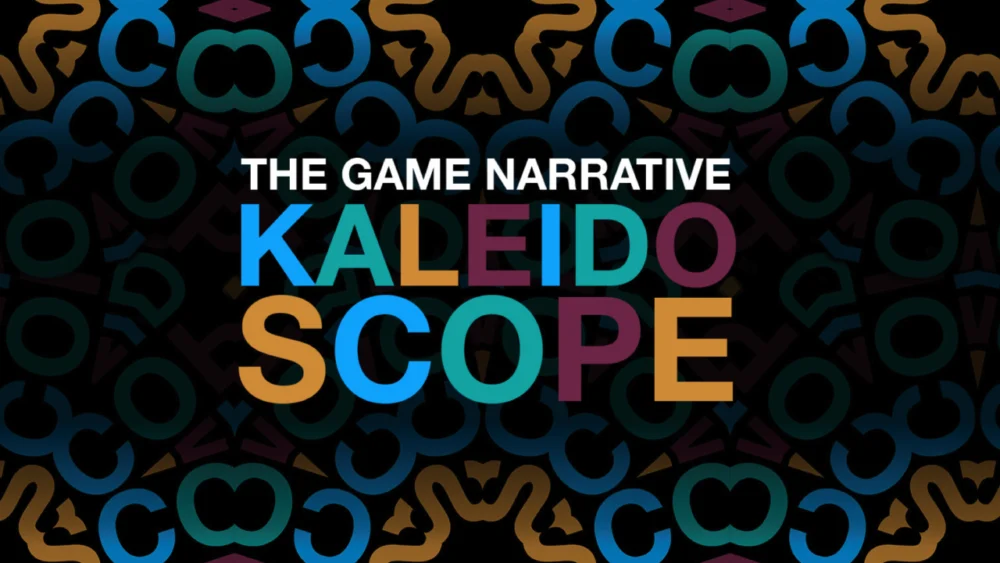
The landscape of interactive entertainment has witnessed a profound transformation in its approach to storytelling, culminating in the release of Kaleidoscope, a new anthology dedicated to the diverse and rapidly evolving craft of game writing. Edited by acclaimed game writer and inkle co-founder Jon Ingold, the book brings together nearly 150 voices from across the games industry, offering a comprehensive and multifaceted look at narrative design, characterization, and world-building in video games. The publication addresses a long-standing need for a collective resource that reflects the breadth of methodologies and philosophies embraced by modern game writers, from seasoned veterans on AAA titles to indie innovators and emerging talents.
The Historical Arc of Narrative in Games
For decades, the role of narrative in video games has undergone a significant evolution, mirroring advancements in technology and creative ambition. In the nascent days of the industry, particularly during the era of text adventures in the late 1970s and early 1980s, writing was undeniably central. Games like Colossal Cave Adventure and Zork were fundamentally literary experiences, relying almost entirely on descriptive text to build worlds and convey plot. However, as graphical capabilities improved with the advent of arcade machines and early home consoles, the narrative function often became secondary, relegated to instruction manuals, brief in-game text, or the evocative artwork adorning arcade cabinets like Space Invaders and Operation Wolf. The implicit narratives were often inferred rather than explicitly told, with player imagination filling the gaps.
The 1990s marked a turning point, with the rise of complex role-playing games (RPGs) and point-and-click adventure titles. Games such as The Secret of Monkey Island, Myst, and Final Fantasy VII demonstrated the immense potential for deep, engaging storylines and memorable characters. Yet, even during this period, the specialized role of a "game writer" or "narrative designer" was largely undefined. Writing duties often fell to lead designers, programmers, or external freelance contractors brought in late in the development cycle to populate dialogue boxes and quest logs. This fragmented approach often led to inconsistencies and a lack of cohesive narrative vision, highlighting the nascent stage of narrative integration within game development pipelines.
The Professionalization of Game Writing
The last two decades have seen an exponential increase in the demand for professional game writers and narrative designers. The global video game market, which surpassed $180 billion in revenue in 2023 and is projected to exceed $200 billion by 2025, has fostered an environment where sophisticated storytelling is not merely an enhancement but a core expectation for many genres. Titles like The Last of Us, Red Dead Redemption 2, Disco Elysium, and Mass Effect have set new benchmarks for narrative depth, character development, and emotional resonance, proving that compelling stories can drive commercial success and critical acclaim.
This shift has necessitated the formalization of narrative roles within game studios. The term "narrative designer," once virtually non-existent, is now a common and highly specialized position. These professionals are not just writers; they are architects of interactive experiences, responsible for weaving story, gameplay, and world-building into a coherent and engaging whole. Their responsibilities often encompass character arcs, dialogue trees, lore creation, quest design, environmental storytelling, and ensuring narrative consistency across vast, branching experiences. The demand for such expertise has fueled a talent pool drawn from diverse backgrounds, including traditional screenwriting, novel writing, theater, and interactive fiction platforms like Twine, which empower individuals to experiment with non-linear storytelling.
According to a 2022 industry survey, the number of dedicated narrative roles in game development teams has increased by over 300% in the last decade, reflecting the industry’s growing recognition of narrative as a distinct and critical discipline. This growth has also led to a vibrant community of game writers who, as Ingold notes, now possess sufficient numbers and shared experience to "disagree vigorously over issues of craft," fostering a dynamic environment of critical discourse and innovation.
The Genesis of Kaleidoscope
The concept for Kaleidoscope emerged from an informal discussion between Jon Ingold and a colleague, who proposed the idea of a self-published anthology by writers, for writers. The objective was to create an accessible resource, affordably priced, that would minimize unpaid labor from contributors – a common challenge in creative industries. Ingold, known for his work on critically acclaimed narrative-driven games like 80 Days and Heaven’s Vault with inkle studios, recognized the urgent need for such a compendium. His extensive background, spanning text adventures in his youth to experimental narrative games at Sony before co-founding inkle, positioned him uniquely to understand the journey of game writing from an niche interest to a central pillar of game development.
In 2024, Ingold issued a speculative call for interest in the project. The response was immediate and overwhelming, with over 300 submissions received within two days. This outpouring of interest underscored a significant industry-wide desire for a platform to share knowledge, discuss craft, and acknowledge the multifaceted nature of game writing. From this extensive pool, approximately half of the respondents were selected to contribute articles to Kaleidoscope.
The curated collection features a diverse array of voices, reflecting the broad spectrum of experience and perspectives within the game writing community. Contributors include seasoned experts who have shaped narrative experiences on some of the industry’s largest titles, adaptable freelancers who navigate varied projects, independent writers pushing creative boundaries with limited budgets, junior writers in their first paid positions, and students actively studying the form. This deliberate inclusion of diverse experience levels ensures that the anthology offers insights relevant to every stage of a game writer’s career.
A Focus on Craft, Not Critique
A core tenet guiding the compilation of Kaleidoscope is its emphasis on craft over critique. Each contributor was tasked with articulating a single, succinct point about their approach to game writing, focusing on practical insights, innovative techniques, and personal philosophies rather than critical analysis of existing works. This approach is intended to foster an environment of inspiration and practical guidance, acknowledging that "any lingering notion that there’s one right way to approach games writing, narrative design, characterization or world-building has evaporated."
The book embraces the interdisciplinary nature of game narrative, drawing inspiration from a vast array of artistic and storytelling forms: film, comics, theater, novel-writing, poetry, lyric-writing, music, opera, dance, visual arts, and sculpting. This synthesis of influences underscores the unique demands and creative opportunities inherent in interactive storytelling. By presenting a multitude of viewpoints, Kaleidoscope aims to be a catalyst for new ideas, encouraging readers to explore different perspectives and integrate them into their own creative processes. The unconventional suggestion to "not read them in order" and instead "open in the middle, at random" further emphasizes the book’s role as a source of fragmented inspiration, much like a literal kaleidoscope.
Implications for the Industry and Aspiring Writers
The release of Kaleidoscope marks a significant moment for the game development community. It solidifies the professional standing of game writers and narrative designers, providing a much-needed collective voice and resource. For aspiring writers, the anthology offers invaluable guidance, demystifying the craft and illustrating the myriad pathways to success within the industry. It serves as a testament to the fact that game writing is a sophisticated and respected discipline, deserving of its own academic and professional discourse.
Furthermore, the book’s emphasis on diversity of thought and technique has broader implications for game development. By showcasing a wide range of approaches, Kaleidoscope encourages innovation and experimentation, potentially leading to even richer, more varied narrative experiences in future games. It validates the idea that storytelling in games is not monolithic but a constantly evolving art form that benefits from a multitude of perspectives. The anthology also highlights the collaborative spirit inherent in game writing, positioning writers not as isolated creators but as integral members of interdisciplinary teams.
The strong industry response to the call for contributions, as well as the participation of figures like Game Developer senior editor Bryant Francis, underscores the collaborative spirit and recognized importance of this initiative. Kaleidoscope is poised to become a foundational text for anyone interested in the art and science of interactive narrative, serving as both a historical snapshot of contemporary practices and a forward-looking guide to the infinite possibilities of storytelling in games. As Jon Ingold aptly concludes, this "kaleidoscope contains jewels, gems, and colorful buttons reflected in different ways by a hundred different voices. What shape they’ll resolve into is for you to discover." The book invites readers to embark on their own journey of discovery, to "steal," "fix," and "make old patterns work in new ways," ultimately shaping the future of game narrative.
About the Author